-
Avoiding Adding Insult to Injury in Climate Adaptation Efforts
› Climate change is expected to produce winners and losers – for example, melting ice-caps may open up new economic opportunities for Greenland at the same time as sea-level rise threatens Asia’s bourgeoning coastal mega-cities. The same can be said about plans to address climate change, from both the mitigation and adaptation perspectives. A special issue of Global Environmental Change, “Adding Insult to Injury: Climate Change, Social Stratification, and the Inequalities of Intervention,” takes on this topic, with two case studies providing particularly compelling evidence.Betsy Beymer-Farris and Thomas Bassett argue in their contribution, “The REDD Menace: Resurgent Protectionism in Tanzania’s Mangrove Forests,” that efforts to ensure REDD readiness in Tanzania have placed local communities at risk of forced evictions, shattered livelihoods, and persecution by both the state and conservation community. Contrary to dominant narratives that “portray local resources users, the Warufiji, in negative terms as recent migrants who are destroying the mangrove forests,” the authors say that they in fact depend upon “allow[ing] the mangroves to regenerate naturally while preparing new rice fields.” “To carbon traders, however, an uninhabited forest greatly simplifies the logistical tasks of monitoring and paying for ecosystem services,” assert the authors. This has resulted in declaration of local communities as squatters, illegally invading the forest. Government officials have repeatedly voiced threats of eviction. As well as increasing the potential for social tension, the study concludes that, “it is difficult to reconcile Tanzania REDD’s participatory and benefit sharing goals with the rhetoric, practices, and plans of the Tanzanian state.”In “Accessing Adaptation: Multiple Stressors on Livelihoods in the Bolivian Highlands Under a Changing Climate,” Julia McDowell and Jeremy Hess present evidence about how specifically-tailored adaptations to climate change risk increasing vulnerability to a complex web of other, less obvious stressors. The study draws evidence from the livelihoods of historically marginalized indigenous farmers in highland Bolivia. The authors, who see “adaptation as part of ongoing livelihoods strategies,” use the case to “explore the tradeoffs that households make when adjustments to one stressor compromise the ability to adjust to another.” For instance, socio-economic stressors have forced many farmers to more closely couple their livelihoods with the market economy by growing more cash crops, intensifying land use, participating in off-farm laboring, and relying on irrigated agriculture. However, the shift to more market-orientated livelihoods has also increased their sensitivity to climatic stress. “As stressors compounded, the ability to mobilize assets became constrained, making adaptation choices highly interdependent, and sometimes contradictory,” the authors write. Avoiding these sorts of lose-lose situations, requires “ensuring sustained access to assets, rather than designing interventions solely to protect against a specific stressor.”
 -
Richard Matthew: Responsive Peacebuilding Includes the Environment and Natural Resources
›April 30, 2012 // By Stuart Kent“After 20 years of peacebuilding experimentation, one of the good signs is that the countries receiving this [peacebuilding] attention…more and more are shaping the process,” said Professor Richard Matthew, director of the Center for Unconventional Security Affairs at the University of California, Irvine.
Peacebuilding is shifting, he said, from internationals going in with pre-existing conceptions of “what you need for stability and development, what will make you attractive to investors, what will make your people secure,” to instead sitting down and talking with stakeholders about “what types of capacity do you need, and how can we support you in acquiring those.”
Along with the shift towards more responsive peacebuilding has come an elevated interested in the environment and natural resources. For people living in the peacebuilding countries themselves, “there was never any doubt that water and forest and access to minerals and so on were critical to their future,” said Matthew, but Western and Northern countries often thought of it as a “second tier issue that you might get to once people were safe, and the government was functioning, and the economy was up and running again.”
Matthew co-authored the 2009 UNEP report, From Conflict to Peacebuilding: The Role of Natural Resources and the Environment, which examined environmental factors all along the conflict continuum – from inception to peacebuilding. Successful peacebuilding, the report argues, requires that “environmental drivers are managed, that tensions are defused, and that natural assets are used sustainably to support stability and development in the long term.” -
Women’s Rights and Voices Belong at Rio+20
›This summer, world leaders will gather in Rio de Janeiro for the 20th anniversary of the first UN Earth Summit to hammer out a new set of agreements on what sustainable development means and, more importantly, how both rich and developing nations can get there before it’s too late. However, for the scores of women who will be attending (and just importantly for those who aren’t), there are glaring omissions: reproductive health, gender equality, and girls education are nowhere to be found on the Rio+20 agenda.
Women offer many of the most promising levers for the transformation to sustainable development. My experience with the Global Fund for Women tells me that women are full of creative and strategic solutions to the problems facing their communities around the world. Their voices must be included in critical decisions affecting our world. And the fact is, sustainable development isn’t sustainable if it doesn’t include empowering women to plan their families, educate themselves, and their children, and have a voice in government at all levels. Rio+20 must have human rights – and women’s rights – at its core. Earth summit planners haven’t yet done that, but women can make it happen.
Women are 51 percent of the world’s population, yet own only one percent of its assets, are two-thirds of the world’s workers but earn a mere 10 percent of wages. Rio+20 must not become another forum in which women’s issues are not heard. Instead, the summit must demonstrate that women’s voices are integral to all development. Environmental sustainability simply can’t happen without women’s inclusion.
For example, in West Africa, women make up 70 percent of workers in agriculture. In Burkina Faso, deforestation, water scarcity, and soil erosion show us that climate change is already impacting women farmers. Women tend to “sacrifice themselves” in order to care for their families – feeding themselves last. And women are most likely to suffer and die in environmental disasters – particularly in the Asian countries most at risk from climate change.
So how do we support women while supporting the environment that sustains us all?
Simply meeting women’s needs for family planning is one inexpensive and powerful development strategy with a host of environmental benefits. Over 200 million women around the world want the ability to choose the spacing and number of children but don’t have access to, or accurate information about, basic contraceptives like condoms, pills, and IUDs. One-hundred and seventy-nine nations already agree that meeting this need is a top priority, and the Millennium Development Goals (MDGs) reflect a goal of universal access to family planning as well.
Satisfying this demand would dramatically reduce maternal and child mortality and enhance human rights. What’s more, two recent studies show that a reduction of 8 to 15 percent of essential carbon emissions can be obtained by meeting women’s needs for family planning. This reduction would be equivalent to stopping all deforestation or increasing the world’s use of wind power fortyfold.
The Earth Summit presents a major opportunity to ensure that women’s needs and rights are given top priority in plans for sustainable development. In a time of multiple, interlinked human and environmental crises and a very tight funding environment, investing in women is a clear winner.
A greater understanding of the impact of environmental degradation, pollution, and climate change on women, coupled with solid public policy that respects and protects women’s reproductive rights, is essential to the “Sustainable Development Goals” that many believe will emerge from Rio+20 to replace the MDGs, which expire in 2015.
As the summit approaches, it’s time to reflect on why women’s full participation and inclusion is so important and call for world leaders to harness the power of women as we launch the era of sustainable development.
Musimbi Kanyoro is president and CEO of the Global Fund for Women, which advances women’s human rights by investing in women-led organizations worldwide.
Sources: Food and Agriculture Organization, Guttmacher Institute, Moreland et al. (2010), O’Neill et al. (2010), Princeton Environmental Institute, UN, UNEP, World Bank, World Health Organization.
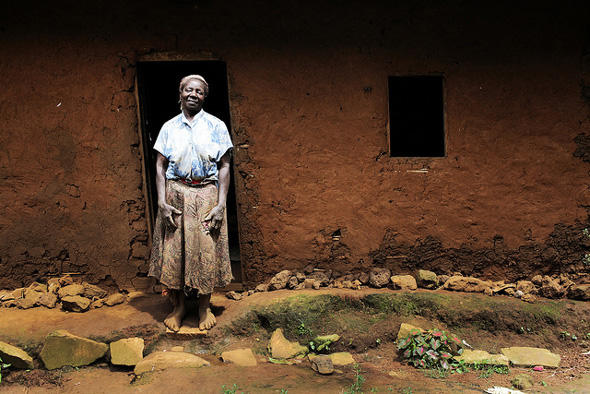
Photo Credit: “Reokadia Nakaweesa Nalongo,” courtesy of Jason Taylor/Friends of Earth International. -
Uganda’s Demographic and Health Challenges Put Into Perspective With Newfound Oil Discoveries [Part Two]
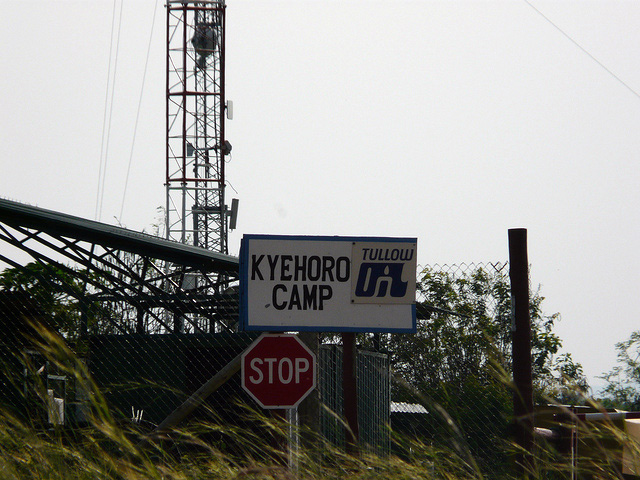
›April 26, 2012 // By Kate Diamond“We never thought we would end up having the same problems here as the people in the Niger Delta. But now I’m worried,” Henry Ford Mirima, a spokesman for Uganda’s Bunyoro kingdom, said last fall in Le Monde Diplomatique. The kingdom – which calls itself East Africa’s oldest – sits along Lake Albert, where over the past seven years British oil company Tullow Oil has discovered oil reserves big enough to produce an estimated 2.5 billion barrels.
-
Uganda’s Demographic and Health Challenges Put Into Perspective With Newfound Oil Discoveries [Part One]
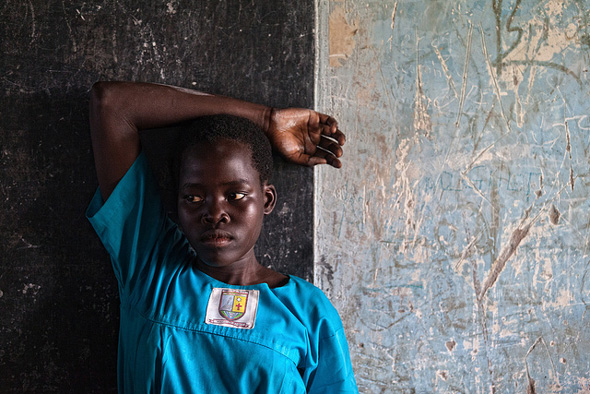
›April 26, 2012 // By Kate DiamondUganda’s population is the second youngest in the world, with half of the country younger than 15.7 years old (just older than Niger’s median age of 15.5 years). In the past 10 years, the country – about half the size of France in land area – has added 10 million people, growing from 24 to 34 million. That growth, paired with other factors like poor governance and long-standing insecurity, has made providing basic services a difficult task for a government that is one of Africa’s most aid-dependent.
-
Richard Cronin, World Politics Review
China and the Geopolitics of the Mekong River Basin
›April 25, 2012 // By Wilson Center StaffThe original version of this article, by Richard Cronin, appeared in World Politics Review.
Two decades after the Paris Peace Accord that ended the proxy war in Cambodia, the Mekong Basin has re-emerged as a region of global significance. The rapid infrastructure-led integration of a region some call “Asia’s last frontier” has created tensions between and among China and its five southern neighbors – Cambodia, Laos, Myanmar, Thailand, and Vietnam. Both expanded regional cooperation as well as increased competition for access to the rich resources of the once war-torn region have created serious environmental degradation while endangering food security and other dimensions of human security and even regional stability.
China’s seemingly insatiable demand for raw materials and tropical commodities has made it a fast-growing market for several Mekong countries and an increasingly important regional investor. Economic integration has been boosted by a multibillion dollar network of all-weather roads, bridges, dams, and power lines largely financed by the Asian Development Bank (ADB) that is linking the countries of the Lower Mekong to each other and to China. To date, the ADB’s Greater Mekong Subregion (GMS) cooperative development program has primarily benefited large population centers outside the basin proper in China, Thailand, and Vietnam. Unfortunately, the same infrastructure that speeds the flow of people and goods to urban centers also facilitates the environmentally unsustainable exploitation of the forests, minerals, water resources, and fisheries that are still the primary source of food and livelihoods to millions of the Mekong’s poorest inhabitants.
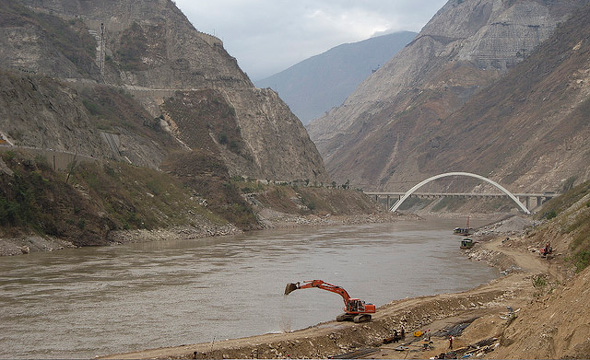
No aspect of China’s fast-growing role and influence in the Mekong region is more evident and more problematic than its drive to harness the huge hydroelectric potential of the Upper Mekong through the construction of a massive cascade of eight large- to mega-sized dams on the mainstream of the river in Yunnan Province. The recently completed Xiaowan dam, the fourth in the series, will mainly be used to send electricity to the factories and cities of Guangdong Province, its coastal export manufacturing base some 1,400 kilometers away. China’s Yunnan cascade will have enough operational storage capacity to augment the dry season flow at the border with Myanmar and Laos by 40-70 percent, both to maintain maximum electricity output and facilitate navigation on the river downstream as far as northern Laos for boats of up to 500 tons.
Continue reading in World Politics Review.
Photo Credit: “Xiaowan Dam Site,” courtesy of International Rivers. -
Karen Newman: Rio+20 Should Re-Identify Family Planning As a Core Development Priority
›April 25, 2012 // By Kate DiamondEnergizing people around family planning can be difficult, “because donors, like everyone else, like something that’s new,” said Karen Newman, coordinator for the UK-based Population and Sustainability Network. “There’s nothing new about family planning. The technology is safe, effective, it’s acceptable, and it works. We just need a lot more of it out there to be accessible to a lot more people.”
Newman spoke to ECSP at the 2012 Planet Under Pressure conference about her hopes for the upcoming Rio+20 sustainable development conference, which marks the 20-year anniversary of the UN Earth Summit.
“What we want is increased investment in voluntary family planning services that respect and protect rights,” Newman said, “and I think that Rio represents a fabulous opportunity for us to re-identify family planning as a core development priority.”
Newman also hopes the Rio conference will lead to “an integrated look at sustainable development, so that… it isn’t just about the green economy and institutional framework, it’s looking at sustainable development in the round.”
Government development programs and policymakers need to adapt their bureaucratic processes to the kinds of integrated programming being carried out on the ground, she said. In Madagascar, for example, conservation group Blue Ventures leads an integrated PHE program that cuts across marine conservation, family planning, and healthcare sectors. “Now I defy you to find an EU budget line that would be broad enough to embrace marine conservation and family planning in the same project line,” said Newman.
“The first thing we need is that level of integrated thinking – not just in Rio, but also in the way that we conceptualize the work that needs to be done and we facilitate the availability of funding streams that can fund that kind of integrated program.”
Lastly, Newman hopes that the summit in and of itself is successful because of its implications for future development work. As the world gears up to create the next big framework for global development to follow the Millennium Development Goals, Rio is uniquely positioned to set a baseline for what matters and for what the development community is capable of accomplishing.
“What I want to see is a really sophisticated look at sustainable development, coming up with sustainable development goals in a world that makes sense of seven billion, where there are still millions of women without access to the family planning services that we take for granted,” said Newman, “and taking that concept to the job of developing the post-MDG framework that will frame development for the next 20 years.” -
John Donnelly, Global Post
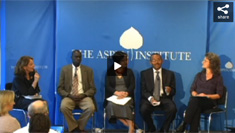
Aspen Institute on Women, Population, and Access to Safe Water
›April 24, 2012 // By Wilson Center StaffLoading the player…The original version of this article, by John Donnelly, appeared on the Global Post.
The U.S. Census Bureau’s World Clock says that the population of the world today is estimated at 7.008 billion people, while projections show that the world could reach the 9 billion marker by 2050.
In the last of its series called “7 Billion: Conversations That Matter,” Aspen Institute’s Global Health and Development hosted a panel of experts based in Africa and the United States on the interconnectedness of gender issues, family planning, population, and access to safe water.
The point of the series was to ask questions about why it mattered that the world was passing the seven billion mark, and the questions today in Washington were appropriately big: Will water wars replace oil wars? What are the solutions to expand water and sanitation to the 2.5 billion people who don’t have it? And just how many people can the world support in an equitable fashion?
An answer to the last question: You need a bigger pie, better manners, and fewer forks.
Borrowing from a book by Joel Cohen called How Many People can the Earth Support? (written in 1996 when the world supported a 5.7 billion population), Laurie Mazur, director of the Population Justice Project, said that the answer was “it depends on how we use resources.”
Continue reading on the Global Post.
Sources: U.S. Census Bureau.
Showing posts from category environment.