• woodrow wilson center
  • ecsp

New Security Beat

Subscribe:
  • rss
  • mail-to
  • Who We Are
  • Topics
    • Population
    • Environment
    • Security
    • Health
    • Development
  • Columns
    • China Environment Forum
    • Choke Point
    • Dot-Mom
    • Friday Podcasts
    • Navigating the Poles
    • Reading Radar
  • Multimedia
    • Water Stories (Podcast Series)
    • Backdraft (Podcast Series)
    • Tracking the Energy Titans (Interactive)
  • Films
    • Water, Conflict, and Peacebuilding (Animated Short)
    • Paving the Way (Ethiopia)
    • Broken Landscape (India)
    • Scaling the Mountain (Nepal)
    • Healthy People, Healthy Environment (Tanzania)
  • Publications
  • Events
  • Contact Us

NewSecurityBeat

The blog of the Wilson Center's Environmental Change and Security Program
Showing posts from category environment.
  • Fixing the Sky: The Checkered History of Weather and Climate Control

    ›
    From the Wilson Center  //  November 4, 2010  //  By Schuyler Null
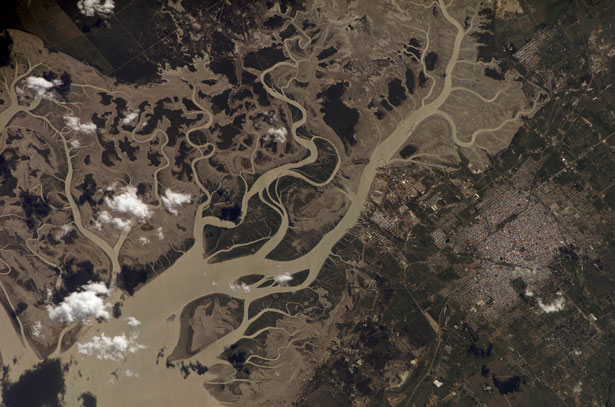
    As geoengineering becomes a more politically and technologically appealing approach to addressing climate change, it is critical to heed the lessons of history and understand the limits of our control over nature, said James Fleming of Colby College. Speaking at the launch of his new book, Fixing the Sky: The Checkered History of Weather and Climate Control, at the Wilson Center on October 6, Fleming brought what he called a “historically informed view of the humanities” to a growing policy discussion: the possibility of using geoengineering as a “quick fix” for the problem of climate change.

    Not So Ancient History

    “When facing unprecedented challenges, it’s good to take a look at the precedents,” said Fleming. He pointed to recent weather management projects conducted in China, U.S. experiments in the 1940s, and older historical discussions about geoengineering as evidence of humanity’s long fascination with “fixing of the sky.”

    In 2008, “they had 30,000 Chinese artillerists shooting chemicals at the clouds to keep either the venues clear or get the rain down on the weekend before the Olympics started,” Fleming said. “And they’re still doing this kind of stuff. So now there’s inter-regional tensions in China, because imagine rains comes across the country, some places get hit some places get missed, there’s intermittent showers, but now every intermittent shower is seen as a managed event where ‘you took my rain away from my farmland.’ So as soon as you start managing the sky, you start fighting about it.”

    In 1839, the United States’ first meteorologist, James Espy, proposed lighting regular fires along the Appalachians to induce rainfall on the eastern seaboard. “What if Espy’s idea actually worked?” asked Fleming. “It’d very much like that Chinese story today, where there’s internecine struggles between keeping and taking the rain away from others,” he said.

    The Threat of Militarization

    Fleming highlighted a number of fundamental ethical concerns raised by atmospheric scientist Alan Robock:
    • Who has the moral right to change the climate?
    • Where would be the “global thermostat” be?
    • Will it reduce incentives for mitigation?
    • Could it be commercialized and/or militarized?
    In 1947 Nobel Laureate Irving Langmuir, in conjunction with GE and the U.S. military, experimented with controlling Hurricane King by seeding it with dry ice. They expected the storm to continue its course off the coast of Florida into the Atlantic, but instead it veered west and hit Savannah, Georgia, causing considerable damage. The lesson, said Fleming, is that “you can intervene in a cloud, but you can’t point it downwind – you can’t tell it what to do.”

    Other U.S. military research into geoengineering included researching the possibility of inducing west-to-east moving rain storms in Europe to help neutralize a Soviet invasion and using the magnetosphere to create selective blackouts over Moscow.

    “Shall we fix the sky – is it broken?” asked Fleming. “And if it is broken should we have people with military hardware shooting at it?”

    One possible institutional counter could be strengthening the UN Environmental Modification Convention (ENMOD), which Fleming said “has been revisited again twice, and could be revisited again if large-scale environmental modification were to get more serious – if there’s deployment of geoengineering techniques.” The treaty prohibits environmental modification “through the deliberate manipulation of natural processes – the dynamics, composition or structure of the Earth, including its biota, lithosphere, hydrosphere and atmosphere, or of outer space.”

    The Once and Future Earth

    The Greek myth of Phaeton illustrates how old, but also flawed, the human desire to control climate really is, said Fleming. In the myth, Phaeton convinces his father, Helios, to let him drive the sun’s chariot for a day. However, Phaeton falters, lacking the strength and experience to control the reins, and Zeus intervenes to save the world from immolation. “Take up Phaeton’s reins,” said Fleming, should be interpreted as “control your carbon emissions,” rather than trying to control the sky.

    We should consider geoengineering to be only an “interesting hypothetical exercise,” said Fleming, until the consequences and results of such colossal tinkering can be better assessed. “Even perfect climate prediction would lead to climate chaos, because the country that could do that could trump its competitors” in various markets, he said. However, such predictions might never be possible, considering the difficulty in modeling cultural and ethical norms, as well as the geostrategic implications – in short, the human element.

    Fleming cautioned against the fundamental belief that you can accurately model the impact of geoengineering projects, reminding would-be geoengineers that “you can only have one Earth to experiment on, you don’t have a lot drosophila Earths or laboratory rat-Earths – you only have one.”

    Event Resources
    • Photo gallery
    • Video
    Sources: NASA, Toronto Star, U.S. State Department.

    Image Credit: Adapted from original by Craig Phillips for The Wilson Quarterly, reproduced with permission.
    MORE
  • Tamara Kreinin on Women’s Empowerment, Population Growth, and Sustainability

    ›
    Friday Podcasts  //  November 3, 2010  //  By Wilson Center Staff
    “We know that when that when we empower women – whether it’s giving them control over their bodies and access to family planning or whether it’s by including them in planning around climate change – their agency can make huge leaps for us,” said Tamara Kreinin, executive director of women and population at the UN Foundation, in this interview with ECSP.

    Seventy percent of the world’s poor are women and they’re also the members of the household most likely to be responsible for food, water, and firewood collection.

    “At the same time, we know that women are often not at the table,” she said. “They’re not at the table in country when countries are creating aid to adaptation strategies around the environment and climate change, and they’re not at the table at places like Copenhagen and some of the big climate change meetings.”

    The “Pop Audio” series is also available as podcasts on iTunes.
    MORE
  • UNFPA State of World Population 2010

    ›
    Eye On  //  October 20, 2010  //  By Russell Sticklor
    Today marks the release of the United Nations Population Fund (UNFPA) annual State of the World Population Report. But the 2010 edition, “From Conflict and Crisis to Renewal: Generations of Change,” is unlike those that have come before. In lieu of the traditional statistic-driven report, this year’s edition has enlisted another tool to document living conditions across the world — storytelling. In addition to demographers, the UNFPA looked to journalists to fan out across the world to gather stories on the ground and paint a portrait of the challenges and opportunities facing today’s global population that goes beyond the numbers, with particular focus on gender issues and human insecurity.

    For more on the UNFPA report, be sure to listen to The New Security Beat’s interview with one of its authors, Barbara Crossette, who talks about her experiences dealing with family planning around the world, as part of our ongoing Pop Audio series.

    Video Credit: UNFPA.
    MORE
  • Laurie Mazur at SEJ 2010 on ‘A Pivotal Moment: Population, Justice, and the Environmental Challenge’

    ›
    Friday Podcasts  //  October 17, 2010  //  By Wilson Center Staff
    “Right now, half the world’s population – some 3 billion people – are under the age of 25,” began Laurie Mazur on the “Population, Climate, and Consumption” panel at the Society for Environmental Journalists 20th Annual Conference. “It’s the largest generation ever that’s coming of age, and the choices that those young men and women make about childbearing will determine whether world population…grows to anywhere between 8 and 11 billion by the middle of this century.”

    “The good news is that everything we need to do to slow population growth is something we should be doing anyway,” she continued. Mazur is the author of A Pivotal Moment: Population, Justice, and the Environmental Challenge and director of the Population Justice Project.

    She was joined on the panel by Brian O’Neill, who spoke about a new study examining the impact of demographics on carbon emissions, and Jack Liu, who spoke about the impact of household size on emissions in China.

    The “Pop Audio” series offers brief clips from ECSP’s conversations with experts around the world, sharing analysis and promoting dialogue on population-related issues. Also available on iTunes.
    MORE
  • Welcome Back, Roger-Mark: A Powerful Voice Returns to PHE

    ›
    October 13, 2010  //  By Geoffrey D. Dabelko
    “I’m thrilled to be back.” That was the sentiment that Roger-Mark De Souza relayed to me, in his famous lilting baritone, about becoming the new vice president of research and director of the climate program at Population Action International (PAI). De Souza has long been a leading voice on integrated development programs that feature population, health, and environmental (PHE) dimensions. But three years as the Sierra Club’s director of foundations and corporate relations took him away from day-to-day work on these issues.

    In his new posts, Roger-Mark will lead PAI’s research team in establishing a strong evidence base and engaging new allies in the effort to support healthier women and families, according to PAI. “Roger-Mark’s diverse research experience makes him an ideal fit for PAI as we undertake critical projects on reproductive health, population and environment issues,” said PAI President and CEO Suzanne Ehlers in a press release.

    PAI is a research-based advocacy NGO long known for innovative work connecting demographic considerations with other key development realms: mainly environment, security, and poverty. PAI’s policy-friendly briefs on population’s links with water, forests, and biodiversity provide practical meta-analysis of these complex and evolving connections. The organization’s more recent work on demographic security has been instrumental in advancing research and policy in that largely neglected arena.

    De Souza captured his insights last year for our Focus series, in his brief, “The Integration Imperative – How to Improve Development Programs by Linking Population, Health, and Environment” (see also his follow-up interview on NSB). He combines lessons learned from community-based development efforts in Southeast Asia and East Africa with a savvy sense of the policy debates among donors and recipient countries alike.

    This move reunites De Souza with Kathleen Mogelgaard, with whom he made key contributions to the PHE field as colleagues at Population Reference Bureau earlier this decade, and who is now Senior Advisor for Population, Gender, and Climate at PAI.

    De Souza returns to his former focus on PHE issues at a time when the field is collectively searching for the best ways to respond to the challenges of climate mitigation and adaptation, as well as ongoing hurdles such as scaling up, sustainability, and labeling.
    MORE
  • Youth Delegation Makes a Splash at UNFCCC

    ›
    October 11, 2010  //  By Wilson Center Staff
    This weekend wrapped up an intercessional meeting of the UN Framework Convention on Climate Change (UNFCCC) in Tianjin, China – one of the last before this December’s big follow-up to Copenhagen in Cancun (COP-16).

    Alex Starks, formerly of CNAS’s Natural Security and now shadowing the U.S. climate delegation with the Adopt a Negotiator Project, got a chance to make a brief speech on behalf of a coalition of youth-orientated NGOs, and according to onlookers the speech made quite a stir amongst the assembly. Karl Burkart of tcktcktck.org wrote:
    Normally these 2 minute NGO speeches are politely tolerated by UN negotiators waiting to get on with the day’s business, but in this case Alex’s talk had ripple effects. The LCA (Long-term Cooperative Agreement) chair took the time to formally comment on her remarks, and later in the day the chief EU negotiator said, “If you need a reminder about what we’re up against, listen to the youth delegate’s statement.”
    The full text of Alex’s speech is worth a read. Stay tuned for more on the UNFCCC and the lead-up to Cancun, as Alex has promised a guest contribution to The New Security Beat in the coming days!

    Photo Credit: Adapted from “IMG_2474,” courtesy of flickr user benkamorvan.
    MORE
  • Rare Earths Wake-Up, Aid Shocks, and the “Securitization” Distraction

    ›
    October 8, 2010  //  By Geoffrey D. Dabelko
    Here are some useful links to environment, population, and security work that recently crossed my desk.

    • China’s willingness to cut exports of rare earth elements to Japan over its East China Sea dispute woke up the larger world to the heavy dependency on China for supplying these key inputs into the modern (and green, in particular) industrial economy. Chinese attempts to take back their shot across the bow are bound to fail, as illustrated by U.S. Commerce Secretary Gary Locke’s call for the G20 to guarantee rare earth access, Wednesday at the Wilson Center.

    • The National Geographic headline, “Replacing Oil Addiction With Metals Dependence?” raises another key long-term question, explored in detail on NSB in several previous posts.
    • “Aid Shocks Likely Cause Armed Conflict,” is the provocative title on a post from the new blog AidData. The post summarizes a forthcoming scholarly piece in the American Political Science Review that suggests cutting-off foreign assistance (what the author team calls an “aid shock”) significantly increases the likelihood of violent conflict.

    • Dan Smith, Secretary-General of the UK-based NGO International Alert, has multiple nuggets in his latest riff, “From the UK gov’t, a good message on development and peace.” Like the Global Dashboard post I mentioned last week, Smith uses the recent speech by UK Development Secretary Andrew Mitchell as his foil. The MDGs aren’t the sum total of development and a new narrative is needed. “Securitization” is a distraction that should be put to rest, and integration and focus on conflict-affected countries are the centerpiece of a welcome new narrative coming out of London.

    • Finally, Wilson Center President and Director Lee Hamilton is stepping down this fall after twelve years heading the Center. His time at the Center comes after 34 years as a Congressman from Indiana. Lee’s departure has engendered numerous profiles; this one in Foreign Policy is one of the best.
    MORE
  • Choke Point U.S.: Understanding the Tightening Conflict Between Energy and Water in the Era of Climate Change

    ›
    Choke Point  //  From the Wilson Center  //  October 6, 2010  //  By Peter Marsters
    Without sharp changes in investment and direction, the United States’ current strategy to produce sufficient energy — including energy generated from clean sources — will lead to severe water shortages, and cause potentially major damage to the country’s environment and quality of life. These are the conclusions from a comprehensive reporting project, “Choke Point U.S.” presented by Circle of Blue at the Woodrow Wilson International Center for Scholars on Sept. 22, 2010.

    At the event hosted by the China Environment Forum and Environmental Change and Security Program, J. Carl Ganter, Director of Circle of Blue, Keith Schneider, Circle of Blue’s senior editor, and Jeffrey J. Fulgham, Chief Sustainability Officer and Ecomagination leader at General Electric, discussed the findings of “Choke Point: U.S.,” an analysis of the tightening linkage between the nation’s rising energy demand and finite domestic freshwater supplies. The four-month Circle of Blue project explored whether the nation’s transition to a clean-energy economy will have net dividends or deficits for U.S. freshwater resources in an era of climate change, rising population, and a projected 40-percent rise in energy demand by 2050.

    “In the next decade, every single sector will need to reform due to water shortage. This is not in fifty years, this is in the next decade,” Schneider told an audience of more than 70 energy and environmental experts from the research, policy, business, and security sectors.

    As part of the project, Ganter said that Circle of Blue dispatched reporters to the coal fields of southern Virginia, the high plains of the Dakotas, California’s Central Valley, Midwestern farms, and other regions throughout North America. On one hand, their reporting revealed riveting narratives about the urgent contests between energy development and water supply, and how those contests can be resolved. On the other hand, the reports also recognized the extraordinarily difficult challenges that the energy-water nexus will pose to regional economies, governing practices, technological development, and the quality of natural resources.

    Schneider, who directed the reporting, summarized the findings:
    • Unless the U.S. government plans more carefully, generating energy from clean alternatives is almost certain to consume much more water than the fossil fuels that green energy sources are meant to replace.
    • The region confronting the energy-water choke point in the most dramatic fashion is the Southwest, where climate change is steadily diminishing snowmelt in the Rocky Mountains, and a prolonged drought is threatening to halt energy production at the Hoover Dam.
    • The next era of hydrocarbon development is well underway in the United States, as energy companies invest billions of dollars a year to tap the “unconventional” oil sands of Canada, the oil shales of the northern Great Plains, and the gas shales of the Northeast, Texas, Oklahoma, and the Upper Midwest. However, tapping each of these carbon-rich reserves is using three to four times more water than the conventional oil and gas reserves they are replacing.
    • Developers in North Dakota are spending roughly $7 billion annually to drill 1,000 wells a year now into the Bakken Shale. That effort will produce 100 million barrels of oil and 100 billion cubic feet of gas this year, but will use billions of gallons of North Dakota’s scarce groundwater.
    • Each of the thousands of wells drilled each year into the unconventional gas shales underlying the Northeast, Gulf Coast states, the West, and Midwest requires three million to six million gallons of water injected under high pressure to fracture the rock and enable gas to flow out of the rock.
    • In Kern County, California, where the agriculture and oil industries compete for diminished supplies of water for irrigation and energy production, the winner is the oil industry.
    • The energy vector in the United States points strongly to more fossil fuel consumption, not less.
    • All new energy technologies except wind and solar PV will require increased freshwater withdrawals.
    Jeffrey J. Fulgham of General Electric addressed the potential solutions to the tight water-energy nexus, focusing on water demand, water pricing, and the use of new technologies. According to Fulgham, smarter policies coupled with the implementation of new low-flow irrigation technology could potentially reduce the use of water for agriculture by 50 percent. Applying the same “reduce before we produce” principle to energy production could achieve significant water-use reductions in that sector as well, he said.

    From General Electric’s perspective, the next five to ten years will produce significant leaps in water technology that, if combined with efficient water use, appropriate valuation of water, and more holistic policies, will be key in avoiding an impending water Choke Point.

    The speakers said that the trends identified in “Choke Point U.S.” could have serious implications not just for the United States, but also for freshwater supplies around the world. In August, Circle of Blue joined with the Wilson Center’s China Environment Forum to develop “Choke Point: China,” — a companion to the “Choke Point: U.S.” study — which will produce front-line research, reporting, and analysis about one of China’s most important resource competitions.

    Peter Marsters is a Program Assistant with the China Environment Forum at the Woodrow Wilson Center.

    Photo Credit: “Hoover Dam overlook,” courtesy of flickr user Creativity+ Timothy K Hamilton.
    MORE
Newer Posts   Older Posts
View full site

Join the Conversation

  • RSS
  • subscribe
  • facebook
  • G+
  • twitter
  • iTunes
  • podomatic
  • youtube
Tweets by NewSecurityBeat

Trending Stories

  • unfccclogo1
  • Pop at COP: Population and Family Planning at the UN Climate Negotiations

Featured Media

Backdraft Podcast

play Backdraft
Podcasts

More »

What You're Saying

  • Volunteers,At,The,Lagos,Food,Bank,Initiative,Outreach,To,Ikotun, Pan-African Response to COVID-19: New Forms of Environmental Peacebuilding Emerge
    Rashida Salifu: Great piece 👍🏾 Africa as a continent has suffered this unfortunate pandemic.But it has also...
  • A desert road near Kuqa An Unholy Trinity: Xinjiang’s Unhealthy Relationship With Coal, Water, and the Quest for Development
    Ismail: It is more historically accurate to refer to Xinjiang as East Turkistan.
  • shutterstock_1779654803 Leverage COVID-19 Data Collection Networks for Environmental Peacebuilding
    Carsten Pran: Thanks for reading! It will be interesting to see how society adapts to droves of new information in...

What We’re Reading

  • Rising rates of food instability in Latin America threaten women and Venezuelan migrants
  • Treetop sensors help Indonesia eavesdrop on forests to cut logging
  • 'Seat at the table': Women's land rights seen as key to climate fight
  • A Surprise in Africa: Air Pollution Falls as Economies Rise
  • Himalayan glacier disaster highlights climate change risks
More »
  • woodrow
  • ecsp
  • RSS Feed
  • YouTube
  • Twitter
  • Facebook
  • Home
  • Who We Are
  • Publications
  • Events
  • Wilson Center
  • Contact Us
  • Print Friendly Page

© Copyright 2007-2021. Environmental Change and Security Program.

Woodrow Wilson International Center for Scholars. All rights reserved.

Developed by Vico Rock Media

Environmental Change and Security Program

Woodrow Wilson International Center for Scholars

Ronald Reagan Building and International Trade Center

  • One Woodrow Wilson Plaza
  • 1300 Pennsylvania Ave., NW
  • Washington, DC 20004-3027

T 202-691-4000