• woodrow wilson center
  • ecsp

New Security Beat

Subscribe:
  • rss
  • mail-to
  • Who We Are
  • Topics
    • Population
    • Environment
    • Security
    • Health
    • Development
  • Columns
    • China Environment Forum
    • Choke Point
    • Dot-Mom
    • Friday Podcasts
    • Navigating the Poles
    • Reading Radar
  • Multimedia
    • Water Stories (Podcast Series)
    • Backdraft (Podcast Series)
    • Tracking the Energy Titans (Interactive)
  • Films
    • Water, Conflict, and Peacebuilding (Animated Short)
    • Paving the Way (Ethiopia)
    • Broken Landscape (India)
    • Scaling the Mountain (Nepal)
    • Healthy People, Healthy Environment (Tanzania)
  • Publications
  • Events
  • Contact Us

NewSecurityBeat

The blog of the Wilson Center's Environmental Change and Security Program
Showing posts from category environment.
  • Karen Newman: Rio+20 Should Re-Identify Family Planning As a Core Development Priority

    ›
    April 25, 2012  //  By Kate Diamond
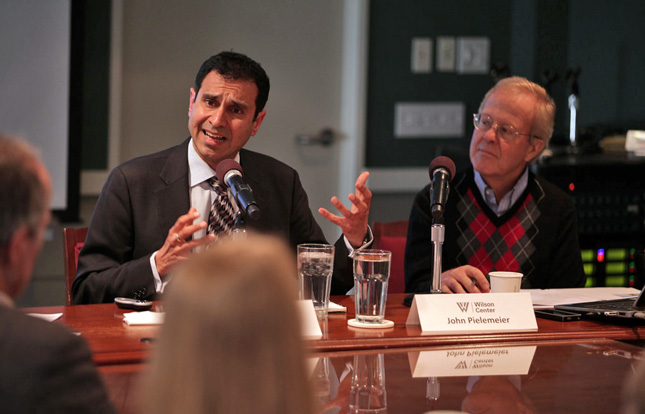
    Energizing people around family planning can be difficult, “because donors, like everyone else, like something that’s new,” said Karen Newman, coordinator for the UK-based Population and Sustainability Network. “There’s nothing new about family planning. The technology is safe, effective, it’s acceptable, and it works. We just need a lot more of it out there to be accessible to a lot more people.”

    Newman spoke to ECSP at the 2012 Planet Under Pressure conference about her hopes for the upcoming Rio+20 sustainable development conference, which marks the 20-year anniversary of the UN Earth Summit.

    “What we want is increased investment in voluntary family planning services that respect and protect rights,” Newman said, “and I think that Rio represents a fabulous opportunity for us to re-identify family planning as a core development priority.”

    Newman also hopes the Rio conference will lead to “an integrated look at sustainable development, so that… it isn’t just about the green economy and institutional framework, it’s looking at sustainable development in the round.”

    Government development programs and policymakers need to adapt their bureaucratic processes to the kinds of integrated programming being carried out on the ground, she said. In Madagascar, for example, conservation group Blue Ventures leads an integrated PHE program that cuts across marine conservation, family planning, and healthcare sectors. “Now I defy you to find an EU budget line that would be broad enough to embrace marine conservation and family planning in the same project line,” said Newman.

    “The first thing we need is that level of integrated thinking – not just in Rio, but also in the way that we conceptualize the work that needs to be done and we facilitate the availability of funding streams that can fund that kind of integrated program.”

    Lastly, Newman hopes that the summit in and of itself is successful because of its implications for future development work. As the world gears up to create the next big framework for global development to follow the Millennium Development Goals, Rio is uniquely positioned to set a baseline for what matters and for what the development community is capable of accomplishing.

    “What I want to see is a really sophisticated look at sustainable development, coming up with sustainable development goals in a world that makes sense of seven billion, where there are still millions of women without access to the family planning services that we take for granted,” said Newman, “and taking that concept to the job of developing the post-MDG framework that will frame development for the next 20 years.”
    MORE
  • John Donnelly, Global Post

    Aspen Institute on Women, Population, and Access to Safe Water

    ›
    April 24, 2012  //  By Wilson Center Staff
    Loading the player…The original version of this article, by John Donnelly, appeared on the Global Post.

    The U.S. Census Bureau’s World Clock says that the population of the world today is estimated at 7.008 billion people, while projections show that the world could reach the 9 billion marker by 2050.

    In the last of its series called “7 Billion: Conversations That Matter,” Aspen Institute’s Global Health and Development hosted a panel of experts based in Africa and the United States on the interconnectedness of gender issues, family planning, population, and access to safe water.

    The point of the series was to ask questions about why it mattered that the world was passing the seven billion mark, and the questions today in Washington were appropriately big: Will water wars replace oil wars? What are the solutions to expand water and sanitation to the 2.5 billion people who don’t have it? And just how many people can the world support in an equitable fashion?

    An answer to the last question: You need a bigger pie, better manners, and fewer forks.

    Borrowing from a book by Joel Cohen called How Many People can the Earth Support? (written in 1996 when the world supported a 5.7 billion population), Laurie Mazur, director of the Population Justice Project, said that the answer was “it depends on how we use resources.”

    Continue reading on the Global Post.

    Sources: U.S. Census Bureau.
    MORE
  • Loaded Dice and Human Health: Measuring the Impacts of Climate Change

    ›
    Reading Radar  //  April 24, 2012  //  By Stuart Kent
    In a new article in the Proceedings of the National Academy of Sciences (PNAS), “Insights From Past Millennia Into Climatic Impacts on Human Health and Survival,” Anthony McMichael compares scientific literature that reconstructs past climates with epidemiological research and comes away with more than a dozen examples of the influence of climate on human health and survival. “Risks to health [as a result of climatic change] are neither widely nor fully recognized,” McMichael writes, but “weather extremes and climatic impacts on food yields, fresh water, infectious diseases, conflict, and displacement” have led to human suffering across the centuries. Some of the literature reviewed, for instance, links the Younger Dryas (a several centuries long period of cooling) to hunger in the Nile Valley between 11,000 and 12,000 years ago, climatic shifts that expanded the range of disease carrying rats and fleas to the “Black Death” during the mid-1400s, and unusually strong El Niño events to a series of late Victorian-era droughts during the late-1800s.

    “Climate Variability and Climate Change: The New Climate Dice,” a working paper from James Hansen, Makiko Sato, and Reto Ruedy recently submitted to PNAS, uses surface air temperature analysis from the Goddard Institute for Space Studies to examine the impact of global warming on the frequency of extreme weather events. Using measurements from 1951 to 1980 as a baseline, the study finds, first, that the planet has warmed by around half of a degree Celsius since the reference period, and second, that the global area affected by “extreme anomalies” (exceeding three standard deviations from the mean climate) has increased by a factor greater than 10. Affecting approximately 10 percent of global land surface in the last several years, these anomalies, such as the droughts and heat waves observed in Texas in 2011, Moscow in 2010, and France in 2003, “almost certainly would not have occurred in the absence of the global warming,” according to the authors.

    The study uses this new evidence about the impact of climate change to update the concept of climate change as a “loading of the climate dice.” Where, the “climate of 1951-1980 [is represented] by colored dice with two sides red for ‘hot,’ two side blue for ‘cold,’ and two sides white for near average temperature,” and the dice themselves represent the chance of observing variations on mean temperature. Under this metaphor, today’s climate is best approximated by a dice with four sides red, one blue, and one white, according to the study.

    As for the future, the data suggest that with just one full degree of warming, anomalies three deviations beyond the mean will be the norm, and five deviations beyond the mean will become more likely (the latest IPCC projections suggest between 1.8 and 4.0 degrees Celsius are likely). In essence, the red side of the die are not only multiplying, but becoming much more extreme. To put this into scale, the Moscow 2010 heat wave, an event that exceeded the three deviations mark, coincided with a doubling of the death rate in the Russian capital.
    MORE
  • Andrew Freedman, Climate Central

    Senate Hearing Focuses on Threat of Sea Level Rise

    ›
    April 21, 2012  //  By Wilson Center Staff
    The original version of this article, by Andrew Freedman, appeared on Climate Central.

    Sea level rise poses an increasingly grave threat to coastal energy facilities and communities during the course of the next several decades, with some impacts already evident, according to testimony delivered Thursday before a rare Senate hearing on climate science.

    The hearing, held by the Senate Energy and Natural Resources Committee, focused on the challenges posed by sea level rise, which is one of the most visible manifestations of a warming planet.

    “Sea level rise takes the current level of vulnerability and multiplies it,” said Committee Chairman Jeff Bingaman (D-N.M.). “When sea levels rise, the storm surge associated with extreme storms gets even worse, and even an average storm can have above-average consequences.”

    Although Chairman Bingaman said he hoped the hearing would help restart “a national conversation” on climate change, the hearing instead may have served to highlight the continuing partisan divide on global climate change. While there were five Democrats in attendance, just one Republican – ranking member Lisa Murkowski (R-AK) – participated in the hearing, a fact not lost on Minnesota Democrat Al Franken, who called climate change the proverbial “elephant in the room.”

    Continue reading on Climate Central.

    Sources: U.S. Senate Energy and Natural Resources Committee.

    Image Credit: Climate Central.
    MORE
  • In Building Resilience for a Changing World, Reproductive Health Is Key

    ›
    April 20, 2012  //  By Laurie Mazur

    Change is a constant in human (and natural) history. But today, we have entered an era in which the pace, scale, and impact of change may surpass anything our species has previously confronted.

    MORE
  • ‘Earth Focus’ Talks to PAI About Bringing Out Women’s Voices on Climate Change

    ›
    On the Beat  //  April 19, 2012  //  By Stuart Kent
    “We have got to build an increased desire for [and] interest in what happens outside of the United States,” said Suzanne Ehlers, CEO of Population Action International (PAI). She was joined by Vice President of Research, Roger-Mark De Souza, in an episode of Link TV’s Earth Focus, “Women and the Changing Environment,” to discuss the interconnections between women’s reproductive health and climate change.

    The episode, built around PAI’s Weathering Change documentary, draws together footage from Ethiopia, Peru, and Nepal to construct messages about the role that reproductive health services can play in responding to the burden that climate change places upon women in the developing world.

    “Women are at the forefront of climate change impacts [and] they are disproportionately affected by the negative impacts,” said De Souza. Empowering women by increasing access to voluntary family planning services that allow them to make choices about the timing and the spacing of their births is a way to help ensure that women have the resilience required to react to climate impacts, he continued.

    “I want the American people to get out of their borders more often,” said Ehlers. “The U.S. is an unbelievable global leader on reproductive health,” but fluctuations in funding due to domestic politics have sometimes “forced closures of clinics throughout the world.” By listening to those voices that are too often marginalized in international decision making, especially women, we can build a desire for international engagement, she suggests.

    “It’s got to be something that the American people see as development…how it links to diplomacy and it absolutely supports defense – that those three D’s are interchangeable,” she said.
    MORE
  • ‘Green Prophet’ Interviews Geoff Dabelko on Water Security in the Middle East

    ›
    April 18, 2012  //  By Schuyler Null
    Tafline Laylin, managing editor of the Green Prophet blog, recently interviewed ECSP Director Geoff Dabelko about the just-released U.S. intelligence assessment on global water security and what it says about the Middle East.

    The conversation touched on regional water scarcity, Palestinian-Israeli water tensions, and the role of the international community.

    “We put a lot of faith in the past helping us understand the future and it rests at the center of much of the way we analyze things,” said Dabelko. “But at the same time, we also, especially in the natural world, have established patterns of thresholds and tipping points and sudden changes.”

    We’ve excerpted the first few questions below; read the full interview on Green Prophet:
    Green Prophet: So, for context, can you say a little bit about the National Intelligence report and why it was compiled?

    Geoff Dabelko: The water and security assessment from the National Intelligence Council was done at the request of Secretary of State Hillary Clinton. The National Intelligence Council has a strong history of looking at long term trends in the environmental, technological, demographic realms and working to understand how trends in these areas are and could be part of larger economic, political, and social dynamics that may pose national security issues for the United States.

    Green Prophet: There were seven river basins of particular concern, of which four are located in the MENA region: the Euphrates, Jordan, Nile, and the Tigris. Why do you think these are of particular importance?

    Geoff Dabelko: I do not explicitly know the criteria for their selection of the seven basins. But I think these four, like the other three, have some common characteristics. They are basins where the rivers are shared by two or more countries/territories that are heavily dependent on the waters; that have relations among the states that include uncertain, tense, or even overtly hostile relationships; that are now and/or likely to experience big growth in demand for the water resource based on both population growth and consumption growth, that at the same time there is concern that climate change will at least increase variability, timing, and or quantity of that water (both scarcity and abundance i.e. floods).

    And then the report focuses on the institutional river basin arrangements and differentiates among their assessed capacities for addressing these current and future stresses. That diversity aside, it is fair to say that the transboundary water institutions remain a priority yet a challenge for addressing the multiple dimensions of the water relationship. I say “multiple” given all the different uses water performs in most of these settings (transport, irrigation, hydropower, culture, industrial, household, etc).
    Continue reading on Green Prophet.

    Photo Credit: “Umm Qais – Sunset,” courtesy of flickr user Magh.
    MORE
  • Georgina Mace on Planetary Stewardship in a Globalized Age: Risks, Obstacles, and Opportunities

    ›
    April 18, 2012  //  By Stuart Kent
    “The goal, ultimately, is just to manage our world better,” to have an “integrated system for the environment that is driven by what local communities want and need,” said Professor Georgina Mace, director of the NERC Centre for Population Biology at Imperial College London. Mace spoke to ECSP on the sidelines of the 2012 Planet Under Pressure conference.

    The environmental challenges of humanity are “really twofold,” she said. First, “human societies have grown up at what we now call the local scale…traditionally using the area in which they live.” Communities have always exerted pressures on their local environment but population growth “means those pressures on local landscapes are much greater than they use to be,” said Mace. “We can’t do everything all in the same place,” without the needs of different groups sometimes conflicting.

    Second, “there are connections between societies that are sometimes good but quite often they’re damaging.” For example, the increasingly globalized nature of how we utilize natural resources means that “overuse by one community may affect local people in ways that they have no way of responding to.”

    Taking apart the first of these challenges, Mace explained that “the population growth issue is really a population growth and demographic change [issue].” In places with mature age structures, such as North America, Europe, Russia, South Korea, and Japan, “the concern is about the number of old people dependent on a reducing number of producers in their society,” while in many poorer regions of the globe the concern is about the “many young people who still have to go through their reproductive years.”

    This latter case “looks a horrible problem from the environment point of view,” said Mace, because the areas growing fastest are areas that are “already overused in many ways.” If countries “don’t worry too much about international migration [and] we’re able to accommodate that,” this “demographic divide” could actually be helpful, as countries with growing populations could provide a young, energetic workforce to those that are aging.

    Mace made policy recommendations on different scales, from the local to the planetary. At the local level she encouraged making sure that climate interventions “are actually in concert with what’s going on in the environment.” “Let’s take advantage of ecological resilience, biological adaptation – all the things that nature has provided us with that give us mechanisms for coping,” she said.

    On a broader scale, she recommended intervening to counteract the “damaging drivers of environmental change,” by using geoengineering and better land use planning, “which is essentially gardening the planet.”

    “Both of those offer solutions that are actually incredibly efficient. They also have costs, risks, and obstacles to do with governance, to do with different people being winners and losers, and to do with the fact that we tend to organize our world around nation states and these solutions mostly transcend international boundaries.”

    “That’s a major obstacle,” Mace said, but in the end we need “to have a fully integrated planning system that is not top down but has an overall strategy that seeks to optimize all the things that people want and allows a way for local communities to connect.”

    “I think that’s the big challenge for us – how to get there.”
    MORE
Newer Posts   Older Posts
View full site

Join the Conversation

  • RSS
  • subscribe
  • facebook
  • G+
  • twitter
  • iTunes
  • podomatic
  • youtube
Tweets by NewSecurityBeat

Trending Stories

  • unfccclogo1
  • Pop at COP: Population and Family Planning at the UN Climate Negotiations

Featured Media

Backdraft Podcast

play Backdraft
Podcasts

More »

What You're Saying

  • Volunteers,At,The,Lagos,Food,Bank,Initiative,Outreach,To,Ikotun, Pan-African Response to COVID-19: New Forms of Environmental Peacebuilding Emerge
    Rashida Salifu: Great piece 👍🏾 Africa as a continent has suffered this unfortunate pandemic.But it has also...
  • A desert road near Kuqa An Unholy Trinity: Xinjiang’s Unhealthy Relationship With Coal, Water, and the Quest for Development
    Ismail: It is more historically accurate to refer to Xinjiang as East Turkistan.
  • shutterstock_1779654803 Leverage COVID-19 Data Collection Networks for Environmental Peacebuilding
    Carsten Pran: Thanks for reading! It will be interesting to see how society adapts to droves of new information in...

What We’re Reading

  • Rising rates of food instability in Latin America threaten women and Venezuelan migrants
  • Treetop sensors help Indonesia eavesdrop on forests to cut logging
  • 'Seat at the table': Women's land rights seen as key to climate fight
  • A Surprise in Africa: Air Pollution Falls as Economies Rise
  • Himalayan glacier disaster highlights climate change risks
More »
  • woodrow
  • ecsp
  • RSS Feed
  • YouTube
  • Twitter
  • Facebook
  • Home
  • Who We Are
  • Publications
  • Events
  • Wilson Center
  • Contact Us
  • Print Friendly Page

© Copyright 2007-2021. Environmental Change and Security Program.

Woodrow Wilson International Center for Scholars. All rights reserved.

Developed by Vico Rock Media

Environmental Change and Security Program

Woodrow Wilson International Center for Scholars

Ronald Reagan Building and International Trade Center

  • One Woodrow Wilson Plaza
  • 1300 Pennsylvania Ave., NW
  • Washington, DC 20004-3027

T 202-691-4000