• woodrow wilson center
  • ecsp

New Security Beat

Subscribe:
  • rss
  • mail-to
  • Who We Are
  • Topics
    • Population
    • Environment
    • Security
    • Health
    • Development
  • Columns
    • China Environment Forum
    • Choke Point
    • Dot-Mom
    • Friday Podcasts
    • Navigating the Poles
    • Reading Radar
  • Multimedia
    • Water Stories (Podcast Series)
    • Backdraft (Podcast Series)
    • Tracking the Energy Titans (Interactive)
  • Films
    • Water, Conflict, and Peacebuilding (Animated Short)
    • Paving the Way (Ethiopia)
    • Broken Landscape (India)
    • Scaling the Mountain (Nepal)
    • Healthy People, Healthy Environment (Tanzania)
  • Publications
  • Events
  • Contact Us

NewSecurityBeat

The blog of the Wilson Center's Environmental Change and Security Program
Showing posts from category environment.
  • Michael D. Lemonick, Climate Central

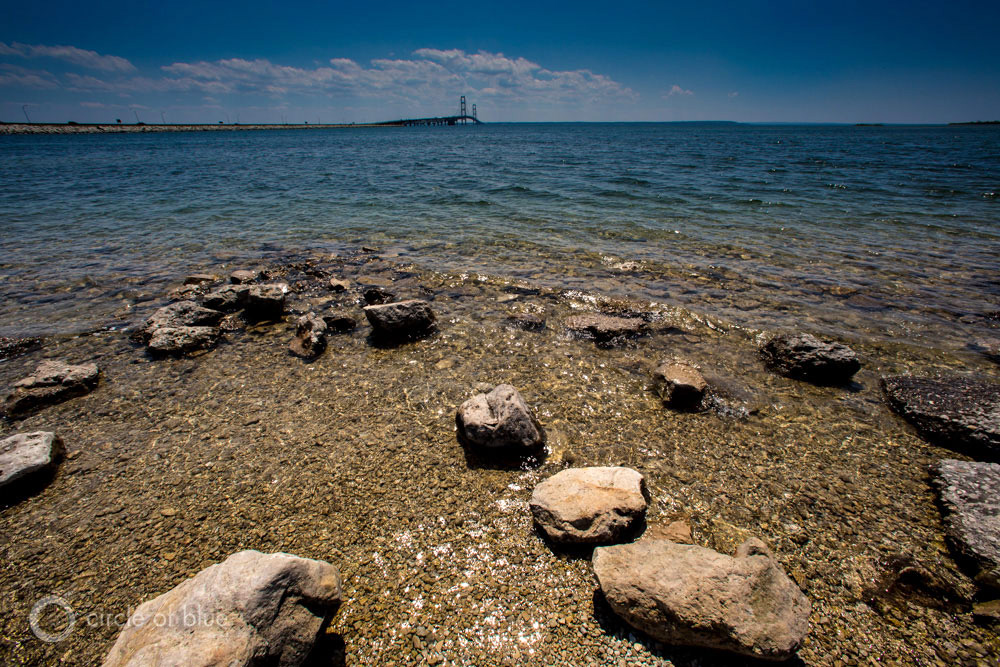
    Surprise Geoengineering Test Goes Forward Off Coast of Canada

    ›
    November 2, 2012  //  By Wilson Center Staff

    The original version of this article, by Michael D. Lemonick, appeared on Climate Central.

    Harvard’s David Keith calls it the “goofy Goldfinger scenario” – a rogue nation, or even an individual, would conduct an unsupervised geoengineering experiment – and he confidently predicted in a story I wrote last month that it would never happen.

    MORE
  • Linking Biodiversity and WASH Efforts in Africa

    ›
    From the Wilson Center  //  November 2, 2012  //  By Carolyn Lamere

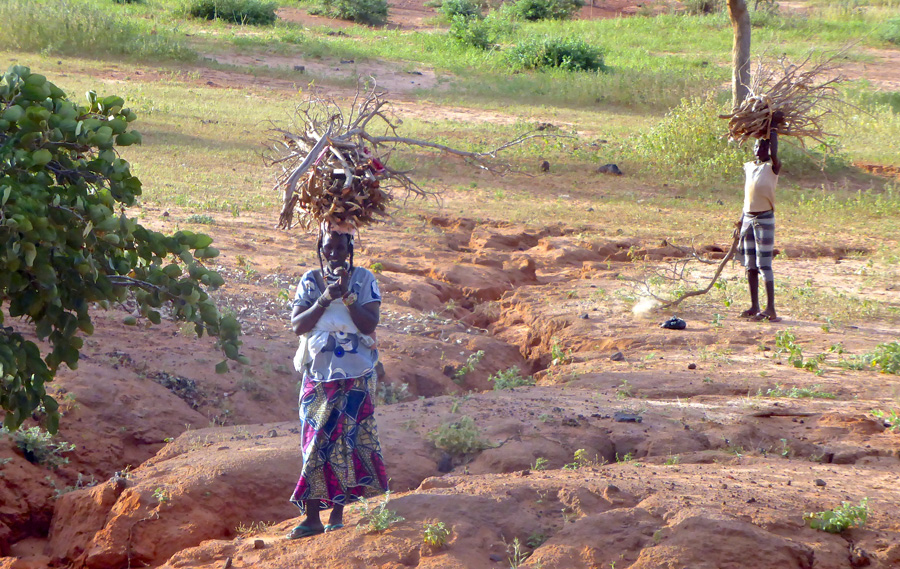
    Sub-Saharan Africa is a key region both for conservationists and those working for improved public health. Nine of the world’s 34 biodiversity hotspots are in sub-Saharan Africa, as are two of the five most important wilderness areas. This hotbed of biodiversity is also home to many of the world’s most rapidly growing populations and swelling urbanization, which is putting increased pressure on natural resources.

    MORE
  • Education as a Conservation Strategy – Really?

    ›
    Beat on the Ground  //  Guest Contributor  //  October 31, 2012  //  By Tim Tear & Craig Leisher

    The original version of this article appeared in The Nature Conservancy’s October issue of their Science Chronicles newsletter.

    It seems like everywhere you turn recently, you hear how the planet’s population is headed to 10 billion. And obvious questions follow: How can we balance far more people with the natural resources needed for their survival? How will we get more food? How will we get more energy?

    MORE
  • From Dirty Wells to Endocrine Disrupters: Covering Women, Water, and Health at SEJ 2012

    ›
    On the Beat  //  October 28, 2012  //  By Schuyler Null

    Access to safe water is often taken for granted in developed countries. But last week at the 22nd annual conference of the Society of Environmental Journalists, panelists argued that the impact of dirty water on women’s health is an important but neglected story, not only in developing countries like Nigeria, but also in the United States.

    MORE
  • Choke Point China Part II: Food Supply, Fracking, and Water Scarcity Challenge a Juggernaut Economy

    ›
    China Environment Forum  //  Choke Point  //  October 25, 2012  //  By Keith Schneider

    The original version of this article, by Keith Schneider, appeared on Circle of Blue. Choke Point: China is a research and reporting initiative produced in partnership between Circle of Blue and the Wilson Center’s China Environment Forum.

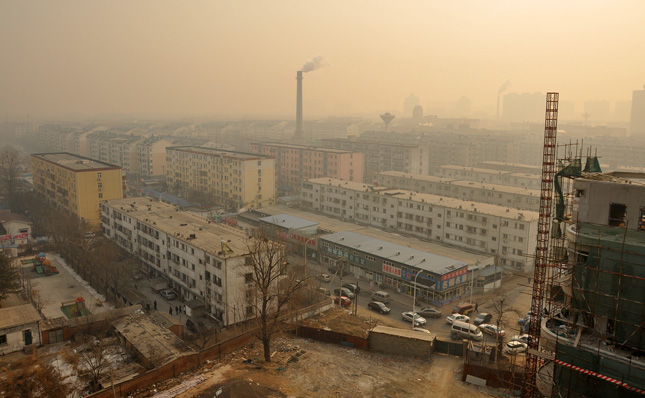
    Where the wide, muddy waters of the Songhua River flow north from Jiamusu to the Russian border, just 150 kilometers (90 miles) distant, the whole of China’s largest treeless prairie sweeps to the horizon. This expanse of fertile grasslands endures the dark fright of cold Siberian winters and the raging winds of Mongolian summers. At night, in the scattered villages, the sky fills with stars so thick and bright that walking along unlit streets is easy.

    MORE
  • Kathleen Mogelgaard on How Malawi Shows the Importance of Considering Population, Food, and Climate Together

    ›
    October 24, 2012  //  By Carolyn Lamere

    Quantifying the role population plays in food security is “an incredibly powerful piece of information,” said Kathleen Mogelgaard in an interview with ECSP. Malawi is a case in point.

    Mogelgaard saw the connections between food, population, and climate change firsthand on a recent trip to the southeast African country, whose population of 15 million is largely dependent on subsistence, rain-fed agriculture. “One in five children in Malawi is currently undernourished,” Mogelgaard said, and climate change paints a bleak picture for the future.

    MORE
  • Population and Environment in Saadani National Park, and Repositioning Family Planning in Sub-Saharan Africa

    ›
    Reading Radar  //  October 23, 2012  //  By Payal Chandiramani

    Tanzania’s Saadani National Park is a hotbed of biodiversity and, like other national parks in the region, it’s surrounded by human activity. A report by the BALANCED Project, “Population, Health, Environment Situational Analysis for the Saadani National Park Area, Tanzania,” provides a snapshot of the population, health, and environment situation inside the park to serve as a baseline for future activities of the Tanzania Coastal Management Partnership (TCMP) – a joint initiative of the government of Tanzania, USAID, and the University of Rhode Island’s Coastal Resources Center. A behavioral monitoring system implemented in June 2009 used surveys that reached a total of 437 respondents (54 percent women) from eight villages to analyze the “behaviors that positively and negatively influence the utilization and condition of natural resources.”  The surveys found that arable land is scarce, fisheries are being depleted, and people have inadequate access to healthcare, water, sanitation, fuel, and family planning resources. The results suggest a strong case for expanding TCMP’s existing integrated approach – combining HIV/AIDS, conservation, and livelihoods goals – to include promotion of positive behavior changes, particularly as they relate to family planning and the effects of population growth on biodiversity loss and resource depletion.

    MORE
  • Michael Kugelman, Global Times

    Repairs Could Stifle South Asia’s Water War

    ›
    October 19, 2012  //  By Wilson Center Staff

    The original version of this article, by Michael Kugelman, appeared on Global Times.

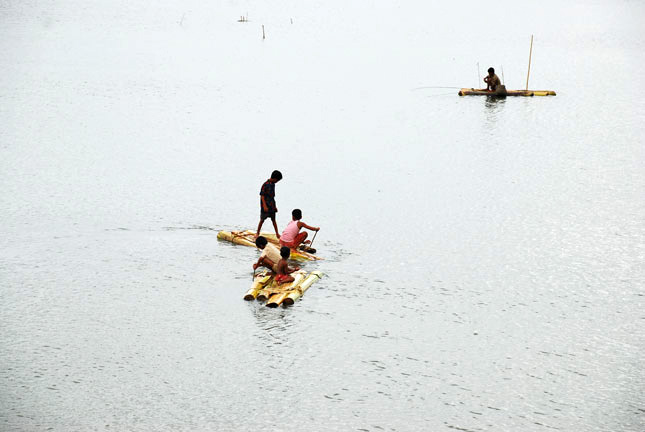
    In recent weeks, militants in Pakistan have escalated their hostile rhetoric toward India. The subject of their ire is water. Hafiz Saeed, the head of militant Islamist group Jamaat-ud-Dawa, has warned that India plans “to make Pakistan barren” by preventing the waters of the Indus Basin from flowing downstream to Pakistan. 

    MORE
Newer Posts   Older Posts
View full site

Join the Conversation

  • RSS
  • subscribe
  • facebook
  • G+
  • twitter
  • iTunes
  • podomatic
  • youtube
Tweets by NewSecurityBeat

Trending Stories

  • unfccclogo1
  • Pop at COP: Population and Family Planning at the UN Climate Negotiations

Featured Media

Backdraft Podcast

play Backdraft
Podcasts

More »

What You're Saying

  • Volunteers,At,The,Lagos,Food,Bank,Initiative,Outreach,To,Ikotun, Pan-African Response to COVID-19: New Forms of Environmental Peacebuilding Emerge
    Rashida Salifu: Great piece 👍🏾 Africa as a continent has suffered this unfortunate pandemic.But it has also...
  • A desert road near Kuqa An Unholy Trinity: Xinjiang’s Unhealthy Relationship With Coal, Water, and the Quest for Development
    Ismail: It is more historically accurate to refer to Xinjiang as East Turkistan.
  • shutterstock_1779654803 Leverage COVID-19 Data Collection Networks for Environmental Peacebuilding
    Carsten Pran: Thanks for reading! It will be interesting to see how society adapts to droves of new information in...

What We’re Reading

  • Rising rates of food instability in Latin America threaten women and Venezuelan migrants
  • Treetop sensors help Indonesia eavesdrop on forests to cut logging
  • 'Seat at the table': Women's land rights seen as key to climate fight
  • A Surprise in Africa: Air Pollution Falls as Economies Rise
  • Himalayan glacier disaster highlights climate change risks
More »
  • woodrow
  • ecsp
  • RSS Feed
  • YouTube
  • Twitter
  • Facebook
  • Home
  • Who We Are
  • Publications
  • Events
  • Wilson Center
  • Contact Us
  • Print Friendly Page

© Copyright 2007-2021. Environmental Change and Security Program.

Woodrow Wilson International Center for Scholars. All rights reserved.

Developed by Vico Rock Media

Environmental Change and Security Program

Woodrow Wilson International Center for Scholars

Ronald Reagan Building and International Trade Center

  • One Woodrow Wilson Plaza
  • 1300 Pennsylvania Ave., NW
  • Washington, DC 20004-3027

T 202-691-4000