• woodrow wilson center
  • ecsp

New Security Beat

Subscribe:
  • rss
  • mail-to
  • Who We Are
  • Topics
    • Population
    • Environment
    • Security
    • Health
    • Development
  • Columns
    • China Environment Forum
    • Choke Point
    • Dot-Mom
    • Friday Podcasts
    • Navigating the Poles
    • Reading Radar
  • Multimedia
    • Water Stories (Podcast Series)
    • Backdraft (Podcast Series)
    • Tracking the Energy Titans (Interactive)
  • Films
    • Water, Conflict, and Peacebuilding (Animated Short)
    • Paving the Way (Ethiopia)
    • Broken Landscape (India)
    • Scaling the Mountain (Nepal)
    • Healthy People, Healthy Environment (Tanzania)
  • Publications
  • Events
  • Contact Us

NewSecurityBeat

The blog of the Wilson Center's Environmental Change and Security Program
Showing posts from category environment.
  • Environmental Migration, Security, and Climate Change

    ›
    Reading Radar  //  January 21, 2013  //  By Carolyn Lamere

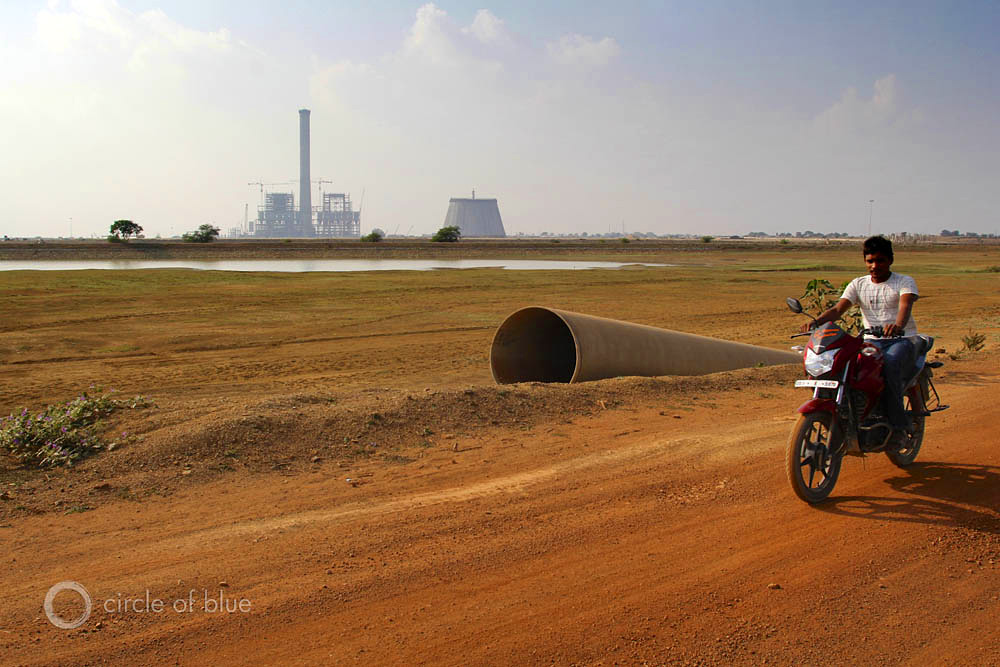
    “Environmental degradation has measurable impacts on migration and presents humanity with unprecedented challenges,” writes Laurence Turbiana in The State of Environmental Migration, edited by François Gemenne  and Pauline Brücker of the Institute for Sustainable Development and International Relations and Dina Ionesco of the International Organization for Migration. The report presents the findings of students at the Paris School of International Affairs who examined a number of case studies in 2011, including sudden disasters like the floods in Thailand, Colombia, China, and Bangladesh, as well as slower-onset events like droughts in Somalia and Mexico. The editors conclude that “environmental migration, in its forced and voluntary forms, is a reality.”

    MORE
  • Should Maternal Health Goals Be Combined With WASH?

    ›
    Dot-Mom  //  January 17, 2013  //  By Lauren Herzer Risi

    Does access to quality water and sanitation have an effect on maternal health outcomes? That was a surprising topic of discussion on day one of the second-ever Global Maternal Health Conference hosted this week in Arusha, Tanzania.

    Surprising because, to be honest, I did not think there would be strong disagreements over the relationship between water and sanitation (WASH) and maternal health. In my work with the Comparative Urban Studies Project, the two seem to be clearly linked.

    MORE
  • Seven Ways Seven Billion People Affect the Environment and Security (Policy Brief)

    ›
    From the Wilson Center  //  January 17, 2013  //  By Geoffrey D. Dabelko & Meaghan Parker

    The Wilson Center Policy Briefs are a series of short analyses of critical global issues facing the next administration that will run until inauguration day.

    Seven billion people now live on Earth, only a dozen years after the global population hit six billion. But this milestone is not about sheer numbers. Demographic trends will significantly affect the planet’s resources and people’s security.

    MORE
  • Managing Mountains for Ecological Services and Environmental Security

    ›
    From the Wilson Center  //  January 16, 2013  //  By Caroline Boules

    High mountain regions face grave environmental challenges with climate change impacts already as severe as any place on earth. Temperature increases are expected to be greater at higher altitudes than at sea level, and glaciers and snowfields are retreating in many areas, increasing the risk of catastrophic glacial lake outburst floods, affecting fresh water supplies for hundreds of millions of people, and exacerbating territorial and natural resource disputes.

    MORE
  • Super Typhoon Bopha Shows Why Developing Countries Are Most Vulnerable to Climate Change

    ›
    January 15, 2013  //  By Carolyn Lamere

    If Hurricane Sandy was a wake-up call for many in the United States to the kind of extreme weather that climate change is expected to bring, Typhoon Bopha, which struck the Philippines a month later, is a reminder of what makes developing regions even more vulnerable to these changes.

    MORE
  • Afghanistan’s Mineral Potential, Sustainability of Development Efforts Crucial Questions, Says Wilson Center’s Michael Kugelman

    ›
    From the Wilson Center  //  January 14, 2013  //  By Schuyler Null

    Rich, untapped deposits of gold, iron, copper, lithium, and rare earth minerals have been known in Afghanistan for decades, but recently, extensive reports from the U.S. Department of Defense and U.S. Geological Survey have shed new light on their potential value.

    MORE
  • Rio+20: Impacts and Ways Forward

    ›
    From the Wilson Center  //  January 14, 2013  //  By Derric Tay

    After last spring’s UN Conference on Sustainable Development, popularly known as Rio+20, the Wilson Center’s Paulo Sotero said there was “a sense of frustration over the lack of new commitments from leading countries and participants.” Where do things stand and where are they headed, in light of these disappointments? Were there any silver linings? [Video Below]

    MORE
  • Measuring Sustainable Development in Ethiopia’s Guraghe Zone

    ›
    Guest Contributor  //  January 11, 2013  //  By Alexon Ayele

    This miniseries focuses on the monitoring and evaluation of PHE projects in Ethiopia.

    Despite progress over the years, Ethiopia’s Guraghe zone, located in the Southern Nations, Nationalities, and People’s Region, faces many development challenges. As senior monitoring and evaluation officer in the Guraghe People’s Self-help Development Organization (GPSDO), I have been working in this region for more than five years trying to reduce poverty and improve socio-economic development. The organization as a whole has been here for more than 50.

    MORE
Newer Posts   Older Posts
View full site

Join the Conversation

  • RSS
  • subscribe
  • facebook
  • G+
  • twitter
  • iTunes
  • podomatic
  • youtube
Tweets by NewSecurityBeat

Trending Stories

  • unfccclogo1
  • Pop at COP: Population and Family Planning at the UN Climate Negotiations

Featured Media

Backdraft Podcast

play Backdraft
Podcasts

More »

What You're Saying

  • Volunteers,At,The,Lagos,Food,Bank,Initiative,Outreach,To,Ikotun, Pan-African Response to COVID-19: New Forms of Environmental Peacebuilding Emerge
    Rashida Salifu: Great piece 👍🏾 Africa as a continent has suffered this unfortunate pandemic.But it has also...
  • A desert road near Kuqa An Unholy Trinity: Xinjiang’s Unhealthy Relationship With Coal, Water, and the Quest for Development
    Ismail: It is more historically accurate to refer to Xinjiang as East Turkistan.
  • shutterstock_1779654803 Leverage COVID-19 Data Collection Networks for Environmental Peacebuilding
    Carsten Pran: Thanks for reading! It will be interesting to see how society adapts to droves of new information in...

What We’re Reading

  • Rising rates of food instability in Latin America threaten women and Venezuelan migrants
  • Treetop sensors help Indonesia eavesdrop on forests to cut logging
  • 'Seat at the table': Women's land rights seen as key to climate fight
  • A Surprise in Africa: Air Pollution Falls as Economies Rise
  • Himalayan glacier disaster highlights climate change risks
More »
  • woodrow
  • ecsp
  • RSS Feed
  • YouTube
  • Twitter
  • Facebook
  • Home
  • Who We Are
  • Publications
  • Events
  • Wilson Center
  • Contact Us
  • Print Friendly Page

© Copyright 2007-2021. Environmental Change and Security Program.

Woodrow Wilson International Center for Scholars. All rights reserved.

Developed by Vico Rock Media

Environmental Change and Security Program

Woodrow Wilson International Center for Scholars

Ronald Reagan Building and International Trade Center

  • One Woodrow Wilson Plaza
  • 1300 Pennsylvania Ave., NW
  • Washington, DC 20004-3027

T 202-691-4000