

-
Turning the Climate-Security Problem on Its Head: Geoff Dabelko Talks G7 ‘Climate for Peace’ Report
› Conversations around climate change often take place at the “30,000-foot level,” said Ohio University Professor and ECSP Senior Advisor Geoff Dabelko in a recent radio interview with WOUB Public Media, based out of Athens, Ohio. Emission reductions, carbon concentrations, global temperatures. But a certain amount of change is already baked into the system and impacts are playing at in different ways around the world already.
 -
How Successful Were the Millennium Development Goals? A Final Report
›July 28, 2015 // By Josh Feng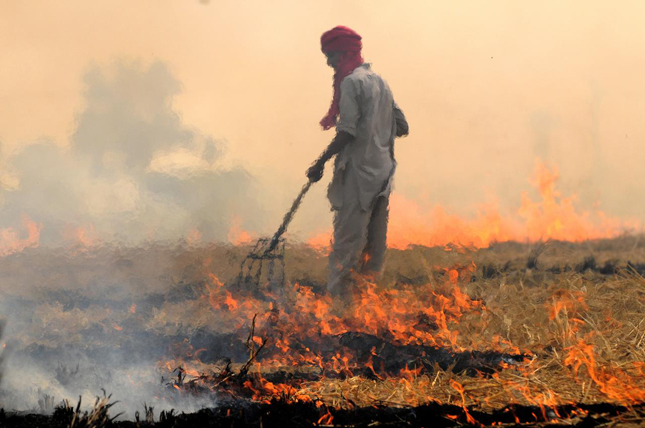
Earlier this month, the United Nations released a final report on the Millennium Development Goals (MDGs), the framework that has guided global development efforts for the last 15 years. The document examines each of the eight MDGs and finds that “despite many successes, the poorest and most vulnerable people are being left behind.” As one of the first global poverty reduction movements nears its end, the report calls for better data collection practices to create a post-2015 development agenda that can overcome the MDG’s shortcomings.
-
A World of Extremes: New Thinking Needed to Reconcile Food-Water Choke Points
›Food and water are tied to one another fundamentally. But in addition to their biophysical relationship, human systems intervene, whether through pricing schemes and trade agreements or shifting patterns in consumption and taste.
-
Alex Evans, The Guardian
Addis Financing Summit Leaves Questions – Will the SDGs Provide Answers?
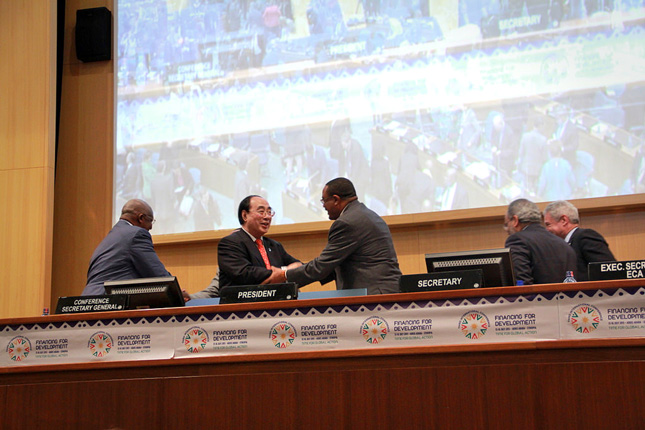
›July 24, 2015 // By Wilson Center StaffStart with the good news from this week’s finance for development conference in Addis Ababa: at least it got the narrative right.
-
As African Cities Grow, Rural-Urban Divides Widen Too
›In 2007, the world crossed a threshold: for the first time in human history, the majority of people lived in urban areas. Today, Africa and Asia are the only remaining continents where the rural population outnumbers urban, but they are urbanizing at unprecedented rates. This rapid growth is a double-edged sword. While urbanization spurs economic opportunity and often increases access to infrastructure, it is also widening disparities in health and development, according to a new data sheet by the Population Reference Bureau.
-
“People Need Nature to Thrive”: Recovering From Conflict Through Conservation in Timor-Leste
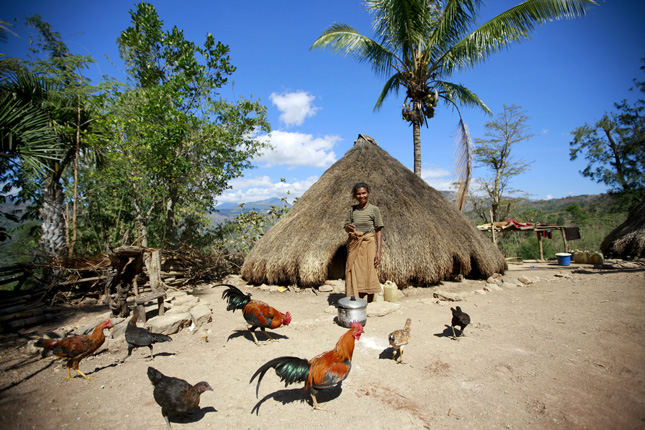
›In my tiny, half-an-island country of Timor-Leste, cemeteries smell of jasmine and come to life on All Saints’ Day. Families have picnics and kids roam wild over the tombstones. Here, stepping on somebody else’s family tombstones is not seen as an offense but as the norm; after all, since there isn’t enough land to hold so many graves, not stepping on one is impossible unless you have mastered levitation.
-
A Case for Refugee Resilience: Reflection on the Lost Boys’ Story of Perseverance
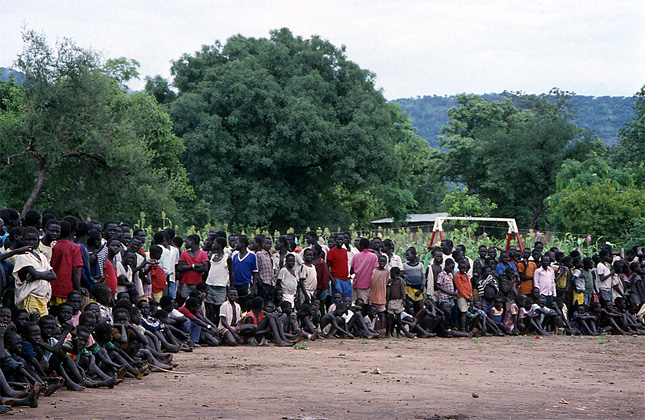
›Fifteen years ago last month, I was brought to America through the U.S. Refugee Resettlement Program after having lived in refugee camps in Ethiopia and Kenya for more than a decade. As I reflect on my experience, it is my hope that it will inspire others and help inform dialogue on forced migration so that refugees are perceived not just as victims, but models of resilience.
-
Alice Hill on Mainstreaming Climate Risks Into U.S. Government Planning: “We Should Care Deeply”
›“Perhaps I’m a case study for what happens in the federal government when we start on a tough problem,” says Alice Hill, the senior director for resilience policy at the National Security Council and former senior counselor to the secretary of homeland security, in this week’s podcast.
Showing posts from category environment.
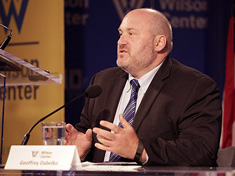 Conversations around climate change often take place at the “30,000-foot level,” said Ohio University Professor and ECSP Senior Advisor Geoff Dabelko in a recent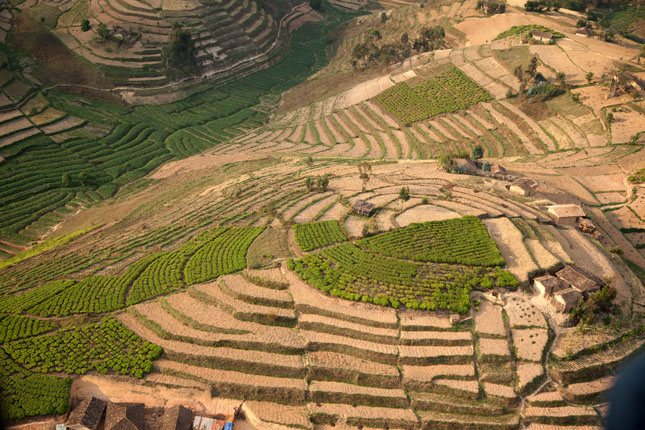

 “Perhaps I’m a case study for what happens in the federal government when we start on a tough problem,” says Alice Hill, the senior director for resilience policy at the National Security Council and former senior counselor to the secretary of homeland security, in this week’s podcast.

