-
4 Billion Face Regular Water Scarcity, and Three Climate Conflict Narratives
› In a study published in Science Advances, Mesfin M. Mekonnen and Arjen Y. Hoekstra estimate that over 4 billion people, approximately two-thirds of the world’s population, face severe water scarcity for at least one month out of the year – far greater than previous estimates of between 1.7 billion and 3.1 billion. The authors examined global water scarcity data from 1996 to 2005 on a monthly basis and at a more localized resolution to show how water scarcity affects different places at different times of year.
 -
David Titley, Center for Climate and Security
New Department of Defense Directive on Climate Change Adaptation and Resilience
›February 25, 2016 // By Wilson Center Staff
If you Google “arcane bureaucratic tool” the Department of Defense Directive (DODD) should be high on the results list. That said, these little-known directives can be very influential in how the Pentagon conducts its day-to-day business. Late last week, Deputy Secretary of Defense Robert Work signed out a DODD that may just be the most meaningful climate-related document the Department of Defense has released.
-
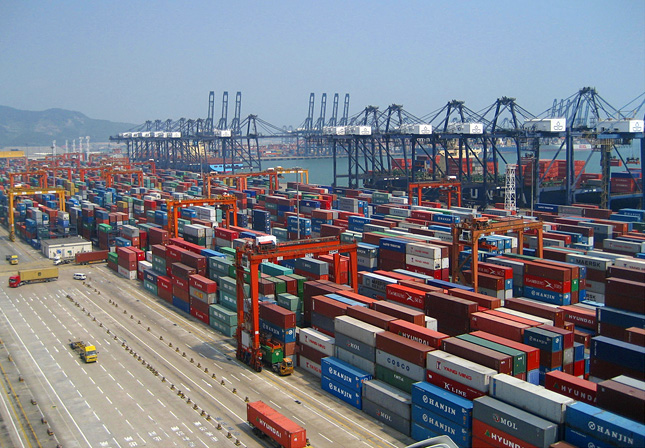
Cleaning up China’s Ports: Shenzhen Explores Fuel Switching and Onshore Power
›China’s “strictest air protection law” yet took effect on January 1, 2016, promising to bring big changes to its smog-filled cities. But some municipal governments have been ahead of the curve, working to clean up the air through experimentation and innovation. Shenzhen, China’s first special economic zone and which recently passed its neighbor Hong Kong to lead China’s most competitive cities, is one of these.
-
It’s OK to Play With Your Food: What We Learned From a Global Food Security Game
›The year is 2022. Strong El Niño and La Niña events in successive years have drastically reduced wheat yields in India and Australia and increased the range of certain pests and plant pathogens in the Western Hemisphere. Moreover, a drought across North America has reduced corn and soybean yields significantly. Global commodity prices are up 262 percent over long-term averages. These price increases are compounding other social and economic challenges, contributing to social unrest in several food-importing nations.
-
The Commander in Chief, Congress, and Climate Security: Who Has the Authority?
›Climate change is the world’s greatest environmental threat. It is also increasingly understood as a threat to domestic and international peace and security – recognized by the Department of Defense as a “threat multiplier,” by Secretary of State John Kerry as “perhaps the world’s most fearsome weapon of mass destruction,” and by President Obama, in an address to graduates of the United States Military Academy, as “a creeping national security crisis.” The Supreme Court’s temporary blocking of the Clean Power Plan highlights the Federal-State divide over how to address climate change, but because of its national security dimension, climate change also raises unique separation of powers issues between the president and Congress with regard to how the military can respond.
-
Ethan Zindler on Clean Energy in Emerging Markets: “The Private Sector Sees the Opportunity”
›“The good news is clean energy has gotten much cheaper,” says Ethan Zindler, head of the Americas for Bloomberg New Energy Finance, on this week’s podcast. “The amount of stuff getting built for the same number of dollars has been going up. You’re getting more ‘bang for your buck’ when it comes to actual deployment.” -
What’s Next? A Report Out From the First Planetary Security Conference
›February 18, 2016 // By Gracie CookIn November 2015, experts from a variety of fields gathered at the Peace Palace in The Hague for the Planetary Security Conference, one of the first large-scale conferences on environmental security and what is hoped to be the start of an annual series. The conference report gives a sense of the diverse discussions held in the Netherlands.
-
Keith Schneider, Circle of Blue
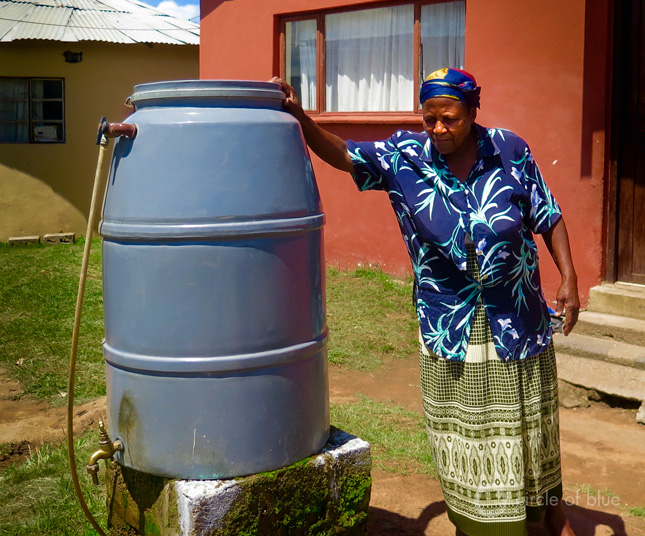
Durban’s Decentralized Water and Sanitation System Sets Global Standard
›DURBAN, South Africa — Arguably the most elegant aspect of an inelegant subject is how this city of 3.2 million residents, South Africa’s second largest, is solving monumental water and waste challenges in its jammed informal settlements.
Showing posts from category environment.

 “The good news is clean energy has gotten much cheaper,” says