• woodrow wilson center
  • ecsp

New Security Beat

Subscribe:
  • rss
  • mail-to
  • Who We Are
  • Topics
    • Population
    • Environment
    • Security
    • Health
    • Development
  • Columns
    • China Environment Forum
    • Choke Point
    • Dot-Mom
    • Friday Podcasts
    • Navigating the Poles
    • Reading Radar
  • Multimedia
    • Water Stories (Podcast Series)
    • Backdraft (Podcast Series)
    • Tracking the Energy Titans (Interactive)
  • Films
    • Water, Conflict, and Peacebuilding (Animated Short)
    • Paving the Way (Ethiopia)
    • Broken Landscape (India)
    • Scaling the Mountain (Nepal)
    • Healthy People, Healthy Environment (Tanzania)
  • Publications
  • Events
  • Contact Us

NewSecurityBeat

The blog of the Wilson Center's Environmental Change and Security Program
Showing posts from category environment.
  • Measurement Matters: Understanding Water Scarcity in an Increasingly Complex World

    ›
    March 21, 2014  //  By Kathleen Mogelgaard
    WWD_measurement

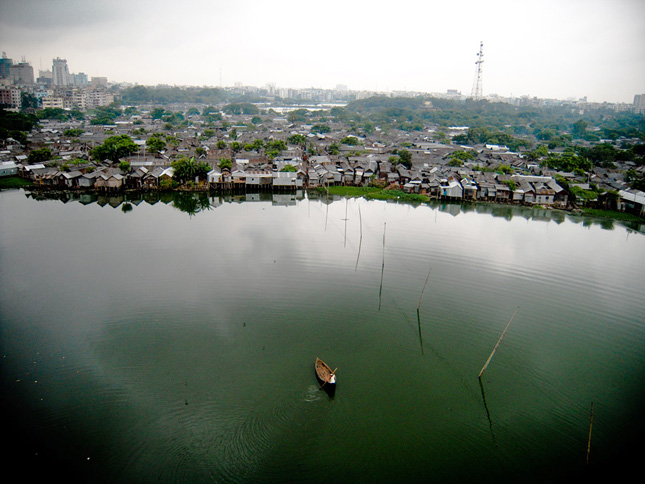
    It was a scorching hot April afternoon in Keur Moussa, a small farming community about 60 kilometers outside Dakar, Senegal. The landscape was mostly barren and very dry, and a fine red dust settled into our clothes as we walked with community leaders to learn about their efforts to cope with a changing environment. In this part of the world, adapting to climate change is figuring out how to manage water: how to survive for long periods without it, and what to do when too much comes at unexpected times.

    MORE
  • To Save the Environment, Move Beyond Finger Pointing, Says Andrew Revkin

    ›
    On the Beat  //  March 20, 2014  //  By Schuyler Null

    “The idea that there’s an information deficit – that if you fill it, it’ll change the world – is fantasy,” says Andrew Revkin in an interview at the Wilson Center.

    MORE
  • A New Model of Development? The Role of Public-Private Partnerships in International Aid

    ›
    Dot-Mom  //  From the Wilson Center  //  March 19, 2014  //  By Paris Achenbach
    NatCon

    USAID funding is “far outstripped” by private investment and business relationships in “nearly every country” in which it works – and that’s a good thing, according to USAID Administrator Rajiv Shah. [Video Below]

    MORE
  • In Quest to Understand Climate Change and Conflict, Avoid Simplification

    ›
    Guest Contributor  //  March 18, 2014  //  By François Gemenne
    darfur_conflict

    As the war in Syria shows no signs of letting up, a recent article in Middle Eastern Studies put forward the hypothesis that the brutal conflict was triggered by government mismanagement of the country’s recent drought, which lasted from 2006 to 2010. It’s a story we’ve heard before.

    MORE
  • Big Changes Need Big Stories: The Year Ahead in Environment and Energy Reporting

    ›
    From the Wilson Center  //  On the Beat  //  March 17, 2014  //  By Donald Borenstein
    Rhine_coal_mine3

    While climate change has enjoyed a recent spike in news coverage, journalists face a constant challenge to bring sustained attention to other environmental stories, including resource scarcity, the changing oceans, and demographic change. [Video Below]

    MORE
  • Deepa Pullanikkatil: Climate Adaptation Efforts Reveal Health-Environment Links in Malawi

    ›
    Friday Podcasts  //  March 14, 2014  //  By Moses Jackson
    deepa_small

    Effective development interventions often require thinking outside the box. In southern Malawi’s Lake Chilwa basin, where environmental degradation, public health, and population dynamics intersect in unpredictable ways, people like Deepa Pullanikkatil of Leadership for Environment and Development (LEAD) are challenging conventional thinking with promising results.

    MORE
  • Environmental Impacts of Household Size, Bringing Family Planning Outside the Health Sector

    ›
    Reading Radar  //  March 13, 2014  //  By Paris Achenbach

    BradburyWhat are the environmental implications of changing household sizes? A recent article by Mason Bradbury, M. Nils Peterson, and Jianguo Liu, published in Population and Environment, analyzes data from 213 countries over 400 years and finds the average number of occupants per home tends to decline as population grows. This dynamic, they write, indicates that accommodating housing could prove to be one of “the greatest environmental challenges of the twenty-first century.” As countries develop and urbanize, “according to convergence theory, household size decreases (often from greater than five to less than three).” Other cultural shifts, like increasing divorce rates, urban sprawl driven by rising affluence, decreasing numbers of multigenerational households, and larger houses (in the United States, homes more than doubled in size between 1950 and 2002, according to the article) compound the issue. As population growth continues in parts of the world, these trends pose critical questions for conservation and environmental sustainability, since “households are the end consumers of most natural resources and ecosystem services.”

    MORE
  • Infographic: The Environmental Effects of China’s Growing Pork Industry

    ›
    China Environment Forum  //  March 11, 2014  //  By Siqi Han
    Pork_industry_in_China

    The pork industry in China accounts for 65 percent of domestic meat consumption, but also produces 1.29 billion metric tons of waste every year. China’s growing appetite for meat has put tremendous pressure on the livestock sector, which now produces three times more waste than industrial sources, and created a series of environmental and food safety issues.

    MORE
Newer Posts   Older Posts
View full site

Join the Conversation

  • RSS
  • subscribe
  • facebook
  • G+
  • twitter
  • iTunes
  • podomatic
  • youtube
Tweets by NewSecurityBeat

Trending Stories

  • unfccclogo1
  • Pop at COP: Population and Family Planning at the UN Climate Negotiations

Featured Media

Backdraft Podcast

play Backdraft
Podcasts

More »

What You're Saying

  • Volunteers,At,The,Lagos,Food,Bank,Initiative,Outreach,To,Ikotun, Pan-African Response to COVID-19: New Forms of Environmental Peacebuilding Emerge
    Rashida Salifu: Great piece 👍🏾 Africa as a continent has suffered this unfortunate pandemic.But it has also...
  • A desert road near Kuqa An Unholy Trinity: Xinjiang’s Unhealthy Relationship With Coal, Water, and the Quest for Development
    Ismail: It is more historically accurate to refer to Xinjiang as East Turkistan.
  • shutterstock_1779654803 Leverage COVID-19 Data Collection Networks for Environmental Peacebuilding
    Carsten Pran: Thanks for reading! It will be interesting to see how society adapts to droves of new information in...

What We’re Reading

  • Rising rates of food instability in Latin America threaten women and Venezuelan migrants
  • Treetop sensors help Indonesia eavesdrop on forests to cut logging
  • 'Seat at the table': Women's land rights seen as key to climate fight
  • A Surprise in Africa: Air Pollution Falls as Economies Rise
  • Himalayan glacier disaster highlights climate change risks
More »
  • woodrow
  • ecsp
  • RSS Feed
  • YouTube
  • Twitter
  • Facebook
  • Home
  • Who We Are
  • Publications
  • Events
  • Wilson Center
  • Contact Us
  • Print Friendly Page

© Copyright 2007-2021. Environmental Change and Security Program.

Woodrow Wilson International Center for Scholars. All rights reserved.

Developed by Vico Rock Media

Environmental Change and Security Program

Woodrow Wilson International Center for Scholars

Ronald Reagan Building and International Trade Center

  • One Woodrow Wilson Plaza
  • 1300 Pennsylvania Ave., NW
  • Washington, DC 20004-3027

T 202-691-4000