-
ECSP Weekly Watch | September 23 – 27
›
A window into what we’re reading at the Wilson Center’s Environmental Change and Security Program
Member States Adopt Pact of the Future (United Nations)
The United Nations hosted the Summit of the Future earlier this week, which led to a new agreement between member states which acknowledged the shortcomings of the UN’s current role and abilities. The Pact of the Future encourages member states to reaffirm, reestablish, and renew global cooperation—and create new solutions to address today’s escalating polycrises.
-
ECSP Weekly Watch | September 16 – 20
›
A window into what we’re reading at the Wilson Center’s Environmental Change and Security Program
COP29-Host Azerbaijan Accused of Hypocrisy (The Guardian)
Azerbaijan holds the presidency for the upcoming COP29 in November 2024, and it is using that platform to call for all member states to cease any ongoing conflict they are involved in during the two-week conference. The Central Asian country will also host a “peace day” on November 15, and is putting forth a COP29 Climate and Peace Initiative to support vulnerable countries and advance action in the climate and peace nexus.
-
Signs and Signals: Exploring How a Novel Foresight Approach Gains Prominence
›A number of highly respected research entities in the US and abroad—including the US National Intelligence Council and the European Union—produce hefty global trends reports. These valuable in-depth guides inform new policies (such as USAID’s just-released Democracy, Development and Human Rights Policy)—or refresh older ones. They focus on the risks, uncertainties, and opportunities that lie ahead for the international development community, and they can provide an empirical basis to shape ongoing and future aid programming.
-
ECSP Weekly Watch | August 26 – 30
›A window into what we are reading at the Wilson Center’s Environmental Change and Security ProgramWorld Food Program Faces Scrutiny Over Fraud in Sudan (Reuters)
As Sudan suffers an immense humanitarian crisis due to an ongoing internal conflict between the Army Forces and the paramilitary Rapid Support Forces (RSF), the U.N. World Food Program (WFP) has provided crucial aid to people displaced by the conflict. Yet its ability to continue this crucial work is now under threat because of allegations of illicit activities made against its top officials in that country. These developments have drawn the attention of humanitarian practitioners and diplomats—who also have concerns regarding WFP’s mismanagement and how it might have contributed to the failure to deliver enough aid in Sudan.
-
ECSP Weekly Watch | August 19 – 23
›A window into what we are reading at the Wilson Center’s Environmental Change and Security Program
What’s Next for the Teesta Water Disputes? (The Hindu)
The recent political upheaval in Bangladesh which led to the resignation of Prime Minister Sheikh Hasina and the return of Nobel Peace Prize laureate Muhammed Yunus as leader of an interim government is not the only tumult in this nation. A worsening trend in weather events there has heightened Bangladesh’s exposure to climate shocks and allowed a dispute over the Teesta River to reemerge.
-
The Arc | Climate Justice in the Arctic: Part 1
›In today’s episode of The Arc, ECSP’s Claire Doyle and Angus Soderberg interview Gunn-Britt Retter, Head of the Arctic and Environmental Unit at the Saami Council, in part one of three episodes focused on climate justice in the Arctic. We dive into Gunn-Britt’s background and her work on the Saami Council. Gunn-Britt outlines how climate change is impacting the livelihoods and daily lives of the Saami people and how even our responses to climate change can threaten Indigenous rights and land use. She also makes the case for a fundamental reexamination of our relationship with nature to make progress on addressing climate change. Select quotes from the interview are featured below. -
Accelerating the Transition: Can the U.S. Support India’s Path to Net Zero?
›Energy is a bridge that has historically fostered the U.S.-India relationship. The reasons are many. Both economies focus on energy security, climate action, economic cooperation, and technological innovation.
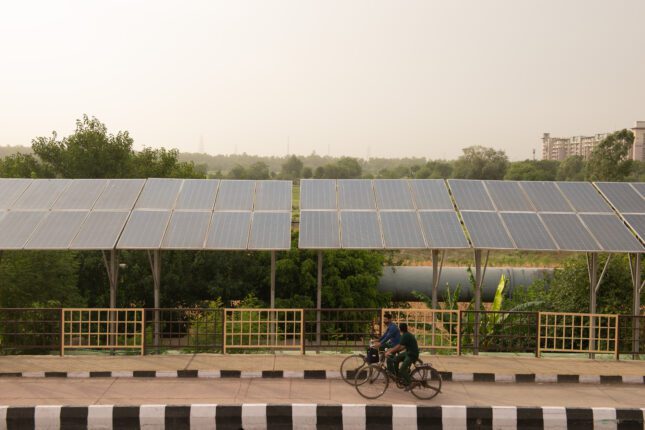
Recent innovations in India offer new challenges and opportunities. The country has rapidly deployed renewable energy (RE) technologies to meet its stated Net Zero targets. This effort has exceeded its promises; 40% of India’s electricity now comes from renewable sources. And the nation’s other ambitious target— installing 450 GW—would triple this existing capacity in less than ten years.
-
ECSP Weekly Watch | July 29 – August 2
›A window into what we are reading at the Wilson Center’s Environmental Change and Security Program
How One Loss and Damage Fund Bore Fruit (The Guardian)
The Loss and Damage Fund established during the UN COP27 was a monumental breakthrough in the climate finance realm and aimed to provide financial assistance to vulnerable nations impacted by climate change. Such damage can be catastrophic. When Cyclone Freddy hit Malawi in 2023, it killed 1,200 people and displaced 659,000 more. The estimated economic loss exceeded $1 billion, and it landed especially hard on farmers—including the women who make up more than 70% of Malawi’s agricultural workforce.
Showing posts from category development.



 In today’s episode of