-
US-Africa Energy Development: An Opportunity for the Trump Administration?
›China Environment Forum // Guest Contributor // December 12, 2024 // By Kalim Shah & Etchu Tabenyang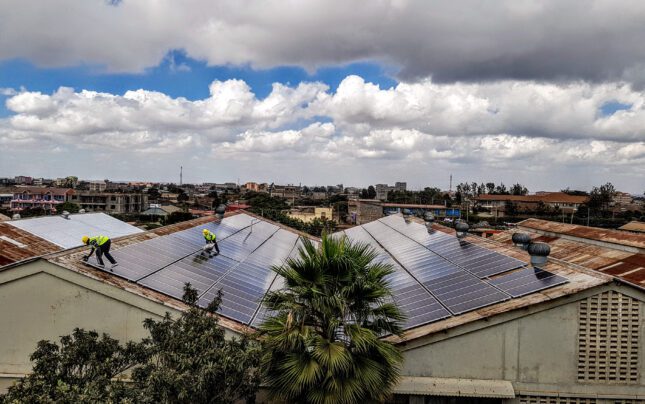
While traditional fuels likely will remain part of Africa’s energy portfolio for some time to come, the fossil fuel industry does face strong headwinds from a continuing global march towards alternative sources of clean energy. Indeed, the energy poverty experienced by nearly a billion Africans seems incomprehensible given the combination of massive untapped oil and gas resources, as well as available hydropower, solar and wind potential across the continent.
-
The Arc | Financing Inclusive Climate Action: Investing in and Empowering Local Communities
› In today’s episode of The Arc, we’re sharing a panel discussion from the Forum on Advancing Inclusive Climate Action in Foreign Policy and Development, an event hosted by the Wilson Center in collaboration with the White House and USAID’s Bureau for Humanitarian Assistance, and with support from the USAID Climate Adaptation Support Activity.
 -
ECSP Weekly Watch | December 2 – 6
›A window into what we’re reading at the Wilson Center’s Environmental Change and Security Program
Famine Prevention Systems Prove Insufficient (Reuters)
The Integrated Food Security Phase Classification (or IPC) is a global partnership that monitors hunger levels. It is widely recognized for its five-phase classification system of food insecurity that ranges from “minimal” (Phase 1) to “famine” (Phase 5). While the IPC’s aim is to inform humanitarian organizations at an early stage of a crisis to allow them streamline the flow of aid, the worsening global hunger levels experienced this year have pointed to shortcomings in existing prevention systems.
-
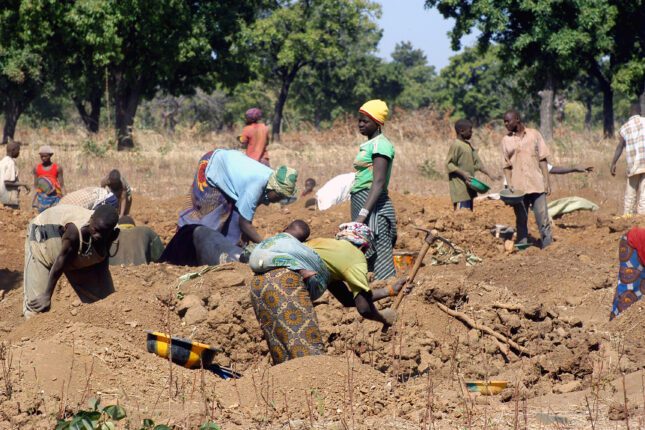
Children and Slaves are Mining our Critical Metals (and Not Just Cobalt)
›This article is adapted from Vince Beiser’s “Power Metal” newsletter.
If you’ve heard anything about the dark side of the shift to renewable energy and digital tech—one of the main topics of my new book, Power Metal: The Race for the Resources That Will Shape the Future—you’ve probably heard about the children working in cobalt mines in the Democratic Republic of Congo (DRC). That particular outrage has been covered by major international news outlets, human rights organizations and another recent book, Cobalt Red. But it turns out there are many other places where children, as well as enslaved adults, are producing the metals that go into our electric cars and cell phones.
-
Swathi Veeravalli on the Importance of Climate Security for US Strategic Interests
›In today’s episode of New Security Broadcast, ECSP Program Director Lauren Risi sits down with Swathi Veeravalli on her last day as the Director for Climate Security and Adaptation at the National Security Council (NSC) to discuss the new US Framework for Climate Resilience and Security, its significance for the future of US security and economic interests, and what success in building climate security looks like over the next decade. -
Lights On or Off? Chinese Solar and Wind Companies in Sub-Saharan Africa
›Africa in Transition // China and the Global Energy Transition // China Environment Forum // Guest Contributor // November 21, 2024 // By Xiaokang XueWhen I stepped into the bustling exhibition hall at Enlit Africa in Cape Town in May 2024, I was surprised by the riot of colorful banners featuring Chinese characters. A whopping 40% of the exhibitors at one of Africa’s largest energy and power conferences in Cape Town from China—more than any other country.
-
New Tool Offers Key Insights for Tackling Climate and Conflict Challenges
›When the White House released the US Framework for Climate Resilience and Security in September 2024, it was an important opportunity to highlight the significant impacts of climate change on US national security, economic, and strategic interests. The Framework also emphasized the need for tailored approaches in fragile, conflict-affected, and vulnerable (FCV) contexts, particularly in managing and allocating resources, as well as ensuring that climate finance addresses conflict drivers.
-
ECSP Weekly Watch | October 28 – November 1
›A window into what we’re reading at the Wilson Center’s Environmental Change and Security Program
COP16 Sees Action Against Biomass Subsidies (Mongabay)
In recent years, biofuel has gained tremendous popularity as an alternative to fossil fuels. Yet scientists have now demonstrated how burning forest biomass to produce energy emits more carbon emissions than coal when measured per unit of electricity generated. They also have evidence that forest-based products like wood pellets degrade carbon stores and biodiversity. It is a debate that has gained momentum in the ongoing COP16.
Showing posts from category development.
 In today’s episode of The Arc, we’re sharing a panel discussion from the Forum on Advancing Inclusive Climate Action in Foreign Policy and Development, an event hosted by the Wilson Center in collaboration with the White House and USAID’s Bureau for Humanitarian Assistance, and with support from the USAID Climate Adaptation Support Activity.
 In today’s episode of New Security Broadcast, ECSP Program Director Lauren Risi sits down with Swathi Veeravalli on her last day as the Director for Climate Security and Adaptation at the National Security Council (NSC) to discuss the new US Framework for Climate Resilience and Security, its significance for the future of US security and economic interests, and what success in building climate security looks like over the next decade.