• woodrow wilson center
  • ecsp

New Security Beat

Subscribe:
  • rss
  • mail-to
  • Who We Are
  • Topics
    • Population
    • Environment
    • Security
    • Health
    • Development
  • Columns
    • China Environment Forum
    • Choke Point
    • Dot-Mom
    • Friday Podcasts
    • Navigating the Poles
    • Reading Radar
  • Multimedia
    • Water Stories (Podcast Series)
    • Backdraft (Podcast Series)
    • Tracking the Energy Titans (Interactive)
  • Films
    • Water, Conflict, and Peacebuilding (Animated Short)
    • Paving the Way (Ethiopia)
    • Broken Landscape (India)
    • Scaling the Mountain (Nepal)
    • Healthy People, Healthy Environment (Tanzania)
  • Publications
  • Events
  • Contact Us

NewSecurityBeat

The blog of the Wilson Center's Environmental Change and Security Program
Showing posts from category development.
  • To Reach Global Climate Targets, Wildlife and Nature Must Be Protected, Report Warns

    ›
    April 22, 2019  //  By Amanda King
    Earthday Picture

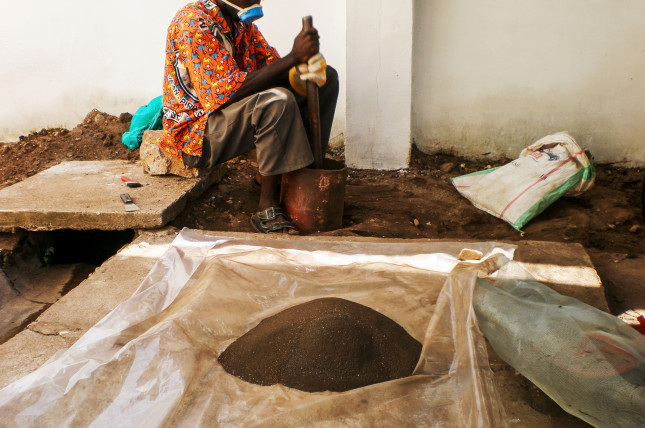
    The Paris Agreement in December 2015 set targets to limit global climate change. To prevent average global temperatures from rising 2°C above preindustrial levels, it recommends limiting the temperature increase to 1.5°C above preindustrial levels. “But the Paris Agreement is only a half-deal; it will not alone save the diversity of life on Earth or conserve ecosystem services upon which humanity depends,” say the authors of a new article published in Science Advances. Their article proposes a Global Deal for Nature (GDN), a time-bound, science-driven plan to save the diversity and abundance of life on Earth.  

    MORE
  • ICPD at 25: Unfinished Business Points to Unmet Needs

    ›
    Dot-Mom  //  From the Wilson Center  //  April 22, 2019  //  By Nazra Amin
    ICPD

    “The ICPD (International Conference on Population and Development) Programme of Action is a promise. A promise that was made 25 years ago to young people, the intention of which was to give young people hope—hope that their rights, their needs, and their demands would be met,” said Kobe Smith, Vice President of the Youth Advocacy Movement at International Planned Parenthood Federation/ Western Hemisphere Region, at a recent Wilson Center event. This year marks the 25th anniversary of ICPD in Cairo.

    MORE
  • The “Push” Factor: Central American Farmers, Free Trade, and Migration

    ›
    April 17, 2019  //  By Kyla Peterson
    31113016297_608dde4777_o

    The number of migrants traveling from Central American countries (particularly El Salvador, Guatemala, and Honduras) destined for the United States has rapidly increased in recent years. In 2018, 87 percent of Central American immigrants came from those three countries, which account for most of the migrants at the U.S. southern border. Their numbers will likely only increase considering the Trump administration’s plan to cut around $700 million in aid to these three countries. The absence of aid will reduce countries’ ability to confront the violence, crime, and government instability within their borders—which act as some of the more notorious drivers of the movement north.

    MORE
  • The Care Knot: Untangling Women’s Rights and Responsibilities

    ›
    Dot-Mom  //  April 16, 2019  //  By Sonya Michel
    nido-vacio

    This article is the third in a three-part series on migration and caregiving. Carework is growing faster than any other sector in our economy and migrant women, who have long held caregiving jobs in the United States, are unable to meet these needs due to our current immigration system.

    “We were all working mothers,” writes American journalist Megan Stack in her recent New Yorker piece about raising two children in India. The women who helped shape her thinking and cleared the way for her writing were migrants who left their own children behind to lovingly care for hers. “We spun webs of compromise and sacrifice and cash, and it all revolved around me—my work, my money, my imagined utopias of one-on-one fair trade that were never quite achieved,” she writes. 

    MORE
  • Savings Mothers, Giving Life Tackled Three Delays to Improve Maternal and Newborn Health

    ›
    Dot-Mom  //  From the Wilson Center  //  April 10, 2019  //  By Nazra Amin
    SMGL

    “Saving Mothers, Giving Life has undeniably raised the bar in how we address maternal perinatal mortality,” said Dr. Florina Serbanescu, Team Lead of Global Reproductive Health Evidence for Action at the Centers for Disease Control and Prevention, for the launch of the Global Health: Science and Practice Supplement on Saving Mothers, Giving Life at a recent Wilson Center event. Saving Mothers, Giving Life (SMGL), is a public-private partnership created to reduce maternal and newborn mortality in sub-Saharan African countries. “The achievements show that what is often seen as an intractable problem,” said Serbanescu, “can be addressed with the right leadership, resources, and political will.”

    MORE
  • Better Water Security Translates into Better Food Security

    ›
    From the Wilson Center  //  Water Security for a Resilient World  //  April 8, 2019  //  By Kyla Peterson
    45644520434_565d4344fe_k B

    This article is part of ECSP’s Water Security for a Resilient World series, a partnership with USAID’s Sustainable Water Partnership and Winrock International to share stories about global water security.

    “Food production is the largest consumer of water and also represents the largest unknown factor of future water use as the world’s population continues to balloon, and we face increasing weather-related shocks and stresses,” said Laura Schulz, Acting Deputy Assistant Administrator in USAID’s Bureau for Economic Growth, Education and Environment. She spoke at “Feeding a Thirsty World: Harnessing the Connections Between Food and Water Security,” an event sponsored by the Wilson Center, Winrock International, the Sustainable Water Partnership, and USAID. Currently about 70 percent of global water goes to agriculture, a number that is projected to rise “as high as 92 percent,” said Rodney Ferguson, the President and CEO of Winrock International. 

    MORE
  • Ambassador Marcia Bernicat on the U.S. Global Water Strategy

    ›
    Friday Podcasts  //  Water Stories (Podcast Series)  //  April 5, 2019  //  By Benjamin Bosland

    46514020945_7411fb233d_k (1)3x2The overarching goal of the U.S. Global Water Strategy is to create a more water secure world, said Ambassador Marcia Bernicat, Principal Deputy Assistant Secretary for the Bureau of Oceans, and International Environmental and Scientific Affairs at the U.S. Department of State at a recent Wilson Center event. “Simply put,” she said, “a world where people have the water they need, where they need it, when they need it, without living in fear of floods or droughts.”

    MORE
  • China’s Hollow Villages Undergo a Transformation

    ›
    China Environment Forum  //  April 4, 2019  //  By Karen Mancl
    Photo needed

    As an agricultural engineering professor, I was excited to visit and tour the farm village Houbali, in southwestern Shandong Province. I found myself standing among newly constructed high-rise buildings, a vastly different community than I had expected to encounter. A bicycle repair shop was setting up alongside other bustling businesses in the first-floor storefronts. Farm families occupied apartments in the upper floors and a beautifully landscaped park and playground were a short walk away. This neighborhood looked like a transplant from Beijing, but these modern buildings were a newly developed farm village surrounded by agricultural fields. The new buildings brought together the residents of four old, nearly empty or “hollow” villages.

    MORE
Newer Posts   Older Posts
View full site

Join the Conversation

  • RSS
  • subscribe
  • facebook
  • G+
  • twitter
  • iTunes
  • podomatic
  • youtube
Tweets by NewSecurityBeat

Trending Stories

  • unfccclogo1
  • Pop at COP: Population and Family Planning at the UN Climate Negotiations

Featured Media

Backdraft Podcast

play Backdraft
Podcasts

More »

What You're Saying

  • Volunteers,At,The,Lagos,Food,Bank,Initiative,Outreach,To,Ikotun, Pan-African Response to COVID-19: New Forms of Environmental Peacebuilding Emerge
    Rashida Salifu: Great piece 👍🏾 Africa as a continent has suffered this unfortunate pandemic.But it has also...
  • A desert road near Kuqa An Unholy Trinity: Xinjiang’s Unhealthy Relationship With Coal, Water, and the Quest for Development
    Ismail: It is more historically accurate to refer to Xinjiang as East Turkistan.
  • shutterstock_1779654803 Leverage COVID-19 Data Collection Networks for Environmental Peacebuilding
    Carsten Pran: Thanks for reading! It will be interesting to see how society adapts to droves of new information in...

What We’re Reading

  • Rising rates of food instability in Latin America threaten women and Venezuelan migrants
  • Treetop sensors help Indonesia eavesdrop on forests to cut logging
  • 'Seat at the table': Women's land rights seen as key to climate fight
  • A Surprise in Africa: Air Pollution Falls as Economies Rise
  • Himalayan glacier disaster highlights climate change risks
More »
  • woodrow
  • ecsp
  • RSS Feed
  • YouTube
  • Twitter
  • Facebook
  • Home
  • Who We Are
  • Publications
  • Events
  • Wilson Center
  • Contact Us
  • Print Friendly Page

© Copyright 2007-2021. Environmental Change and Security Program.

Woodrow Wilson International Center for Scholars. All rights reserved.

Developed by Vico Rock Media

Environmental Change and Security Program

Woodrow Wilson International Center for Scholars

Ronald Reagan Building and International Trade Center

  • One Woodrow Wilson Plaza
  • 1300 Pennsylvania Ave., NW
  • Washington, DC 20004-3027

T 202-691-4000