• woodrow wilson center
  • ecsp

New Security Beat

Subscribe:
  • rss
  • mail-to
  • Who We Are
  • Topics
    • Population
    • Environment
    • Security
    • Health
    • Development
  • Columns
    • China Environment Forum
    • Choke Point
    • Dot-Mom
    • Friday Podcasts
    • Navigating the Poles
    • Reading Radar
  • Multimedia
    • Water Stories (Podcast Series)
    • Backdraft (Podcast Series)
    • Tracking the Energy Titans (Interactive)
  • Films
    • Water, Conflict, and Peacebuilding (Animated Short)
    • Paving the Way (Ethiopia)
    • Broken Landscape (India)
    • Scaling the Mountain (Nepal)
    • Healthy People, Healthy Environment (Tanzania)
  • Publications
  • Events
  • Contact Us

NewSecurityBeat

The blog of the Wilson Center's Environmental Change and Security Program
Showing posts from category development.
  • Goldilocks Had It Right: How to Build Resilient Societies in the 21st Century

    ›
    March 5, 2013  //  By Laurie Mazur

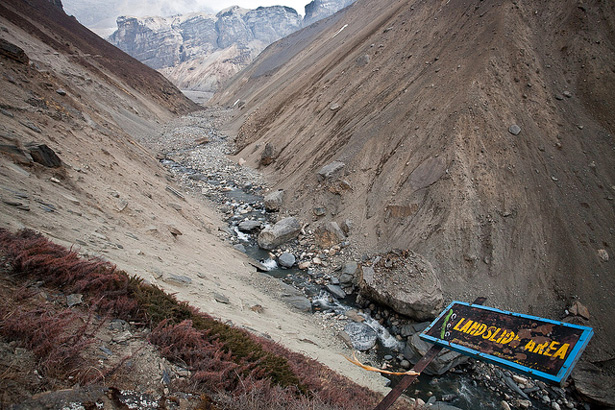
    ‘Toward Resilience’ is a series on the meaning of global resilience and vulnerability today.

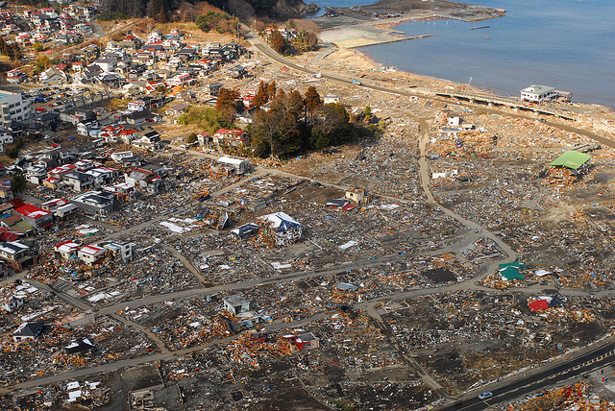
    When Superstorm Sandy slammed into the U.S. East Coast last October, it was the latest in a series of “teachable moments” about our growing vulnerability to climate change.

    MORE
  • Sam Eaton Describes Population-Food-Environment Links in Rural Philippines

    ›
    Friday Podcasts  //  March 1, 2013  //  By Carolyn Lamere

    In this podcast, journalist Sam Eaton describes the process of producing two pieces that aired on Marketplace and NewsHour last year on the connection between population, the environment, and food security in the Philippines. Eaton visited the rural village of Humayhumay where PATH Foundation Philippines, Inc., has a pilot program distributing contraceptives and teaching community members about conservation and sustainable livelihoods. Although Eaton said he was at first hesitant to tackle such an “abstract concept” as integrated population, health, and environment development, he found on the ground that it had “all the elements of a good story” and there were tangible benefits visible within the community. Eaton discussed his reporting at the Wilson Center on January 28.

    MORE
  • What Could Sequestration Mean for U.S. Development and Diplomacy?

    ›
    February 28, 2013  //  By Schuyler Null

    Newly minted Secretary of State John Kerry would probably prefer his first few months on the job to be a little quieter. But – in addition to everything else – sequestration is bearing down on Washington this week, and the U.S. government is beginning to seriously take stock of what automated cuts might mean. The Department of State and the U.S. Agency for International Development (USAID) are not spared. Kerry sent a letter earlier this month to Senate Appropriations Committee Chairwoman Barbara Mikulski (D-MD) outlining the projected effects for his charges if the March 1st deadline should pass without action.

    MORE
  • Cleo Paskal and Uttam Sinha on the Geopolitical Implications of Climate Change for India and China

    ›
    Eye On  //  February 27, 2013  //  By Maria Prebble

    India and China – “the two most important countries going forward in this century” – will both experience domestic concerns as a result of environmental change, but they are responding very differently, said Cleo Paskal, an associate fellow at Chatham House, in an interview with the Environment, Conflict, and Cooperation (ECC) Platform.

    MORE
  • The Other Migration Story in Mexico: Climate Change

    ›
    From the Wilson Center  //  February 26, 2013  //  By Carolyn Lamere

    The conversation around immigration and Mexico has long been tied to the United States and the prevailing economic conditions in both countries. But a new report from the Royal United Services Institute argues that as temperatures rise and precipitation patterns change over the course of the next century, climate too will increasingly become a driver of both internal and international migration in Mexico. [Video Below]

    MORE
  • Renewable Resource Shocks and Conflict in India’s Maoist Belt

    ›
    Reading Radar  //  February 25, 2013  //  By Maria Prebble

    India’s Maoist (or “Naxalite”) insurgency has resulted in more than 9,000 deaths in the last decade and famously been called the country’s “single biggest internal security challenge” by Prime Minister Manmohan Singh. In, Renewable Resource Shocks and Conflict in India’s Maoist Belt, a working paper for the Center for Global Development, Devesh Kapur, Kishore Gawande, and Shanker Satyanth present their econometric analysis of the conflict and suggest that there is a link with natural resource depletion.

    MORE
  • Strengthening Responses to Climate Variability in South Asia

    ›
    From the Wilson Center  //  February 22, 2013  //  By Carolyn Lamere

    Climate change and conflict can create a self-reinforcing feedback loop: Climate change exacerbates existing conflicts, while conflict makes adapting to climate change more difficult, said Janani Vivekananda of International Alert at the Wilson Center on February 7. [Video Below]

    MORE
  • Child Mortality in the Developing World: Hans Rosling Crosses the “River of Myths” Once More

    ›
    Eye On  //  February 21, 2013  //  By Graham Norwood

    “The world my father told me about 50 years ago was a divided world,” says Hans Rosling, famed Swedish statistician and development expert, in a new video. Standing in the middle of one of his trademark graphs of development indicators, his body neatly splitting the data, he gestures: “In many people’s minds, the world still looks like this: developing and developed.”

    “But it’s a myth,” he continues, “because the world has improved immensely in the last 50 years.”

    MORE
Newer Posts   Older Posts
View full site

Join the Conversation

  • RSS
  • subscribe
  • facebook
  • G+
  • twitter
  • iTunes
  • podomatic
  • youtube
Tweets by NewSecurityBeat

Trending Stories

  • unfccclogo1
  • Pop at COP: Population and Family Planning at the UN Climate Negotiations

Featured Media

Backdraft Podcast

play Backdraft
Podcasts

More »

What You're Saying

  • Volunteers,At,The,Lagos,Food,Bank,Initiative,Outreach,To,Ikotun, Pan-African Response to COVID-19: New Forms of Environmental Peacebuilding Emerge
    Rashida Salifu: Great piece 👍🏾 Africa as a continent has suffered this unfortunate pandemic.But it has also...
  • A desert road near Kuqa An Unholy Trinity: Xinjiang’s Unhealthy Relationship With Coal, Water, and the Quest for Development
    Ismail: It is more historically accurate to refer to Xinjiang as East Turkistan.
  • shutterstock_1779654803 Leverage COVID-19 Data Collection Networks for Environmental Peacebuilding
    Carsten Pran: Thanks for reading! It will be interesting to see how society adapts to droves of new information in...

What We’re Reading

  • Rising rates of food instability in Latin America threaten women and Venezuelan migrants
  • Treetop sensors help Indonesia eavesdrop on forests to cut logging
  • 'Seat at the table': Women's land rights seen as key to climate fight
  • A Surprise in Africa: Air Pollution Falls as Economies Rise
  • Himalayan glacier disaster highlights climate change risks
More »
  • woodrow
  • ecsp
  • RSS Feed
  • YouTube
  • Twitter
  • Facebook
  • Home
  • Who We Are
  • Publications
  • Events
  • Wilson Center
  • Contact Us
  • Print Friendly Page

© Copyright 2007-2021. Environmental Change and Security Program.

Woodrow Wilson International Center for Scholars. All rights reserved.

Developed by Vico Rock Media

Environmental Change and Security Program

Woodrow Wilson International Center for Scholars

Ronald Reagan Building and International Trade Center

  • One Woodrow Wilson Plaza
  • 1300 Pennsylvania Ave., NW
  • Washington, DC 20004-3027

T 202-691-4000