• woodrow wilson center
  • ecsp

New Security Beat

Subscribe:
  • rss
  • mail-to
  • Who We Are
  • Topics
    • Population
    • Environment
    • Security
    • Health
    • Development
  • Columns
    • China Environment Forum
    • Choke Point
    • Dot-Mom
    • Friday Podcasts
    • Navigating the Poles
    • Reading Radar
  • Multimedia
    • Water Stories (Podcast Series)
    • Backdraft (Podcast Series)
    • Tracking the Energy Titans (Interactive)
  • Films
    • Water, Conflict, and Peacebuilding (Animated Short)
    • Paving the Way (Ethiopia)
    • Broken Landscape (India)
    • Scaling the Mountain (Nepal)
    • Healthy People, Healthy Environment (Tanzania)
  • Publications
  • Events
  • Contact Us

NewSecurityBeat

The blog of the Wilson Center's Environmental Change and Security Program
Showing posts from category development.
  • Understanding Climate Vulnerability: José Miguel Guzmán on How Census and Survey Data Can Help Us Plan

    ›
    Friday Podcasts  //  November 15, 2013  //  By Laura Henson
    guzman-small

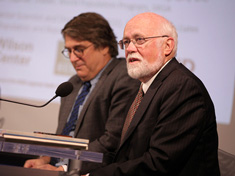
    “Population-related data from census, surveys, and other administrative data can and must be used for adaptation to climate change,” says José Miguel Guzmán in this week’s podcast from the launch of The Demography of Adaptation to Climate Change. As the devastation from Typhoon Haiyan shows, population density, poverty levels, and even building construction quality can have a huge impact on how vulnerable a particular area is to extreme weather, flooding, and other effects of climate change.

    MORE
  • Achieving the Demographic Dividend in Africa: Lessons From East Asia

    ›
    From the Wilson Center  //  November 14, 2013  //  By Laura Henson
    Hawa Abdi IDP Camp

    In the latter half of last century, Thailand and other East Asian countries successfully capitalized on shifts in their age structures to gain a boost in economic productivity, a phenomenon known as the demographic dividend. Today, despite the hitherto sluggish pace of Africa’s demographic transition, scholars and politicians remain hopeful that similar changes on the continent may lead to faster development in coming decades. [Video Below]

    MORE
  • Gorillas and Family Planning: At the Crossroads of Community Development and Conservation in Uganda

    ›
    From the Wilson Center  //  November 13, 2013  //  By Donald Borenstein
    gorillaweb

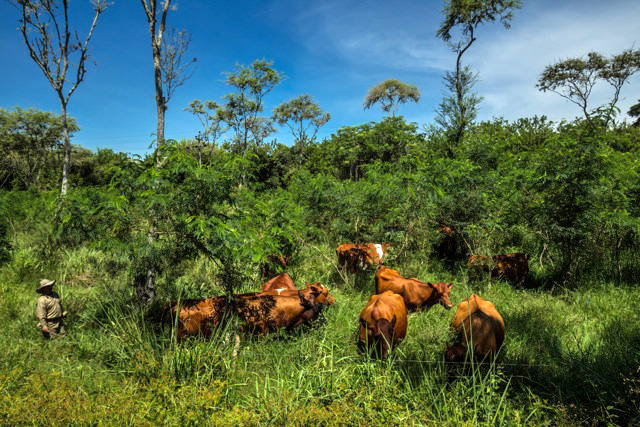
    “Gorillas are very good at family planning; if we were like them, we’d be much better off,” said wildlife veterinarian Dr. Gladys Kalema-Zikusoka at the Wilson Center on September 26. The Conservation Through Public Health (CTPH) CEO and founder is celebrating 10 years of population, health, and environment (PHE) work in Uganda and the Democratic Republic of Congo, bringing health and livelihood interventions to people while protecting mountain gorillas around Virunga and Bwindi Impenetrable National Parks. [Video Below]

    MORE
  • Crowded Out: New Evidence Points to Population Growth as Key Driver of Biodiversity Loss

    ›
    November 12, 2013  //  By Kathleen Mogelgaard
    black-rhino

    In 2009, economist Jeffrey Sachs, alongside more than 20 eminent scholars from different fields, highlighted the importance of biodiversity for human well-being in a policy commentary published in Science. They noted the Millennium Development Goals (MDGs) included a target to achieve, by 2010, a significant reduction in the rate of species loss, and they also noted that it was one of the MDG targets that was most off-track. “Our lack of progress toward the 2010 target,” they said, “could undermine achievement of the MDGs and poverty reduction in the long term.” The 2010 target was missed, and today species are moving toward extinction at an ever faster pace. Last week’s announcement confirming the extinction of Africa’s western black rhino is the latest sad example of this trend.

    MORE
  • Curbing China’s Massive – and Destructive – Distant Water Fishing Fleet

    ›
    From the Wilson Center  //  November 11, 2013  //  By Katie Lebling
    fishing-for-answers

    Last month, two Chinese fishing boats were caught operating illegally in South Korean waters. The incident made local headlines and minor diplomatic waves, but it’s just a drop in the bucket in what has become a troubling trend for China’s foreign water fishing fleets. Over the last decade, there have been more than 4,600 cases of Chinese fishing boats being caught illegally in South Korea’s waters alone, according to the government, and these marine transgressions have not been limited to neighbors.

    MORE
  • Climate Change in a Growing, Urbanizing World: Understanding the Demography of Adaptation (Book Launch)

    ›
    From the Wilson Center  //  November 7, 2013  //  By Jacob Glass
    dogs-vs-children-san-franci

    The effects of climate change are often conveyed through the lens of changing physical landscapes. Shifting weather patterns, the intensification of drought, flooding, and coastal erosion are all primary areas of climate research. But do researchers know enough about changes in the size, distribution, and composition of human populations as they relate to climate vulnerability? [Video Below]

    MORE
  • “We Are Not Sitting Idle, We Are Fighting”: Interview With Saleemul Huq on Bangladesh’s Climate & Food Challenges

    ›
    Beat on the Ground  //  November 5, 2013  //  By Jacob Glass
    Huq Interview Rice Flood

    When it comes to climate change vulnerability, it sometimes seems as if all eyes are on Bangladesh. As part of my research for a recent article exploring the rise of aquaculture in the country, I interviewed Saleemul Huq, senior fellow at the International Institute for Environment and Development in London, former executive director of the Bangladesh Center for Advanced Studies, and lead author of two chapters on adaptation and sustainable development in the IPCC’s third and fourth assessment reports. A number of his quotes made it into the final story but I wanted to provide the full transcript here as well, as his thoughts on the country’s climate-related risks, food security, and population dynamics are worth a read.

    MORE
  • A Dialogue on Pakistan’s Galloping Urbanization

    ›
    From the Wilson Center  //  November 4, 2013  //  By Michael Kugelman
    Rawalpindi-urbanization

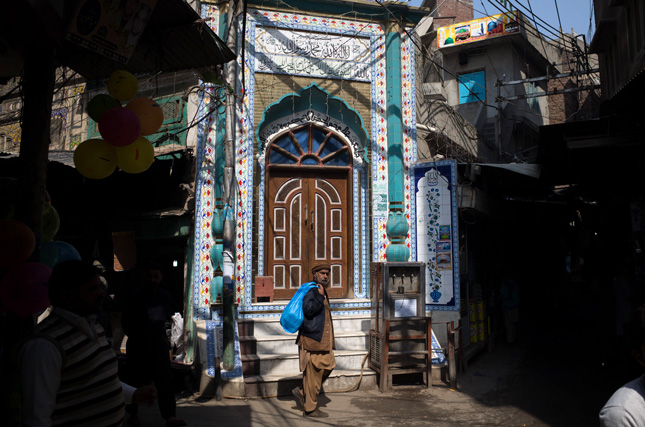
    Pakistan, long a nation defined by its large rural populations and dominant agricultural industries, is undergoing a dramatic urban shift.

    According to UN Population Division estimates, the country is urbanizing at a three percent annual rate – the fastest pace in South Asia. In barely 10 years, nearly 50 percent of Pakistan’s 180 million people will live in cities (a third do today). Pakistani government projections using density-based rather than administrative definitions of urbanization suggest that Pakistan’s urban population has already reached 50 percent.

    MORE
Newer Posts   Older Posts
View full site

Join the Conversation

  • RSS
  • subscribe
  • facebook
  • G+
  • twitter
  • iTunes
  • podomatic
  • youtube
Tweets by NewSecurityBeat

Trending Stories

  • unfccclogo1
  • Pop at COP: Population and Family Planning at the UN Climate Negotiations

Featured Media

Backdraft Podcast

play Backdraft
Podcasts

More »

What You're Saying

  • Volunteers,At,The,Lagos,Food,Bank,Initiative,Outreach,To,Ikotun, Pan-African Response to COVID-19: New Forms of Environmental Peacebuilding Emerge
    Rashida Salifu: Great piece 👍🏾 Africa as a continent has suffered this unfortunate pandemic.But it has also...
  • A desert road near Kuqa An Unholy Trinity: Xinjiang’s Unhealthy Relationship With Coal, Water, and the Quest for Development
    Ismail: It is more historically accurate to refer to Xinjiang as East Turkistan.
  • shutterstock_1779654803 Leverage COVID-19 Data Collection Networks for Environmental Peacebuilding
    Carsten Pran: Thanks for reading! It will be interesting to see how society adapts to droves of new information in...

What We’re Reading

  • Rising rates of food instability in Latin America threaten women and Venezuelan migrants
  • Treetop sensors help Indonesia eavesdrop on forests to cut logging
  • 'Seat at the table': Women's land rights seen as key to climate fight
  • A Surprise in Africa: Air Pollution Falls as Economies Rise
  • Himalayan glacier disaster highlights climate change risks
More »
  • woodrow
  • ecsp
  • RSS Feed
  • YouTube
  • Twitter
  • Facebook
  • Home
  • Who We Are
  • Publications
  • Events
  • Wilson Center
  • Contact Us
  • Print Friendly Page

© Copyright 2007-2021. Environmental Change and Security Program.

Woodrow Wilson International Center for Scholars. All rights reserved.

Developed by Vico Rock Media

Environmental Change and Security Program

Woodrow Wilson International Center for Scholars

Ronald Reagan Building and International Trade Center

  • One Woodrow Wilson Plaza
  • 1300 Pennsylvania Ave., NW
  • Washington, DC 20004-3027

T 202-691-4000