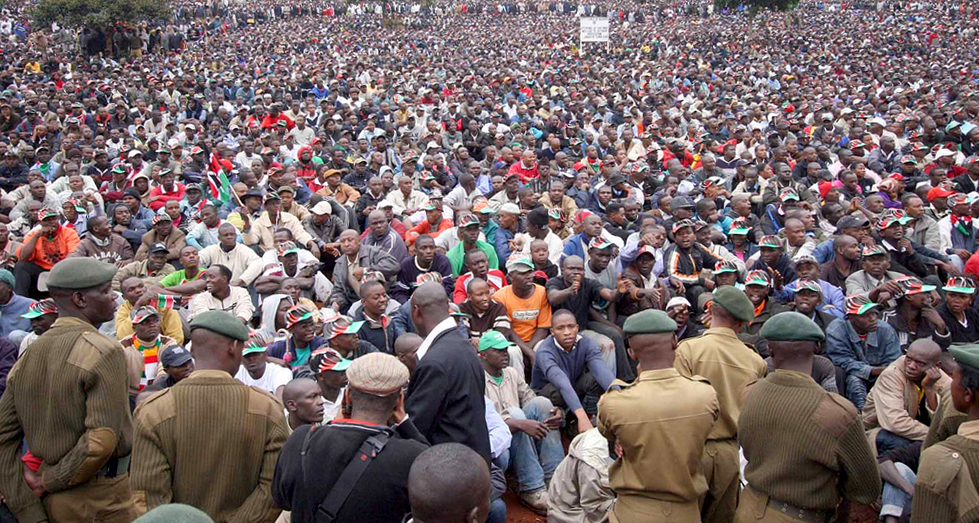
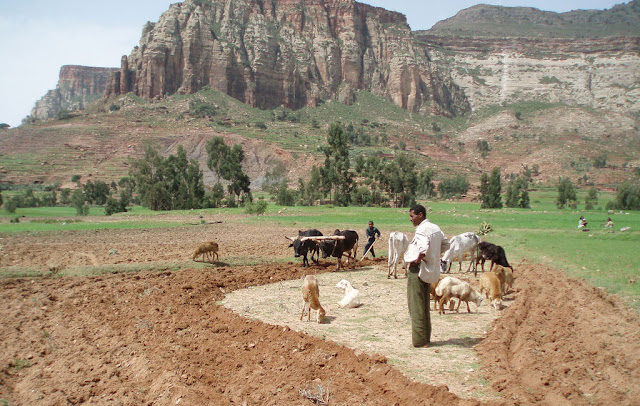
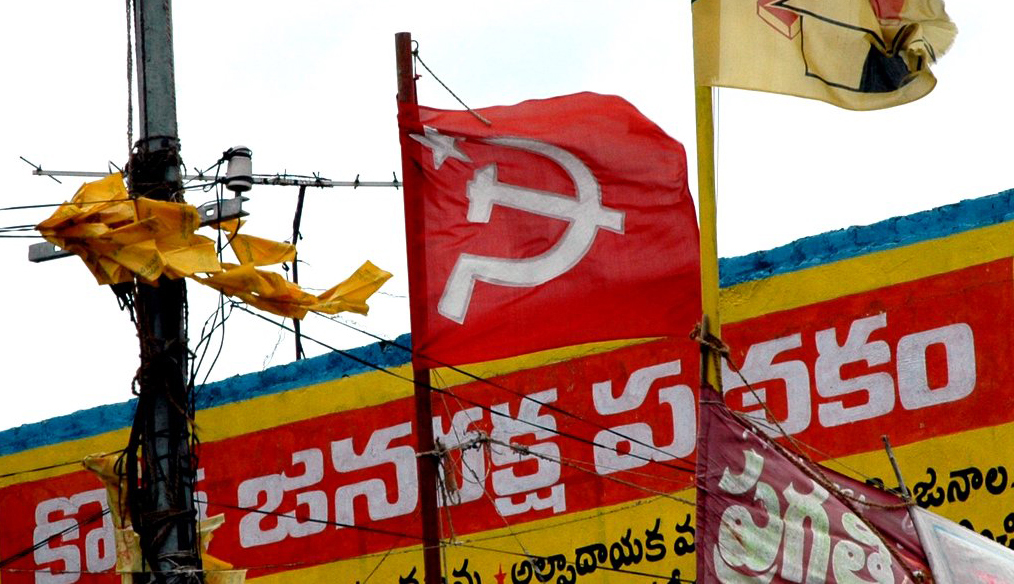
Showing posts from category livelihoods.
-
Tackling Youth Unemployment, Instability in Kenya
›
Today, Kenya’s youth unemployment rate stands at 65 percent, among the highest in the world. Three in five unemployed Kenyans are 15 – 35 years old. The situation is exacerbated by a shrinking economy, political instability, and pervasive income inequality.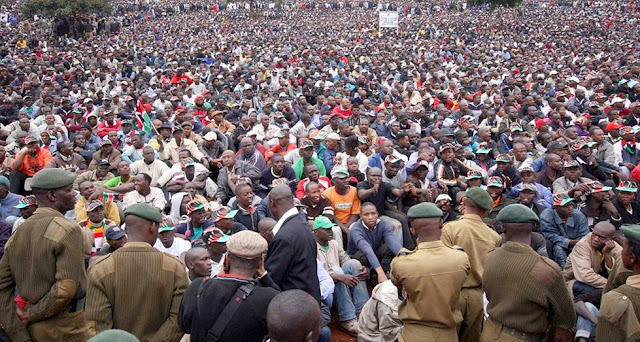
Significantly, youth are engaged in the informal sector, which is largely unregulated and subjects workers to low earnings and long hours, without any formal contract. Suffering under a slow-growing economy, youth, whether well educated or uneducated, have increasingly turned to crime and violence, serving as watu wa mkono (handymen) to the ruling elite and intimidating and harassing their political opponents.Violence during Kenya’s disputed 2007 elections left approximately 1,133 people dead and 650,000 displaced from their land. Many of these atrocities were committed by youth, for sums as low as $6. With the 2012 elections fast approaching, Kenya risks renewed violence if its daunting youth unemployment rate is not properly addressed.
Against this backdrop, the Kenyan government has established the Youth Enterprise Development Fund (YEDF) and Kazi kwa Vijana (KKV), which means “jobs for youth,” to boost employment and entrepreneurship among people 18 to 35 years old.
Through YEDF, groups of up to 12 people can submit a business plan and apply for funding, as well as other services such as training, mentorship, and market access. The fund also connects youth with local and international job markets. KKV facilitates access to temporary, labor-intensive jobs for generally low wages, and also offers some business training.
Given the high poverty levels among youth in Kenya, temporary jobs can help young people learn the marketable skills they need to find decent work. But it’s not a long-term solution, as these low-paying jobs can also trap people in poverty, making crime and violence seem like the only viable exit.
Kenya would do well to learn from other countries’ efforts, where similar programs have long existed. For example, Italy’s Imprenditorialita Giovanile, or “Young Entrepreneurs’ Company,” and the UK’s Prince Trust exist solely to support young people’s start-up businesses.
Like Kenya’s efforts, these two programs provide training and mentoring to young people. However, they also have autonomy from their respective governments, which gives them freedom to operate without political interference and burdensome bureaucracy. Services are delivered by highly competent, successful entrepreneurs, who inspire youth to become entrepreneurs, not as an alternative to joblessness, but as a genuine career path with financial reward and work satisfaction. Through these programs, youth have managed to start and sustain viable businesses, and attain financial independence and stability.
Compared to these cases, Kenya’s KKV and YEDF fall short. Their activities overlap, and their objectives are too broad, which makes them unachievable within a reasonable timeframe.
They are also constrained by heavy government control. The prime minister’s office oversees KKV, while the Ministry of Sports and Youth Affairs manages YEDF. As a consequence, the programs are burdened by politics rather than buoyed with professionalism.
The tendency to treat youth as a homogenous group could isolate some young people who cannot fulfill YEDF’s requirements, such as a business development plan, a registered group, or an existing bank account. The rules should be more flexible and needs-based in order to benefit some of the needy and illiterate youth who require more rigorous training and support to succeed.
Finally, the programs’ near-sighted focus on temporary employment is but a bandage; Kenya needs long-term strategies to enable youth to access more rewarding and productive work.
Fundamentally, the problem requires properly planned, well-structured, and broad-based programs, and so far the government seems to be tinkering at the superficial level without a long-term, comprehensive plan. Accelerating economic growth is central to creating employment opportunities for youth, as well as providing market-driven education, training, and life skills.
In order to make a smooth transition to adulthood, young people require decent work and the ability to actively contribute to economic and political development and stability. Short of this, youth will remain at the margin of the economy, to serve as the violent watu wa mkono in 2012 and beyond.
Margaret Wamuyu Muthee is Programs Manager for Kenya’s University of Nairobi Center for Human Rights and Peace, and is currently an Africa Program Scholar at the Woodrow Wilson Center.
Photo Credit: Adapted from “Promulgation,” courtesy of flickr user ActionPixs (Maruko). -
Ethiopian Case Study Illustrates Shortcomings of “Land Grab” Debate
›The lines have been drawn in the “land grab” debate: Will foreign investors displace small, local land-holders, damaging the environment with exploitive practices? Or will a combination of infrastructure investment and employment opportunities lead to a virtuous development cycle?
Recent reports suggest that the former is more likely than the latter (e.g., see the Oakland Institute, GRAIN, and the Food and Agriculture Organization). In each case, the proposed antidote is the typical wish-list: Boost institutional capacity to ensure that agreements are honored, environmental and labor regulations are observed, and local populations are given a stake in the process.
While it incorporates a broader swath of data and country case studies, the recent World Bank report, “Rising Global Interest in Farmland: Can It Yield Sustainable and Equitable Results?” largely recycles this tired diagnosis, as noted recently by Michael Kugelman on The New Security Beat.
But the two months we spent in the Amhara and Oromia regions of Ethiopia, surveying smallholders and profiling large-scale commercial farms, left us with a different impression. After completing 1,200 pages of surveys on smallholder livelihood strategies and farm management practices with 120 local farmers, as well as six profiles of private investors’ farms, we identified several key points that these reports missed.
Strong Laws Don’t Always Scare Investors Away
The World Bank report focuses on the belief that countries with weak institutions attract predatory investors, who use lack of oversight to their advantage by exploiting local populations, abusing regulations, etc. Ethiopia, however, has high institutional capacity relative to other African nations, yet still receives enormous land investment.
Every commercial farm we profiled received yearly visits from multiple regional and federal agencies investigating regulatory compliance. Moreover, two of the farms had been sold to their current owners because the previous business ventures failed to observe the terms of their business proposals. These terms included bringing certain amounts of foreign exchange into the country and hitting export targets.
Ethiopia attracts investors for other reasons. Official documents tout the diversity of its micro-climates, but we suspect investors are more likely drawn by a lease rate roughly 100x lower per hectare than the African average.
Given the emphasis on boosting institutional capacity as a means to ensure positive development outcomes, it’s too bad that the World Bank didn’t choose to conduct one of its case studies on Ethiopian commercial farms. Such a study could provide grounds for discussing what investment governed by stronger institutions would look like.
An Incomplete Paradigm
The potential for population displacement (with or without compensation), job creation, and infrastructure development is a well known and well studied paradigm. The World Bank report investigates the occurrence of these phenomena in its case studies, and the results are unsurprising: Sometimes things go OK and sometimes they go badly. This same story emerges in studies of foreign investments of all stripes: logging, oil and natural gas extraction, precious mineral mining, among others.
A more inventive analysis of land grabs could yield meaningful findings, however. Investors and smallholders are engaged in the same activity — farming — and in the case of cereal farms, they are producing the same crops. The resulting overlap allows for a multitude of creative interactions between smallholders and investors that should receive more attention.
Two of the investors we interviewed used these creative interactions to promote their business plans to regional development authorities. One farm sold certified seed to local farmers; another imported an irrigation system new to the region and plans to introduce it to the broader community. They each rented farm equipment to smallholders and held demonstration days to discuss farming techniques and new crop types with community members. One had already introduced new crops to the adjacent village via an “outgrowing” scheme and was exporting smallholder products from the farm, thus diversifying livelihoods for local farming households.
These are, of course, anecdotal accounts. But they suggest a broader point: More attention must be given to “secondary” benefits like technology and knowledge transfers, outgrowing or renting schemes, and informal interactions. Given the unique attributes of large-scale commercial investment in the agricultural sector, which continues to provide most Ethiopians’ livelihoods, these secondary benefits are the mechanism through which livelihoods seem most likely to be transformed. In this case, the preoccupation with displacement, formal compensation, jobs created, and infrastructure development only leads to generalized and ineffective analysis.
Our smallholder surveys and commercial farm profiles point to one conclusion: The commercial farms in our sample that engaged most fully in those creative interactions will generate substantial benefits for local populations over the next 5-10 years (quantitative analysis to be published in our final report this spring). The particular interactions taking place between these smallholders and commercial farms directly alleviate the primary constraints to smallholder livelihoods identified by our survey, such as lack of mechanization, lack of access to inputs, and inability to generate cash through sale of crops.
It’s far from clear that the World Bank analysis would have captured this reality in Ethiopia given its limited focus. Ideas like outgrowing receive scant attention, and are usually only discussed in hypothetical terms or in parentheticals – a trend the World Bank report unfortunately continued.
Incorporate Case Studies and Put Livelihoods First
So while our limited analysis may not enable us to speak broadly about the effects of commercial farming, we can offer two observations.
First, the creative arrangements that accompany the introduction of commercial farming must be front and center of any study. The study should be grounded in an understanding of the livelihood constraints faced by local populations, followed by an analysis of the types of interactions between commercial farms and smallholders that may affect those constraints, including not only traditional effects, such as displacement and employment, but also atypical impacts, such as improved seed distribution and technology demonstration.
Second, since Ethiopia has enough institutional capacity to be selective when choosing commercial investors (and to ensure they adhere to the terms), it embodies a number of principles the promoted by the World Bank report. Ethiopian Prime Minister Meles Zenawi views large-scale private farms as one piece of a broader commercialization effort to revolutionize smallholder agriculture, as described in the government’s development plan, PASDEP. This effort is in keeping with the report’s basic recommendation that host governments ensure that investment is compatible with domestic needs.
Understanding the phenomenon of large-scale land acquisitions should be at the top of the international research agenda. The effects on livelihood security and food security (in both developed and developing countries), as well as the potential contributions to resource conflicts, place such land deals among the most consequential recent trends in the international arena.
We believe a new framework must be brought to the analysis of land grabs. To effectively implement this framework, important but overlooked cases, such as we found in Ethiopia, should be included in future studies.
Nathan Yaffe and Laura Dismore are students at Carleton College, who just returned from researching commercial farming in Ethiopia. They can be reached at yaffen@carleton.edu and dismorel@carleton.edu.
Photo Credit: Adapted from “P8060261,” courtesy of flickr user Ben Jarman. -
Google Data Maps Development Indicators
›If you have not had the (purely wonky) pleasure of playing with Google’s Public Data Explorer, do yourself a favor and direct your browser there now.
Born from Hans Rosling’s Gapminder, Google’s data explorer currently allows the user to choose from 24 different data sets, including information from the World Bank, U.S. Census Bureau, Eurostat, and Energy Information Agency. Users can then customize the dataset’s variables, save their work, and even embed the resulting chart, “unveiling the beauty of statistics for a fact-based world view,” as the Gapminder site puts it.
The example dataset above uses development indicators from the World Bank to show areas of the world where high fertility rate and heavy reliance on subsistence agriculture have persisted over time. It’s worth noting that many of the countries in the upper right of the graph are also where we find persistent conflict, and, if one accepts the predictions that Africa will see some of the most profound effects of climate change, they also face real risk of continuing instability as declining crop yields threaten livelihoods and population growth continues. -
The Tenth Parallel: Dispatches From the Fault Line Between Christianity and Islam
›The latitudinal tenth parallel — located 700 miles above the equator — constitutes a “faith-based fault line” between Islam and Christianity, said Eliza Griswold at the launch of her latest book, The Tenth Parallel: Dispatches from the Fault Line Between Christianity and Islam at the Wilson Center on September 16, 2010. The former Wilson Center public policy scholar traveled more than 9,000 miles to six countries along the line. One quarter of the world’s Muslim population lives north of the line, while one-fourth of the world’s Christian population lives south of it.
Religious Conflict and Environmental Peacemaking
The tenth parallel is vulnerable to intense religious conflicts, exacerbated by the imposition of colonial-era national borders. Griswold collected stories from tribal leaders, presidents, and missionaries that reveal subtle linkages between religious conflict, politics, and environmental change. “Every single religious conflict I saw had a worldly trigger, whether land, oil, or water,” she said, because these groups tend to self-identify along lines of religion, “even over any kind of ethnicity.”
In the town of Abiay, Sudan, Griswold described a fight “over who’s going to get that oil, and how they’re going to divide themselves. Religion comes in as an overlay, because the north pushes the people of the south farther south by saying, ‘Guess what? We need that land, and why? Because our Muslim people need that land for their cattle,’ but underneath that land runs a river of oil.”
But in these origins of conflict Griswold finds an avenue to peace: “Environmental challenges seem to work well in areas of religious conflict” as a neutral meeting ground, she said.
For example, in the Nigerian city Kaduna, where Christians and Muslims have clashed violently, two former mortal enemies and self-avowed fundamentalists work together to deprogram the youth they trained to protect their faith through violence. At the Interfaith Reconciliation Center, Pastor James (who lost an arm to a group of Muslims) and Imam Muhammed Nurayn Ashafa use practical aspects of living to encourage interfaith dialogue. During Griswold’s visit, it was fuel-efficient cookstoves, “because that’s one of the things Christians and Muslims fight about…whether land, water, oil.”
Such concrete examples of environmental peacemaking offer future policy options for mitigating conflicts in other areas. “The tenth parallel is one of the most sensitive environmental zones in the world…so do I think it’s replicable? Absolutely,” said Griswold.
The Changing Demographics of Religion
Today, “four out of five of the world’s one billion Muslims don’t live in the Middle East; they live in Africa and they live in Asia. More than half of them live along the tenth parallel, and about half of the world’s two billion Christians also live along the tenth parallel,” sais Griswold.
She explained that the migration of Islam to Africa stopped along the tenth parallel because of the tsetse flies and the devastating sleeping sickness they carried.
Later, colonial-era European missionaries arrived, many with “the express purpose of stopping Islam from winning Africa, from spreading south of the tenth parallel,” she said. For example, Britain’s division of Sudan restricted Muslims to the north and Christians to the south, where missionaries developed and constructed the southern Sudanese state.
“Many of these places are failed states…and religion has come in largely to fill the gaps,” said Griswold. “The world is breaking down on tribal lines and religion is the largest tribe there is, more so than ethnicity, more so than other global markers.”
Based on population projections, Griswold pointed out that “the center of Christianity, in 2050 will be on the tenth parallel…in Muslim Nigeria.”
Historical Echoes
Historically, aid and development work along the tenth parallel “was not a secular enterprise,” Griswold said, since most of the aid workers were Christian missionaries. “So there is a very long history and a very strong association between the West and Christianity in many, many places,” she pointed out.
This history has long affected American foreign policy and perceptions of the United States abroad. According to Griswold, “foreign policy [has] come to reflect the interests of selective groups of Americans.” For that reason, “we really need to call for caution in how we allow ourselves to be represented and in the diversity of voices that get out there,” she advised.
For example, the evangelical preacher Franklin Graham met with Bashir in 2003 to ask for the right to proselytize in northern Sudan. In exchange, Bashir hoped to avoid being added to “the American ‘hit list’ after Afghanistan and Iraq,” reported Griswold. Graham told her that in response he took out a George W. Bush re-election pin and said, “Mr. President, I understand you’ll be talking to my president later today. Why don’t you tell him you’re his first voter here in the Sudan?”
In the same vein, Griswold cautioned against perpetuating American ignorance of Muslim culture:We, especially in America, are extremely aware of this fight over who speaks for God. Because I think, when we see what’s happening on the steps of the Lincoln Memorial or at Ground Zero, we’re looking at a struggle inside of a broader Christian context between Franklin Graham and Barack Obama over who a true Christian is. And Islam becomes the easiest bogeyman. The quickest way to whip up fear in followers is to create a shared enemy.
“The single most important finding of the book,” Griswold concluded, “was that the clashes within religions, the clashes between Christians and Christians, Muslims and Muslims, over who has the right to speak for God, are the most important and most overlooked religious conflicts going on today.”
Shawna Cuan is an intern with the Environmental Change and Security Program. Edited by Meaghan Parker.
Photo Credit: “Farmer Harvests Sorghum Seeds in Sudan,” courtesy of flickr user United Nations Photo. -
India’s Threat From Within
›Once a modest pro-peasant movement, India’s Maoist (or Naxalite) insurgency has become what New Delhi describes as the nation’s biggest internal security threat. The insurgency has spread to 20 of India’s 29 states, and across more than a third of the country’s 626 districts, most of them in the impoverished east. Earlier this summer, the Woodrow Wilson Center’s Asia Program, with assistance from the Environmental Change and Security Program, hosted, “The ‘Gravest Threat’ to Internal Security: India’s Maoist Insurgency,” to examine the insurgency’s main drivers, identify its prime tactics and strategies, and consider the best ways to respond.
Same Insurgency, Different Motivations
P.V. Ramana, a research fellow at the New Delhi-based Institute for Defense Studies and Analyses, discussed the motivations that draw people to the insurgency. Some people are aggrieved by the resource exploitations they witness in their villages. Others join the Maoist cause because of the “high-handedness” of Indian security forces. Still others do so because family members are already in the movement.
Ramana underscored a “serious disconnect” at play — people have such varied reasons for joining the insurgency, yet top Maoist leaders are inspired by one sole motivation: capturing political power. Ramana also highlighted the “increasing militarization” of the insurgency. Maoists have amassed an immense arsenal of weaponry, from “crude” tools to more sophisticated weapons such as rocket launchers and landmines. Their attacks increasingly target not only government security forces, but also national infrastructure such as power lines and railways.
Andhra Pradesh: Leading By Example
K. Srinivas Reddy, a Hyderabad-based deputy editor for The Hindu, offered a case study of the insurgency in his home state, Andhra Pradesh (AP), in southeastern India. He noted that New Delhi’s response to the insurgency in AP is often cited as a success story. This response, according to Reddy, can be attributed to an “attitudinal change” within the security ranks. From the 1970s through the mid-1990s — a period of mass Maoist recruitment and escalating insurgent violence — New Delhi’s counterinsurgency measures had been “panicky,” haphazard, and reactive, Reddy said. The “turning point” came in 1996, when a new “unity of thought” emerged within the government that emphasized better training of security forces, stronger intelligence, and greater attention to economic development. Later in the 1990s, security forces further softened their strategies and tactics, emphasizing “problem-solving rather than hunting Naxals.” As a result, in the early 2000s, popular support for Maoists in AP began to wane.
Is the Government Also to Blame?
Nandini Sundar, a professor of sociology at Delhi University, focused on the human impact of both the insurgency and the government’s response. Much of her presentation centered around Bastar, a sparsely populated, heavily forested, mineral-rich district of Chhattisgarh state — one of the areas hardest-hit by the insurgency. Maoist “entrenchment” is strong, she argued, because locals are treated so dreadfully by the government. “Very poor people are jailed” for committing minor forestry transgressions, Sundar explained, while “powerful people” get away with large-scale offenses. Additionally, the police are deeply unpopular and “a source of repression.” They also regularly rape women and extort money, she said.
Sundar identified and condemned a raft of repressive government policies — from throwing locals off their land to commandeering schools — and insisted that such repression constitutes the prime reason for recruitment to the insurgency. “Injustice more than inequality” explains why people join the Maoists, she said.
The panel was far from sanguine about the future. Ramana contended that immediate prospects for peace talks between the government and the Maoists are slim, and that civil society has been “quiet” and has offered little assistance. While he predicted that some sort of resolution could be reached in “7 to 10 years,” Sundar countered that the harsh nature of New Delhi’s response means that 7 to 10 years “could finish off” not just the Maoists, but also village populations.
Compounding the challenge is what Sundar described as “official contempt” toward the culture of the Adivasi, the tribal peoples of India whose homeland comprises the insurgency’s epicenter. Dehumanizing, anti-adivasi language from the government enables New Delhi to justify the waging of forceful counterinsurgency, Sundar argued.
Glimmers of Hope
Several speakers, however, gave reasons to be guardedly optimistic about the Maoist issue. Pointing to Maoist strategies in Andhra Pradesh, Reddy suggested that the insurgency’s poor policies could spell its demise. Maoists in this state chose to escalate violence, but their inability to spread their ideology along with this violence has cost them public support, particularly in urban areas. (A recent survey by The Times of India actually found that 58 percent of those in AP think Naxalism has been good for the area – a devastating poll for those in the government who thought they were winning there – Ed.)
Sundar, meanwhile, noted that much good would come out of simply implementing long-dormant constitutional protections for the rural poor in Maoist-affected areas. This, she concluded, would reflect rights-based development, which is necessary for success — as opposed to development based on “hand-outs” by the elite, which is destined to fail.
Michael Kugelman is a program associate with the Woodrow Wilson Center’s Asia Program.
For more on the resource conflict aspect of the insurgency see The New Security Beat’s, “India’s Maoists: South Asia’s ‘Other’ Insurgency.”
Sources: BBC, Foreign Policy, Times of India.
Photo Credit: Adapted from “CPI Flag (Andhra Pradesh),” courtesy of flickr user Shreyans Bhansali. -
Jon Barnett on Climate Change, Small Island States, and Migration
›Contrary to the iconic image of lapping waves submerging low-lying countries, few Pacific islanders are emigrating from their homes due to climate change, according to Australian geographer Jon Barnett of the University of Melbourne.
-
U.S. v. China: The Global Battle for Hearts, Minds, and Resources
›September 22, 2010 // By Schuyler NullThis summer, Secretary Clinton gave a speech at the Association of Southeast Asian Nations (ASEAN) summit in Hanoi that Chinese Foreign Minister Yang Jiechi called “in effect an attack on China.” What did Clinton say that prompted such a direct response? She called for negotiations over the rights to resource extraction in the South China Sea to be multilateral rather than bilateral:
-
Joseph Speidel on Population, the Environment, and Growth
›“If we could do something about unintended pregnancies – which are about 80 million a year – we could dramatically reduce population growth,” and reduce pressure on the environment, says Joseph Speidel in this short analysis from the Environmental Change and Security Program. Speidel discusses the connections between population, health, and environment issues, and offers solutions for the way forward.
The “Pop Audio” series offers brief clips from ECSP’s conversations with experts around the world, sharing analysis and promoting dialogue on population-related issues. Also available on iTunes.