

-
The Next Feminist Wave: Heat
›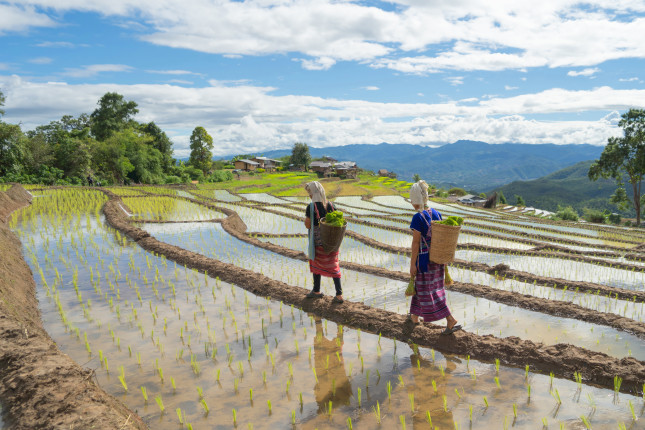
The summer of 2023 featured some of the hottest days ever recorded. Feminists should be alarmed.
Climate change may not seem like a feminist issue on its face. A warming planet poses a cross-cutting and common threat. But the perception that climate impacts result in uniform harm produces partial solutions that neglect the world’s most vulnerable populations. This alone makes environmental justice a gender justice issue as well.
-
Recognizing the International Day for Preventing the Exploitation of the Environment in War and Armed Conflict
›
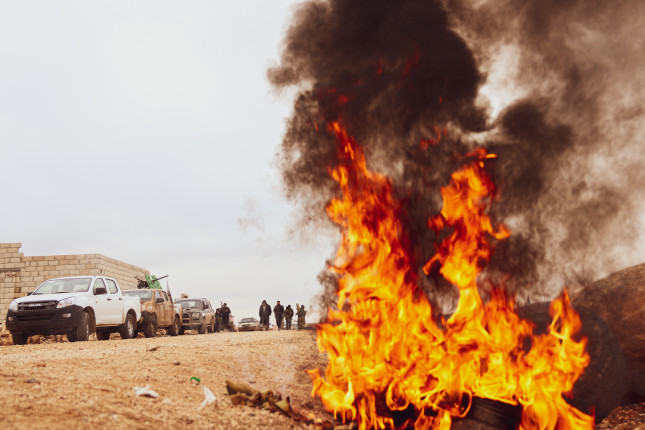
In 2001, the UN General Assembly declared November 6 the International Day for Preventing the Exploitation of the Environment in War and Armed Conflict. In the 22 years since, both the impact of the exploitation of the environment during war—and the centrality of natural resources in establishing peace—have gained greater global recognition.
-
Introducing “The Arc”
› On today’s episode of New Security Broadcast, ECSP is launching a new series called The Arc, focused on the connections between climate change, equity, justice, and identity. We will cover a wide range of topics – from food and water systems to the energy transition, migration, and climate finance – and talk with practitioners, advocates, professors, and community leaders to discover where these topics intersect with issues related to climate impacts and justice.
-
ECSP Weekly Watch | October 2 – 6
›A window into what we are reading at the Wilson Center’s Environmental Change and Security Program
A Warming World is Accelerating the Spread of Dengue
Dengue is now endemic in most Latin American countries. But scientists warn that a warming climate is increasing the pace of breeding and transmission of dengue-carrying mosquitoes, and bring them into new countries.
-
Q&A: Peter Schwartzstein on Conflict & Climate in Libya
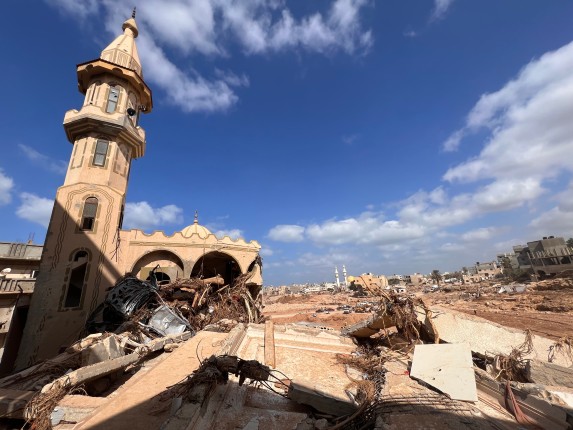
›In the wake of Storm Daniel, which hit Libya in September 2023, ECSP spoke with Wilson Center Global Fellow Peter Schwartzstein about the storm’s tragic fallout and its connection to conflict. As an environmental journalist and consultant, Schwartzstein has written extensively about the climate-conflict nexus and other environmental and geopolitical issues, primarily in the Middle East, North and East Africa.
-
ECSP Weekly Watch | September 11 – 15
›A window into what we are reading at the Wilson Center’s Environmental Change and Security Program
Treading Water: Why Were Libya’s Floods So Devastating?
This week’s devastating disasters in Morocco and Libya underscore the cascading effects of environmental shocks (and in the case of Libya, climate-related shocks), as well as the cross-sectoral response needed to comprehensively address the damage.
-
“You Will Find Your People Here” with Dr. Caroline Wanjiku Kihato and Clare Loveday
›On today’s episode of New Security Broadcast, ECSP Director Lauren Risi and Distinguished Fellow Dr. Blair Ruble talk with Clare Loveday and Dr. Caroline Wanjiku Kihato about their collaborative installation, “You Will Find Your People Here,” currently on view at La Biennale di Venezia. Loveday is a Johannesburg-based composer, and Kihato is an urban sociologist who specializes in gender, migration, and governance; they worked in concert with pianist, Mareli Stolp, and Ghanian artist, Awo Tsegah, to bring the installation to life at the Biennale. -
ECSP Weekly Watch | July 10 – 14
›A window into what we are reading at the Wilson Center’s Environmental Change and Security Program
Rough Waters: Sri Lanka’s Fishermen Face Climate Challenges and Economic Woes
Close to 2.4 million Sri Lankans are employed in that nation’s fisheries, and the bounty of its seas and freshwater bodies make up close to half of the country’s animal-based protein. But now the livelihood that has sustained these workers for generations faces growing constraints.
Showing posts from category livelihoods.

 On today’s episode of New Security Broadcast, ECSP Director Lauren Risi and Distinguished Fellow Dr. Blair Ruble talk with Clare Loveday and Dr. Caroline Wanjiku Kihato about their collaborative installation, “

