-
Can Law Prevent the Green Resource Curse in Sub-Saharan Africa?
›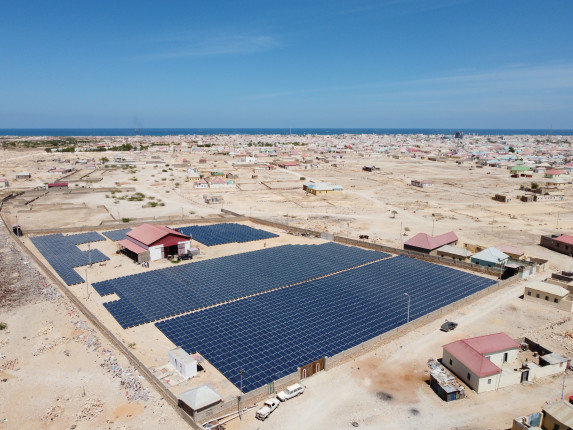
The transition to a carbon-neutral economy will bring profound shifts to diverse economic sectors. This transformation will generate increasing demands for land for renewable energy generation and the minerals needed for clean energy technologies.
-
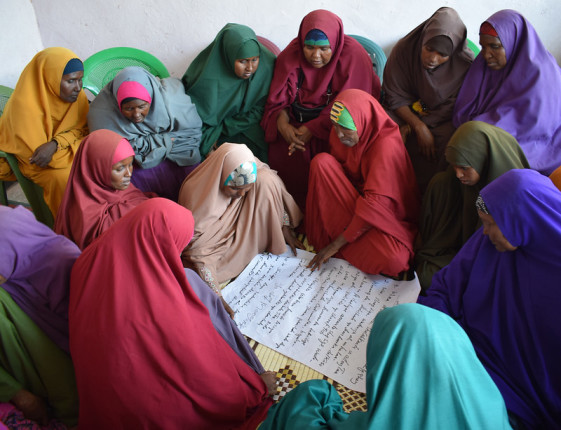
The Risks of Gender-blind Climate Action
›
Climate change is widely recognized as one the greatest threats to peace and security in the 21st century. The causal pathways that link deteriorating environmental conditions, insecurity, and conflict, while seldom automatic or linear, are, nevertheless, ubiquitous. The adverse impacts of climate change exacerbate other risk factors, especially in already fragile contexts. In turn, these factors magnify pre-existing economic, social, or political drivers of insecurity.
-
Centering Indigenous Knowledge in Climate Response
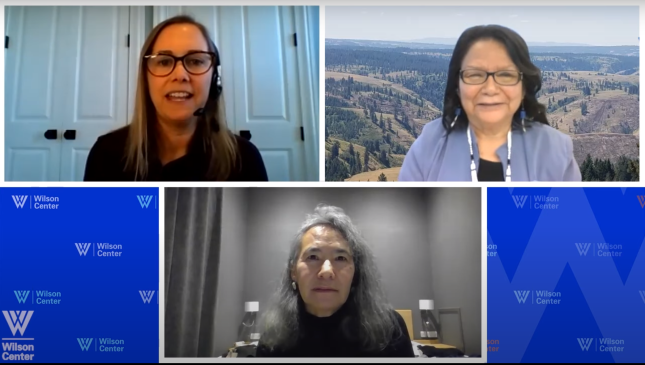
›“Tribal People have learned to take care of the land because our land took care of us,” said Kat Brigham, Chair of the Board of Trustees for the Confederated Tribes of the Umatilla Indian Reservation (CTUIR), at a recent Wilson Center event. “It’s important for tribal people to be at the table. We have a lot of knowledge, we have a lot of experience on how to protect and restore natural resources,” said Brigham. “This is part of our culture, our history, and our future.”
-
Peaceful Minefields: Environmental Protection or Security Risks?
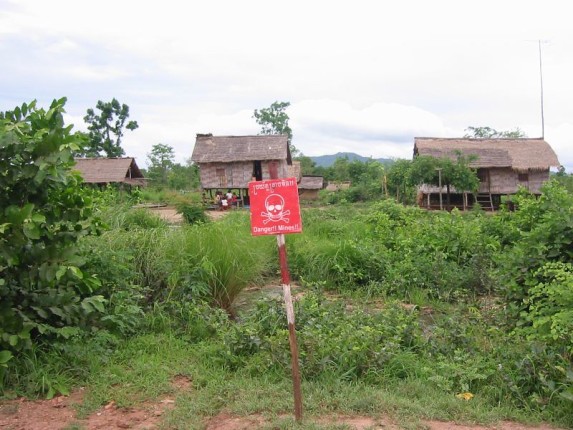
›On my first tour of a Cambodian minefield in 2010, the demining supervisor of the platoon of deminers brought me through a tapioca field where heavily armored men and women stood in lines. I was not allowed beyond the bright red signs with skulls and crossbones. Wearing bulletproof helmets, masks, and aprons, they slowly and tediously walked through the field, using a metal detector to sweep the ground in front of them, the sun reflecting off the long plastic visor. To avoid the heat of the Cambodian sun, they began their work early in the morning. In the golden hour of sunrise as dawn gilded the fields, the sounds of a distant Buddhist temple surrounded us with chanting. I commented on how beautiful it was.
-
The Top 5 Posts of June 2021
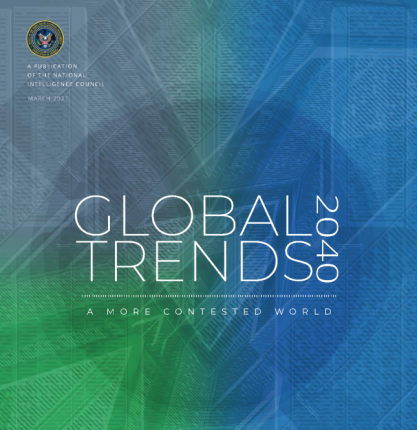
›In our top post for June, Steve Gale shares 5 consequences out of the National Intelligence Council’s recently released Global Trends report that development actors should be particularly attuned to. In addition to the “long tail” of the COVID-19 pandemic, the report recognizes the environmental consequences of climate change, including unprecedented numbers of wildfires, increased intensity of tropical storms, and sea-level rise. As a result, migration will be more pronounced and require more targeted aid approaches as demographics shift.
-
From Rhetoric to Response: Addressing Climate Security with International Development
›Over the past decade, our understanding of how climate change affects conflict and security has advanced considerably. Yet, how to best address the overlapping challenges of climate change, conflict, and human security remains an open question. In an article published in World Development, I address this topic by examining how climate security discourses inform development policy and, in turn, how the structures of development enable or constrain institutional capacity to address climate security. This research identifies not only the unique barriers the development sector must overcome, but also the ways in which the most common framings of climate change (i.e., as a threat multiplier) limit the scope for policy and programming.
-
A Conflict Prevention Agenda Should Inform Climate Change Actions in Africa
›In Africa, climate change and population expansion are increasing fragilities and vulnerabilities—including contributing to conflict dynamics—for many people who directly depend on nature. To cope with how their environment can no longer supply livelihood needs, people are migrating in search of security or economic stability. These factors interact with one another in ways that underline the need for inclusive conflict mitigation considerations in climate change action.
-
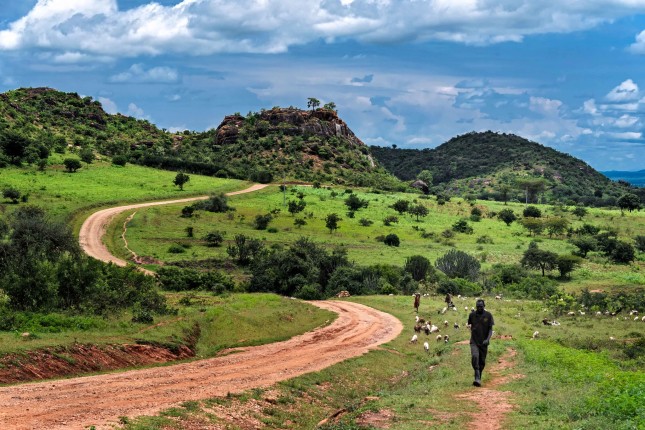
“Land is Now the Biggest Gun”: Climate Change, Conflict, and the Telling Case of Karamoja, Uganda
›Whether and how climate change drives conflict has driven considerable debate over the past decade. Yet understandings of climate-conflict remain general, and in many respects, unsettled. A recent assessment of potential future directions for climate-conflict research highlights the need to go beyond generalities and deepen insight into the contextual mechanisms that link climate change to conflict. That type of knowledge requires in-depth studies that trace climate-conflict dynamics in particular places and times. In an article recently published in Climate and Development, I examine how climate change alters conflict outcomes and vulnerability in Karamoja, Uganda. The case offers direct insight into both why the climate-conflict relationship can be so difficult to interpret and also the need to broaden conceptualizations of the climate-conflict relationship.
Showing posts from category land.