-
Improving Food Security Through Land Rights and Access to Family Planning
›“In a future world affected by climate change, population growth is one lever that can be addressed to ameliorate the impacts of climate change, particularly in the area of food security,” write Scott Moreland and Ellen Smith in “Modeling Climate Change, Food Security, and Population,” a recent study for MEASURE Evaluation and USAID. Moreland and Smith combine demographic changes, food needs, and economic capacity into a single aggregate model to assess how family planning and climate change might affect food security from now until 2050. Using Ethiopia as an example, the model finds that if access to family planning services were increased to meet existing needs, the subsequent decrease in demand for food would reduce child malnutrition and effectively counteract a projected 25 percent shortfall in caloric availability from climate change’s impact on agriculture. Programs designed to increase access to family planning should therefore be incorporated into national adaptation and food security strategies, they conclude. “Family planning, especially in countries with high unmet need, provides a potential solution not only for women’s reproductive health, but also for adapting to the effects of climate change.” The Food and Agriculture Organization’s Committee on World Food Security recently endorsed a set of voluntary guidelines for land tenure governance in the context of food security that aims to strike a balance between encouraging productive investment and ensuring equitable and sustainable development. Population growth, climate change, and environmental degradation are putting pressure on the legal and cultural systems that govern land rights, resulting in “inadequate and insecure tenure rights” which can “increase vulnerability, hunger and poverty, and can lead to conflict and environmental degradation when competing users fight for control of these resources.” The guidelines, drawn from consultations with hundreds of people from both the private and public spheres and representing more than 130 countries, emphasize the need to safeguard access to land, fisheries, and forests – as well as the resources they provide – in a way that respects customary tenure systems, which are not always reflected in official tenure policies or records. They also emphasize strengthening the ownership rights of women and other traditionally marginalized groups in order to enhance food security and minimize the risk of instability and conflict in the future.
 -
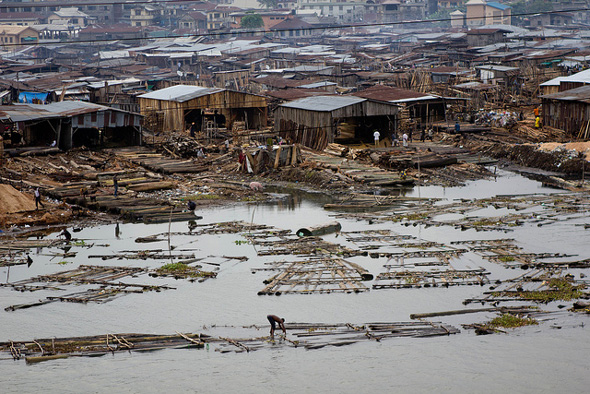
Nigeria Beyond the Headlines: Environment and Security [Part Two]
›In the coming years, Nigeria’s cohort of unemployed youth has equal potential to “be converted into either a religious or a regional clash, as certain youths get opportunities and other youths do not,” said Pauline Baker, President Emeritus of the Fund for Peace, during the day-long “Nigeria Behind the Headlines” event at the Wilson Center on the April 25 (read part one here). [Video Below]
-
Taming Hunger in Ethiopia: The Role of Population Dynamics
›May 4, 2012 // By Laurie Mazur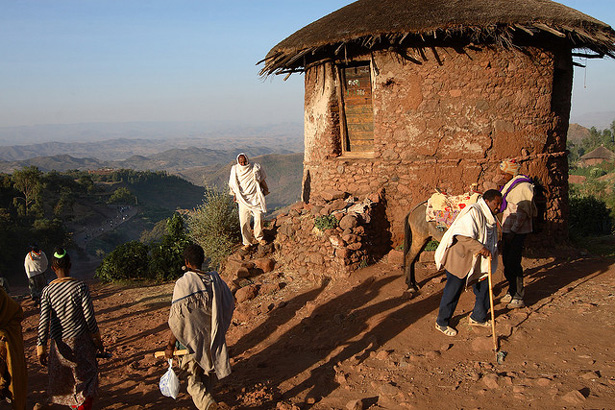
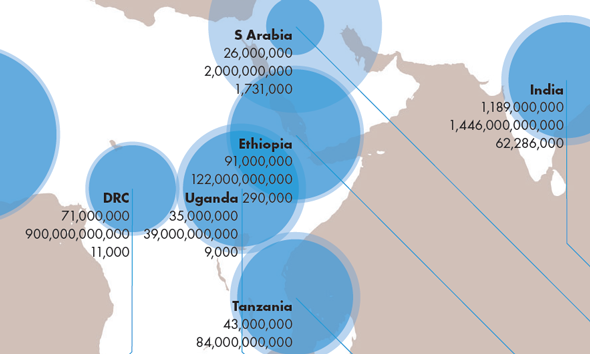
Ethiopia has been deemed a population-climate “hotspot” – a place where rapid growth and a changing climate pose grave threats to food security and human well-being.
-
Uganda’s Demographic and Health Challenges Put Into Perspective With Newfound Oil Discoveries [Part Two]
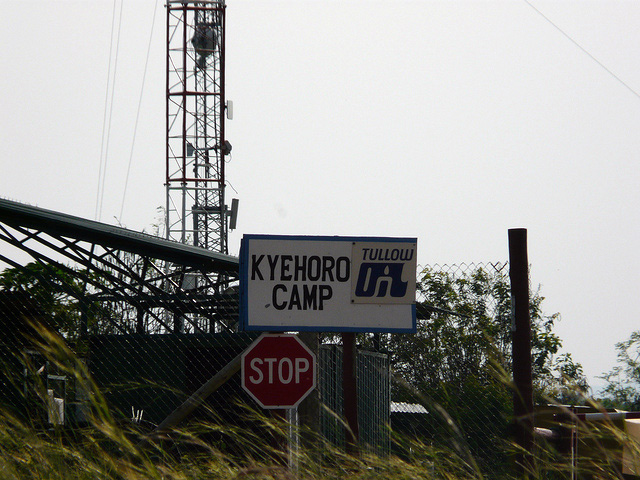
›April 26, 2012 // By Kate Diamond“We never thought we would end up having the same problems here as the people in the Niger Delta. But now I’m worried,” Henry Ford Mirima, a spokesman for Uganda’s Bunyoro kingdom, said last fall in Le Monde Diplomatique. The kingdom – which calls itself East Africa’s oldest – sits along Lake Albert, where over the past seven years British oil company Tullow Oil has discovered oil reserves big enough to produce an estimated 2.5 billion barrels.
-
In Building Resilience for a Changing World, Reproductive Health Is Key
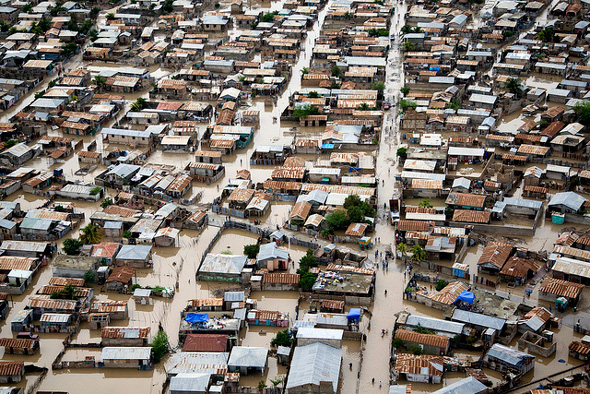
›April 20, 2012 // By Laurie MazurChange is a constant in human (and natural) history. But today, we have entered an era in which the pace, scale, and impact of change may surpass anything our species has previously confronted.
-
A New Land Security Agenda to Enable Sustainable, Equitable Development
›The recent news that overseas investors have acquired over 10 percent of Australia’s farmland and 9 percent of water entitlements in its agriculture sector has struck a political chord in the country. Large grain-producing nations like Brazil and Argentina have passed laws to restrict the foreign ownership of land. In other global grain hubs, like Ukraine and Russia, compromised harvests due to droughts could result in export restrictions. In a globalized economy, the combination of scarcity, market and population pressures, and weather volatility will make fertile land an increasingly precious resource.
A shift is underway in global financial markets, where global investors perceive that owning what grows on the land – or better still, owning the land itself – may be a hedge against the risks of more volatile financial markets. A surge in farmland investments is expected to grow over the next decade is due to a number of combined pressures: a growing global demand for commodities, rising commodity prices, ecological limits, and the fact that farmland is a “real asset” that offers diversification to the portfolios of investors at a time of market volatility.
The need to increase food production against the backdrop of resource limits, social vulnerability, and population growth, puts the question of land at the center of a new security agenda.
In sub-Saharan Africa large-scale acquisitions of land that neglect local livelihoods and resource scarcity, commonly referred to as “land grabs,” put the region’s future in the balance. Not all land investments have negative consequences, but given the lower levels of land tenure by communities and the fragility of human security in sub-Saharan Africa, regulating land investments with foresight is an urgent issue. Population growth and climate change underpin this agenda. A worse-than-average drought, exacerbated by climate change, may be all that is needed in certain places to realize the political, humanitarian, and ecological risks that are slowly building momentum.
From Land Grabs to Land Stewardship
Progress now depends on moving from a land grabs debate to land stewardship solutions. This shift, which the Earth Security Initiative summarized in a report published this month, The Land Security Agenda: How Investor Risks in Farmland Create Opportunities for Sustainability, requires an improved understanding by investors and political leaders of three priorities: managing land degradation, protecting human rights by focusing on food security and land ownership, and keeping economies within ecological – especially water – limits.
The agenda we have developed discusses why these issues form part of a new risk management agenda for investors as well as for countries seeking to attract foreign capital, whose economic competitiveness and political stability may be compromised by these trends. But managing these risks, we argue, will require making human rights and ecological limits a central feature of a new investment paradigm.
A range of international investors is already searching for solutions to engage practically with this debate. Among those with whom we have engaged throughout the study are individual investment funds, people seeking change within the financial sector, and investor networks such as the UN-backed Principles of Responsible Investment. Recently, governments, international organizations and civil society groups have also agreed on a set of voluntary guidelines for land governance under the auspices of the Committee on World Food Security. These developments are positive steps, but their voluntary nature remains problematic. The focus must now be placed on operationalizing their recommendations to ensure real accountability and creating political incentives in host countries to regulate their land to ensure long-term and equitable prosperity.
A Call to Action
In The Land Security Agenda we call on investors to turn their attention to their land and commodities portfolios, as well as the investments currently under due diligence, and begin to ask how soil resilience, the prosperity of local people, and freshwater limits are being considered. We recommend beginning to assess the risks of countries according to how well their governments are managing these issues.
We similarly call on heads of state in countries seeking to attract large investments in land to become more aware that these risks may undermine their country’s wealth, their stability, and economic competitiveness. Political leadership is needed to champion and enforce regulations that will encourage investments and modernization while protecting a country’s social and natural capital.
Some of the recommendations we have developed, which would help set the tone for investors and governments to move from voluntary principles to action, include:- Define land security parameters: Establish a set of verifiable measures that allows stakeholders to distinguish those land investments that advance equitable and sustainable prosperity from those that do not. Based on these criteria, which we suggest must consider people, water, and soil, it is possible to advance their integration into three important areas of the investment cycle: the identification of investment opportunities that build positive value, the due diligence process, and the performance reviews of fund managers.
- Build better country risk profiles: If the population of a given country is dependent on agriculture for livelihoods, shouldn’t issues like soil erosion, water availability and lack of recognition for people’s land rights increase that country’s sovereign risk? We think so and now seek to develop a “land security index” to help investors and host country governments assimilate these trends into their decisions as well as increase the advocacy capacity of local civil society.
- Advance the formal recognition of land rights on a large scale: The universal call for the prior and informed consent of communities must be supported, but will be of little practical value if communities do not hold the legal rights to their land or are not well informed about their rights and the commercial opportunities available to them. Civil society groups working to advance good governance, land titling, and capacity building – many of whom we have spoken to during this study – are in a position to help create a “land security partnership” that builds technical and political momentum for the formal recognition of land rights on a large scale, as well as the resourcing and oversight that government agencies will require to implement them.
Alejandro Litovsky is the founder and director of the Earth Security Initiative and lead author of the report. The Land Security Agenda can be downloaded here.
Sources: DGC Asset Management, Land Commodities Asset Management, Telegraph.
Image Credit: Cover of the The Land Security Agenda. -
Richard Black: Future Climate-Migration Interactions Will Stress Cities, “Trap” Vulnerable Populations
›“In a 50-year time span, climate change, in particular, is likely to have a quite a strong impact on the drivers of migration,” said Richard Black, professor of human geography at University of Sussex and lead author of Migration and Global Environmental Change: Future Challenges and Opportunities. “But in a way that is different to what has been understood until now.”
-
Call for Papers: Reducing Urban Poverty
›The Woodrow Wilson Center’s Comparative Urban Studies Project, USAID, the International Housing Coalition, the World Bank, and Cities Alliance are teaming up a third time to co-sponsor an academic paper competition for graduate- and PhD-level students focused on challenges facing urban centers in the developing world.
The themes of this year’s competition are land markets, global climate change, and youth.
Land Markets: The absence of efficient land and housing markets and lack of secure tenure for both renters and owners are impediments to urban and economic development in developing cities. Papers on this topic should explore strategies and approaches that would enable property markets to function better and would provide increased security of tenure and strengthened property ownership rights.
Global Climate Change: Papers should examine how urban populations, especially the poor, are coping with the impacts of climate change, and provide strategic policy analysis to better understand how cities can become more resilient to climate change impacts.
Youth: Most of the youth of the developing world are now or will soon be living in urban areas. Unfortunately, they are often growing up in the poorest urban areas – informal settlements and slum communities where their opportunities for advancement are limited by a variety of negative factors. Papers focused on youth should explore ways to build capacity so that you can develop knowledge and skills, find gainful employment, and participate more fully in society to advance economic growth and social development.
Winning papers from each category will be published and the authors invited to Washington, D.C. in the fall of 2012 for a policy workshop with subject matter experts. Additionally, one grand prize winner will be asked to present his or her work at the World Urban Forum (WUF). WUF was established by the United Nations to examine rapid urbanization and its impact on communities, cities, economies, climate change, and policies. The sixth WUF will be held from September 1-7, 2012 in Naples, Italy and will be focused on “The Urban Future.” In addition to the Washington conference and publication of his or her paper, the grand-prize winner will be invited to present his or her winning paper on a panel at the World Urban Youth Assembly at WUF on September 1st and 2nd.
The deadline for the submission of abstracts is February 20, 2012.
For detailed competition guidelines and requirements, and further information on the sub-topics, please see the full call for papers.
Image Credit: “Split by yelowcap,” courtesy of flickr user yelowcap (Vladimir Kaštier).
Showing posts from category land.