-
Thought-leaders and Frontline Workers in Environmental Peacebuilding: An Oral History | Dr. Dhanasree Jayaram
›Environmental Peacebuilding Oral History // New Security Broadcast // May 10, 2024 // By Claire Doyle
In today’s episode of New Security Broadcast, ECSP’s Claire Doyle speaks with Dr. Dhanasree Jayaram, Program Manager at Climate Diplomacy and Assistant Professor at the Manipal Academy of Higher Education in India. Dr. Jayaram describes what environmental peacebuilding looks like in the context of South Asia, how climate diplomacy connects to environmental peacebuilding, and how the field has evolved. In looking at the future of environmental peacebuilding, she also raises insights and questions that an environmental peacebuilding lens can help us consider as we push forward on climate action.
-
ECSP Weekly Watch | May 6 – 10
›
A window into what we are reading at the Wilson Center’s Environmental Change and Security Program
2024 World Migration Report Highlights Climate-Food-Mobility Nexus (International Organization for Migration)
The International Organization for Migration’s flagship World Migration Report 2024 highlights a wide variety of factors contributing to global migration, including conflict, economic or political insecurity, and climate change. Between 2020 and 2022 the number of asylum seekers increased more than 30% to 5.4 million people. The report centers climate change’s impact on food security as a core driver of migration. In 2022, 275 million people faced acute food insecurity, which represents a 146% increase since 2016.
-
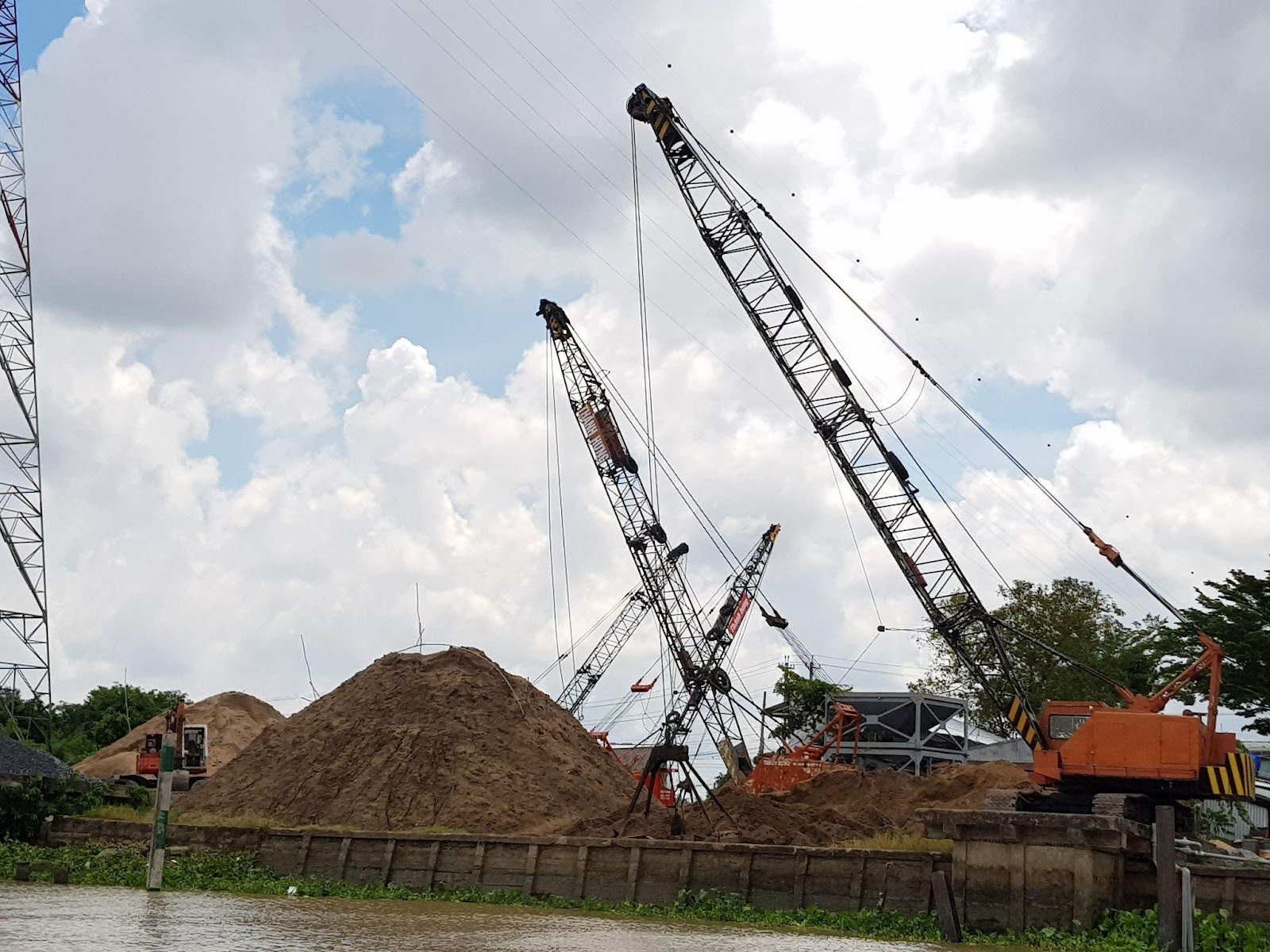
Shifting Sands: Charting a Course for Sustainable Sand Harvesting in Southeast Asia
›The construction boom across Southeast Asia, driven by burgeoning urban development and infrastructure projects, vividly highlights the dual impacts of progress. For instance, the rapid expansion of road networks, ports, and urban centers, while catalyzing economic growth, has also led to significant environmental and social displacement. These projects rely heavily on sand, a fundamental component of concrete and asphalt, extracted in vast quantities from local riverbeds. Annually, this global demand reaches approximately 50 billion tons, positioning sand as the world’s most consumed resource after water. In the Vietnamese Mekong Delta alone, 50 million cubic meters of sand are extracted annually.
-
ECSP Weekly Watch: April 29 – May 3
›A window into what we are reading at the Wilson Center’s Environmental Change and Security ProgramEnvironmental Prize Winners Highlight Local Communities’ Fight Against Fossil Fuels (New York Times)
On Monday, several environmental leaders won the Goldman Environmental Prize, which the Goldman Environmental Foundation awards annually to grassroots environmental activists from each of the world’s six geographic regions. This year’s prize comes as environmental advocacy groups, especially indigenous ones, increasingly fight legal battles against companies or government entities that wish to use their land for oil and gas acquisition or coal mining.
-
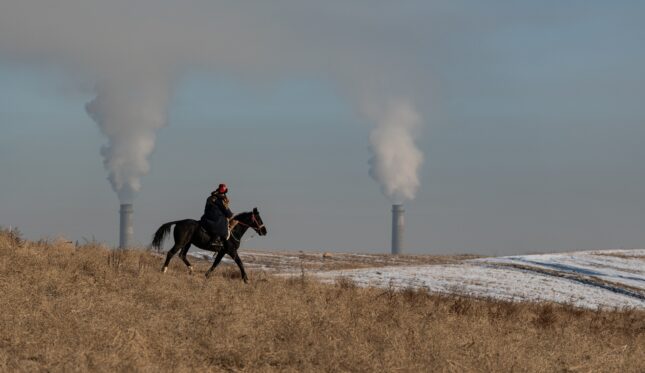
Can Kazakhstan Meet Its Climate Goals?
›“I’m only 33 years old. I have my entire life to live, and I would like to retire on a habitable planet.” | Zulfiya Suleimenova
Signs of our warming planet reveal themselves through the smallest of changes. Zulfiya Suleimenova, Kazakhstan’s Special Representative for International Environmental Cooperation, noticed something odd when she left Kazakhstan’s capital, Astana, in late November for the 28th United Nations Climate Conference (COP28).
-
The Arc | Dr. Renata Giannini on Women Environmental Defenders in the Amazon and Climate Mitigation
›In today’s episode of The Arc, ECSP’s Angus Soderberg and Claire Doyle interview Wilson Center Fellow Dr. Renata Giannini about her work with women environmental defenders in the Amazon and their role at COP30 in Brazil. Select quotes from the interview are featured below. -
ECSP Weekly Watch: April 15 – 19
›UNFPA’s State of World Population 2024 Report Highlights SRHR Inequalities (UNFPA)
Over the last 30 years, the world has made immense progress in improving sexual and reproductive health and rights (SRHR) for women and girls around the world. Since 1994, when governments agreed that SRHR was a cornerstone of international development at the Cairo International Conference on Population, rates of unintended pregnancies have fallen 20%, 162 countries have adopted anti-domestic violence laws, and maternal deaths have decreased by 34%.
-
Thought-leaders and Frontline Workers in Environmental Peacebuilding: An Oral History | Dr. Erika Weinthal
›Environmental Peacebuilding Oral History // New Security Broadcast // April 12, 2024 // By Wilson Center Staff
Today’s episode of New Security Broadcast is hosted by ECSP in collaboration with the Environmental Peacebuilding Association as part of a special series: “Thought-leaders and Frontline Workers in Environmental Peacebuilding: An Oral History.” The series features interviews with academics, practitioners, and frontline workers to trace the history and evolution of the field of environmental peacebuilding.
Showing posts from category international environmental governance.
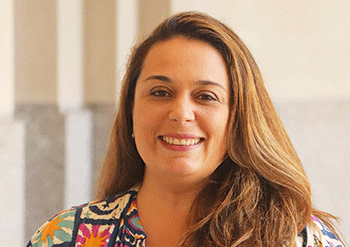 In today’s episode of The Arc, ECSP’s Angus Soderberg and Claire Doyle interview Wilson Center Fellow Dr. Renata Giannini about her work with women environmental defenders in the Amazon and their role at COP30 in Brazil. Select quotes from the interview are featured below.