-
Addressing Human-Wildlife Conflict in Ethiopia’s Protected Lands
›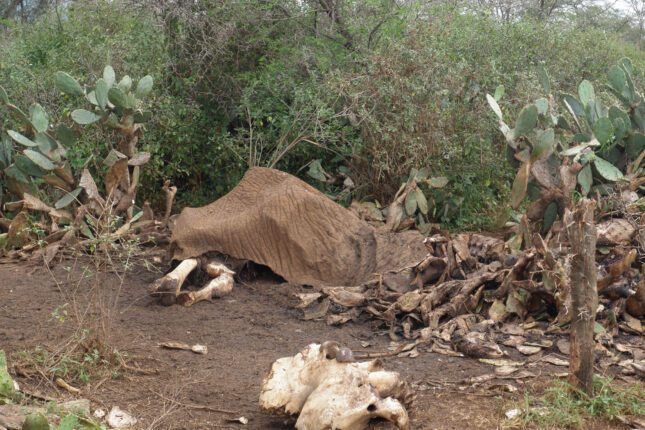
We are undoubtedly at the 11th hour for biodiversity. The World Wildlife Foundation recently reported that Earth saw a 70% drop in species populations over the last fifty years.
As global leaders convened at COP16 in Cali, Colombia in late October and early November, many of the most pressing threats to biodiversity and pathways to improving governance effectiveness were on the agenda. This year’s conference theme—“Peace with Nature”—offered an impetus for a deeper dialogue on the conflict-biodiversity nexus, which included the work of “Peace@CBD”: a community of NGOs, institutions, and individuals that promotes relationships between nature, peace, and conflict.
-
The Arc | Indigenous and Community Power: Localizing Climate Action
› In today’s episode of The Arc, we are featuring a panel discussion on climate action through Indigenous and community power from the Forum on Advancing Inclusive Climate Action in Foreign Policy and Development, hosted by the Wilson Center in collaboration with the White House and USAID’s Bureau for Humanitarian Assistance, with support from the USAID Climate Adaptation Support Activity.
 -
New Tool Offers Key Insights for Tackling Climate and Conflict Challenges
›When the White House released the US Framework for Climate Resilience and Security in September 2024, it was an important opportunity to highlight the significant impacts of climate change on US national security, economic, and strategic interests. The Framework also emphasized the need for tailored approaches in fragile, conflict-affected, and vulnerable (FCV) contexts, particularly in managing and allocating resources, as well as ensuring that climate finance addresses conflict drivers.
-
Finding a Place for “The Planetary?”
›One of academia’s latest buzz phrases is “the planetary.” While it may seem on the surface to lack a clear connection with climate security, a closer inspection suggests that this term does have significant relevance to discussions about this key concept.
Use of “the planetary” is an attempt to compel people to think much more carefully about the current human condition. The climate crisis—as well as the extinction event we are living through—are challenging contemporary notions that humans are somehow separate from nature. In short, a relatively stable world in which our infrastructure, economies, and modes of thinking remain rooted is no longer a useful construct.
-
The 2024 Emissions Gap Report: A Clarion Call for Mandatory Commitments?
›A new United Nations report calls upon countries to deliver drastically stronger action on climate change. “Emissions Gap Report 2024: No more hot air…please!” is intended to raise the alarm at a significant moment: less than a month before nations head to Azerbaijan for COP29, and just a few months before the preparation and submission of new nationally determined contributions (NDCs) next February ahead of COP30 in Brazil.
-
Deep Seabed Mining: Will It Rise to The Surface—and Where?
›Norway recently announced that electric vehicles (EV) now outnumber gas-powered ones on its highways for the first time—and that these vehicles comprise 80 percent of its current new car sales. While internal combustion engines (ICE) will not disappear for several years, Norway’s sales of ICE-powered vehicles will end abruptly in 2025.
-
The COP16 Opportunity: Bringing Biodiversity and Climate into Alignment?
›At first glance, the growing alignment of climate and biodiversity challenges in global politics may seem harmless. Indeed, there is a strong argument that it is a much-needed and long overdue development, since addressing these inextricably-connected challenges together may ensure that gains in one area do not lead to costs in the other.
-
ECSP Weekly Watch | September 23 – 27
›A window into what we’re reading at the Wilson Center’s Environmental Change and Security Program
Member States Adopt Pact of the Future (United Nations)
The United Nations hosted the Summit of the Future earlier this week, which led to a new agreement between member states which acknowledged the shortcomings of the UN’s current role and abilities. The Pact of the Future encourages member states to reaffirm, reestablish, and renew global cooperation—and create new solutions to address today’s escalating polycrises.
Showing posts from category international environmental governance.
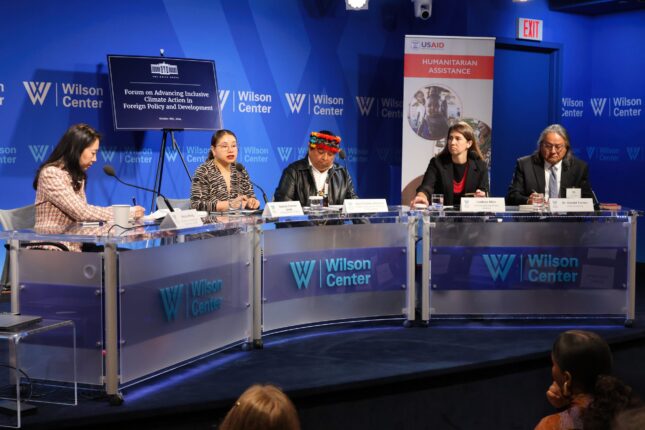 In today’s episode of The Arc, we are featuring a panel discussion on climate action through Indigenous and community power from the Forum on Advancing Inclusive Climate Action in Foreign Policy and Development, hosted by the Wilson Center in collaboration with the White House and USAID’s Bureau for Humanitarian Assistance, with support from the USAID Climate Adaptation Support Activity.