-
What’s Next? Two Decades Tracking the Environment-Security-Population Nexus
›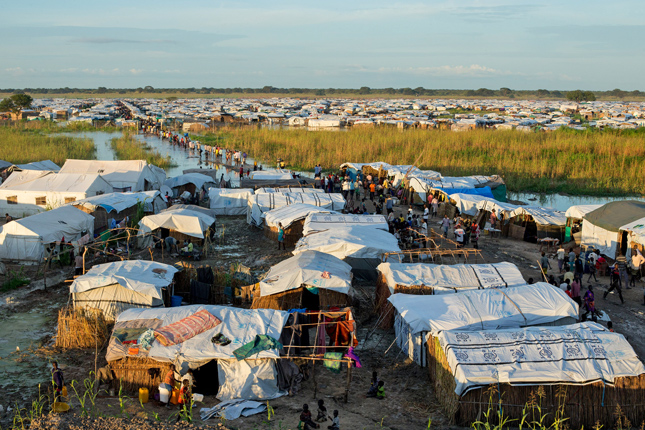
Global crises like the Ebola outbreak force us to consider what “security” really means, said Sharon Burke, senior advisor for the New America Foundation. “Is security getting our kids to school and food on the table…or are you talking about military security and defense threats that require a weapon to counter?”
-
Can We Forecast Where Water Conflicts Are Likely to Occur?
›
Many of the world’s freshwater systems reach across national boundaries, and growing demands combined with supply constraints may lead to increased potential for international water conflicts. If that’s the case, which international river basins are most at risk of conflict or, conversely, which are most prone to cooperation? What are the factors that increase or decrease conflict risk?
-
UK Global Trends Report Forecasts Security Threats in Face of Growth, Climate and Technological Change
›October 22, 2014 // By Heather RandallBy 2045, global population will be north of 9 billion with increased urbanization and migration, natural resource stress, improved medical technologies, greater use of robotic labor, and a shift towards lifelong (and increasingly online) learning, according to a recent report from the UK Ministry of Defense.
-
Wael Hmaidan: Development Goals Unattainable Without Addressing Climate Change
›
When it comes to sustainable development, not all goals are created equal, says Wael Hmaidan, the director of Climate Action Network International, in this week’s podcast. Climate change “intersects everything we do,” he says, but is underrepresented in the Sustainable Development Goals (SDGs), a global development agenda being drafted to replace the Millennium Development Goals next year.
-
Hydro-Diplomacy Can Build Peace Over Shared Waters, But Needs More Support
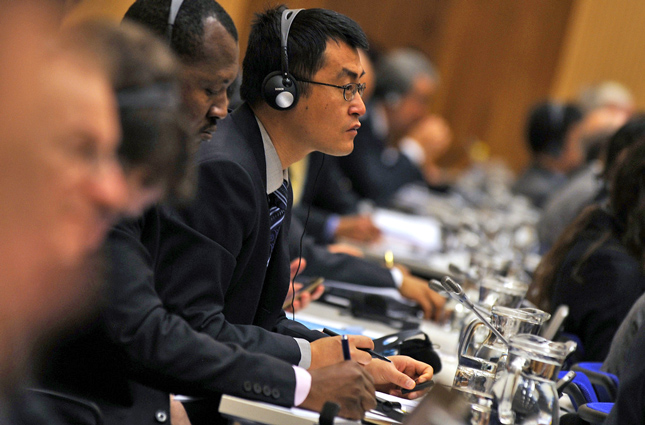
›From Ukraine and the Middle East to sub-Saharan Africa and East Asia, the world is engulfed in a series of significant international crises. But despite such urgent issues, it would be a grave mistake to forget about the structural foreign policy challenges – such as access to water – that could become the crises of the future.
-
Beyond Scarcity: Coleen Vogel on Reframing Water Security
›
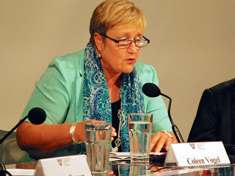
What exactly is meant by “water security?” Different conceptualizations of the problem can lead to different, possibly misguided, solutions, says Coleen Vogel in this week’s podcast. Vogel, professor at the University of Pretoria and a lead author of the IPCC’s 4th and 5th assessment reports, calls for reframing the water security discourse in three key ways.
-
What Can the Environmental Community Learn From the Military? Interview With Chad Briggs on Scenario Planning
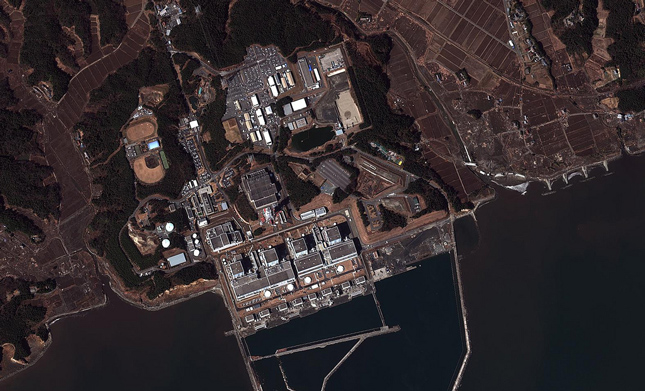
›September 8, 2014 // By Moses JacksonIs it possible to prepare for the unexpected? Could anyone have foreseen, for instance, a nuclear meltdown triggered by an earthquake-induced tsunami? Or a brutal band of transnational militants quickly capturing Iraq’s largest dam while attempting to establish a new Islamic caliphate? Perhaps not exactly, but that shouldn’t stop us from anticipating unlikely events, says Chad Briggs, a risk assessment expert and strategy director of consulting firm GlobalInt.
-
Silver Buckshot: Alternative Pathways Towards Greenhouse Gas Mitigation
›In 1986, global nuclear weapons stockpiles peaked at nearly 70,000 warheads. By the beginning of 2013, there were just over 17,000, with only 4,400 kept operational. This dramatic reduction was the fruit of a negotiation process that began in the late 1940s. In spite of incredible tensions between the United States and the Soviet Union, negotiators were able to make progress once they focused on building trust with small, pragmatic steps, rather than starting with the complete elimination of all weapons. [Video Below]
Showing posts from category international environmental governance.