-
From Readiness to Resilience: Strengthening Institutions for Climate Action
›November 12, 2025 // By Stephanie Speck
This article was adapted from Stephanie Speck’s remarks at the 2025 Berlin Climate Security Conference.
When I arrived in Mogadishu in 2013 to set up and lead the Office of the President’s communication and media department, I had the privilege of being invited to breakfast with the President. As I made my way through the layers of security leading to the presidential residence, I noticed an older woman walking behind me—cradling a chicken under each arm. She followed closely, undeterred by the checkpoints that stopped others.
-
Will the Global Plastics Treaty Safeguard Health?
›August 13, 2025 // By Dr. Philip J. Landrigan
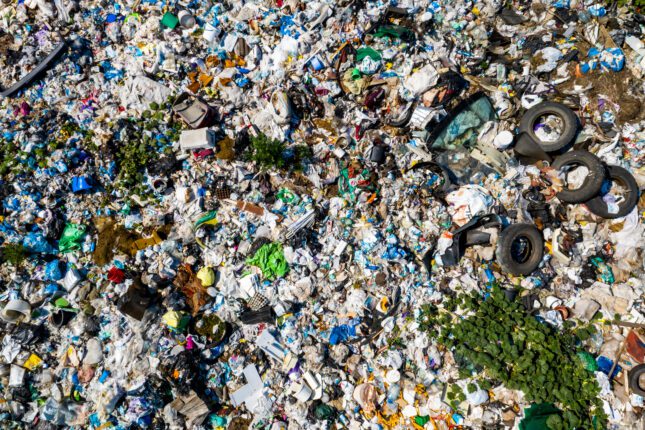
Global plastic production is increasing almost exponentially. Not only has it grown 250-fold since the 1950s, but it is on track to double by 2040, and nearly triple by 2060. The waste associated with its creation has accumulated in parallel. An estimated 8 billion metric tons of discarded plastic now pollute the planet, breaking down into micro-and nanoplastic particles (MNPs) that are ubiquitous in the environment.
-
ECSP Weekly Watch | March 17 – 21
›A window into what we’re reading at the Wilson Center’s Environmental Change and Security Program
Canal Projects Endanger Water Security in Pakistan’s Indus Delta (Al Jazeera)
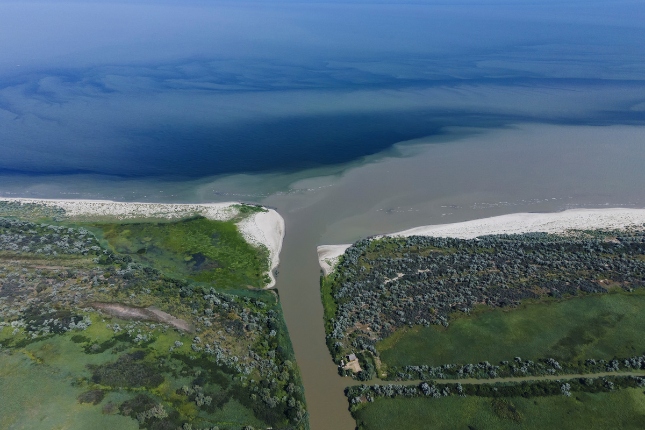
Dozens of villages in the Indus Delta have been submerged by the encroaching sea over recent years, pushing thousands to migrate inland. Now, local residents in Pakistan fear that new canal projects may further exacerbate water shortages in the region.
-
Harnessing the Benefits of Water Cooperation in an Increasingly Complex World
›In an era of apparent decline in international cooperation and rising crises, freshwater offers an area in which joint approaches remain absolutely essential—especially since water often transcends the boundaries of nation-states.
Cooperation has long been the preferred approach in dealing with water resources shared with neighboring countries. Since the first—and so far, only—water war in 2550 B.C.E., states have favored cooperative action over conflict to manage, protect, or develop our planet’s 313 transboundary surface water basins and 468 transboundary aquifers.
-
Environmental Peacebuilding: The Year in Review and the Year Ahead
›As 2025 marches into its third month, the governance challenges that accompany rising demand for natural resources are not only on the front burner—they are proliferating—and becoming entangled with the drivers of conflict and cooperation.
The heated competition for resources has bubbled up in a proposed billion-dollar deal for Ukrainian minerals now making global headlines. The view that critical minerals like lithium, manganese, and others could become bargaining chips in potential peace talks demonstrates how central they’ve become to global competition—and to the economic and political future of countries around the world.
-
ECSP Weekly Watch | March 10 – 14
›A window into what we’re reading at the Wilson Center’s Environmental Change and Security Program
Congo Takes Apple to Court (Foreign Policy)
The Democratic Republic of the Congo has filed criminal lawsuits against Apple subsidiaries in France and Belgium, alleging that the company profits from smuggled conflict minerals laundered through Rwanda. This legal action follows the seizure of key mining areas by M23 rebels, which has further fueled a conflict that already has killed over 8,500 people. Apple denies the claims, stating that it ordered its suppliers to suspend sourcing from Congo and Rwanda.
-
ECSP Weekly Watch | March 3 – 7
›A window into what we’re reading at the Wilson Center’s Environmental Change and Security Program
UK and Ireland Will Connect Energy Networks (The Guardian)
Despite post-Brexit trade barriers, the UK and Ireland have announced a collaboration on renewable energy infrastructure to boost both nations’ energy efficiency and security. The deal is part of larger efforts to “harness the full potential” of the Irish and Celtic seas for offshore windfarms and national energy networks.
-
ECSP Weekly Watch | February 24 – 28
›A window into what we’re reading at the Wilson Center’s Environmental Change and Security Program
EU Parliament Suspends Rwandan Critical Mineral Pact Over Links to DRC Conflict (Mongabay)
Rwanda and the DRC both have large reserves of critical minerals essential to the clean energy transition. Yet the EU has voted to suspend a cooperation agreement on mineral extraction in the region after the Rwandan-backed rebel group M23 seized key areas in the DRC’s eastern provinces.
Showing posts from category international environmental governance.