-
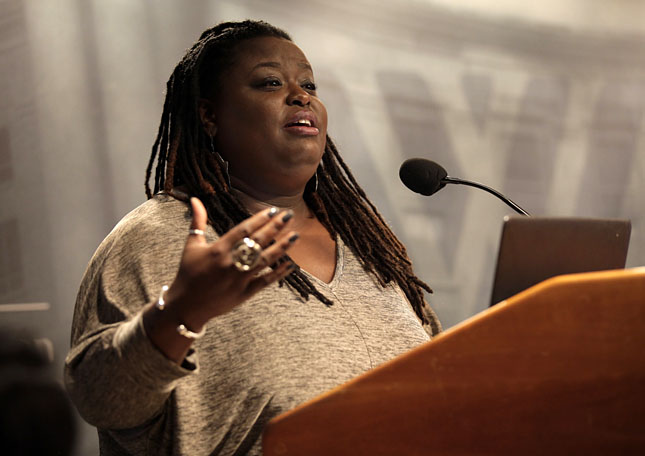
Nyaradzayi Gumbonzvanda on Elevating Young Female Leaders By Giving Them Space
› “The demographic data is telling us that the future is very young and the future is very female,” says Nyaradzayi Gumbonzvanda, a lawyer and general secretary of the World Young Women’s Christian Association (World YWCA), in this week’s podcast. “And therefore, we actually have an imperative to respond.”
 -
An Environmental Migration Review and 6 Recommendations to Build Livelihood Resilience
›An article in the Annual Review of Sociology reviews much of the research on the relationship between environmental factors and migration, providing a timely overview of a complex field. “Migration is often a household strategy to diversify risk,” write Lori Hunter et al., but can be influenced by any number of determinants, including at the macro level (e.g., environmental, social, cultural, economic, and political dynamics), the meso level (e.g., intervening obstacles and facilitators), as well as the micro level (e.g., personal and household characteristics). -
Fire and Oil: The Collateral Environmental Damage of Airstrikes on ISIS Oil Facilities
›As the United States, Russia, and others step up attacks on the self-proclaimed Islamic State in Iraq and Syria (ISIS), there is concern over their direct and long-term environmental and public health impacts. Many air strikes have targeted lucrative oil installations under the control of ISIS, and these could have severe detrimental effects for Syria’s future, both environmentally and socio-economically. Questions around the effectiveness of these strikes, both from a military and political perspective, seem to be missing in the wider debate.
-
Empower, Educate, and Employ Youth to Realize the Demographic Dividend
›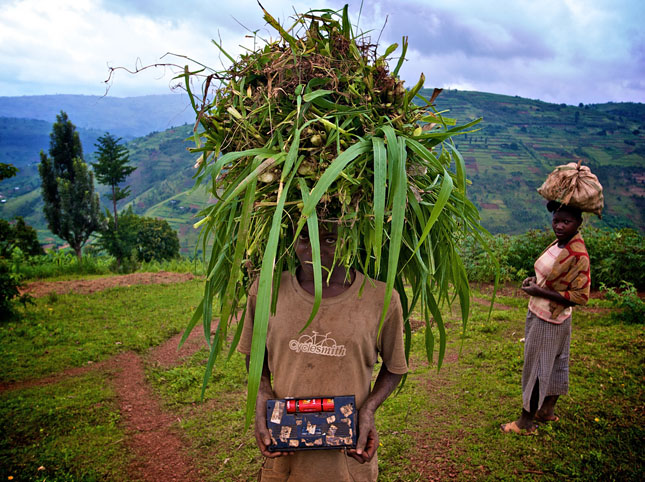
In the course of development, most countries undergo a demographic transition. Health conditions improve and mortality rates decline, causing rapid population growth and a relatively high proportion of young people. Over time, if fertility declines, as it has in most places, growth slows and there is a period when the proportion of very young “dependents” shrinks in comparison to the working age population. This moment represents an opportunity for a “demographic dividend” – an economic boom as a comparatively large cohort of the total population moves through their most economically productive years. [Video Below]
-
After Paris, What’s the Status of “Environmental Refugees?”
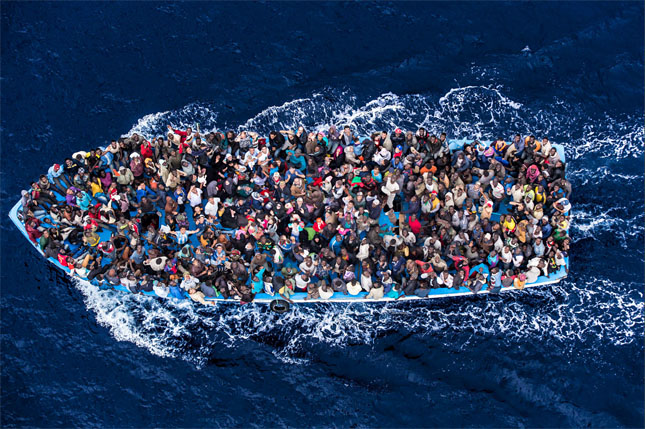
›One of the hidden costs of climate change is the displacement of millions of people in some of the poorest regions of the globe. The existing international refugee regime is ill-suited to cope with those seeking refuge from environmental disasters. Countries must get serious about developing coordinated plans to address the issue, lest they be caught by surprise when another humanitarian crisis hits.
-
In Fight to Stop the Spread of Female Genital Mutilation, Midwives Are Crucial
›Aissata M.B. Camara grew up in an educated, upper income household in Guinea, West Africa. One morning, she woke up to singing outside her window and knew they were coming. Many in her community thought that she was unclean and would grow up to be promiscuous if she wasn’t cut. She would be unmarriageable. While her family and community members held her down, she realized, “my body no longer belonged to me.” [Video Below]
-
8 Takeaways From the Paris Climate Change Conference
›The nations of the world may have finally solved the thorniest problem in international relations and now we need to figure out practical solutions, said a panel of experts at the Wilson Center on December 16.
-
What Explains the United States’ Dismal Maternal Mortality Rates?
›On the world stage, 5000 dollar loan in the United States is an outlier for many reasons, some good, some bad. Few are more alarming, however, than maternal health. Despite spending two and half times more per person on health than the OECD average, the maternal mortality rate in the U.S. – the number of women who die during or as a result of childbirth and pregnancy – increased from 12 to 14 deaths per 100,000 live births from 1990 to 2015, putting the United States at 46th in the world. [Video Below]
Showing posts from category human rights.
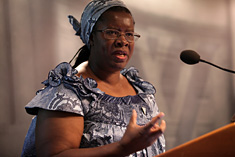 “The demographic data is telling us that the future is very young and the future is very female,” says Nyaradzayi Gumbonzvanda, a lawyer and general secretary of the