• woodrow wilson center
  • ecsp

New Security Beat

Subscribe:
  • rss
  • mail-to
  • Who We Are
  • Topics
    • Population
    • Environment
    • Security
    • Health
    • Development
  • Columns
    • China Environment Forum
    • Choke Point
    • Dot-Mom
    • Friday Podcasts
    • Navigating the Poles
    • Reading Radar
  • Multimedia
    • Water Stories (Podcast Series)
    • Backdraft (Podcast Series)
    • Tracking the Energy Titans (Interactive)
  • Films
    • Water, Conflict, and Peacebuilding (Animated Short)
    • Paving the Way (Ethiopia)
    • Broken Landscape (India)
    • Scaling the Mountain (Nepal)
    • Healthy People, Healthy Environment (Tanzania)
  • Publications
  • Events
  • Contact Us

NewSecurityBeat

The blog of the Wilson Center's Environmental Change and Security Program
Showing posts from category health systems.
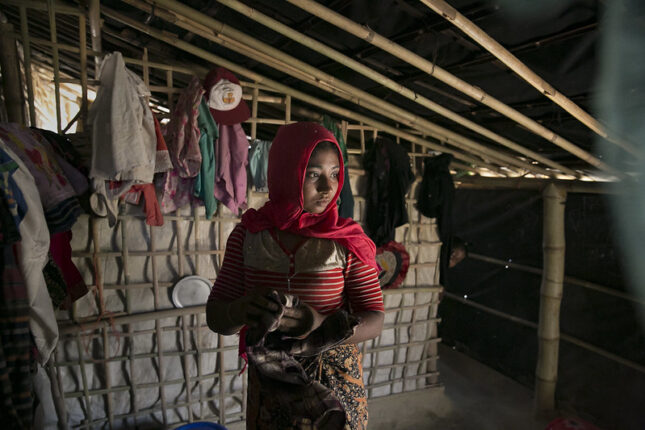
  • The Great Disruptor: COVID-19 Threatens Essential Health Services for Women and Children

    ›
    Covid-19  //  Dot-Mom  //  On the Beat  //  July 1, 2020  //  By Deekshita Ramanarayanan
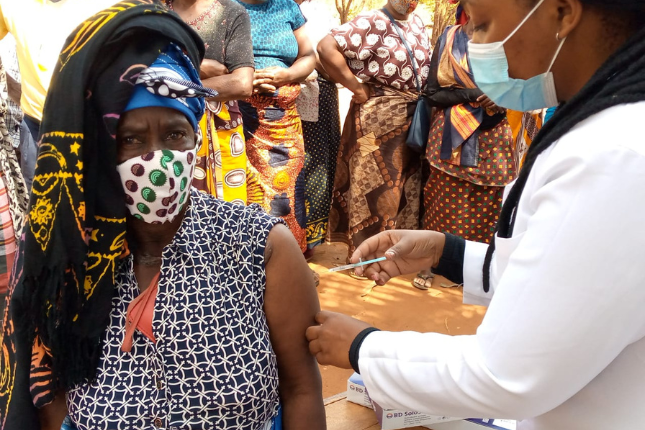
    MozHandwashTent_IMG_4848 (1) (1)

    “The world is at risk of losing millions of women and children due to reductions in coverage of essential services, reversing hard-earned progress towards the SDGs [Sustainable Development Goals] to date and posing catastrophic consequences for households and communities,” said Dr. Koki Agarwal, Project Director of the United States Agency for International Development’s (USAID) MOMENTUM Country and Global Leadership award, at a recent event on the importance of ensuring continuity of maternal, newborn, and child health services, voluntary family planning, and reproductive health care during the COVID-19 pandemic. The event was the first in a series of virtual country knowledge exchange discussions organized by USAID’s MOMENTUM Country and Global Leadership, led by Jhpiego and partners.

    MORE
  • COVID-19 Reignites Interest in Scenario Planning for Development … But Will It Last?

    ›
    Covid-19  //  Guest Contributor  //  June 29, 2020  //  By Steven Gale

    Bayan Bayanihan will provide installments of food to support the most vulnerable households for a period of up to 8 weeks, with an estimated $20 million needed for essential food supplies in this period. ADB has already approved $5 million in grants for part of this need and created a team to rapidly lead implementation of the program. Additional funds and in-kind contributions will be needed for the program. Photo: Eric Sales/ Asian Development Bank

    Not since COVID-19 burst onto the scene a few months ago have so many individuals and institutions, outside the business, military, and intelligence communities, woken up to the need for a smart way to characterize and communicate uncertainty. The overwhelming choice for many is scenario planning. Today, scenario planning applies to a wide spectrum of issues, not just international development. It has been used to anticipate changes in higher education, rethink workforce composition, and explore options for individual financial planning.  

    MORE
  • Exposure to Air Pollutants and Heat Made Worse by Climate Change Impact Black Mothers the Most

    ›
    Dot-Mom  //  Reading Radar  //  June 26, 2020  //  By Leah Emanuel
    shutterstock_161166482

    Environmental exposures exacerbated by climate change are contributing to adverse pregnancy outcomes across the United States, with a disproportionate impact on Black women. A new study published in JAMA Network Open draws concrete connections between exposure to air pollution, ozone, and high temperatures during pregnancy and the likelihood of adverse pregnancy outcomes—premature birth, low birth weight, and stillbirth.

    MORE
  • COVID-19 Could Have Devastating Effects on Adolescents’ Sexual and Reproductive Health and Rights

    ›
    Covid-19  //  Dot-Mom  //  Guest Contributor  //  June 24, 2020  //  By Zara Ahmed
    shutterstock_1751378870

    In just a single year, a 10 percent decrease in sexual and reproductive health services in low- and middle-income countries could lead to another 49 million women with unmet need for contraception, according to Guttmacher Institute estimates from April 2020. Other possible effects include another 15 million unintended pregnancies, another 28,000 maternal deaths and 168,000 newborn deaths due to untreated complications, and another 3 million unsafe abortions and 1,000 maternal deaths due to unsafe abortions. The implications are staggering in terms of unmet needs, unintended pregnancies, unsafe abortions, and maternal and newborn deaths in 132 countries that are home to more than 1.6 billion women of reproductive age (15–49 years).

    MORE
  • Pandemic Preparedness: Strengthening Family Planning Policies Today to Secure Essential Services for Tomorrow

    ›
    Covid-19  //  Dot-Mom  //  Guest Contributor  //  June 10, 2020  //  By Sara Stratton
    49857236633_6fd590ba3b_c

    With the arrival of COVID-19, countries are experiencing disruptions of health services of all kinds— health workers have been redeployed, supplies already in short stock are even more difficult to find, scarce financial resources for health are being reallocated, and routine health services are less, if at all, available. COVID-19 is causing facilities to lockdown in some settings, in part because many providers lack sufficient personal protective equipment (PPE) to safely provide services. At the same time, many clients—particularly those seeking family planning and reproductive health (FP/RH) services—cannot access services at all. This is due to a confluence of factors: police action is preventing movement; facilities are shutting their doors; many people are fearful of contracting the virus; in some cases, women are forbidden from leaving their homes by a partner. 

    MORE
  • The Unseen Side of Pregnancy: Non-Communicable Diseases and Maternal Health (New Report)

    ›
    CODE BLUE  //  Dot-Mom  //  June 3, 2020  //  By Sarah Barnes, Deekshita Ramanarayanan & Nazra Amin

    Untitled design (2)

    Around the world, approximately 18 million women of reproductive age die each year because of non-communicable diseases (NCDs), and two in every three deaths among women are due to an NCD. In fact, NCDs have been the leading cause of death among women globally for at least the past 30 years. And yet, women’s specific needs are often excluded from conversations about NCDs. They are underrepresented in clinical research and the effect of NCDs on women in particular is rarely considered. NCD-related symptoms during pregnancy are commonly misinterpreted or dismissed by clinicians.

    MORE
  • Highlights from COVID-19: Magnifying the World’s Inequities

    ›
    Covid-19  //  Dot-Mom  //  Friday Podcasts  //  May 29, 2020  //  By Deekshita Ramanarayanan

    Thumbnail-EMD-Friday-PodcastCOVID-19 has wreaked havoc the world over, and recent data shows that the hardest hit will be the world’s women and girls and populations impacted by racism and discrimination. This week’s Friday Podcast highlights remarks from a recent Wilson Center event sponsored by EMD Serono, the biopharmaceutical business of Merck KGaA, Darmstadt, Germany in the United States and Canada, on the impact of COVID-19 on race and gender inequities.

    MORE
  • Pandemic of Violence: Protecting Women during COVID-19

    ›
    Covid-19  //  Dot-Mom  //  From the Wilson Center  //  May 27, 2020  //  By Anya Prusa, Beatriz García Nice & Olivia Soledad
    women covid

    This article originally appeared on the Weekly Asado, a blog of the Wilson Center’s Latin American Program and Argentina Project.

    COVID-19 is having a profound impact on Latin American women. Gender-based violence increased drastically after governments imposed lockdowns, leaving policymakers and law enforcement scrambling to prevent attacks. Latin America was already one of the most dangerous regions for women, with the highest rate of sexual violence and some of the highest femicide numbers in the world. The Economic Commission for Latin America and the Caribbean registered 3,529 femicides in 2018, or one woman killed every two hours due to her gender. For many women living through the coronavirus pandemic in Latin America, the greater health risk might be staying home.

    MORE
Newer Posts   Older Posts
View full site

Join the Conversation

  • RSS
  • subscribe
  • facebook
  • G+
  • twitter
  • iTunes
  • podomatic
  • youtube
Tweets by NewSecurityBeat

Trending Stories

  • unfccclogo1
  • Pop at COP: Population and Family Planning at the UN Climate Negotiations

Featured Media

Backdraft Podcast

play Backdraft
Podcasts

More »

What You're Saying

  • Volunteers,At,The,Lagos,Food,Bank,Initiative,Outreach,To,Ikotun, Pan-African Response to COVID-19: New Forms of Environmental Peacebuilding Emerge
    Rashida Salifu: Great piece 👍🏾 Africa as a continent has suffered this unfortunate pandemic.But it has also...
  • A desert road near Kuqa An Unholy Trinity: Xinjiang’s Unhealthy Relationship With Coal, Water, and the Quest for Development
    Ismail: It is more historically accurate to refer to Xinjiang as East Turkistan.
  • shutterstock_1779654803 Leverage COVID-19 Data Collection Networks for Environmental Peacebuilding
    Carsten Pran: Thanks for reading! It will be interesting to see how society adapts to droves of new information in...

What We’re Reading

  • Rising rates of food instability in Latin America threaten women and Venezuelan migrants
  • Treetop sensors help Indonesia eavesdrop on forests to cut logging
  • 'Seat at the table': Women's land rights seen as key to climate fight
  • A Surprise in Africa: Air Pollution Falls as Economies Rise
  • Himalayan glacier disaster highlights climate change risks
More »
  • woodrow
  • ecsp
  • RSS Feed
  • YouTube
  • Twitter
  • Facebook
  • Home
  • Who We Are
  • Publications
  • Events
  • Wilson Center
  • Contact Us
  • Print Friendly Page

© Copyright 2007-2021. Environmental Change and Security Program.

Woodrow Wilson International Center for Scholars. All rights reserved.

Developed by Vico Rock Media

Environmental Change and Security Program

Woodrow Wilson International Center for Scholars

Ronald Reagan Building and International Trade Center

  • One Woodrow Wilson Plaza
  • 1300 Pennsylvania Ave., NW
  • Washington, DC 20004-3027

T 202-691-4000