• woodrow wilson center
  • ecsp

New Security Beat

Subscribe:
  • rss
  • mail-to
  • Who We Are
  • Topics
    • Population
    • Environment
    • Security
    • Health
    • Development
  • Columns
    • China Environment Forum
    • Choke Point
    • Dot-Mom
    • Friday Podcasts
    • Navigating the Poles
    • Reading Radar
  • Multimedia
    • Water Stories (Podcast Series)
    • Backdraft (Podcast Series)
    • Tracking the Energy Titans (Interactive)
  • Films
    • Water, Conflict, and Peacebuilding (Animated Short)
    • Paving the Way (Ethiopia)
    • Broken Landscape (India)
    • Scaling the Mountain (Nepal)
    • Healthy People, Healthy Environment (Tanzania)
  • Publications
  • Events
  • Contact Us

NewSecurityBeat

The blog of the Wilson Center's Environmental Change and Security Program
Showing posts from category global health.

  • Leslie Mwinnyaa: Young People Drive Integrated Development in Ghana’s Ellembelle District

    ›
    Beat on the Ground  //  Friday Podcasts  //  May 17, 2013  //  By Schuyler Null & Carolyn Lamere

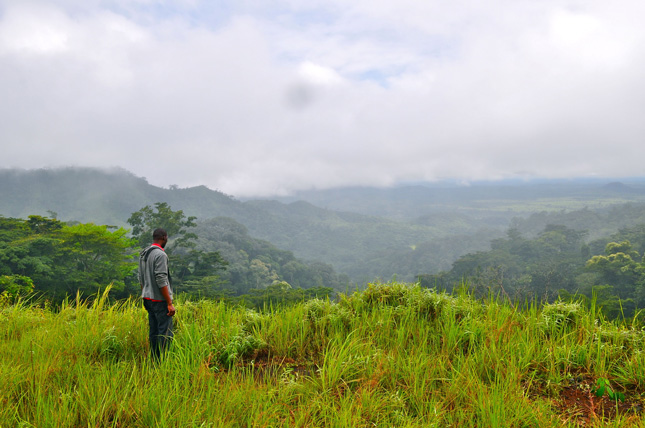
    “I have been amazed and inspired by the youth that I’ve worked with, with their dedication and motivation to help their countrymen and to try to make their communities better places,” says Leslie Mwinnyaa in this week’s podcast.

    When Mwinnyaa arrived in the Ellembelle district of coastal Ghana as a Peace Corps volunteer she found a multitude of development challenges. Fishermen routinely use illegal techniques like chemicals, lights, and dynamite that decimate fish stocks; “sand winning” and mangrove clearing increases erosion, leaving communities vulnerable to flooding and reducing breeding grounds for local fish; poor waste and refuse management contributes to disease and poor health; and teenage girls have twice the national rate of pregnancy.

    MORE
  • Combining Health and Food Security in Mozambique: Interview With Pathfinder International’s SCIP Project

    ›
    Beat on the Ground  //  May 15, 2013  //  By Carolyn Lamere

    Pathfinder International’s Strengthening Communities Through Integrated Programming (SCIP) is part of a new push towards integrated development – looking at communities as a whole and addressing multiple, traditionally-siloed sectors at once. SCIP integrates both its activities and its funding to great effect in Mozambique.

    MORE
  • Protecting Parks, Empowering People: Innovative Conservation and Development Projects in Mozambique and Zambia

    ›
    From the Wilson Center  //  May 14, 2013  //  By Carolyn Lamere

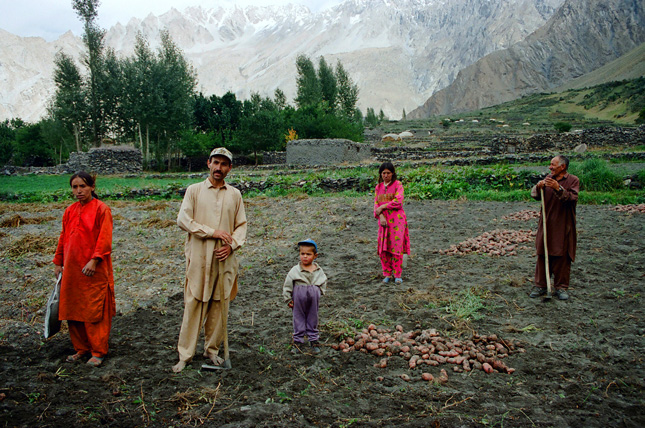
    Wildlife areas and parks are designed to preserve plant and animal life in biological hotspots, but what about the people who live nearby these hotspots? In many parts of East Africa, communities press right up against park boundaries and people have few alternatives but to draw on the natural resources of protected areas. Conservation efforts depend on these communities’ cooperation and the sustainability – both environmentally and economically – of their livelihoods. [Video Below]

    MORE
  • From Alcohol to HIV/AIDS, Anita Raj on How Gender Inequities Affect Maternal Health in India

    ›
    Dot-Mom  //  Friday Podcasts  //  May 10, 2013  //  By Carolyn Lamere

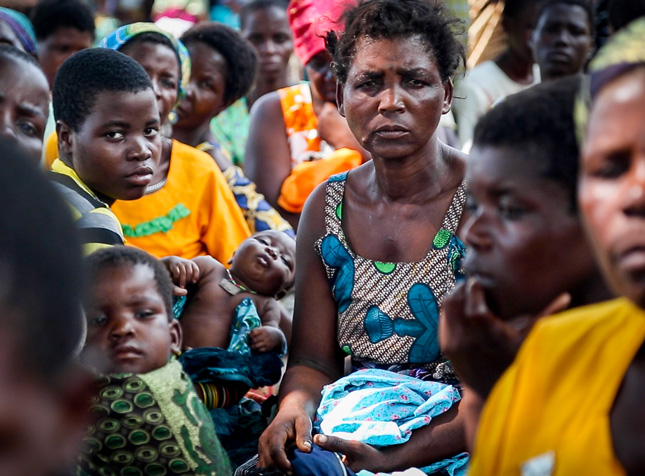
    Anita-Raj-podcast“Improving the equity of women, the treatment of women and girls, the value of women and girls in society is a very important means of improving population health,” says Dr. Anita Raj of the University of California, San Diego. Traditional societal expectations of women and girls in India contribute to high early marriage rates, low birth spacing, high rates of sexually transmitted infections, and high rates of abuse. Efforts to improve maternal and child health should take these and other gender inequities into consideration. “The need to work on these issues and work on them immediately cannot be overstated,” she said.

    MORE
  • What Rights? New York Times’ Discussion of Egypt’s Population Policy Incomplete

    ›
    On the Beat  //  May 7, 2013  //  By Schuyler Null

    The New York Times had a front-page story on Egypt’s population policy last week; unfortunately it wasn’t a sterling example of how to report on this tricky issue and left out a key part of the story – the important role of family planning in ensuring human rights, especially for women.

    MORE
  • Jay Silverman on the Impact of Domestic Violence on Maternal and Child Health

    ›
    Dot-Mom  //  Friday Podcasts  //  May 3, 2013  //  By Carolyn Lamere

    “Violence against women is obviously a major factor in maternal and reproductive health,” says Jay Silverman, co-director of the Program on Gender Inequities and Global Health at the University of California, San Diego, in this week’s podcast. From hypertension to early delivery, “all of these things occur at significantly higher rates among women who have an abusive partner.” Silverman gives an overview of the “state of knowledge” about the effect of abuse on mothers and children and suggested that interventions during antenatal care that targets both women and their partners can reduce this important source of child and maternal morbidity.

    MORE
  • Lessons From Kenya and Malawi on Combining Climate Change, Development, and Population Policy

    ›
    From the Wilson Center  //  May 1, 2013  //  By Maria Prebble

    “The combined effects of rapid population growth and climate change are increasing food insecurity, environmental degradation, and poverty levels in Malawi and Kenya,” said Clive Mutunga, a senior research associate at Population Action International (PAI).

    MORE
  • Carl Haub, Demographics Revealed

    A Tale of Four Pyramids

    ›
    April 30, 2013  //  By Wilson Center Staff

    The original version of this article, by Carl Haub, appeared on Demographics Revealed.

    There has been quite a bit made in the media and in blogs about low birth rates in industrialized countries. Quite correctly, many people (and countries!) are concerned that unprecedented aging and a dearth of younger people are leading to serious pressure on national budgets from a rising burden of support for the elderly because of  a declining group of tax-paying workers. But the situation is far from equal everywhere, and less is written about that.

    MORE
Newer Posts   Older Posts
View full site

Join the Conversation

  • RSS
  • subscribe
  • facebook
  • G+
  • twitter
  • iTunes
  • podomatic
  • youtube
Tweets by NewSecurityBeat

Trending Stories

  • unfccclogo1
  • Pop at COP: Population and Family Planning at the UN Climate Negotiations

Featured Media

Backdraft Podcast

play Backdraft
Podcasts

More »

What You're Saying

  • Volunteers,At,The,Lagos,Food,Bank,Initiative,Outreach,To,Ikotun, Pan-African Response to COVID-19: New Forms of Environmental Peacebuilding Emerge
    Rashida Salifu: Great piece 👍🏾 Africa as a continent has suffered this unfortunate pandemic.But it has also...
  • A desert road near Kuqa An Unholy Trinity: Xinjiang’s Unhealthy Relationship With Coal, Water, and the Quest for Development
    Ismail: It is more historically accurate to refer to Xinjiang as East Turkistan.
  • shutterstock_1779654803 Leverage COVID-19 Data Collection Networks for Environmental Peacebuilding
    Carsten Pran: Thanks for reading! It will be interesting to see how society adapts to droves of new information in...

What We’re Reading

  • Rising rates of food instability in Latin America threaten women and Venezuelan migrants
  • Treetop sensors help Indonesia eavesdrop on forests to cut logging
  • 'Seat at the table': Women's land rights seen as key to climate fight
  • A Surprise in Africa: Air Pollution Falls as Economies Rise
  • Himalayan glacier disaster highlights climate change risks
More »
  • woodrow
  • ecsp
  • RSS Feed
  • YouTube
  • Twitter
  • Facebook
  • Home
  • Who We Are
  • Publications
  • Events
  • Wilson Center
  • Contact Us
  • Print Friendly Page

© Copyright 2007-2021. Environmental Change and Security Program.

Woodrow Wilson International Center for Scholars. All rights reserved.

Developed by Vico Rock Media

Environmental Change and Security Program

Woodrow Wilson International Center for Scholars

Ronald Reagan Building and International Trade Center

  • One Woodrow Wilson Plaza
  • 1300 Pennsylvania Ave., NW
  • Washington, DC 20004-3027

T 202-691-4000