-
Parfait Eloundou-Enyegue on Re-Conceptualizing Education to Help Developing Countries Create Jobs
› “There is more to education than the picture that you typically see in most reports,” says Parfait Eloundou-Enyegue, professor of development sociology at Cornell University, in this week’s podcast. “And this picture comes from looking at education not as an outcome but as an institution.”
 -
The Environment and Energy Stories to Watch in 2016
›The climate agreement reached in Paris last December, seen by many as a critical step toward lowering greenhouse gas emissions, was big news – perhaps too big. Pointing to the thousands of articles about COP-21, National Geographic Senior Editor Marla Cone asked at a recent Wilson Center panel, “Is this a wise use of resources, when newsrooms are so stretched thin, to have everybody pretty much chasing the same stories?”
-
Suzanne Ehlers & Simon Wright, The World Post
Zika Another Sign of Urgent Need for Primary Care
›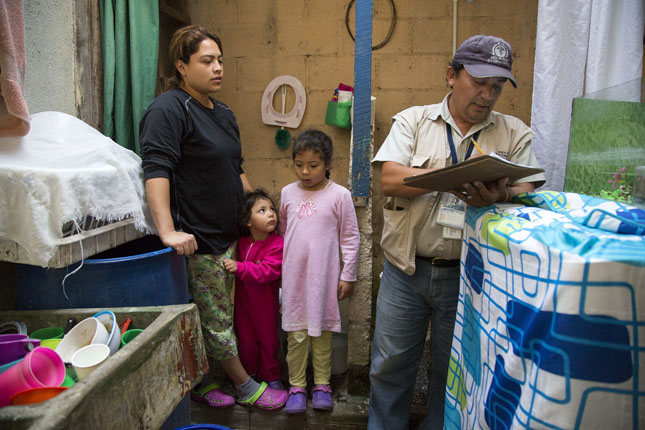
On February 1, the World Health Organization declared the spread of the Zika virus a public health emergency. The declaration was the WHO’s highest level of warning – so dire, in fact, that it has only been declared three times in the organization’s history. We believe that, as with Ebola, the lesson we learn must be the importance of robust universal primary health care services.
-
Ellen Starbird on the Allure of the Demographic Dividend and How to Achieve It
›“It has always surprised me actually how powerful this ‘demographic dividend’ framework seems to be,” says Ellen Starbird, director of USAID’s Office of Population and Reproductive Health, in this week’s podcast. But “for a lot of countries it’s a long way off.” -
Keith Schneider, Circle of Blue
Durban’s Decentralized Water and Sanitation System Sets Global Standard
›DURBAN, South Africa — Arguably the most elegant aspect of an inelegant subject is how this city of 3.2 million residents, South Africa’s second largest, is solving monumental water and waste challenges in its jammed informal settlements.
-
Jagdish Upadhyay: Don’t Wait for the Demographic Dividend, Seize It
›“The demographic dividend is about inclusive growth, not just economic growth,” says Jagdish Upadhyay, chief of commodity security at the United Nations Population Fund (UNFPA), in this week’s podcast. “If it’s not inclusive, achieving the demographic dividend will be difficult.” -
Breaking Out of the Dome: Can Energy Efficiency Help Chinese Cities Conquer Air Pollution?
› -
Zika Virus Prompts El Salvador and Others to Discourage Pregnancy – What Are the Potential Consequences?
›The government of El Salvador took a truly extraordinary step in an attempt to control the rapidly spreading Zika virus last week by asking its citizens to avoid getting pregnant from now until 2018. Yes, you read that right.
Showing posts from category global health.
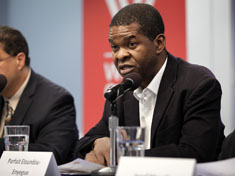 “There is more to education than the picture that you typically see in most reports,” says Parfait Eloundou-Enyegue, professor of development sociology at Cornell University, in this week’s podcast. “And this picture comes from looking at education not as an outcome but as an institution.”
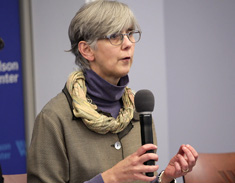 “It has always surprised me actually how powerful this ‘demographic dividend’ framework seems to be,” says Ellen Starbird, director of USAID’s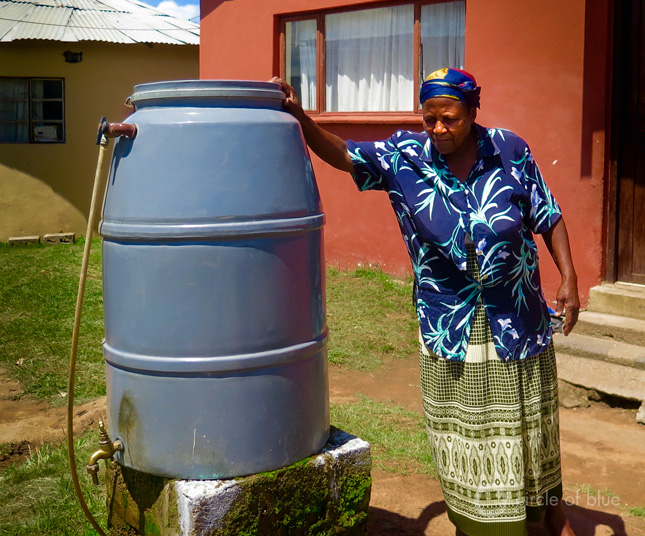
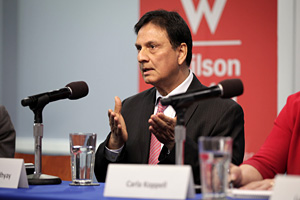 “The demographic dividend is about inclusive growth, not just economic growth,” says Jagdish Upadhyay, chief of commodity security at the United Nations Population Fund (UNFPA), in this week’s podcast. “If it’s not inclusive, achieving the demographic dividend will be difficult.”