• woodrow wilson center
  • ecsp

New Security Beat

Subscribe:
  • rss
  • mail-to
  • Who We Are
  • Topics
    • Population
    • Environment
    • Security
    • Health
    • Development
  • Columns
    • China Environment Forum
    • Choke Point
    • Dot-Mom
    • Friday Podcasts
    • Navigating the Poles
    • Reading Radar
  • Multimedia
    • Water Stories (Podcast Series)
    • Backdraft (Podcast Series)
    • Tracking the Energy Titans (Interactive)
  • Films
    • Water, Conflict, and Peacebuilding (Animated Short)
    • Paving the Way (Ethiopia)
    • Broken Landscape (India)
    • Scaling the Mountain (Nepal)
    • Healthy People, Healthy Environment (Tanzania)
  • Publications
  • Events
  • Contact Us

NewSecurityBeat

The blog of the Wilson Center's Environmental Change and Security Program
Showing posts from category global health.
  • In FOCUS: To Get HELP, Add Livelihoods to Population, Health, and Environment

    ›
    January 20, 2011  //  By Wilson Center Staff
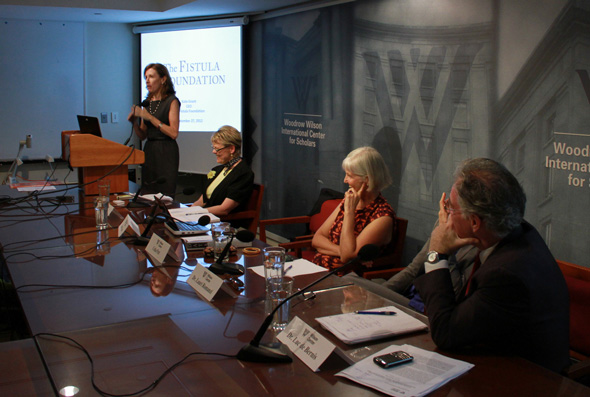
    Proponents of integrated development have always faced significant barriers, but with a new focus on international aid from the Obama administration, the tide may be turning. To fully harness this momentum, Gib Clarke argues in a new ECSP brief that the population-health-environment (PHE) community must solidify its research base, reach out to new partners, and push for flexible funding and programming.

    In “Helping Hands: A Livelihood Approach to Population, Health, and Environment Programs,” he writes that PHE programs should also add livelihoods (i.e., ways to make a living) as a critical element. He suggests such programs adopt a new moniker: “HELP” – Health, Environment, Livelihoods, and Population.

    “Helping Hands” comes at a time when the integrated approach is being touted at the highest levels:
    “We cannot simply confront individual preventable illnesses in isolation. The world is interconnected, and that demands an integrated approach to global health,” said President Barack Obama in May 2009, echoing what population-health-environment (PHE) practitioners have long argued: Integrated lives with integrated problems require integrated solutions. Proponents of integration face significant barriers: lack of funding, programmatic silos, and policy disinterest.
    While the Administration’s newest development efforts (see, e.g., Feed the Future Initiative, Global Health Initiative, and release of the QDDR) all recognize the power of integration, the degree to which these initiatives will operate across sectors remains to be seen. Drawing on interviews with leading experts, Clarke outlines the continuing challenges to implementing more integrated PHE programs and offers four recommendations for overcoming them:
    • The PHE community should adopt a new name that highlights the all-important livelihood component, such as “HELP Plus.”
    • PHE programs need to gather data and conduct operational research to justify the claims of the PHE field.
    • The PHE community needs to “agree to disagree” on the issue of scaling up integrated programs.
    • PHE programs should seek funding from a diverse array of donors.
    “Given the strong base of existing and recent PHE programs, the PHE community is well-positioned to work with lead partners in Obama’s Global Health Initiative, climate change adaptation efforts, food security programs, and other upcoming crosscutting work,” concludes Clarke, who is currently director of planning and development at Interfaith Community Health Center in Bellingham, Washington. For example, USAID Administrator Rajiv Shah stated that the Feed the Future program would be closely integrating its objectives with the Global Health Initiative – a potential opportunity for PHE programs that offer both health benefits and food security.

    “This increased interest in integration may also be the best opportunity for finding new funding, fostering replication, and scaling up. It is a promising moment for integrated approaches, whether we call them PHE, HELP Plus, or some other acronym,” writes Clarke.

    “Helping Hands: A Livelihood Approach to Population, Health, and Environment Programs” along with previous FOCUS issues are available on ECSP’s publications page.

    Image Credit: From the cover of “Helping Hands: A Livelihood Approach to Population, Health, and Environment Programs,” courtesy of the Wilson Center.
    MORE
  • Andrew Morton, UNEP

    Haiti 2011: Looking One Year Back and Twenty Years Forward

    ›
    January 14, 2011  //  By Wilson Center Staff
    This piece first appeared on the website of the Haiti Regeneration Initiative – a new collaborative venture between the UN, the government of Haiti, the Earth Institute at Columbia University, Catholic Relief Services, and a wide range of other implementing partners.

    In 2010, Haiti endured a year like no other. The country was struck by a devastating earthquake, a cholera epidemic, floods, violence, and political uncertainty. At the same time, Haiti witnessed heroic rescue and relief efforts and an enormous demonstration of international goodwill. Today, recovery and reconstruction are taking place, albeit at a frustratingly slow pace and not currently at the scale of existing needs.

    Just as importantly, 2010 brought a renewed awareness of the need for lasting solutions and improvements in the design and delivery of international aid. During the next few days, we will look back on the tragic events of January 12th, 2010, while at the same time, we must look forward, not just one year, but 20.

    A Failed Recovery in a Fragile State

    Already before the earthquake, Haiti was a fragile state trapped in a slow but vicious negative spiral. A tightly interconnected trio of chronic environmental, political, and socio-economic crises has gradually ensured that Haiti has had the lowest human development indicators in the Western Hemisphere, with life-long poverty, chronic hunger, and violence. Catastrophic events, such as natural disasters, epidemics, and political violence, have simply steepened the descent. Moreover, disaster recovery efforts to date have systematically failed to bring the country back to pre-disaster levels.

    In spite of this depressing analysis and forecast, we should not resign ourselves to failure. The situation can be turned around but only with great effort and by foregoing “business as usual.”

    The first step towards change is full recognition of the situation. In the case of Haiti, this means recognizing the marked failure of foreign recovery and development assistance to date. It is pointless to blame any particular institution or individual for this: The current state of Haiti is the culmination of generations of efforts and decisions, good and bad, combined with rapid population growth and an inherent vulnerability to natural hazards. (Editor’s note: according to the UN, Haiti’s fertility rate tripled in the immediate aftermath of the earthquake last year.)

    The second step is planning. While relatively solid recovery plans have been developed by the government of Haiti with international assistance, their implementation has not so far met with success, due to four interlinked problems.

    First, the humanitarian imperative for urgent and chronic relief is overrunning all good intentions for recovery and development – it is politically impossible, inhumane, and simply unwise to ignore the basic resource needs of a cholera epidemic and a million people living in tents.

    Second, nothing suppresses development investments like political violence and uncertainty: Few donors, and even fewer companies, will invest while riots and political uncertainty paralyze the country and destroy its reputation.

    Third, the planning process is necessarily democratic and participatory; as a result, however, virtually all of the country’s needs are listed with no reliable process of thematic or geographic prioritization.

    Finally – and perhaps most importantly – although the plans are official and uncontested, they generally lack broad credibility and commitment. Weary aid workers, government officials, donors and the general public look back at the fate of previous plans and, not surprisingly, expect these latest efforts to fail just as others have before.

    Regenerating Haiti

    Unlike virtually all other aid organizations I have met in Haiti, the team behind the Haiti Regeneration Initiative (HRI) has fortunately been given the vital time and seed funding to reflect on these issues and try something really different. After two years of preparation, on January 4, 2010, we launched a long-term rural sustainable development initiative for the southwestern tip of Haiti. The Côte Sud Initiative aims to transform the lives and the degraded environment of 200,000 people living in one of the poorest yet most beautiful parts of Haiti.

    This specific initiative will only directly assist two percent of the population of Haiti, but just as importantly, we aim to demonstrate that sustainable development is truly possible in this country. Because national-scale issues require national-scale efforts, we also aim to promote change through dialogue and assisting the government of Haiti to develop and deliver on sustainable development plans that work. This is the primary mission of the HRI.

    We must arrest the long-term decline as soon as possible. This includes, but is not limited to, basic recovery from the earthquake. At the same time, we need to establish the foundations for the long-term radical changes that are an absolute prerequisite to achieving sustainable development in Haiti. We must prepare to turn the vicious circles into virtuous ones.

    So what are the short- to medium-term priorities?

    The first is political stabilization, as vital foreign aid and direct foreign investment will simply not arrive in the face of such negative news and uncertainty.

    Second, a massive aid investment in potable water and sanitation is required to suppress cholera in the longer term. No country can develop in the midst of recurrent major epidemics. This investment needs to be designed for sustainability; in other words, infrastructure needs to be accompanied by realistic, locally financed mechanisms for maintenance. Otherwise it will become useless within weeks of installation.

    Third, persistence is needed on the current debris clearance and rebuilding efforts; we know from many other countries that such efforts can take years to be completed.

    Finally, development aid should move out of Port-au-Prince and into the regions. In 2010, the massive influx of earthquake relief and reconstruction aid actually increased the economic pull of the capital and exacerbated existing urban problems.

    What to do to prepare for the long term? Implementing radical change requires political support and even cultural reform, so in addition to good ideas, the HRI partnership will work hard to develop a sense of national ownership of the solutions as well as the problems.

    Many of the ideas are not new: mildly decentralized development, diversified and value-added agriculture, niche tourism, improved aid coordination, public-private partnerships, etc.

    Many, however, are radical, including a proposed paradigm change on migration and remittances, education, food security and import policies, widespread privatization, harsh revisions and rebuttals of traditional development models and assumptions, and adaptation to the new types of religious NGOs. These are just a few of the concepts and opportunities we have identified and will work to make a reality in Haiti.

    Over the next few years, the HRI hopes to foster an intelligent and useful dialogue on sustainable development in Haiti. We look forward to having all of those who are concerned about and interested in helping Haiti join us in the debate.

    Andrew Morton is the Haiti Regeneration coordinator and a senior staff member at UNEP. For more information on the Haiti Regeneration Initiative please see www.haitiregeneration.org.

    Sources: BBC, Haiti Regeneration Initiative, United Nations Development Programme.

    Image Credit: “Rebuilding as a community,” courtesy of flickr user Save the Children.
    MORE
  • Civil-Military Interface Still Lacks Operational Clarity

    ›
    Guest Contributor  //  January 12, 2011  //  By Frederick M. Burkle

    The Quadrennial Diplomacy and Development Review (QDDR) is an important first step in redefining civilian roles and capacities in crises, conflict, and instability. After the expensive failures of both the military and USAID in Vietnam during the 1960s and 70s, Congress set new guidelines governing military interventions and assistance to foreign governments. Foreign assistance staff was cut from 15,000 to 2,000 people. When modern-day conflicts arose and USAID found itself understaffed and under-funded, the military was called upon to fill a gap and became overnight, in essence, our primary development agency.

    MORE
  • The Cholera Quandary

    ›
    Guest Contributor  //  December 27, 2010  //  By Sarah Kornblet

    The original version of this article first appeared in the Stimson Center Spotlight series, November 19, 2010.

    Cholera is usually seen as one of the most devastating infections of the 19th century. Trade routes carried cholera from India to the great cities of Europe and the United States. Disease, fear, and political unrest spread in great waves that cost millions of lives. After much destruction, it was only with science and resources that certain populations were able to curb the epidemic.

    One of the most celebrated lessons in the history of public health involves a cholera outbreak in London in 1854 and efforts by John Snow – celebrated as the father of epidemiology – to control it. At the time, it was not clear that cholera was a waterborne bacterial infection that caused severe diarrhea and vomiting, and sometimes fatal dehydration. Snow proved that the outbreaks decimating communities spread from contaminated water. Water and sanitation services had virtually eliminated cholera epidemics in the developed world by the early 1900s.

    Today, cholera has been nearly eradicated in the developed world, but continues to be endemic in poorer countries. Risks seem to be rising as larger populations are crowded into unsanitary conditions. The World Health Organization (WHO) estimates three to five million illnesses and 100,000-200,000 deaths from cholera each year. If caught early, infections are treatable with inexpensive oral rehydration solutions. For much of the world, these options are unavailable or underused – the mere presence of cholera serves as an indicator of a country’s socioeconomic status and health system capabilities.

    The cholera epidemics that are currently menacing countries on three different continents – Asia, Africa, and North America – raise tough questions about what is required to protect the world’s vulnerable populations. We know how to predict the crisis of cholera, prevent outbreaks, and contain them when they occur. To control cholera, what is needed is not cutting-edge technologies, but will, transparency, and resources – and where cholera appears, at least one of these three factors has failed.

    Currently, cholera outbreaks in Pakistan, Haiti, and Nigeria are piling misery upon misery. Cholera in post-flood Pakistan comes as no surprise. When floodwaters left millions homeless and without access to clean drinking water in a region where cholera remains endemic, health officials could have reasonably assumed infected human waste would seep into water supplies and spread disease. The inability of health networks on the ground to prevent and then detect cholera demonstrates cracks in the country’s health system. What is apparent here is a lack of will and resources. Disease surveillance is especially vital in a post-disaster scenario where steps can be taken, such as treating water with chlorine, to prevent an outbreak.

    Haiti had been free of cholera for at least 50 years, but the disease struck and spread rapidly 10 months after the devastating January 2010 earthquake. It reached Haiti’s capital and spread to its neighbor, the Dominican Republic. Since October, more than 114,000 people have become ill and more than 2,500 have died (Editor’s note: updated since original publication).

    Haiti lacked resources for basic infrastructure even prior to the earthquake; the cholera crisis is not only costing lives, but also diverting aid from “building back better.” But regardless of the source of the cholera strain, if basic infrastructure and resources to protect Haiti’s vulnerable populations had been in place, cholera’s re-emergence would have been far less devastating.

    This particular outbreak draws attention to the practical and political challenges of identifying health risks in humanitarian workers and peacekeepers, many of whom come from developing countries themselves. Evidence suggests that peacekeepers from Nepal, housed at a UN base, may have been the source of the outbreak clustered around the Artibonite River. Cholera outbreaks frequently exacerbate frictions between communities and aid workers – suspicions that have led to riots and murder more than once in recent years. At least two people were killed in Haiti in riots with peacekeepers during November.

    The delayed decision by the UN to investigate whether the outbreak originated with peacekeepers may have conserved resources for the race to stave off more cases, but did little to build trust between communities and foreign workers. Further violence and protests surrounding the recent disputed presidential election in Haiti do little to ease the devastation and in fact, threaten the relief effort. There has been discussion in Congress of cutting direct aid and suspending visas for Haitian officials until the dispute as been resolved. The Organization of American States is now reviewing the results.

    In Africa, Nigeria is experiencing its worst cholera outbreak since 1991, and the disease is crossing borders. An onslaught of cases raised the 2010 death toll to more than 1,500 fatalities out of 40,000 cases. This mortality rate is three times higher than the seasonal cholera outbreaks of 2009, and seven times higher than 2008. Despite Nigeria’s oil wealth, most of the population is impoverished. Two-thirds of rural Nigerians lack access to safe drinking water and fewer than 40 percent of people in cholera-affected areas have access to toilet facilities, according to the Nigerian Health Ministry. A combined lack of will, transparency, and resources mean that cholera epidemics occur annually, and in clusters throughout sub-Saharan Africa.

    A century and a half after John Snow’s discovery, we know how to control cholera. Globally, the resources exist, but the question of a collective will remains. For those who lack clean water to drink, to wash, or even proper toilets, the gap between knowing and doing is not easily closed. The international community has shown repeatedly that it can confront cholera outbreaks like those in Haiti, Pakistan, and Nigeria in the midst of crisis. The question remains as to how those efforts can eliminate the conditions that fostered outbreaks in the first place. The answer is not as riveting as the causes that often receive funding: basic infrastructure and resources. Roads, wells, clean water, toilets, education, and the willingness to recognize that if the foundation is not sound, nothing will be able to stand. Sometimes the simplest problems are the most difficult to solve.

    Sarah Kornblet is a research fellow at the Global Health Security Program at the Stimson Center. Her research focuses on the International Health Regulations, health systems strengthening, global health diplomacy, the intersection of public health and security, and the potential for innovative and dynamic health policy solutions in developing countries.

    Sources: Agence France-Presse, BBC, Washington Post, World Health Organization.

    Photo Credit: “UN Peacekeepers Provide Security During Port-au-Prince Food Distribution,” courtesy of flickr user United Nations Photo.
    MORE
  • Evidence, Links, and Solutions

    Maternal Undernutrition

    ›
    Dot-Mom  //  December 22, 2010  //  By Wilson Center Staff
    “Maternal undernutrition is often overlooked as a strategy for reducing poverty and as a key intervention to reduce maternal mortality and morbidity,” said Mary Ellen Stanton, senior maternal health advisor at the U.S. Agency for International Development. Stanton was joined by Dr. Doyin Oluwole, director of the Africa’s Health in 2010 program, and Amy Webb Girard, assistant professor at the Emory University School of Public Health, in the final meeting of the Advancing Policy Dialogue on Maternal Health series on December 15 where they addressed the linkages between poverty, undernutrition, and poor maternal health outcomes.

    The Cycle of Malnutrition and Poverty

    Many factors contribute to a woman’s nutritional status, including lack of capital, access to land, and poverty; thus, said Oluwole, “we must adopt a multi-pronged and multi-sectoral response.”

    “General malnutrition is usually associated with iron-deficiency anemia, which leads to poor cognitive function and educational achievement, poor health, and fatigue.” Oluwole said. “These three factors lead to low worker productivity, and low worker productivity leads to income poverty.”

    “All of these aggravate malnutrition and so the vicious cycle of malnutrition and poverty continues,” said Oluwole. To break this cycle, she pointed out that countries like Malawi and Mexico have implemented various multi-sectoral interventions that have “stimulated economic growth; implemented targeted social, health, and nutrition programs; and put in place safety nets.”

    “In the window of opportunity during pregnancy and the first two years of life, we can make a big difference,” Oluwole said. She advocated for an “integrated anemia package” that provides anti-malarials, de-worming medicine, iron folic acid tablets, and extra food during pregnancy. She also noted the importance of family planning and targeted high-coverage interventions, such as salt iodization, vitamin A supplementation, and breastfeeding promotion.

    In conclusion, Oluwole provided several recommendations for the development community to improve maternal mortality rates and undernutrition of women:
    • Promote universal primary and secondary education, especially for girls
    • Stimulate economic growth with a focus on gender and equity
    • Invest in infrastructure to reduce transportation time to hospitals
    • Postpone age of marriage and of first pregnancy
    • Provide targeted and effective nutrition and health interventions
    • Encourage private sector participation and government leadership
    • Integrate the maternal health and nutrition communities and services
    Maternal Undernutrition: Our Global Disgrace

    “We don’t tend to look at maternal nutrition and its impacts on the woman herself,” said Girard. The lack of data on the relationship between nutrition and maternal health outcomes “hampers our ability to move maternal nutrition onto the health and development agenda,” she added.

    “Anemia is widespread; worldwide, it is a significant public health burden, both in women of reproductive age as well as in pregnant women,” said Girard. Studies have shown that moderate anemia increases risk of hemorrhage and may also increase the risk of sepsis, while severe anemia has been shown to directly contribute to maternal mortality. Targeted interventions can help reduce these risks greatly. “For every one gram per deciliter increase in hemoglobin level, you can reduce maternal mortality by approximately 25 percent, but the mechanisms by which this occurs are not well elucidated,” noted Girard.

    “We need to include women not as just targets of nutritional interventions, but as beneficiaries in their own health,” said Girard. Key nutritional interventions such as micronutrient supplementation, fortification, and behavior change communication can help to improve not only fetal, infant, and child health, but can also reduce maternal morbidity and mortality. In addition, Girard recommended the following strategies to achieve greater impact:
    • Improve nutrition throughout the life cycle, not just during pregnancy
    • Look for alternate strategies for micronutrient delivery
    • Integrate maternal nutrition into food security and agricultural strategies
    • Collect indicators specific to women’s health impacts
    • Recognize and address gender bias
    Together, these strategies can help improve access to nutrition and health services, as well as adequate food for women throughout their lives. “We need to integrate health and nutrition – they are actually the same pillar, complementing each other,” Girard concluded.

    Photo Credit: “Bangladesh mothers, kids,” courtesy of flickr user Bread for the World.
    MORE
  • The Role of Population Dynamics in Climate Adaptation

    ›
    December 21, 2010  //  By Wilson Center Staff
    This post is a synthesis of a panel discussion at the UNFPA Population Dynamics and Climate Change conference in Mexico City with Marcia Castro, of the Harvard School of Public Health; Heather D’Agnes, of USAID; and Lori Hunter, of the University of Colorado at Boulder.

    It is well-known that environmental change — including climate change — has important impacts on human health. However, it is less well understood how health systems shape the responses of individuals and households to environmental change. Population dynamics — such as fertility, migration, and mortality and morbidity — influence community health and greatly affect community resilience in the face of environmental changes, including the capacity to adapt to climate change.

    Mortality and Morbidity

    Morbidity and mortality dramatically shape a household’s ability to adapt its livelihood strategies to a changing climate. For example, in areas of high HIV prevalence, such as sub-Saharan Africa, adult mortality seriously undermines livelihood options. In the face of such loss, the household’s reliance on local natural resources intensifies. If environmental change reduces the amount of available resources, the household has fewer options for energy and sustenance.

    Morbidity also affects adaptive capacity, and morbidity itself can be shaped by environmental change. For example, environmental scarcity can increase poverty, which can lead to an increase in risky transactional sex, further fueling the HIV pandemic. Malnutrition resulting from drought and environmental shocks can suppress the immune systems of HIV-positive people, making them more vulnerable to illness and less able to adapt to other external changes.

    Fertility and Family Planning

    Healthier households are more resilient households, so increasing access to health services, including reproductive health services, is essential for building adaptive capacity. High fertility poses challenges to a family’s livelihood and has negative health effects on women and children. Providing reproductive health services is an effective way to improve the capacity of these vulnerable groups to adapt to climate change. For example, a recent study argues that lowering fertility rates in the Himalayan region could increase community resilience to the predicted fluctuations in water quantity.

    However, there is a high level of unmet demand for contraception across the globe. How can community adaptation programs help meet this need? Importantly, research from the Philippines suggests that integrating population, health, and environment programs in a package approach to community development is more effective than single-sector interventions. Including family planning and reproductive health services in community-based climate adaptation programs could not only more effectively meet the community’s needs, but could also improve its adaptive capacity better than health or climate programs alone.

    Migration

    Another population process, migration, can both impact health and affect the capacity for adaptation. For example, internal migration in the Brazilian Amazon appears associated with the spread of malaria, which negatively impacts the adaptive capacity of households. To mitigate climate change’s health impacts, states should more effectively plan settlements and health systems, including health impact assessments for infrastructure and development projects. (Editor’s Note – northern Nigeria and Niger present another example of similar climate-related migratory patterns that significantly impact health and economic resilience.)

    In summary, the scientific evidence is clear that population dynamics — such as mortality, fertility, and migration — and environmental trends are linked. Projects intended to improve a community’s ability to adapt to a changing climate should consider and address these linkages in their design and implementation.

    Sources: Foundation for Environmental Conservation, UNFPA, USAID.

    Photo Credit: “Toureg family in Niger,” courtesy of flickr user ILRI.
    MORE
  • Judith Bruce on Empowering Adolescent Girls in Post-Earthquake Haiti

    ›
    Friday Podcasts  //  December 16, 2010  //  By Wilson Center Staff
    “The most striking thing about post-conflict and post-disaster environments is that what lurks there is also this extraordinary opportunity,” said Judith Bruce, a senior associate and policy analyst with the Population Council’s Poverty, Gender, and Youth program. Bruce has spent time this year working with the Haiti Adolescent Girls Network (HAGN), a coalition of humanitarian groups conducting workshops focused on the educational, health, and security needs of the country’s vulnerable female youth population.

    Gender-based violence has long been an issue in Haiti, but the problem became even more pronounced in the wake of the January earthquake. HAGN has sought to address the problem by concentrating its community-based programming on “high priority” groups, including girls who are disabled, serve as de facto heads of households, or are aged 10-14.

    Bruce asserted that protecting and empowering young girls is critical because upon reaching puberty, “their access to a safe world shrinks dramatically.” With the post-disaster environment adding another layer of challenge, she said “there could be no ambiguity in anyone’s mind that we have to create dedicated spaces for girls who, at least for a few hours a week, feel secure to be themselves and to plan for their long-term safety as well as their development.”

    The “Pop Audio” series is also available as podcasts on iTunes.
    MORE
  • The World’s Toilet Crisis

    ›
    Eye On  //  December 15, 2010  //  By Hannah Marqusee
    Forty percent of the world’s population – 2.6 billion people – do not have access to toilets, and some in the international aid community are finally dispensing with the euphemisms and calling this sanitation crisis what it is: “shit.”

    In “The World’s Toilet Crisis” (trailer above), Adam Yamaguchi sets off in an episode of Current TV’s Vanguard program to tell the story of “the deadliest killer in the world…something no one wants to talk about.” All around the developing world, thanks in part to rapid population growth and poor development and environmental standards, “people are literally eating their own shit,” he said.

    His journey takes him to India, where more people own cell phones, than toilets. The 55 percent of Indians who practice open defecation have contributed to another grim statistic: an estimated 840,000 children under the age of five die in India each year from diarrheal diseases.

    India’s water quality is especially affected by lack of sanitation. In the documentary, Yamaguchi visits the Yamuna River, which is Delhi’s primary source of drinking water, and has become a “giant toilet” literally bubbling with methane gas. This phenomenon is not unique to India. Approximately 80 percent of sewage in developing countries goes untreated, polluting local water resources.

    But it is women who feel the effects of lack of access to clean water and toilets most keenly. In 72 percent of households around the world, women are the primary water collectors, often travelling long distances for drinkable water. They face shame and harassment when going to the bathroom, causing them to suppress their need until dark, causing negative health effects. Waiting until nightfall also means that when women openly defecate, they often face molestation, violence, and rape. Teenage girls also often drop out of school once they begin to menstruate because toilets are not private, unsafe, or are simply nonexistent.

    Reflecting on his motivations for making the documentary, Yamaguchi said that in order to expose this “global public health crisis,” he needed to be as graphic, shocking, and disgusting as possible.
    If you’re not grossed out by, or incensed by the fact that there is shit everywhere, you’re not really moved to act or change your ways. And that’s ultimately what’s happened in many places in the world. It’s a normal fact of life. You see it everywhere, and you think nothing of it. There are causes out there that are deep sexy causes or marketable causes. Shit or toilets – not the most marketable thing in the world.
    “The World’s Toilet Crisis” forms part of a broader trend among sanitation advocates to use crude language to address a problem the international health and development community has traditionally shied away from talking about directly.

    Tales of shit: Community-Led Total Sanitation in Africa, published shortly before World Toilet Day by the International Institute for Environment and Development, takes an equally direct approach to sanitation.

    Community-Led Total Sanitation (CLTS) is an approach begun with great success by Dr. Kamal Kar in Bangladesh that relies on “triggering” to change community behavior. The report, which is prefaced by a three-page “International Glossary of Shit” listing the words for shit in other languages, emphasizes the need to “explicitly [talk] about and [make] visible the shit that is normally hidden beneath taboos and polite language.” By almost literally thrusting people’s shit right under their noses, communities learn what they have been ignoring: that they are “eating each others’ shit.”

    Traditional sanitation programs often fail because “a high proportion of latrines constructed with subsidies are never used as toilets, but as storage space, animal shelters, or prayer rooms – the buildings are too high quality to be wasted on toilets!” says the report. CLTS, on the other hand, focuses on changing behavior at the community, rather than the individual level to create sustainable change that responds and adapts to a community’s distinct culture and needs.

    “The World’s Toilet Crisis” shows the promise CLTS has of meeting the needs of the billions without toilets. In East Java, Yamaguchi joins a community leader to collect a “specimen” from a well-traveled river bank near the town, which he proceeds to show to a group of women in the town who are, predictably, revolted. The community then takes collective action to become “open-defecation free” and invest in toilets.

    “The World’s Toilet Crisis” is not easy to watch, nor was it easy to film – seven minutes in, Yamaguchi vomits on the banks of the polluted Yamuna River. Disgust, however, is central to raising awareness and affecting change on both the community and global levels. As Yamaguchi explains, “You’re going to get grossed out by seeing this piece, and that’s part of the point.”

    Sources: Community-Led Total Sanitation, Current TV, Earth Times, IIED, Water.org, World Toilet Organization, WHO, United Nations University.

    Video Credit: “The World’s Toilet Crisis – Vanguard Trailer,” courtesy of Current TV’s
    Vanguard.
    MORE
Newer Posts   Older Posts
View full site

Join the Conversation

  • RSS
  • subscribe
  • facebook
  • G+
  • twitter
  • iTunes
  • podomatic
  • youtube
Tweets by NewSecurityBeat

Trending Stories

  • unfccclogo1
  • Pop at COP: Population and Family Planning at the UN Climate Negotiations

Featured Media

Backdraft Podcast

play Backdraft
Podcasts

More »

What You're Saying

  • Volunteers,At,The,Lagos,Food,Bank,Initiative,Outreach,To,Ikotun, Pan-African Response to COVID-19: New Forms of Environmental Peacebuilding Emerge
    Rashida Salifu: Great piece 👍🏾 Africa as a continent has suffered this unfortunate pandemic.But it has also...
  • A desert road near Kuqa An Unholy Trinity: Xinjiang’s Unhealthy Relationship With Coal, Water, and the Quest for Development
    Ismail: It is more historically accurate to refer to Xinjiang as East Turkistan.
  • shutterstock_1779654803 Leverage COVID-19 Data Collection Networks for Environmental Peacebuilding
    Carsten Pran: Thanks for reading! It will be interesting to see how society adapts to droves of new information in...

What We’re Reading

  • Rising rates of food instability in Latin America threaten women and Venezuelan migrants
  • Treetop sensors help Indonesia eavesdrop on forests to cut logging
  • 'Seat at the table': Women's land rights seen as key to climate fight
  • A Surprise in Africa: Air Pollution Falls as Economies Rise
  • Himalayan glacier disaster highlights climate change risks
More »
  • woodrow
  • ecsp
  • RSS Feed
  • YouTube
  • Twitter
  • Facebook
  • Home
  • Who We Are
  • Publications
  • Events
  • Wilson Center
  • Contact Us
  • Print Friendly Page

© Copyright 2007-2021. Environmental Change and Security Program.

Woodrow Wilson International Center for Scholars. All rights reserved.

Developed by Vico Rock Media

Environmental Change and Security Program

Woodrow Wilson International Center for Scholars

Ronald Reagan Building and International Trade Center

  • One Woodrow Wilson Plaza
  • 1300 Pennsylvania Ave., NW
  • Washington, DC 20004-3027

T 202-691-4000