• woodrow wilson center
  • ecsp

New Security Beat

Subscribe:
  • rss
  • mail-to
  • Who We Are
  • Topics
    • Population
    • Environment
    • Security
    • Health
    • Development
  • Columns
    • China Environment Forum
    • Choke Point
    • Dot-Mom
    • Friday Podcasts
    • Navigating the Poles
    • Reading Radar
  • Multimedia
    • Water Stories (Podcast Series)
    • Backdraft (Podcast Series)
    • Tracking the Energy Titans (Interactive)
  • Films
    • Water, Conflict, and Peacebuilding (Animated Short)
    • Paving the Way (Ethiopia)
    • Broken Landscape (India)
    • Scaling the Mountain (Nepal)
    • Healthy People, Healthy Environment (Tanzania)
  • Publications
  • Events
  • Contact Us

NewSecurityBeat

The blog of the Wilson Center's Environmental Change and Security Program
Showing posts from category global health.
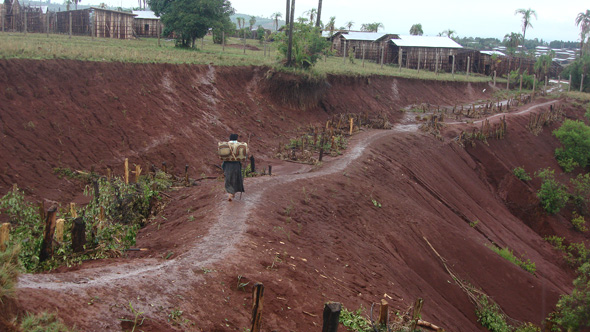
  • Integrated Approach Helps “Model Farmers” Increase Productivity in Ethiopia

    ›
    March 24, 2011  //  By Schuyler Null
    Grar Gaber

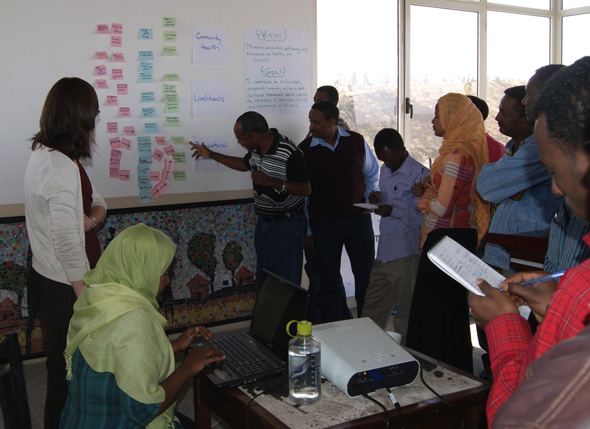
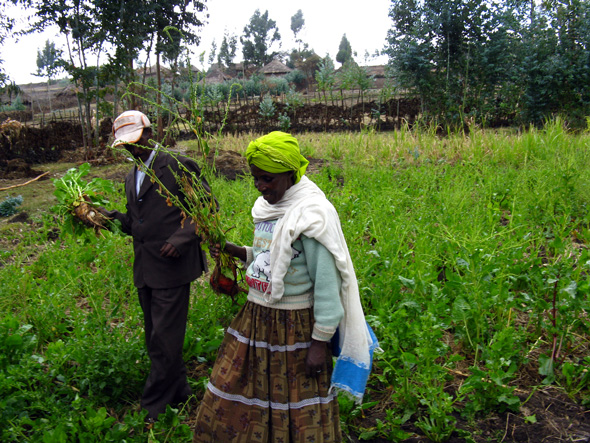
    To reach the village of Grar Gaber from Addis Ababa, you drive up over the Entoto Mountains overlooking the capital then motor down two hours of new Japanese-built highway to the town of Fiche. From there it’s 20 minutes on a broken dirt road across rocky hills. I was joined there by about 20 others from the PHE Ethiopia Consortium’s general assembly (see day one and day two coverage here) and Population Action International, to visit an integrated population, health, and environment (PHE) development program run by LEM Ethiopia.

    MORE
  • USAID: Maternal Deaths in Bangladesh Decline by 40 Percent in Less Than 10 Years

    ›
    Dot-Mom  //  March 18, 2011  //  By Wilson Center Staff
    The original version of this article, by the USAID Global Health Bureau, appeared on the USAID Impact blog.

    Bangladesh is on track to meet the 2015 deadline for UN Millennium Development Goal 5 (50 percent reduction in maternal deaths). The Bangladesh Maternal Mortality and Health Service Survey, jointly funded by the Government of Bangladesh, USAID, Australian Aid (AusAID) and the United Nations Population Fund (UNFPA), found that maternal deaths in Bangladesh fell from 322 per 100,000 in 2001 to 194 in 2010, a 40 percent decline in 9 years.

    The decline in direct obstetric deaths is most likely the consequence of better care seeking practices and improved access to and use of higher-level referral care. The decline in total fertility rate due to the successful family planning program has reduced exposure to high risk pregnancies and has thus prevented a large number of maternal deaths.

    Continue reading on USAID’s Impact blog.

    Sources: Directorate General of Health Services – Bangladesh, UN.

    Photo Credit: Adapted from “Mother & Son,” courtesy of flickr user Anduze traveller.
    MORE
  • Congressional Hearing: Clean Water Access Is a Global Crisis, Human Right, and National Security Issue

    ›
    March 17, 2011  //  By Hannah Marqusee
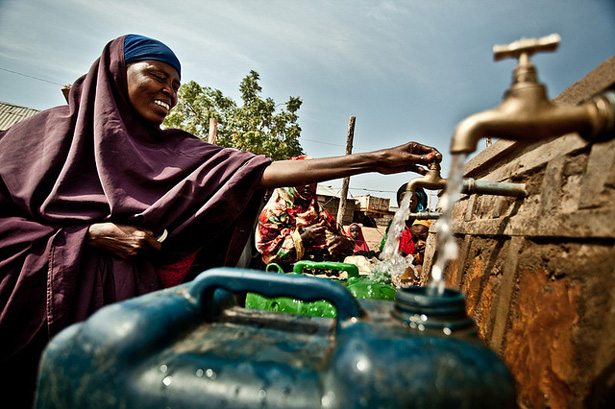
    Unsafe drinking water causes nearly 1.8 million deaths each year from diarrhea, “a number that dwarfs the casualties associated with violent conflict,” said U.S. Representative James McGovern at a congressional human rights commission hearing earlier this month on water as a basic right. Nearly all of these deaths are children under the age of five, he said. “This is a war against families, children, and women on an ongoing basis,” said Representative Earl Blumenauer, also speaking at the hearing, titled “Realizing the Right to Safe Water and Sanitation.”

    There are currently 884 million people in the world without access to safe drinking water, according to UNICEF, and 2.6 billion without improved sanitation. As population growth and climate change place added stress on fresh-water systems, by 2025, two thirds of the world’s population will live in water-stressed conditions, according to the Food and Agriculture Organization. “This is a severe global crisis,” said McGovern.

    “A Human Right”

    With 2011 World Water Day only weeks away, the hearing harkened back to Secretary Clinton’s widely quoted statement from World Water Day 2010, marking a commitment by the Obama administration to address global water issues:
    It’s not every day you find an issue where effective diplomacy and development will allow you to save millions of lives, feed the hungry, empower women, advance our national security interests, protect the environment, and demonstrate to billions of people that the United States cares. Water is that issue.
    Four months after that statement, the UN passed a resolution to make access to water and sanitation a human right, not just a development priority. Said Catarina de Albuquerque, a UN independent expert who testified at this month’s congressional hearing, the resolution stipulates that water must be “available, accessible, affordable, acceptable and safe.” A “right to water” is an important “sign of political will,” that will place increased obligations on governments to improve access to water and sanitation, she said. But in the meantime, for the millions without access to safe water, “there is no change.”

    According to the UN, the world is on track to meet the Millennium Development Goal target of halving the number of people without access to an improved water source by 2015. But de Albuquerque noted that the reality is not quite so optimistic. On a UN fact-finding mission, she encountered at least one family who by UN definitions had access to an “improved drinking water source,” yet their tap water was literally black. “Water quality is not being monitored” and for many of the people who do have access, it is simply “undrinkable,” she said.

    In developed countries as well, there are significant barriers to access, especially for marginalized communities. On a recent mission to the United States, de Albuquerque found that America’s “voiceless” – people of color, Native Americans, and the homeless – face significant discrimination in access to water. “Society closes its eyes to them,” she said. Thirteen percent of Native Americans lack access to safe water, in comparison to 0.6 percent of non-native Americans, she said in a statement to the press releasing her findings. And in Boston, “for every one percent increase in the city ward’s percentage of people of color, the number of threatened cut-offs increases by four percent.” To make the necessary improvements to fill these gaps in America’s aging water infrastructure would cost $4 to $6 billion annually, she said.

    A National Security Issue

    Water “is a security issue as well as a human development issue,” said Blumenauer. Since, according to UNEP, 40 percent of the world relies on river basins that share two or more political boundaries, water management has enormous potential for both conflict and cooperation. Echoing Clinton’s World Water Day statement, McGovern championed the cross-cutting nature of water:
    The right to water is inextricably linked with other basic rights…including the right to food, the right to health, and the right to education.
    The burden of collecting water in underdeveloped countries often creates a gender gap and exposes women and girls to violence and rape, he said. And it “has been the basis for many territorial and violent disputes between various peoples and even nations.”

    Last month, a staff report by the Senate Foreign Relations Committee expressed a similar sentiment with the publication of their report, Avoiding Water Wars: Water Scarcity and Central Asia’s Growing Importance for Stability in Afghanistan and Pakistan. The report commends the Obama administration for recognizing the importance of water: “For the first time, senior government officials are recognizing the critical role that sound water management must play in achieving our foreign policy goals and in protecting our national security.” However, by exclusively focusing on Pakistan and Afghanistan’s water issues and “neglecting the interconnectivity of water issues between Central and South Asia, the U.S. approach could exacerbate regional tensions,” the report says.

    To be more strategic about water assistance, the report recommends the United States: (1) provide technical support in data collection to better manage water; (2) help increase water efficiency and reduce demand for water; (3) recognize the transboundary nature of water issues and “provide holistic solutions;” and (4) “safeguard institutions against shocks to water supply and demand.”

    Moving Forward

    The Obama administration’s commitment to water issues, the UN’s recognition of water as a human right, and the 2005 Water for the Poor Act have all been important steps towards fulfilling the pledge of making access to safe water a human right. “We’ve come a long way,” Blumenauer (who authored the Water for the Poor Act) said at the hearing, but there is still significant work ahead.

    “We’re going to have to be more strategic moving forward” in order to meet global water shortages, said Aaron Salzberg, special coordinator for water resources for the U.S. Department of State who testified at the hearing. Salzberg recommended that the U.S. government take steps to integrate water management with the food and health sectors; build political will; mobilize financial support; promote science and technology; and form partnerships with other governments and aid organizations. The United States must also “be smarter” about allocating funds based on the dual criteria of “need” and “opportunity.” Balancing efforts with partners to find out which countries have the greatest need and the least resources will allow limited U.S. funds to make the deepest impact, he said.

    John Oldfield, managing director of the WASH Advocacy Initiative, urged Congress to increase funding for foreign assistance, continue appropriations for the Water for the Poor Act, and improve the effectiveness of existing water, sanitation, and hygiene (WASH) assistance. “Each dollar invested in water and sanitation leads to an 8:1 return from reduced healthcare costs and time savings,” he said. “The world does not need to bury millions more of its children in the coming years when we know how to prevent waterborne disease today.”

    Sources: FAO, UNEP, UNICEF, United Nations, WHO.

    Image Credit: Adapted from “School girl drinks water from new handpump,” courtesy of flickr user waterdotorg.
    MORE
  • Watch: Roger-Mark De Souza on the Scaling Advantages of Population, Health, and Environment Integration

    ›
    March 11, 2011  //  By Schuyler Null
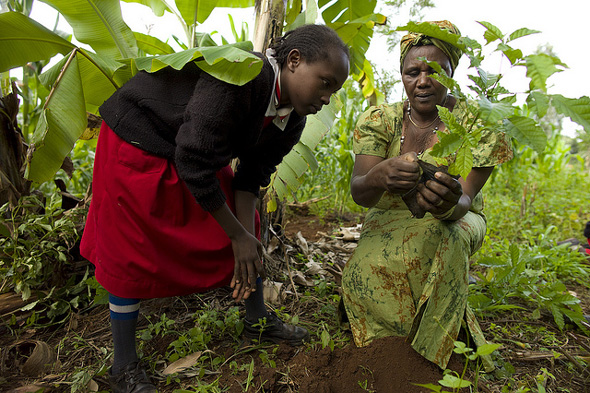
    By integrating population, health, and environment (PHE) efforts, development programs can make a difference in people’s lives in a real and meaningful way – one which they understand, appreciate, and desire, said Roger-Mark De Souza in this interview with ECSP. De Souza is the vice president of research and director of the Climate Program at Population Action International.

    The PHE approach “allows itself to be applied at different levels,” said De Souza. “It’s easily implemented at the level of a village, or a town, or a city where a number of individuals can say ‘these are concrete results and outcomes that we want in our lives and that we want to live our lives in an integrated way.’”

    PHE interventions not only provide tangible results to individuals, said De Souza, but they also help accomplish broader policy objectives, including improving health and alleviating poverty.

    “There are lessons to be learned from different areas of integration, not just population, health, and environment,” De Souza said. For example, initiatives that integrate food security and HIV/AIDS deal with issues “similar to the ones we deal with in integrating population, health, and environment,” he said. Lessons and experiences need to be shared between these communities, but they also share similar advantages: From a cost-efficiency stand point, integration simply provides greater “bang for the buck,” he said.
    MORE
  • Celebrating Ordinary Women Doing Extraordinary Things to Improve Gender Equality and Maternal Health Worldwide

    ›
    Dot-Mom  //  March 8, 2011  //  By Calyn Ostrowski
    As coordinator of one of the few forums dedicated solely to maternal and reproductive health in Washington, D.C., I am particularly excited about this year’s 100th anniversary of International Women’s Day. This day commemorates ordinary women doing extraordinary things and acknowledges both the progress made and barriers still faced by women worldwide.

    “When it comes to the boardroom meetings, government sessions, peace negotiations, and other assemblies where crucial decisions are made in the world, women are too often absent,” said Secretary of State Hillary Clinton during her remarks for International Women’s Day. “It is clear that more work needs to be done to consolidate our gains and to keep momentum moving forward.” [Video Below]

    For mothers worldwide, some momentum has indeed been gained: Maternal mortality rates dropped from 526,000 a year in 1980 to 342,900 in 2008, according to a report by the Institute of Health Metrics and Evaluation at the University of Washington. In September of last year, a group of international leaders – including the UN and other multilateral institutions, donors, the business community, and NGOs – launched the “Global Strategy for Women and Children’s Health” and committed $40 billion to save the lives of 16 million women and children in developing countries.

    At the sixth meeting of the Wilson Center’s Advancing Policy Dialogue on Maternal Health Series, Mayra Buvinic, sector director of the World Bank’s gender and development group, said: “Investing in women and girls is the right thing to do. It is not only fair for gender equality, but it is smart economics.” She said the World Bank has found that empowering women allows families to better endure economic crises and leads to better futures for their children as well.

    “When women have better education and health, mothers have greater household decision-making power and prioritize the well-being of their children,” said Buvinic. “In return, children have better educational attainment and are productive adults, building long-term economic growth.”

    However, increased investment will only pay off when money is translated into action and stakeholders are held accountable for empowering women.

    Since the inauguration of International Women’s Day 100 years ago, the low status of women in many parts of the world has remained relatively unchanged. Many women are still subject to male-dominated values that preclude them from making basic decisions about “who to marry, when to marry, when to have children, and how many children to have,” said Nafis Sadik, special envoy of the UN Secretary-General for HIV/AIDS, in an interview with the Population Reference Bureau. To change this, international development strategies need to prioritize improving gender equality, women’s status, and women’s voice in the political process.

    I am grateful to be working in collaboration with extraordinary institutions such as the Maternal Health Task Force (MHTF) and United Nations Population Fund (UNFPA) who take real steps every day to help improve the lives of women and girls. In collaboration with these institutions, the Wilson Center’s Global Health Initiative is please to announce that it will partner with the African Population Health Research Center in Kenya to co-host a three-part dialogue series with local, regional, and national decision-makers on effective maternal health policies and programs. These in-country dialogue meetings will create a platform for field workers, policymakers, program managers, media, and donors to share research, disseminate lessons learned, and address concerns related to policy, institutional, and organizational capacity building for improved maternal health outcomes.

    It is our goal that programs like these will continue to highlight neglected maternal health and issues and galvanize the community everyday – and not just on International Women’s Day.

    Sources: Population Reference Bureau, UN, UN Population Fund, U.S. State Department.

    Photo Credit: Afghan girl, courtesy of flickr user U.S Embassy Kabul Afghanistan, and Secretary Clinton’s video address courtesy of the U.S. State Department.
    MORE
  • What’s Behind Iraq’s Day of Rage? It’s Pretty Basic

    ›
    March 4, 2011  //  By Schuyler Null
    Iraq’s “Day of Rage” – a phenomenon that has swept the Middle East since Tunisia’s “Jasmine Revolution” – reportedly claimed the lives of nearly 20 people last week. But though the protests may have been inspired by the current broader movement in the region, they are also a symptom of long-standing grievances ordinary Iraqis have had with their government since the American invasion, including lack of public services like access to clean water and especially, reliable electricity.

    While these protests alone are unlikely to lead to revolution, they reveal basic livelihood challenges that neither the United States nor the Maliki government have effectively addressed.

    The protests in Baghdad and more than 10 other cities were the largest since last summer, when demonstrations over access to electricity led to the death of two protestors in Basra. The New Security Beat spoke to Iraq’s first Minister of the Environment, Mishkat Al Moumin, after those protests to ask her about the lack of services and Iraq’s other non-security challenges, including water security, women’s empowerment, and demographics. She said that decentralizing decision-making power might help alleviate pressure on the government and provide more effective local services:
    Enacting policies at the local level establishes a sense of ownership among local communities and provides them with an incentive to protect their environmental resources. Moreover, it provides a better opportunity to involve the main stakeholders in policymaking.
    Frederick Burkle, senior public policy scholar at the Wilson Center and a senior fellow of the Harvard Humanitarian Initiative at the Harvard School of Public Health, recently cited the military’s failure to restore services, specifically public health services in Iraq, as something the State Department and USAID should seize on to justify the end of “militarized aid.” He pointed out that a 2004 joint report by the Iraqi Ministry of Health and Red Cross found more death and illness was due to the country’s decimated public health infrastructure and social protections than to the violence of war:
    These indirect deaths from war are preventable but require attention from the occupying powers to the invaded country’s declining public health, social, and physical protections. Iraqis were well aware of this deficiency, and the United States’ lack of attention to the matter led to the loss of lasting trust.
    For more on Iraq, be sure to also check out The New Security Beat’s interview with Steve Lonergan, former head of Canada-Iraq Marshlands Initiative, on the state of the southern marshes and their potential for peacemaking.

    Sources: Foreign Affairs, The New York Times.

    Photo Credit: Adapted from “Tangle of electrical wires in Baghdad,” courtesy of flickr user News Hour (PBS News Hour – Larisa Epatko).
    MORE
  • Joan Castro on Integrated Population and Coastal Resource Management in the Southern Philippines

    ›
    Friday Podcasts  //  March 3, 2011  //  By Schuyler Null

    In the southern Philippines, the innovative IPOPCORM program “worked in areas where there is high…marine biodiversity, high population, and high population momentum, which means…about 40 percent of the population are 15 years and below,” Joan Castro told ECSP in this interview. Castro, the executive vice president of PATH Foundation Philippines, Inc., recently spoke at the Wilson Center on the state of integrated development efforts in her country and elsewhere.

    From 2000-2006, IPOPCORM (which stands for “integrated population and coastal resource management”) sought to integrate population, health, and environment (PHE) development efforts in Philippine communities. They had four primary objectives, said Castro: 1) improve the reproductive health of the community members; 2) improve management of the coastal resources; 3) increase knowledge of the linkages between population, health, and the environment; and 4) increase the capacity of community leaders to advocate for these links.

    “The aspect of livelihoods was very essential,” said Castro, especially for empowering women in the communities. Through family planning services and micro-credit finance initiatives, women were able to better space their pregnancies and contribute to household incomes, she said. In addition, by establishing locally managed, marine protected areas, IPOPCORM increased the protection of high biodiversity zones and improved the likelihood that there will be enough fish to feed future generations.

    The “Pop Audio” series is also available as podcasts on iTunes.
    MORE
  • QDDR Coverage Wrap-up: Institutional Shifts, Development-as-Security, Women’s Empowerment, and Complex New Threats

    ›
    February 23, 2011  //  By Schuyler Null

    Somewhat lost in the wake of turmoil in the Middle East and the budget battle in Congress has been the State Department’s most aggressive attempt yet to reshape itself for the dynamic foreign policy challenges of the 21st century.

    MORE
Newer Posts   Older Posts
View full site

Join the Conversation

  • RSS
  • subscribe
  • facebook
  • G+
  • twitter
  • iTunes
  • podomatic
  • youtube
Tweets by NewSecurityBeat

Trending Stories

  • unfccclogo1
  • Pop at COP: Population and Family Planning at the UN Climate Negotiations

Featured Media

Backdraft Podcast

play Backdraft
Podcasts

More »

What You're Saying

  • Volunteers,At,The,Lagos,Food,Bank,Initiative,Outreach,To,Ikotun, Pan-African Response to COVID-19: New Forms of Environmental Peacebuilding Emerge
    Rashida Salifu: Great piece 👍🏾 Africa as a continent has suffered this unfortunate pandemic.But it has also...
  • A desert road near Kuqa An Unholy Trinity: Xinjiang’s Unhealthy Relationship With Coal, Water, and the Quest for Development
    Ismail: It is more historically accurate to refer to Xinjiang as East Turkistan.
  • shutterstock_1779654803 Leverage COVID-19 Data Collection Networks for Environmental Peacebuilding
    Carsten Pran: Thanks for reading! It will be interesting to see how society adapts to droves of new information in...

What We’re Reading

  • Rising rates of food instability in Latin America threaten women and Venezuelan migrants
  • Treetop sensors help Indonesia eavesdrop on forests to cut logging
  • 'Seat at the table': Women's land rights seen as key to climate fight
  • A Surprise in Africa: Air Pollution Falls as Economies Rise
  • Himalayan glacier disaster highlights climate change risks
More »
  • woodrow
  • ecsp
  • RSS Feed
  • YouTube
  • Twitter
  • Facebook
  • Home
  • Who We Are
  • Publications
  • Events
  • Wilson Center
  • Contact Us
  • Print Friendly Page

© Copyright 2007-2021. Environmental Change and Security Program.

Woodrow Wilson International Center for Scholars. All rights reserved.

Developed by Vico Rock Media

Environmental Change and Security Program

Woodrow Wilson International Center for Scholars

Ronald Reagan Building and International Trade Center

  • One Woodrow Wilson Plaza
  • 1300 Pennsylvania Ave., NW
  • Washington, DC 20004-3027

T 202-691-4000