• woodrow wilson center
  • ecsp

New Security Beat

Subscribe:
  • rss
  • mail-to
  • Who We Are
  • Topics
    • Population
    • Environment
    • Security
    • Health
    • Development
  • Columns
    • China Environment Forum
    • Choke Point
    • Dot-Mom
    • Friday Podcasts
    • Navigating the Poles
    • Reading Radar
  • Multimedia
    • Water Stories (Podcast Series)
    • Backdraft (Podcast Series)
    • Tracking the Energy Titans (Interactive)
  • Films
    • Water, Conflict, and Peacebuilding (Animated Short)
    • Paving the Way (Ethiopia)
    • Broken Landscape (India)
    • Scaling the Mountain (Nepal)
    • Healthy People, Healthy Environment (Tanzania)
  • Publications
  • Events
  • Contact Us

NewSecurityBeat

The blog of the Wilson Center's Environmental Change and Security Program
Showing posts from category gender.
  • Providing Water Security in an Uncertain World

    ›
    Guest Contributor  //  August 20, 2019  //  By Nathanial Matthews
    Leparkeri. a Samburu warrior, stands inside a well he has dug along a dry river bed where he will water his livestock during the dry season. They sing as they lift the buckets of water from the deep wells  and each warrior's cattle knows who his owner is

    A problem is looming. Most water infrastructure isn’t designed to meet the demands of the increasingly volatile world that climate change is producing. Our modern landscape requires a reconceptualization of infrastructure’s demands and needs that often defies convention. And nowhere is a flexible and responsive approach more crucial than in water infrastructure, where we are experiencing unprecedented changes in flows and increasing pressures on consumption, according to Wellspring: Source Water Resilience and Climate Adaptation, a new report from the Global Resilience Partnership, the Alliance for Global Water Adaptation and The Nature Conservancy. The report explores some ways practitioners can take a new approach to source water protection that would enhance resilience and help sustain communities and ecosystems in a shifting climate.

    MORE
  • Empowered Midwives Could Save More Lives

    ›
    Dot-Mom  //  August 14, 2019  //  By Sarah Barnes
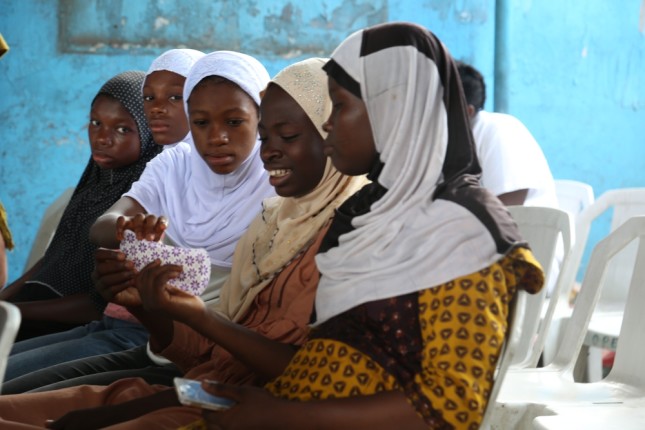
    Photo credit: Karen Kasmauski, Maternal Child Survival Program, Hohoe Midwifery Training School,  Ghana

    “Midwifery is what women want and what the world needs,” said Anneka Knutsson, Chief, Sexual and Reproductive Health Branch, United Nations Population Fund (UNFPA) at the Fourth Global Midwifery Symposium held at Women Deliver on June 2, 2019. More than 200 people, mostly midwives and global midwifery experts, attended the symposium titled, “Empowered Midwives, Transformed Communities.” Organized by UNFPA, the International Confederation of Midwives (ICM), and World Health Organization (WHO), in collaboration with Jhpiego, UNICEF, Laerdal, and the Canadian Association of Midwives, the all-day symposium highlighted how the midwife-led continuity of care model and women-centered care can improve outcomes for women, their newborn, and their families. The discussion also focused on the importance of enabling environments and productive collaborations between midwives and other health professionals.

    MORE
  • How Are We Failing American Women? Alarming Trends of U.S. Maternal Mortality

    ›
    Dot-Mom  //  August 7, 2019  //  By Amanda King
    violence-woman-3651844_1280

    Every day 830 women around the globe die from pregnancy or childbirth-related causes. Almost all of these deaths occur in the developing world, but over the past sixty years this global problem has made waves at home. While worldwide maternal mortality rates are decreasing, the rates are rising in three countries: Afghanistan, Sudan, and the United States. Between 2000 and 2014, the number of women who died in the United States from pregnancy-related causes while pregnant or within 42 days postpartum increased by almost 27 percent, from 18.8 per 100,000 deaths in 2000 to 23.8 in 2014.

    MORE
  • Removing Barriers to Family Planning Essential for Conservation, Groups Agree

    ›
    Guest Contributor  //  July 25, 2019  //  By Robert Engelman
    9240215990_c033d5f007_k

    The voluntary use of family planning, among its many benefits, is good for sustaining the healthy ecosystems that support all wild plant and animal species. This should be common sense. If your mission is environmental conservation, you should want to help remove barriers to reproductive health services, so that all women can space wanted pregnancies and avoid unintended ones.

    MORE
  • Race, Bias, and Equity in Prenatal Care: No Pregnant Woman is the Same

    ›
    Dot-Mom  //  On the Beat  //  June 26, 2019  //  By Amanda King
    Race, Bias, and Equity OTB Photo

    It’s disturbing to see the data going in the wrong direction and it means we have to go beyond what we’ve been doing, said Terri D. Wright, Vice President of Programs and Community at the Eugene and Agnes E. Meyer Foundation at a recent event on equitable prenatal care in the United States hosted by The Jennifer Bush-Lawson Foundation and the American Medical Association at Duke University in DC. “We can’t do the same things the same way and expect a different outcome,” she said. “We’ve got to do something different.”

    MORE
  • Transforming Africa: Women and Young People Will Drive Progress

    ›
    From the Wilson Center  //  On the Beat  //  June 18, 2019  //  By Nazra Amin
    48079286236_e14c613c02_o

    “Too often in the United States, the narrative that we hear about Africa is one of poverty, war, and ineffective or failed states. It is a crisis, a place best engaged through aid packages and humanitarian assistance,” said Keith Lee, President and Chief Operating Officer of Brown Capital Management at a recent Wilson Center event hosted by the Africa Program. “This has never been the entire story, and today more than ever, Africa is undergoing enormous transformations that challenge this narrative,” Lee said.

    MORE
  • New Report: Six Steps Towards Ending Preventable Maternal Mortality

    ›
    Dot-Mom  //  From the Wilson Center  //  May 29, 2019  //  By Yuval Cohen & Nazra Amin
    webpage 2

    “Women and girls are central to any strategy toward ending preventable maternal mortality. Women and girls defining their own needs and demanding them is paramount to change.”

     —Six Steps Towards Ending Preventable Maternal Mortality

    In Six Steps Towards Ending Preventable Maternal Mortality, Sarah B. Barnes, Project Director of the Maternal Health Initiative, Geeta Lal, Senior Technical Advisor at the United Nations Population Fund (UNFPA), and Elizabeth Wang, Staff Intern at the Maternal Health Initiative, discuss suggested steps to prevent avoidable maternal deaths, globally.

    MORE
  • Africa in Transition: Highlights from a Conversation on Investing in Youth for Economic Prosperity

    ›
    Africa in Transition  //  Friday Podcasts  //  May 24, 2019  //  By Benjamin Bosland
    33745824268_1e4e142d29_k

    Africa in Transition, a new series hosted by the Wilson Center and the Population Institute, explores the role of population trends—migration, urbanization, fertility, maternal mortality—in shaping sub-Saharan Africa’s chances for prosperity, health, and security. In this podcast, we share highlights from the first Africa in Transition event. Parfait Eloundou-Enyegue, Professor at Cornell University, starts the conversation by reminding us that “African countries are in the middle of multiple transitions that have the potential to create opportunities for prosperity, growth, and increased human capital, but also to create greater inequality. The challenge, therefore, is to build prosperity, but to do it for all.”

    MORE
Newer Posts   Older Posts
View full site

Join the Conversation

  • RSS
  • subscribe
  • facebook
  • G+
  • twitter
  • iTunes
  • podomatic
  • youtube
Tweets by NewSecurityBeat

Trending Stories

  • unfccclogo1
  • Pop at COP: Population and Family Planning at the UN Climate Negotiations

Featured Media

Backdraft Podcast

play Backdraft
Podcasts

More »

What You're Saying

  • Volunteers,At,The,Lagos,Food,Bank,Initiative,Outreach,To,Ikotun, Pan-African Response to COVID-19: New Forms of Environmental Peacebuilding Emerge
    Rashida Salifu: Great piece 👍🏾 Africa as a continent has suffered this unfortunate pandemic.But it has also...
  • A desert road near Kuqa An Unholy Trinity: Xinjiang’s Unhealthy Relationship With Coal, Water, and the Quest for Development
    Ismail: It is more historically accurate to refer to Xinjiang as East Turkistan.
  • shutterstock_1779654803 Leverage COVID-19 Data Collection Networks for Environmental Peacebuilding
    Carsten Pran: Thanks for reading! It will be interesting to see how society adapts to droves of new information in...

What We’re Reading

  • Rising rates of food instability in Latin America threaten women and Venezuelan migrants
  • Treetop sensors help Indonesia eavesdrop on forests to cut logging
  • 'Seat at the table': Women's land rights seen as key to climate fight
  • A Surprise in Africa: Air Pollution Falls as Economies Rise
  • Himalayan glacier disaster highlights climate change risks
More »
  • woodrow
  • ecsp
  • RSS Feed
  • YouTube
  • Twitter
  • Facebook
  • Home
  • Who We Are
  • Publications
  • Events
  • Wilson Center
  • Contact Us
  • Print Friendly Page

© Copyright 2007-2021. Environmental Change and Security Program.

Woodrow Wilson International Center for Scholars. All rights reserved.

Developed by Vico Rock Media

Environmental Change and Security Program

Woodrow Wilson International Center for Scholars

Ronald Reagan Building and International Trade Center

  • One Woodrow Wilson Plaza
  • 1300 Pennsylvania Ave., NW
  • Washington, DC 20004-3027

T 202-691-4000