• woodrow wilson center
  • ecsp

New Security Beat

Subscribe:
  • rss
  • mail-to
  • Who We Are
  • Topics
    • Population
    • Environment
    • Security
    • Health
    • Development
  • Columns
    • China Environment Forum
    • Choke Point
    • Dot-Mom
    • Friday Podcasts
    • Navigating the Poles
    • Reading Radar
  • Multimedia
    • Water Stories (Podcast Series)
    • Backdraft (Podcast Series)
    • Tracking the Energy Titans (Interactive)
  • Films
    • Water, Conflict, and Peacebuilding (Animated Short)
    • Paving the Way (Ethiopia)
    • Broken Landscape (India)
    • Scaling the Mountain (Nepal)
    • Healthy People, Healthy Environment (Tanzania)
  • Publications
  • Events
  • Contact Us

NewSecurityBeat

The blog of the Wilson Center's Environmental Change and Security Program
Showing posts from category gender.
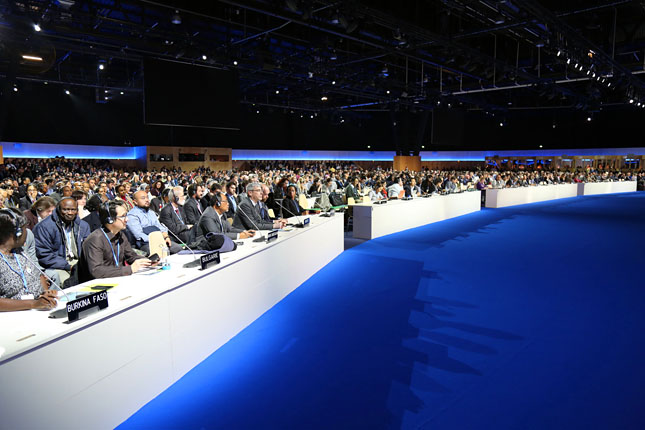
  • African Leaders Urge Action to Meet (and Succeed) MDG 5

    ›
    Dot-Mom  //  October 8, 2013  //  By Laurie Mazur
    MDG-5-meeting

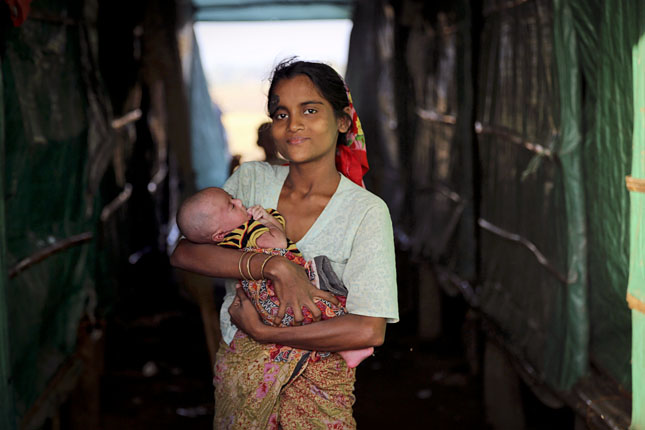
    As world leaders gathered at the UN for a special event on achieving the Millennium Development Goals (MDGs) last month, there was much to celebrate. Some of the MDG targets – on poverty reduction and safe drinking water, for example – have been reached ahead of the 2015 deadline. But on MDG 5, which addresses maternal mortality and reproductive health, progress lags shamefully behind.

    MORE
  • 10 Steps for Expanding the Population, Health, and Environment Approach

    ›
    Beat on the Ground  //  From the Wilson Center  //  October 7, 2013  //  By Laura Henson
    PHE-10-steps

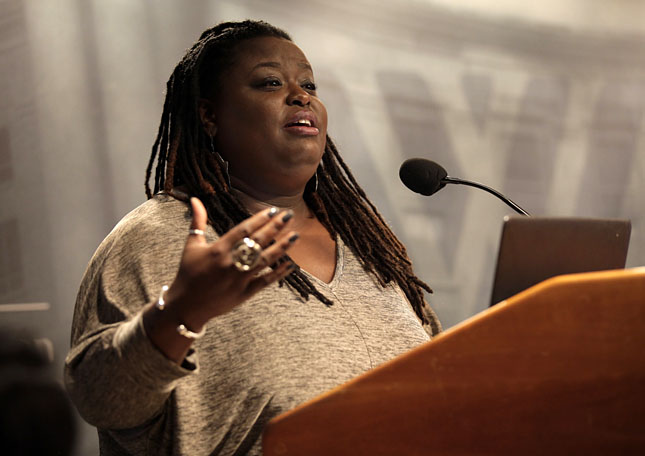
    As their five-year funding cycle for supporting integrated population, health, and environment (PHE) programs around the world came to a close this fall, leaders from BALANCED Project – Building Actors and Leaders for Advancing Community Excellence in Development – came together at the Wilson Center to discuss lessons learned, best practices, and new ideas for the future.

    MORE
  • Five Years of Population, Health, and Environment Programs: What Works and What’s Next?

    ›
    From the Wilson Center  //  September 26, 2013  //  By Laura Henson
    mahija_BALANCED

    More than 20 percent of the world’s population live in ecological hotspots, places rich in biodiversity but often lacking basic government services. Population, health, and environment – or PHE – programs address compounding stresses in these areas by helping to meet people’s needs for basic health services, including reproductive health care; promoting food security and poverty reduction; and teaching sustainable natural resource management. [Video Below]

    MORE
  • Religion and Reproductive Rights: Looking For Common Ground

    ›
    From the Wilson Center  //  September 23, 2013  //  By Jacob Glass
    Faith-and-Rights-Photo

    More than 84 percent of the 2010 world population – 5.8 billion people – consider themselves religiously affiliated, according to a recent study. Religious leaders can therefore have significant influence across a broad range of social, economic, and political issues. Perhaps nowhere is that influence felt more strongly than in debates about reproductive health and rights, and perhaps nowhere are the consequences so large than in poor and marginalized communities.

    MORE
  • Prospects for Gender Parity in UN Peacekeeping Forces, Evaluating Girls’ Empowerment Efforts

    ›
    Dot-Mom  //  Reading Radar  //  August 29, 2013  //  By Jacob Glass
    Population Council Report Cover

    The Population Council’s annual report highlights new work from one of the largest organizations doing research on the lives of adolescent girls in the developing world. Of particular note is the Council’s Adolescent Girls Empowerment Program, a four-year study launched in May which will involve 42,000 girls in seven countries – Bangladesh, Burkina Faso, Ethiopia, Guatemala, India, Tanzania, and Zambia. The aim is to evaluate successful strategies for helping girls avoid child marriage, sexually transmitted infections, and unintended pregnancies at a critical juncture in their lives. Council President Peter Donaldson writes that young girls are “one of the potentially most influential figures in the developing world.” A typical 12-year-old girl “in the next few years…will either abandon or continue her schooling, be pushed into marriage and childbearing, or develop a sense of proud ownership of her physical self… As her future is reconfigured, so is ours.”

    MORE
  • A Season for Motherhood: The Role of Family Planning in Improving Maternal Health

    ›
    Dot-Mom  //  From the Wilson Center  //  August 28, 2013  //  By Swara Salih

    Ensuring access to family planning is not only a matter of human rights, but can also play a key role in protecting the health of mothers and children. Maternal health experts and program directors met at the Wilson Center on July 31 to discuss the role family planning takes in women’s health in developing countries, what successes family planning programs worldwide have had so far, and what can be done to expand services. Sarah Craven, chief of the UN Population Fund’s Washington office, moderated the event.

    MORE
  • Taliban Return Threatens Gains in Girls’ Education, Says Razia Jan

    ›
    Friday Podcasts  //  August 23, 2013  //  By Jacob Glass
    Razia Jan

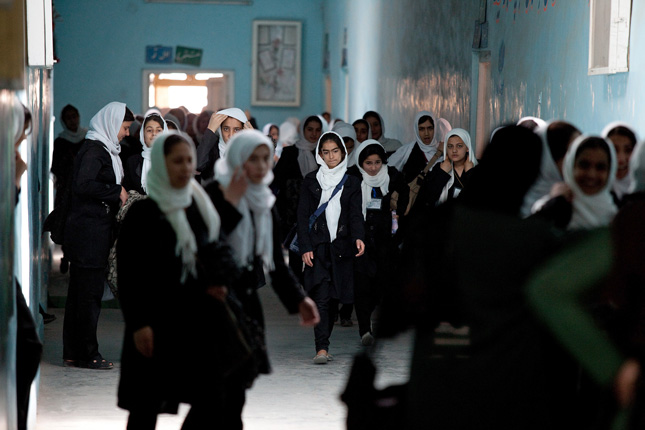
    “There has never been a school for girls in this area; no one really offered them this option,” says Razia Jan in this week’s podcast. “Whenever I see these girls and I talk to my students, I can’t tell you how honored I am that my girls are getting educations.”

    Since 2008, Jan has managed the Zabuli Education Center, an all-girls school located in Afghanistan’s Deh’Subz district. With the support of her organization, Razia’s Ray of Hope Foundation, the school provides free kindergarten-through-ninth-grade education to 400 Afghan girls.

    MORE
  • Harnessing the Demographic Dividend: PRB’s ENGAGE Presentations Look to Empower, Educate

    ›
    Guest Contributor  //  August 12, 2013  //  By Carolyn Lamere

    The demographic dividend – the idea that a decline from high to low rates of population growth can lead to dramatic economic gains – has become something of a buzzword in development circles. Sub-Saharan Africa holds the single largest block of remaining high fertility countries and while headlines tend towards the dramatic about demographic shifts there, less column space has been devoted to examining the underlying issues causing these shifts or the other changes that will be necessary for countries to benefit from them.

    MORE
Newer Posts   Older Posts
View full site

Join the Conversation

  • RSS
  • subscribe
  • facebook
  • G+
  • twitter
  • iTunes
  • podomatic
  • youtube
Tweets by NewSecurityBeat

Trending Stories

  • unfccclogo1
  • Pop at COP: Population and Family Planning at the UN Climate Negotiations

Featured Media

Backdraft Podcast

play Backdraft
Podcasts

More »

What You're Saying

  • Volunteers,At,The,Lagos,Food,Bank,Initiative,Outreach,To,Ikotun, Pan-African Response to COVID-19: New Forms of Environmental Peacebuilding Emerge
    Rashida Salifu: Great piece 👍🏾 Africa as a continent has suffered this unfortunate pandemic.But it has also...
  • A desert road near Kuqa An Unholy Trinity: Xinjiang’s Unhealthy Relationship With Coal, Water, and the Quest for Development
    Ismail: It is more historically accurate to refer to Xinjiang as East Turkistan.
  • shutterstock_1779654803 Leverage COVID-19 Data Collection Networks for Environmental Peacebuilding
    Carsten Pran: Thanks for reading! It will be interesting to see how society adapts to droves of new information in...

What We’re Reading

  • Rising rates of food instability in Latin America threaten women and Venezuelan migrants
  • Treetop sensors help Indonesia eavesdrop on forests to cut logging
  • 'Seat at the table': Women's land rights seen as key to climate fight
  • A Surprise in Africa: Air Pollution Falls as Economies Rise
  • Himalayan glacier disaster highlights climate change risks
More »
  • woodrow
  • ecsp
  • RSS Feed
  • YouTube
  • Twitter
  • Facebook
  • Home
  • Who We Are
  • Publications
  • Events
  • Wilson Center
  • Contact Us
  • Print Friendly Page

© Copyright 2007-2021. Environmental Change and Security Program.

Woodrow Wilson International Center for Scholars. All rights reserved.

Developed by Vico Rock Media

Environmental Change and Security Program

Woodrow Wilson International Center for Scholars

Ronald Reagan Building and International Trade Center

  • One Woodrow Wilson Plaza
  • 1300 Pennsylvania Ave., NW
  • Washington, DC 20004-3027

T 202-691-4000