• woodrow wilson center
  • ecsp

New Security Beat

Subscribe:
  • rss
  • mail-to
  • Who We Are
  • Topics
    • Population
    • Environment
    • Security
    • Health
    • Development
  • Columns
    • China Environment Forum
    • Choke Point
    • Dot-Mom
    • Friday Podcasts
    • Navigating the Poles
    • Reading Radar
  • Multimedia
    • Water Stories (Podcast Series)
    • Backdraft (Podcast Series)
    • Tracking the Energy Titans (Interactive)
  • Films
    • Water, Conflict, and Peacebuilding (Animated Short)
    • Paving the Way (Ethiopia)
    • Broken Landscape (India)
    • Scaling the Mountain (Nepal)
    • Healthy People, Healthy Environment (Tanzania)
  • Publications
  • Events
  • Contact Us

NewSecurityBeat

The blog of the Wilson Center's Environmental Change and Security Program
Showing posts from category gender.
  • Why Feminism Is Good for Your Health

    ›
    Covid-19  //  Guest Contributor  //  August 26, 2020  //  By Alison Brysk & Miguel Fuentes Carreño
    49890944808_c7d6dfef74_c

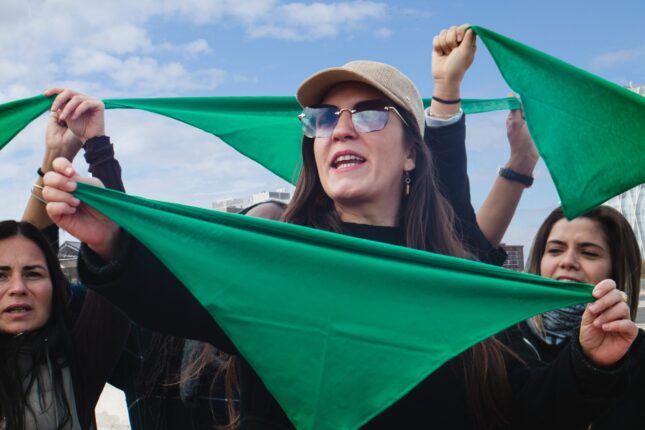
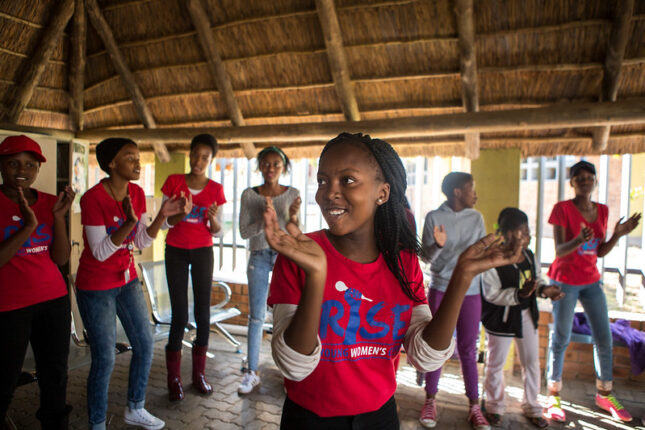
    As a world still dominated by patriarchy struggles with a deadly pandemic, the countries that have successfully navigated the global COVID-19 pandemic are distinguished by the gender of their leadership.  Across the world, countries headed by women and representing diverse cultures—from Germany, Norway, and Finland, to Taiwan, New Zealand, and Namibia—have managed the crisis more effectively, with fewer fatalities and less livelihood loss than others. But what distinguishes these health winners is not just the female shape of their leaders but the feminist shape of their societies. Even more gender-balanced societies headed by men—like Canada—do better in health crises than their less equitable peers like the United States. On the other hand, the most patriarchal countries headed by regressive strongmen do worse at every level of development. Today, we see this in Brazil, which until recently had managed health crises well under less masculinist leadership.

    MORE
  • A National Reckoning: Highlights From A Conversation with Congresswoman Alma Adams

    ›
    Covid-19  //  Dot-Mom  //  Friday Podcasts  //  July 31, 2020  //  By Amanda King

    Congresswoman Adams_235x176“I believe that we’re experiencing a national reckoning and in this unique moment, I definitely see an opportunity for Congress, but also for our local governments to enact policies that begin to address our country’s greatest ills,” said Representative Alma Adams (D-NC-12) at a recent Wilson Center event on women, race, and COVID-19 in the United States. “COVID-19 has revealed what the Black community and communities of color have known for a long time—health outcomes are further compounded by systemic and structural racism. COVID-19 has exposed what women have known for a long time—gender inequality exists, it threatens economic empowerment, and it increases vulnerabilities.” 

    MORE
  • Structural Racism and its Impact on Black Maternal Health

    ›
    Dot-Mom  //  On the Beat  //  July 22, 2020  //  By Deekshita Ramanarayanan
    shutterstock_209469040

    “The past months have been profoundly difficult for our nation, and for Black communities in particular,” said Representative Lauren Underwood (D-IL-14) at a recent March of Dimes event on the impact of structural racism on maternal health. COVID-19 has highlighted health outcome inequity caused by race and racism. Though Black people constitute 13 percent of the U.S. population, the CDC estimates they represent over 30 percent of COVID-19 cases. 

    MORE
  • Accessing Justice: Femicide and the Rule of Law in Latin America

    ›
    Dot-Mom  //  From the Wilson Center  //  July 17, 2020  //  By Annelise Gilbert, Beatriz García Nice, Olivia Soledad & Anya Prusa
    18256074579_6616a81ea2_c

    “The pandemic is just making visible a reality that has been going on for decades,” said Claudia Calvin, Founder of Mujeres Construyendo (Women Building) and a member of Nosotras Tenemos Otros Datos (We Have Other Data). She spoke at a recent Wilson Center event on femicide and the rule of law in Latin America. The panelists discussed the longstanding roots of this issue and new barriers to protecting women and preventing violence during the pandemic in the launch event for a project examining gender-based violence in Latin America, co-hosted by the Brazil Institute, Latin America Program, Mexico Institute, and Maternal Health Initiative. “Violence against women and femicides are not new,” Calvin said. But what is new is the fact that the media and civil society are bringing this topic to our attention, she said.

    MORE
  • Women, Race, and COVID-19: A Conversation with Representative Alma Adams

    ›
    Covid-19  //  Dot-Mom  //  From the Wilson Center  //  July 15, 2020  //  By Amanda King
    ASA Official Photo

    “The pandemic has shown us in the starkest terms how wide the gaps are in health outcomes between Black and White America and between men and women,” said Representative Alma Adams (D-NC-12) at a recent Wilson Center event on women, race, and COVID-19 in the United States. “COVID-19 has revealed what the Black community and communities of color have known for a long time, health outcomes are further compounded by systemic and structural racism,” said Rep. Alma Adams. And COVID-19 has exposed what women have known for a long time. Gender inequality exists, it threatens economic empowerment, and it increases vulnerabilities.

    MORE
  • The Great Disruptor: COVID-19 Threatens Essential Health Services for Women and Children

    ›
    Covid-19  //  Dot-Mom  //  On the Beat  //  July 1, 2020  //  By Deekshita Ramanarayanan
    MozHandwashTent_IMG_4848 (1) (1)

    “The world is at risk of losing millions of women and children due to reductions in coverage of essential services, reversing hard-earned progress towards the SDGs [Sustainable Development Goals] to date and posing catastrophic consequences for households and communities,” said Dr. Koki Agarwal, Project Director of the United States Agency for International Development’s (USAID) MOMENTUM Country and Global Leadership award, at a recent event on the importance of ensuring continuity of maternal, newborn, and child health services, voluntary family planning, and reproductive health care during the COVID-19 pandemic. The event was the first in a series of virtual country knowledge exchange discussions organized by USAID’s MOMENTUM Country and Global Leadership, led by Jhpiego and partners.

    MORE
  • Exposure to Air Pollutants and Heat Made Worse by Climate Change Impact Black Mothers the Most

    ›
    Dot-Mom  //  Reading Radar  //  June 26, 2020  //  By Leah Emanuel
    shutterstock_161166482

    Environmental exposures exacerbated by climate change are contributing to adverse pregnancy outcomes across the United States, with a disproportionate impact on Black women. A new study published in JAMA Network Open draws concrete connections between exposure to air pollution, ozone, and high temperatures during pregnancy and the likelihood of adverse pregnancy outcomes—premature birth, low birth weight, and stillbirth.

    MORE
  • COVID-19 Could Have Devastating Effects on Adolescents’ Sexual and Reproductive Health and Rights

    ›
    Covid-19  //  Dot-Mom  //  Guest Contributor  //  June 24, 2020  //  By Zara Ahmed
    shutterstock_1751378870

    In just a single year, a 10 percent decrease in sexual and reproductive health services in low- and middle-income countries could lead to another 49 million women with unmet need for contraception, according to Guttmacher Institute estimates from April 2020. Other possible effects include another 15 million unintended pregnancies, another 28,000 maternal deaths and 168,000 newborn deaths due to untreated complications, and another 3 million unsafe abortions and 1,000 maternal deaths due to unsafe abortions. The implications are staggering in terms of unmet needs, unintended pregnancies, unsafe abortions, and maternal and newborn deaths in 132 countries that are home to more than 1.6 billion women of reproductive age (15–49 years).

    MORE
Newer Posts   Older Posts
View full site

Join the Conversation

  • RSS
  • subscribe
  • facebook
  • G+
  • twitter
  • iTunes
  • podomatic
  • youtube
Tweets by NewSecurityBeat

Trending Stories

  • unfccclogo1
  • Pop at COP: Population and Family Planning at the UN Climate Negotiations

Featured Media

Backdraft Podcast

play Backdraft
Podcasts

More »

What You're Saying

  • Volunteers,At,The,Lagos,Food,Bank,Initiative,Outreach,To,Ikotun, Pan-African Response to COVID-19: New Forms of Environmental Peacebuilding Emerge
    Rashida Salifu: Great piece 👍🏾 Africa as a continent has suffered this unfortunate pandemic.But it has also...
  • A desert road near Kuqa An Unholy Trinity: Xinjiang’s Unhealthy Relationship With Coal, Water, and the Quest for Development
    Ismail: It is more historically accurate to refer to Xinjiang as East Turkistan.
  • shutterstock_1779654803 Leverage COVID-19 Data Collection Networks for Environmental Peacebuilding
    Carsten Pran: Thanks for reading! It will be interesting to see how society adapts to droves of new information in...

What We’re Reading

  • Rising rates of food instability in Latin America threaten women and Venezuelan migrants
  • Treetop sensors help Indonesia eavesdrop on forests to cut logging
  • 'Seat at the table': Women's land rights seen as key to climate fight
  • A Surprise in Africa: Air Pollution Falls as Economies Rise
  • Himalayan glacier disaster highlights climate change risks
More »
  • woodrow
  • ecsp
  • RSS Feed
  • YouTube
  • Twitter
  • Facebook
  • Home
  • Who We Are
  • Publications
  • Events
  • Wilson Center
  • Contact Us
  • Print Friendly Page

© Copyright 2007-2021. Environmental Change and Security Program.

Woodrow Wilson International Center for Scholars. All rights reserved.

Developed by Vico Rock Media

Environmental Change and Security Program

Woodrow Wilson International Center for Scholars

Ronald Reagan Building and International Trade Center

  • One Woodrow Wilson Plaza
  • 1300 Pennsylvania Ave., NW
  • Washington, DC 20004-3027

T 202-691-4000