-
In Humanitarian Settings, Addressing Gender-Based Violence is Paramount
›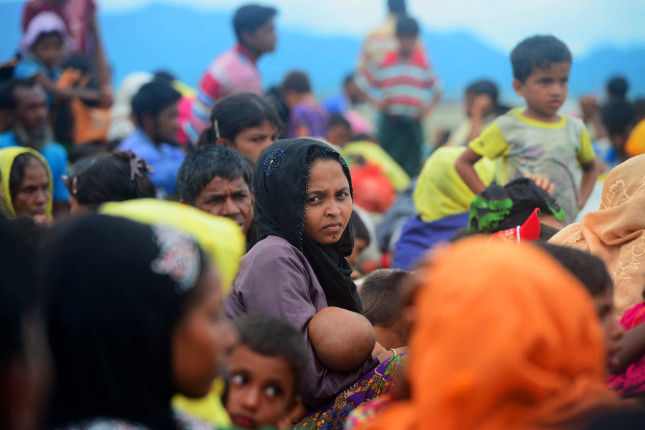
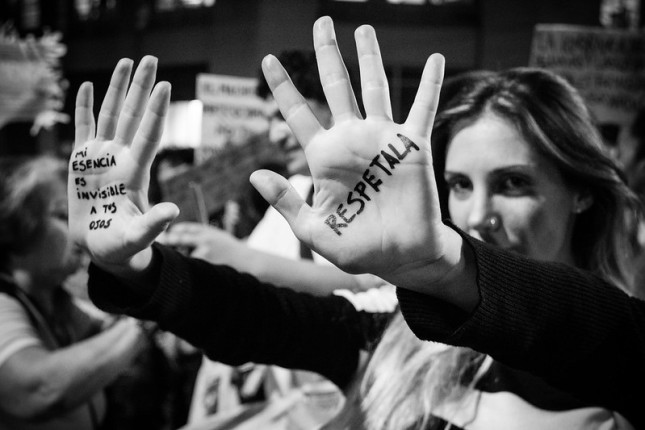
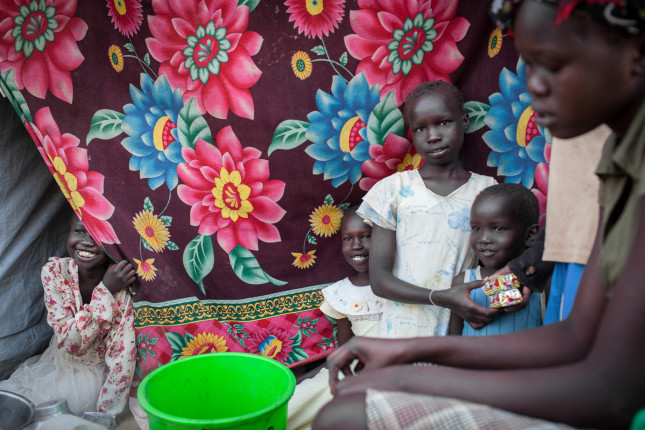
“One hundred thirty-seven women are killed by a family member every day,” said Beth Schlachter, Executive Director of Family Planning 2020. “That’s a staggering statistic.” She spoke at a recent Wilson Center event about gender-based violence (GBV) in conflict and humanitarian settings in partnership with CARE, the International Rescue Committee (IRC), Save the Children, and the Women’s Refugee Commission. The event was a part of a Wilson Center series recognizing the United Nation’s “16 Days of Activism Against Gender-Based Violence” and commemorated our friend and colleague, Jennifer Schlecht.
-
COVID-19 Adds to Challenges of Curbing Child Marriage
›
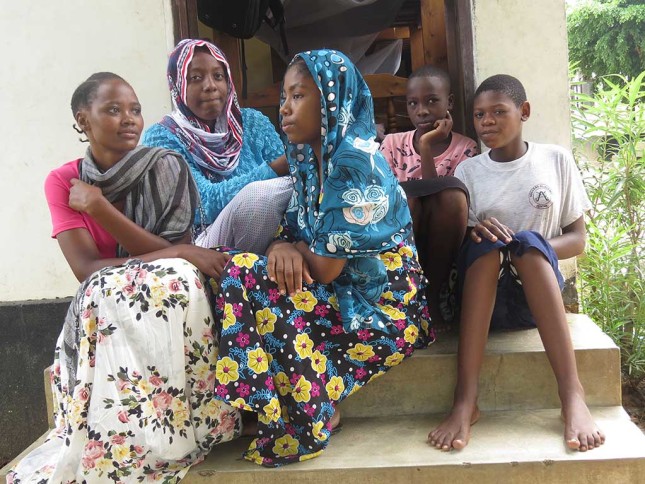
When Mwanahamisi Abdallah’s mother announced plans to marry her off to a stranger, the 14-year-old Tanzanian girl burst into tears. She had no desire to marry—especially after learning the man already had three wives. Remembering advice from a teacher, she phoned authorities to intervene. They blocked the wedding and eventually delivered Mwanahamisi from her village in southeastern Lindi region to a girls’ shelter in Dar es Salaam.
-
Valerie M. Hudson on How Sex Shapes Governance and National Security Worldwide
›“The very first political order in any society is the sexual political order established between men and women,” says Valerie M. Hudson, a University Distinguished Professor at Texas A&M, in today’s Friday Podcast, recorded at a recent Wilson Center launch of the book, The First Political Order: How Sex Shapes Governance and National Security Worldwide. Co-authored by Hudson, Donna Lee Bowen, Professor Emerita at Brigham Young University, and P. Lynne Nielson, a statistics professor at Brigham Young University, the book investigates how the relationship between men and women shapes the wider political order. “We argue, along with many other scholars, that the character of that first order molds the society, its governance, and its behavior,” says Hudson. -
What Does a Biden-Harris White House Mean for Women and Girls? Everything.
›The significance of the Biden-Harris administration for the world’s women and girls cannot be overstated. The current status of women and girls is grim. The COVID-19 pandemic and four years of dangerous policies designed to strip women and girls of their reproductive and economic autonomy and punish them—first for their biology, and second for their gender—have slowed and even reversed decades of progress toward gender equity. Systemic racism and policies meant to further exclude and disenfranchise minority communities have targeted women of color with tragic results.
-
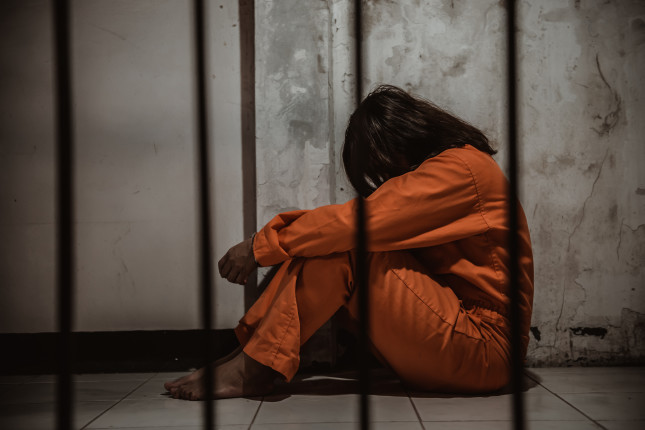
Reproductive Justice in the United States Prison System
›The United States imprisons the most women in the world. Across the United States, approximately 200,000 women are incarcerated—nearly an 800 percent increase since 1980. Women of color are disproportionately affected by the criminal justice system. In 2017, twice as many Black women and 1.3 times as many Hispanic women were incarcerated compared to white women. An often overlooked aspect of the increasing rates of women’s incarceration is the impact on the sexual and reproductive health needs of these women. “Despite being the fastest growing incarcerated population, women and girls are correctional afterthoughts,” writes Kimberly Haven, an activist and formerly incarcerated woman who had to undergo a hysterectomy—a surgical procedure to remove the uterus (and, with it, childbearing possibilities)—after being denied proper menstrual products while incarcerated.
-
Women Transforming Peace: Evaluating Progress 20 Years After Resolution 1325
›“Despite national action plans and legislation in 84 countries, women remain undervalued in peacebuilding, and we know today [women are] seriously underrepresented in peace processes,” said Kathleen Kuehnast, Director of Gender Policy and Strategy at the United States Institute of Peace (USIP), at a recent event with USIP and the U.S. Civil Society Working Group on Women, Peace and Security (U.S. CSWG).
-
A National Reckoning: Highlights From A Conversation with Congresswoman Alma Adams
›“I believe that we’re experiencing a national reckoning and in this unique moment, I definitely see an opportunity for Congress, but also for our local governments to enact policies that begin to address our country’s greatest ills,” said Representative Alma Adams (D-NC-12) at a recent Wilson Center event on women, race, and COVID-19 in the United States. “COVID-19 has revealed what the Black community and communities of color have known for a long time—health outcomes are further compounded by systemic and structural racism. COVID-19 has exposed what women have known for a long time—gender inequality exists, it threatens economic empowerment, and it increases vulnerabilities.” -
Accessing Justice: Femicide and the Rule of Law in Latin America
›Dot-Mom // From the Wilson Center // July 17, 2020 // By Annelise Gilbert, Beatriz García Nice, Olivia Soledad & Anya Prusa“The pandemic is just making visible a reality that has been going on for decades,” said Claudia Calvin, Founder of Mujeres Construyendo (Women Building) and a member of Nosotras Tenemos Otros Datos (We Have Other Data). She spoke at a recent Wilson Center event on femicide and the rule of law in Latin America. The panelists discussed the longstanding roots of this issue and new barriers to protecting women and preventing violence during the pandemic in the launch event for a project examining gender-based violence in Latin America, co-hosted by the Brazil Institute, Latin America Program, Mexico Institute, and Maternal Health Initiative. “Violence against women and femicides are not new,” Calvin said. But what is new is the fact that the media and civil society are bringing this topic to our attention, she said.
Showing posts from category GBV.
 “The very first political order in any society is the sexual political order established between men and women,” says Valerie M. Hudson, a University Distinguished Professor at Texas A&M, in today’s Friday Podcast, recorded at a recent Wilson Center launch of the book,
 “I believe that we’re experiencing a national reckoning and in this unique moment, I definitely see an opportunity for Congress, but also for our local governments to enact policies that begin to address our country’s greatest ills,” said Representative Alma Adams (D-NC-12) at a recent Wilson Center event on women, race, and COVID-19 in the United States. “COVID-19 has revealed what the Black community and communities of color have known for a long time—health outcomes are further compounded by systemic and structural racism. COVID-19 has exposed what women have known for a long time—gender inequality exists, it threatens economic empowerment, and it increases vulnerabilities.”