Showing posts from category funding.
-
Ethiopian Case Study Illustrates Shortcomings of “Land Grab” Debate
›The lines have been drawn in the “land grab” debate: Will foreign investors displace small, local land-holders, damaging the environment with exploitive practices? Or will a combination of infrastructure investment and employment opportunities lead to a virtuous development cycle?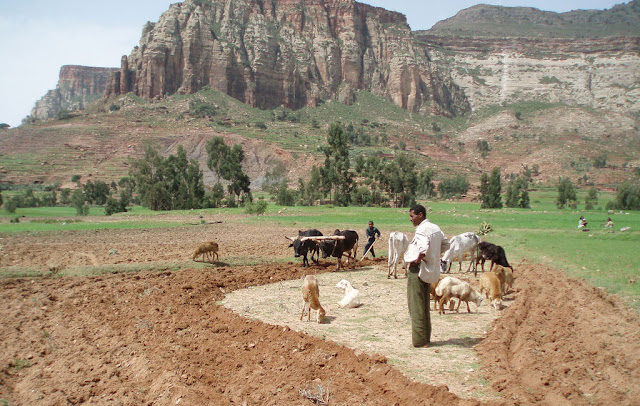
Recent reports suggest that the former is more likely than the latter (e.g., see the Oakland Institute, GRAIN, and the Food and Agriculture Organization). In each case, the proposed antidote is the typical wish-list: Boost institutional capacity to ensure that agreements are honored, environmental and labor regulations are observed, and local populations are given a stake in the process.
While it incorporates a broader swath of data and country case studies, the recent World Bank report, “Rising Global Interest in Farmland: Can It Yield Sustainable and Equitable Results?” largely recycles this tired diagnosis, as noted recently by Michael Kugelman on The New Security Beat.
But the two months we spent in the Amhara and Oromia regions of Ethiopia, surveying smallholders and profiling large-scale commercial farms, left us with a different impression. After completing 1,200 pages of surveys on smallholder livelihood strategies and farm management practices with 120 local farmers, as well as six profiles of private investors’ farms, we identified several key points that these reports missed.
Strong Laws Don’t Always Scare Investors Away
The World Bank report focuses on the belief that countries with weak institutions attract predatory investors, who use lack of oversight to their advantage by exploiting local populations, abusing regulations, etc. Ethiopia, however, has high institutional capacity relative to other African nations, yet still receives enormous land investment.
Every commercial farm we profiled received yearly visits from multiple regional and federal agencies investigating regulatory compliance. Moreover, two of the farms had been sold to their current owners because the previous business ventures failed to observe the terms of their business proposals. These terms included bringing certain amounts of foreign exchange into the country and hitting export targets.
Ethiopia attracts investors for other reasons. Official documents tout the diversity of its micro-climates, but we suspect investors are more likely drawn by a lease rate roughly 100x lower per hectare than the African average.
Given the emphasis on boosting institutional capacity as a means to ensure positive development outcomes, it’s too bad that the World Bank didn’t choose to conduct one of its case studies on Ethiopian commercial farms. Such a study could provide grounds for discussing what investment governed by stronger institutions would look like.
An Incomplete Paradigm
The potential for population displacement (with or without compensation), job creation, and infrastructure development is a well known and well studied paradigm. The World Bank report investigates the occurrence of these phenomena in its case studies, and the results are unsurprising: Sometimes things go OK and sometimes they go badly. This same story emerges in studies of foreign investments of all stripes: logging, oil and natural gas extraction, precious mineral mining, among others.
A more inventive analysis of land grabs could yield meaningful findings, however. Investors and smallholders are engaged in the same activity — farming — and in the case of cereal farms, they are producing the same crops. The resulting overlap allows for a multitude of creative interactions between smallholders and investors that should receive more attention.
Two of the investors we interviewed used these creative interactions to promote their business plans to regional development authorities. One farm sold certified seed to local farmers; another imported an irrigation system new to the region and plans to introduce it to the broader community. They each rented farm equipment to smallholders and held demonstration days to discuss farming techniques and new crop types with community members. One had already introduced new crops to the adjacent village via an “outgrowing” scheme and was exporting smallholder products from the farm, thus diversifying livelihoods for local farming households.
These are, of course, anecdotal accounts. But they suggest a broader point: More attention must be given to “secondary” benefits like technology and knowledge transfers, outgrowing or renting schemes, and informal interactions. Given the unique attributes of large-scale commercial investment in the agricultural sector, which continues to provide most Ethiopians’ livelihoods, these secondary benefits are the mechanism through which livelihoods seem most likely to be transformed. In this case, the preoccupation with displacement, formal compensation, jobs created, and infrastructure development only leads to generalized and ineffective analysis.
Our smallholder surveys and commercial farm profiles point to one conclusion: The commercial farms in our sample that engaged most fully in those creative interactions will generate substantial benefits for local populations over the next 5-10 years (quantitative analysis to be published in our final report this spring). The particular interactions taking place between these smallholders and commercial farms directly alleviate the primary constraints to smallholder livelihoods identified by our survey, such as lack of mechanization, lack of access to inputs, and inability to generate cash through sale of crops.
It’s far from clear that the World Bank analysis would have captured this reality in Ethiopia given its limited focus. Ideas like outgrowing receive scant attention, and are usually only discussed in hypothetical terms or in parentheticals – a trend the World Bank report unfortunately continued.
Incorporate Case Studies and Put Livelihoods First
So while our limited analysis may not enable us to speak broadly about the effects of commercial farming, we can offer two observations.
First, the creative arrangements that accompany the introduction of commercial farming must be front and center of any study. The study should be grounded in an understanding of the livelihood constraints faced by local populations, followed by an analysis of the types of interactions between commercial farms and smallholders that may affect those constraints, including not only traditional effects, such as displacement and employment, but also atypical impacts, such as improved seed distribution and technology demonstration.
Second, since Ethiopia has enough institutional capacity to be selective when choosing commercial investors (and to ensure they adhere to the terms), it embodies a number of principles the promoted by the World Bank report. Ethiopian Prime Minister Meles Zenawi views large-scale private farms as one piece of a broader commercialization effort to revolutionize smallholder agriculture, as described in the government’s development plan, PASDEP. This effort is in keeping with the report’s basic recommendation that host governments ensure that investment is compatible with domestic needs.
Understanding the phenomenon of large-scale land acquisitions should be at the top of the international research agenda. The effects on livelihood security and food security (in both developed and developing countries), as well as the potential contributions to resource conflicts, place such land deals among the most consequential recent trends in the international arena.
We believe a new framework must be brought to the analysis of land grabs. To effectively implement this framework, important but overlooked cases, such as we found in Ethiopia, should be included in future studies.
Nathan Yaffe and Laura Dismore are students at Carleton College, who just returned from researching commercial farming in Ethiopia. They can be reached at yaffen@carleton.edu and dismorel@carleton.edu.
Photo Credit: Adapted from “P8060261,” courtesy of flickr user Ben Jarman. -
Flooded With Food Insecurity in Pakistan
›The floods sweeping across Pakistan have caused widespread destruction, ruined livelihoods, displaced millions, and sparked a food crisis. Food prices have skyrocketed across the country as miles of farmland succumb to the deluge, including 1.5 million hectares in Punjab province, Pakistan’s breadbasket and agricultural heartland.
Food insecurity is now rife across the country — yet even before the floods, millions of Pakistanis struggled to access food. Back in 2008, the UN estimated that 77 million Pakistanis were hungry and 45 million malnourished. And while many developing nations have begun to recover from the global food crisis of 2007-08, Pakistan’s food fortunes have remained miserable. Throughout 2010, Pakistan’s two chief food staples, rice and wheat, have cost 30 to 50 percent times more than they did before the global food crisis. Drought, rampant water shortages, and conflict have intensified food insecurity in Pakistan in recent months.
A new edited book volume published by the Wilson Center’s Asia Program, Hunger Pains: Pakistan’s Food Insecurity, examines the country’s food insecurity. The book has already been the subject of a news story and an editorial in the Pakistani newspaper Dawn. The book, edited by Michael Kugelman and Robert M. Hathaway, is based on the 2009 Wilson Center conference of the same name. It assesses food supply challenges, access issues, governance constraints, social and structural dimensions, gender and regional disparities, and international responses.
The book makes a range of recommendations. These include:- Declare hunger a national security issue. Since some of Pakistan’s most food-insecure regions lie in militant hotbeds, hunger should be linked to defense, and food provision projects should be given ample public funding.
- Diversify the crop mix so that Pakistan’s agricultural economy revolves around more than wheat and rice. The country should accord more resources to crops that are less water-intensive and more nutritious.
- Give schools a central focus in food aid and food distribution. Using schools as a venue for food distribution gives parents powerful incentives to send their children to school.
- Tackle the structural dimensions. Strengthening agricultural institutions, improving infrastructure and storage facilities, and injecting capital into a stagnant farming sector are all key to making Pakistan more food-secure. Yet unless Pakistan deals with poverty, landlessness, and entrenched political interests in agriculture, food insecurity will remain.
Michael Kugelman is program associate with the Asia Program at the Woodrow Wilson International Center for Scholars.
Photo Credit: “Chitarl, Pakistan” where floods damaged the way over Lawari pass and killed five in August 2006. Courtesy of flickr user groundreporter -
Reform Aid to Pakistan’s Health Sector, Says Former Wilson Center Scholar
›August 5, 2010 // By Wilson Center StaffExcerpt from op-ed by Samia Altaf and Anjum Altaf in Dawn:
WE must state at the outset that we have been wary of, if not actually opposed to, the prospect of further economic assistance to Pakistan because of the callous misuse and abuse of aid that has marked the past across all elected and non-elected regimes.
We are convinced that such aid, driven by political imperatives and deliberately blind to the well-recognised holes in the system, has been a disservice to the Pakistani people by destroying all incentives for self-reliance, good governance and accountability to either the ultimate donors or recipients.
Even without the holes in the system the kind of aid flows being proposed are likely to prove problematic. Over half a century ago, Jane Jacobs, in a brilliant chapter (Gradual and Cataclysmic Money) in a brilliant book (The Death and Life of Great American Cities), showed convincingly how ‘cataclysmic’ money (money that arrives in huge amounts in short periods of time) is a surefire way of destroying all possibilities of improvement. What is needed, she argued, is ‘gradual’ money in the control of the residents themselves. While Jacobs was writing in the context of aid to impoverished communities within the US, she concluded with a remarkably prescient concern: “I hope we disburse foreign aid abroad more intelligently than we disburse it at home.”
Continue reading on Dawn.
For more on U.S. aid to Pakistan, see New Security Beat‘s coverage of the recent U.S.-Pakistani Strategic Dialogue.
Photo Credit: A U.S. Army Soldier with 32nd Infantry Regiment, 10th Mountain Division, hands out medical supplies to Pakistani refugees outside an International Committee of the Red Crescent aid station in Afghanistan’s Kunar province, October 23, 2009. Courtesy of flickr user isafmedia. -
Wilson Center’s Michael Kugelman Finds the Real Culprit in Pakistan’s Water Shortage
›July 28, 2010 // By Wilson Center StaffExcerpt from Dawn:
ON Jan 15, 2006, the Karachi Port Trust (KPT) inaugurated its new fountain – the Rs320m lighted harbour structure that spews seawater hundreds of feet into the air.
Also on this day – as on most others in Karachi – several million gallons of the city’s water supply were lost to leakage, some hundred million gallons of raw sewage oozed into the sea, and scores of Karachiites failed to secure clean water.
Over the next few years, the fountain jet would produce a powerful and relentless stream of water high above Karachi. Meanwhile, down below, tens of thousands of the city’s masses would die from unsafe water.
After several fountain parts were stolen in 2008, the KPT quickly made the necessary repairs and re-launched what it deems “an extravaganza of light and water”.
In an era of rampant resource shortages, boasting about such extravagance demonstrates questionable judgment. So, too, does the willingness to lavish millions of rupees on a giant water fountain, and then to repair it fast and furiously – while across Karachi and the nation as a whole, drinking water and sanitation projects are heavily underfunded and water infrastructure stagnates in disrepair.
Continue reading on Dawn.
For more on Pakistan’s water crisis, see the Wilson Center report, “Running on Empty.”
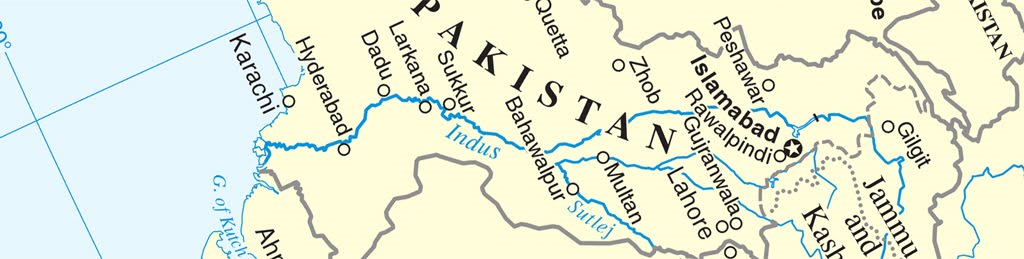
Photo Credit: Adapted from UN map of South Asia, courtesy of Wikimedia Commons. -
Improving Transportation and Referral for Maternal Health
›“Referral has been called an orphan cause,” said Patricia Bailey, public health specialist for Family Health International and Columbia University, because it is “everybody’s responsibility and therefore nobody’s responsibility.”
As part of the Maternal Health Dialogue Series the Woodrow Wilson International Center for Scholars’ Global Health Initiative convened a small technical meeting on May 19, 2010, with 25 experts from five countries to discuss their experiences and share lessons, challenges, and recommendations for improving transportation and referral for maternal health. Following the technical meeting, a public dialogue was held on May 20, 2010, to share the knowledge gaps and recommendations identified. The formal report from the technical meeting will be available in the near future.
Mobilizing District Communities in Rural GhanaTo improve maternal health care in Ghana, “we needed to shift [services] to the community level, where 70 percent of our population lives,” said Dr. John Koku Awoonor-Williams, the east regional director of Ghana Health Service. The “Community-based Health Planning and Services” (CHPS) program was created to galvanize local leadership and empower communities to engage in health outreach activities.
Through this approach, “community health officers and nurses are trained and delegated to distant village locations called CH[I]P zones, in which they are responsible for health education, treatment of minor illnesses, maternal and antenatal care, and referral to district hospitals for emergency care,” said Awoonor-Williams. Community health officers use two-way Motorola walkie-talkies to communicate with traditional birth attendants and referral centers. Pregnant women are given the phone numbers so they can call in the event of complications.
1-0-8 Emergency Number for Improving Maternal Health in IndiaMany parts of the developing world do not have a 911-style emergency response service. To address this gap, the GVK Emergency Management & Research Institute in India developed the toll-free 1-0-8 telephone number for all medical, police, and fire emergencies.
“We assure every citizen that wherever you are, [if] you call us we will be there,” said Subodh Satyawadi, chief operating officer of GVK. In order to reach the 433 million people covered by GVK, they have:
“Although we address all kinds of emergencies, we heavily focus on maternal health…31 percent of emergencies are pregnancy-related,” said Satyawadi, who said that GVK’s emergency response system has helped save more than 200,000 mothers. Institutional deliveries have increased in the state of Gujarat by 92 percent. “We have been able to reduce maternal mortality by 20-25 percent in different geographies,” he said.- 19,623 EMTs and 10,000 doctors and other healthcare professionals
- 2,710 ambulances
- 16,300 call-center employees
Pre-Hospital Barriers: Reducing Maternal Morbidity in BoliviaWomen in Bolivia receive free maternal care. In cities like La Paz, emergency obstetric care is often available within a short distance. However, “37 percent of our maternal deaths [occur] at our hospitals,” said Víctor Conde Altamirano, OB/GYN of CARE Bolivia.
To better understand this mortality rate, Altamirano evaluated whether pre-hospital barriers and routine antenatal care are associated with near-miss morbidity. He found that women who are older, have lower levels of education, lack antenatal care, are pregnant for the first time, or live in rural areas are at a greatest risk of illness or death
“We are trying to organize our communities and service facilities, and promote improved health management by the municipalities. If our authorities can be sensitive and invest in health; invest in fuel, drugs, and human resources; we can improve near-miss morbidity rates,” said Altamirano.
Strategies and Recommendations for Improving Transportation & ReferralThe workshop participants agreed on six key topic areas for improving transportation and referral:1. Multi-sectoral collaboration
The group called for improved multi-sectoral engagement and continuous dialogue among key ministries: Health, Finance, Communication, Social Welfare, Security and Defense, Transportation, and Public Works.
2. Mobile phone technology
3. Public-private partnerships
4. Referral for newborns
5. Indicators for referral
6. Sharing evidence
Private-public partnerships, such as those demonstrated by GVK in India and the CH[I]P program in Ghana, create opportunities for collaboration. “Cell-phone technology can reduce delays in transport and treatment by identifying which facilities might be the most appropriate for referral,” said Bailey.
The final recommendation by the group calls for increased pooling and use of existing evidence to move the transportation and referral agenda forward. Updated synthesis papers on existing evidence are needed, said Bailey. “We have a lot of data that is perhaps less than perfect, but this should not be a barrier for further action,” she said. -
‘Frontlines’ Interviews John Sewell: “Promoting Development Is a Risky Business”
›May 31, 2010 // By Wilson Center StaffQ: Foreign assistance has had major achievements over the past 50 years. What are some examples?
SEWELL: There have been many but off the top of my head I can think of three. First, the Green Revolution where the combined efforts of American aid and private foundations revolutionized agriculture in Asia. As a result, many more people lived a much longer time. Second, the efforts put into improving education, particularly of women and girls. The third is population growth. When I started working on development, the best predictions said that global population would rise to over 20 billion at the end of the 20th century. Now we know it will not go much above 9 billion and perhaps lower. That wouldn’t have happened without American leadership and funding.
Q: What are the major failures of foreign assistance?
SEWELL: Failures have occurred either because countries were not committed to development, or because aid agencies designed ineffective programs. But most major failures came about because aid was provided for political reasons— for Cold War purposes in Southeast Asia or the Middle East, not for economic and social development. And we should remember that promoting development is a risky business. If there were no failures, development agencies were being too cautious.
But the more important failures are at the strategic level. Assistance really is only effective when governments and leaders want to speed economic growth, improve health and education, and address poverty. When the government isn’t committed to development, a lot of aid is wasted.
That’s why the choice of countries is so important. Korea is one example. Korean leaders knew how to use foreign aid effectively to build agriculture and industry. Part of that assistance funded investments in health and education. We all know the result.
Egypt, on the other hand, also has received large amounts of American assistance since 1979. But its growth rates are low and they still have one of the highest rates of adult illiteracy in the world.
Perhaps the largest failure has been in Africa. Except for a small number of countries, Africa lags far behind other regions. The blame lies not just with African leaders but also with aid donors who have continued to provide assistance in ways that hinder development.
Q: In what ways can global poverty be reduced quickly in the next three to four years?
SEWELL: In the short term, it won’t happen. The global financial crisis makes that a certainty.
The best estimates are that up to 90 million people will fall back into poverty because they will have lost jobs and livelihoods. The most important thing the U.S. can do in the near term is to continue to lead the reform of the international financial systems that are essential to restarting global economic growth, particularly in the developing world.
Q: That’s the way to reduce poverty?
SEWELL: In the short term, yes. But the U.S. can target aid to build poor peoples’ capacities and can make a great difference. That means aid for education, especially women, and to enable poor people to improve their health. And jobs are critical.
I think the right goal is to empower people to move into the middle class.
That means helping to provide technical assistance and in making low-cost credits for both farmers and small scale entrepreneurs. They will be the generators of jobs that enable men and women to move out of poverty.
Q: Why do you say in one of your papers that economic growth alone will not eliminate poverty?
SEWELL: Because it’s true. Growth does not automatically diminish poverty; it has to be complemented by government actions to share the gains from growth by investing in better health and education. For this you also need a competent state. That’s how the East Asian countries managed to develop so successfully. On the other hand, many Latin American countries have grown at decent rates but have lousy income distribution. But now countries like Brazil are starting to change. For instance, the Brazilian government now pays mothers to keep their children in school where they can get education and health care.
Q: USAID has restrictions that inhibit advertising. How can the public and Congress be informed about the successes and importance of development assistance?
SEWELL: USAID has been very timid about educating the public and Congress. I am not even sure that the earlier successful programs of development education exist anymore. Some steps are easy.
USAID staff knows a lot about development. Why not send them out to talk to public groups around the country? USAID staff doesn’t even participate actively in the yeasty dialogue on development that goes on in the Washington policy community and they should be encouraged to do so. Other changes may require funding and perhaps legislation and the administration should work with the Congress to get them.
Informing the public is particularly important now when there are two major processes underway to modernize U.S. development programs and Congress is rewriting the development assistance legislation.
Q: Since China and Vietnam have both developed without democracy, how important is it to push for democracy and good governance? Are they really necessary?
SEWELL: We need to separate democracy and governance. Very few of the successful developing countries have started out as democracies; India is the big exception. On the other hand, all of the successful countries have had effective governments to do what governments should do: provide security and public goods like health and education, establish the rule of law, and encourage entrepreneurship.
We need to face the fact that no outsider, including the U.S., can “democratize” a country. But it can play an important role in helping to improve governance in committed poor countries. And one of the important parts of successful development is what a Harvard economist calls “conflict mediating institutions” that allow people to deal with the inevitable conflicts that arise within successful development.
Q: You have said that we need to make markets work. How can we help poor people begin to trade when Europe, Japan, and the United States either block imports or subsidize exports?
SEWELL: If you are serious about development, you have to give high priority to trade policy. Unfortunately, USAID seems to have very little voice in trade decisions.
The U.S. needs to focus its development trade policy on the poorest countries. The highest priority should be dropping the remaining subsidies for U.S. production of highly subsidized agricultural products like cotton that can be produced very competitively in very poor countries.
But many of these countries have difficulty selling goods in the U.S., not only because of subsidies, but also because they are not equipped to export. Transport costs are high as are the costs of meeting U.S. health and quality standards, and knowledge of marketing in America is scarce.
Here’s where USAID can play an important complementary role. U.S. companies are already providing technical assistance, some with USAID support. But USAID can expand its trade capacity building programs and focus them on the poorer countries.
Q: What about microcredit?
SEWELL: Microcredit is a very important innovation, especially for empowering poor people, particularly poor women. It’s part of the solution to ending poverty.
But there are other needs. In most poor countries, there are large groups of poor entrepreneurs who are not poor enough to get microcredit but who can’t get commercial banks to lend to them. These are people who produce products for sale— handbags, for instance—that employ 10 to 20 people, but they need capital and advice in order to grow. In the U.S., small businessmen used to borrow money from local banks.That’s how America grew. But similar institutions don’t exist in many poor countries.
Q: We are involved in so many different programs—20 or 30 different federal agencies do some sort of foreign assistance— why not just invest in education and health and let each country figure out what their own development plan should be?
SEWELL: A very good idea. I have long advocated that the U.S. should focus its programs on a few major development issues but I would go beyond just health and education. I add climate change and dealing with global health threats. We dodged the bullet on SARS [severe acute respiratory syndrome] and avian flu but we may not be so lucky in the future. And strengthening governance and strengthening weak states is essential.
The real need now is for some mechanism that oversees and coordinates the multiplicity of agencies that have programs and expertise on these critical issues. Let’s hope that emerges from the current administration’s reviews of development policy
John Sewell a senior scholar at the Woodrow Wilson International Center for Scholars, was interviewed by FrontLines Editorial Director Ben Barber. Originally published in USAID FrontLines, April 2010.Urbanization, Climate Change, and Indigenous Populations: Finding USAID’s Comparative Advantage
›May 26, 2010 // By Kayly Ober“Part of the outflow of migrants from rural areas of many Latin American countries has settled in remote rural areas, pushing the agricultural frontier further into the forest,” writes David López-Carr in a recent article in Population & Environment, “The population, agriculture, and environment nexus in Latin America.” In a May 4 presentation at the LAC Economic Growth and Environment Strategic Planning Workshop in Panama City, Panama, he discussed how to integrate family planning and environmental services in rural Latin America.
Latin America is one of the most highly urbanized continents in the world, with an average of 75 percent of the population living in cities. However, “there are two Latin Americas,” said López-Carr at the workshop, which was sponsored by the Woodrow Wilson Center’s Environmental Change and Security Program and Brazil Institute, as well as the U.S. Agency for International Development. Largely developed countries like Chile, Argentina, and Uruguay are close to 90 percent urbanized, while Guatemala, Ecuador, and Bolivia are about 50 percent. In less urbanized countries, rural-rural migrants in search of agricultural land remain a major driving force behind forest conversion, he said.
Between 1961 and 2001, Central America’s rural population increased by 59 percent, said Lopez-Carr. The increasing density of the rural population had a negative impact on forest reserves: a 15 percent increase in deforestation totaling some 13 million hectares.
“Rural areas of Latin America still have high fertility rates but (unlike much of rural Africa, for example) also have a high unmet demand for contraception, meaning that improved contraceptive availability would likely result in a rapid and cost-effective means to reduce population pressures in priority conservation areas,” he said. Additionally, remote rural areas with high population growth rates tend to be associated with indigenous populations located in close proximity to protected forests.
For example, in Guatemala, communities surrounding Sierra de Lacandon National Park have, since 1990, grown by 10 percent each year, with birthrates averaging eight children per woman. Larger communities and larger households have led to agricultural expansion, which infringes on the park and accelerates deforestation in one of the most biologically diverse biospheres in the world, said López-Carr.
Based on these demographic and environmental trends, López-Carr suggested USAID’s work in the region should focus on rural maternal and child health, and education – especially for girls. Not only does USAID already invest in such programs, but they only cost pennies per capita and could reduce the number of rural poor living in Latin American cities by tens of millions.
Given the strong links between population density and deforestation in Latin America, expanding access to family planning would also be a smart investment in forest conservation and climate mitigation, López-Carr concluded.
Source: Population Reference Bureau.
Photo Credit: Dave Hawxhurst, Woodrow Wilson Center.Look Beyond Islamabad To Solve Pakistan’s “Other” Threats
›After years of largely being ignored in Washington policy debates, Pakistan’s “other” threats – energy and water shortages, dismal education and healthcare systems, and rampant food insecurity – have finally moved to the front burner.
For several years, the Woodrow Wilson Center’s Asia Program has sought to bring these problems to the attention of the international donor community. Washington’s new determination to engage with Pakistan on its development challenges – as evidenced by President Obama’s signing of the Kerry-Lugar bill and USAID administrator Raj Shah’s comments on aid to Pakistan – are welcome, but long overdue.
The crux of the current debate on aid to Pakistan is how to maximize its effectiveness – that is, how to ensure that the aid gets to its intended recipients and is used for its intended purposes. Washington will not soon forget former Pakistani president Pervez Musharraf’s admission last year that $10 billion in American aid provided to fight the Taliban and al-Qaeda was instead diverted to strengthen Pakistani defenses against archrival India.
What Pakistani institutions will Washington use to channel its aid monies? In recent months, the U.S. government has considered both Pakistani NGOs and government agencies. It is now clear that Washington prefers to work with the latter, concluding that public institutions in Pakistan are better equipped to manage large infusions of capital and are more sustainable than those in civil society.
This conclusion is flawed. Simply putting all its aid eggs in the Pakistani government basket will not improve U.S. aid delivery to Pakistan, as Islamabad is seriously governance-challenged.
Granted, Islamabad is not hopelessly corrupt. It was not in the bottom 20 percent of Transparency International’s 2009 Corruption Perceptions Index (Pakistan ranked 139 out of 180), and enjoyed the highest ranking of any South Asian country in the World Bank’s 2010 Doing Business report.
At the same time, the Pakistani state repeatedly fails to provide basic services to its population – not just in the tribal areas, but also in cities like Karachi, where 30,000 people die each year from consuming unsafe water.
Where basic services are provided, Islamabad favors wealthy, landed, and politically connected interests over those of the most needy – the very people with the most desperate need for international aid. Last year, government authorities established a computerized lottery that was supposed to award thousands of free tractors to randomly selected small farmers across Pakistan. However, among the “winners” were large landowners – including family members of a Pakistani parliamentarian.
Working through Islamabad on aid provision is essential. However, the United States also needs to diversify its aid partners in Pakistan.
For starters, Washington should look within civil society. This rich and vibrant sector is greatly underappreciated in Washington. The Hisaar Foundation, for example, is one of the only organizations in Pakistan focusing on water, food, and livelihood security.
The country’s Islamic charities also play a crucial role. Much of the aid rendered to health facilities and schools in Pakistan comes from Muslim welfare associations. Perhaps the most well-known such charity in Pakistan – the Edhi Foundation – receives tens of millions of dollars each year in unsolicited funds.
Washington should also be targeting venture capital groups. The Acumen Fund is a nonprofit venture fund that seeks to create markets for essential goods and services where they do not exist. The fund has launched an initiative with a Pakistani nonprofit organization to bring water-conserving drip irrigation to 20,000-30,000 Pakistani small farmers in the parched province of Sindh.
Such collaborative investment is a far cry from the opaque, exploitative foreign private investment cropping up in Pakistan these days – particularly in the context of agricultural financing – and deserves a closer look.
With all the talk in Washington about developing a strategic dialogue with Islamabad and ensuring the latter plays a central part in U.S. aid provision to Pakistan, it is easy to forget that Pakistan’s 175 million people have much to offer as well. These ample human resources – and their institutions in civil society – should be embraced and be better integrated into international aid programs.
While Pakistan’s rapidly growing population may be impoverished, it is also tremendously youthful. If the masses can be properly educated and successfully integrated into the labor force, Pakistan could experience a “demographic dividend,” allowing it to defuse what many describe as the country’s population time bomb.
A demographic dividend in Pakistan, the subject of an upcoming Wilson Center conference, has the potential to reduce all of Pakistan’s threats – and to enable the country to move away from its deep, but very necessary, dependence on international aid.
Michael Kugelman is program associate with the Asia Program at the Woodrow Wilson International Center for Scholars.
Photo Credit: Water pipes feeding into trash infected waterway in Karachi, courtesy Flickr user NB77.