Showing posts from category forests.
-
Nepal to East Africa: Population, Health, and Environment Programs Compared
›“Practice, Harvest and Exchange: Exploring and Mapping the Global, Health, Environment (PHE) Network of Practice,” by the University of Rhode Island’s Coastal Resources Institute and the USAID-supported BALANCED Project, explores the successes and challenges of their global population, health, and environment (PHE) network (with a heavy presence in East Africa). In order to increase support of the nascent PHE approach, the network seeks to shorten the “collaborative distance” between “PHE champions,” so they can develop a stronger body of evidence for the links between population, health, and the environment. In their analysis, the authors write that the network has facilitated the development of independent, information-sharing relationships between “champions.” However, they also observed shortfalls in the network, such as its limited reach into less technologically advanced yet more biodiverse regions, its bias toward BALANCED meet-up event participants, and its exclusion of those experts unlikely to be included in published works. In “Linking Population, Health, and the Environment: An Overview of Integrated Programs and a Case Study in Nepal” from the Mount Sinai Journal of Medicine, Sigrid Hahn, Natasha Anandaraja, and Leona D’Agnes provide both a broad survey of the structure and content of programs using the PHE method and an in-depth case study of a successful initiative in Nepal. Hahn et al. praise the Nepalese program for simultaneously addressing deforestation from fuel-wood harvesting, indoor air pollution from wood fires, acute respiratory infections related to smoke inhalation, as well as family planning in Nepal’s densely populated forest corridors. “The population, health, and environment approach can be an effective method for achieving sustainable development and meeting both conservation and health objectives,” the authors conclude. In particular, one benefit of cross-sectoral natural resource and development programs is the inclusion of men and adolescent boys typically overlooked by strictly family planning programs.
 -
Scott Wallace, National Geographic
A Death Foretold
›June 23, 2011 // By Wilson Center StaffThe original version of this article, by Scott Wallace, appeared on National Geographic News Watch.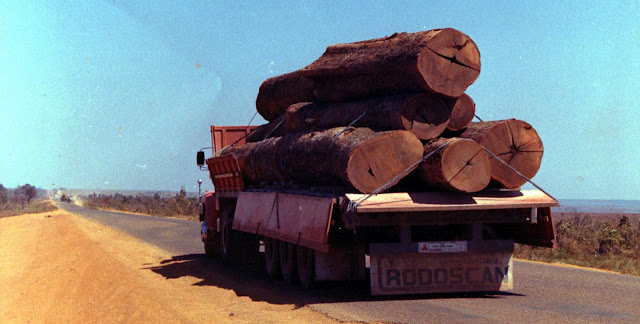
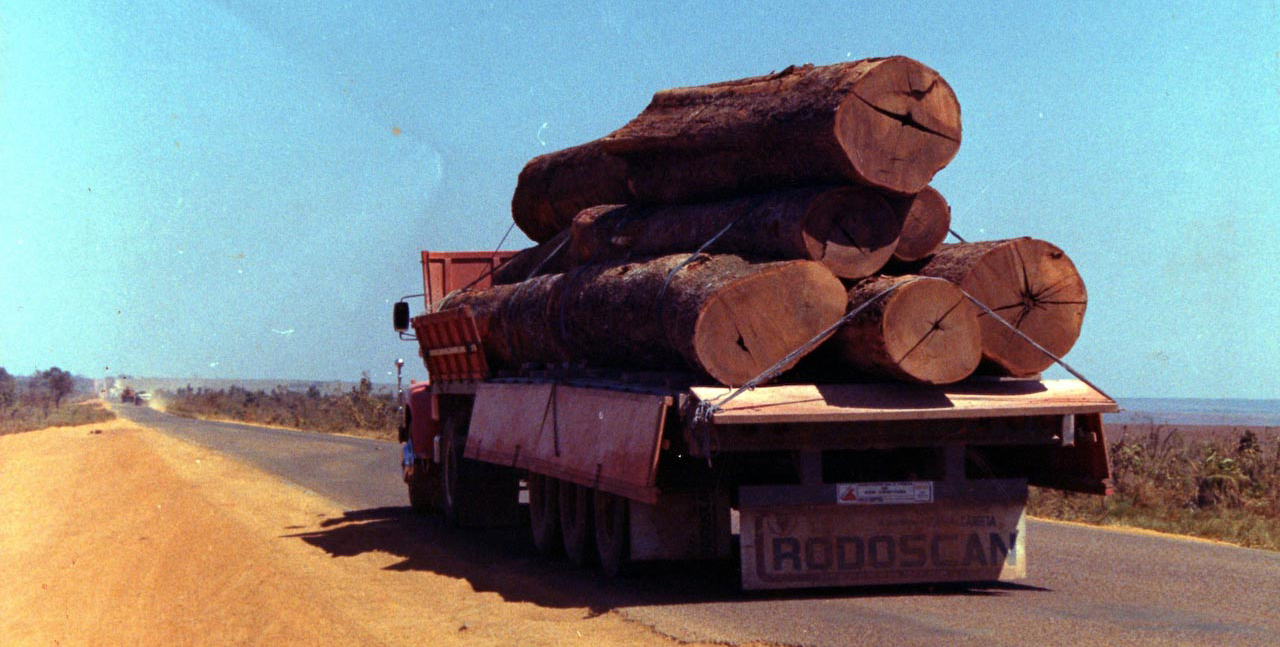
Late last month the Brazilian Congress passed a bill that if it becomes law would ease restrictions on rain-forest clearing and make it easier than ever to mow down the Amazon. That same day, 800 miles north of the parliamentary chamber in Brasilia, assailants ambushed and killed a married couple whose opposition to environmental crimes had placed them in the crosshairs of those who most stand to gain from the new legislation.
It’s a nauseatingly familiar story. Over the past 20 years, there have been more than 1,200 murders related to land conflict in Brazil’s Amazon region. Most of the victims, like the married activists Zé Claudio Ribeiro and Maria do Espírito Santo, were defenders of the rain forest – people seeking sustainable alternatives to the plunder-for-profit schemes that characterize much of what passes for “development” in the Amazon.
The state of Pará – where Zé Claudio and Maria were ambushed on their motorbike as they crossed a rickety bridge – holds an especially notorious reputation for environmental destruction and organized violence. Pará is the bloodiest state in Brazil, accounting for nearly half of all land-related deaths in recent decades. It sprawls across an area larger than the states of Texas, Oklahoma, and New Mexico combined. Picture a tropical version of the Wild West, stripped of the romance, where loggers and ranchers muscle their way onto public land as though they own the place and impose a law of the jungle with their hired thugs. Those who have the nerve to protest soon find themselves the targets of escalating threats. If they persist, they find themselves staring down the gun barrels of those come to make good on the threats.
Continue reading on National Geographic.
Photo Credit: “Toras,” courtesy of flickr user c.alberto. -
Book Launch: ‘Human Population: Its Influence on Biological Diversity’
›Measurements of “human population density and growth can be used to identify changes in the viability of native species, and more directly, in changes in ecological systems or habitat quality,” said Richard Cincotta, consultant at the Environmental Change and Security Program and demographer-in-residence at the Stimson Center, speaking at the book launch of Human Population: Its Influence on Biological Diversity.
Cincotta was joined by coeditor L.J. Gorenflo, associate professor of landscape architecture at Penn State University, and contributing author Christopher Small, research professor at the Lamont-Doherty Earth Observatory and adjunct professor at Columbia University, to discuss the book’s objectives, its diverse and multidisciplinary contributors, and its policy implications. [Video Below]
Establishing a Handbook for the Field
“Human Population: Its Influence on Biological Diversity establishes a handbook for the field,” said Cincotta. While the scientific volume is specifically geared towards researchers and conservation managers rather than policymakers, “there are a few Washington-type policy messages that are useful,” he added.
Human population affects biological diversity in multiple ways. While population density alone can be strongly indicative of the viability of different populations of native species, human activities and their chemical and energetic byproducts can also have a strong impact, even when human population density is low, said Cincotta.
Conserving Biodiversity in Different Settings
“Planned solutions, based on strategic actions, increasingly are essential,” said Gorenflo, a professor at Penn State University. “The days of letting nature take care itself are probably gone.” Gorenflo presented results from the two chapters he worked on: “Human Demography and Conservation in the Apache Highlands Ecoregion, U.S.-Mexico Borderlands” and “Exploring the Association Between People and Deforestation in Madagascar.”
“Population density seems to be a reasonably good indicator of biodiversity loss,” said Gorenflo. Data from the Apache Highland Ecoregion (a 12 million-hectare area located along the U.S.-Mexico border) indicate that biodiversity tends to drop off at population densities of more than 10 people per square kilometer. Conservation efforts in areas within the ecoregion that are at, or close to, this density threshold will likely encounter challenges to maintaining biodiversity, he said.
Human mobility is a major consideration, said Gorenflo: “Whereas high fertility can create population growth over generations, high mobility can create population growth in a matter of months or years.” In the Apache Highlands, for example, the 40 percent increase in population between 1990 and 2000 was largely caused by migration into U.S. cities in the region.
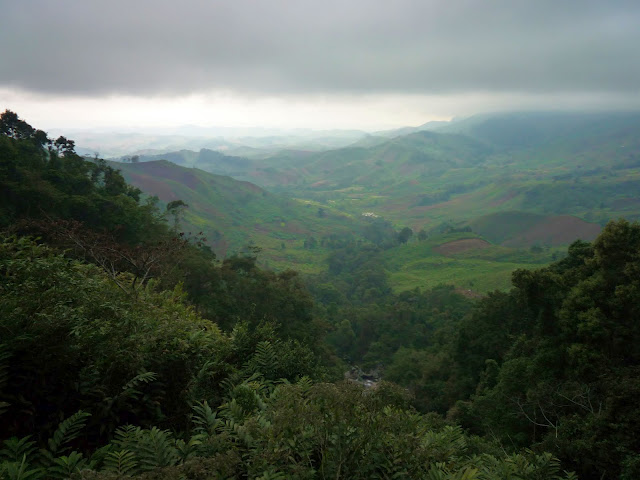
In Madagascar, Gorenflo and colleagues examined whether population growth and poverty were systematically driving deforestation and loss of biodiversity. Using data from the 1990s, they found that higher population density only slightly raises rates of deforestation and large increases in income only modestly decrease deforestation.
Not surprisingly, they found that the likelihood of deforestation decreased dramatically in protected areas. In addition, proximity to roads or footpaths was associated with significantly higher rates of deforestation. “Roads, footpaths, and protected areas are all policy decisions,” Gorenflo pointed out. “So when bilateral or multilateral organizations decide to invest in development in a place like Madagascar, they can look at these sorts of investments as being important.”
While there are some similarities to be drawn between regions’ experience with population and biodiversity, said Gorenflo, “every locality likely has a slightly different story; you need to do context-specific studies to get a real handle on what is going on.”
The Human Habitat
In his chapter, “The Human Habitat,” Christopher Small of the Lamont-Doherty Earth Observatory said his goal was “to set the stage for some of the more detailed studies by taking a look at the global distribution of human population.”
Using census data and satellite-derived maps of night lights to serve as a “proxy for development,” Small found that “people are everywhere, but they are not evenly distributed.”
At least half the world’s population lives on less than three percent of the inhabitable land, and most people live at densities between 100 and 1000 people per square kilometer. At both local and global scales, population density and city size are dominated by extremes: There are large numbers of small groups of people, and small numbers of large groups of people, he said.
“The environments where people live are more strongly correlated with features of the landscape than they are with climatic parameters,” said Small. While humans have effectively adapted to a range of climates, the majority of people tend to cluster close to rivers, at low elevations, and close to coastlines. Although it was once thought that three-quarters of the world’s population lived in coastal regions, Small’s results show that the actual number is close to half of these previous assumptions.
Understanding the spatial and environmental distribution of population and managing population growth may therefore help minimize negative impacts on specific habitats and biomes, said Small.
Image Credit: “View from a Madagascar Train,” courtesy of flickr user cr01. -
Connections Between Climate and Stability: Lessons From Asia and Africa
›“We, alongside this growing consensus of research institutes, analysts, and security agencies on both sides of the Atlantic, think of climate change as a risk multiplier; as something that will amplify existing social, political, and resource stressors,” said Janani Vivekananda of International Alert, speaking at the Wilson Center on May 10. [Video Below]
Vivekananda, a senior climate policy officer with International Alert’s Peacebuilding Program, was joined by co-presenter Jeffrey Stark, the director of research and studies at the Foundation for Environmental Security and Sustainability (FESS), and discussant Cynthia Brady, senior conflict advisor with USAID’s Office of Conflict Management and Mitigation, to discuss the complex connections between climate change, conflict, stability, and governance.
A Multi-Layered Problem
Climate change and stability represent a “double-headed problem,” said Vivekananda. Climate change, while never the only cause of conflict, can increase its risk in certain contexts. At the same time, “states which are affected by conflict will already have weakened social, economic, and political resilience, which will mean that these states and their governments will find it difficult to address the impacts of climate change on the lives of these communities,” she said.
“In fragile states, the particular challenge is adapting the way we respond to climate change, bearing in mind the specific challenges of operating in a fragile context,” said Vivekananda. Ill-informed intervention programs run the risk of doing more harm than good, she said.
For example, Vivekananda said an agrarian village she visited in Nepal was suffering from an acute water shortage and tried adapting by switching from rice to corn, which is a less water-intensive crop. However, this initiative failed because the villagers lacked the necessary technical knowledge and coordination to make their efforts successful in the long term, and in the short term this effort actually further reduced water supplies and exacerbated deforestation.
“Local responses will only be able to go so far without national-level coordination,” Vivekananda said. What is needed is a “harmony” between so-called “top-down” and “bottom-up” initiatives. “Adapting to these challenges means adapting development assistance,” she said.
“What we’re finding is that the qualities that help a community, or a society, or in fact a government be resilient to climate change are in fact very similar qualities to that which makes a community able to deal with conflict issues without resorting to violence,” said Vivekananda.
No Simple, Surgical Solutions
“The impacts of environmental change and management of natural resources are always embedded in a powerful web of social, economic, political, cultural, and historical factors,” said Stark. “We shouldn’t expect simple, surgical solutions to climate change challenges,” he said.
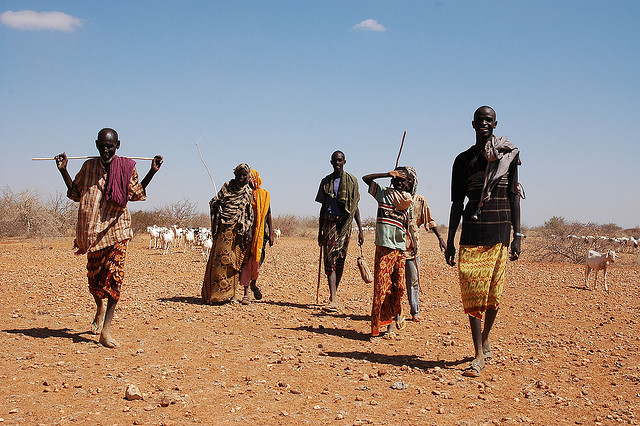
Uganda and Ethiopia, for example, both have rich pastoralist traditions that are threatened by climate change. Increasing temperatures, drought, infrequent but intense rains, hail, and changes in seasonal patterns are threatening pasture lands and livelihoods.
At the same time, pastoralists are confronting the effects of a rapidly growing population, expanding cultivation, forced migration, shrinking traditional grazing lands, anti-pastoralist attitudes, and ethnic tensions. As a result, “any intervention in relation to climate adaptation – whether for water, or food, or alternative livelihoods – has to be fully understood and explicitly acknowledged as mutually beneficial by all sides,” Stark said. “If it is seen in any way to be favoring one group or another it will just cause conflict, so it is a very difficult and delicate situation.”
Yet, the challenges of climate change, said Stark, can be used “as a way to involve people who feel marginalized, empower their participation…and at the same time address some of the drivers of conflict that exist in the country.”
Case Studies: Addressing the “Missing Middle”
When doing climate change work in fragile states, “you have to think about your do-no-harm parameters,” said Brady. “Where are the opportunities to get additional sustainable development benefit and additional stabilization benefit out of reducing climate change vulnerability?”
More in-depth case studies, such as the work funded by USAID and conducted by FESS in Uganda and Ethiopia, are needed to help fill the “missing middle” between broad, international climate change efforts – like those at the United Nations – and the community level, Brady said.
The information generated from these case studies is being eagerly awaited by USAID’s partners in the Departments of State, Defense, and Treasury, said Brady. “We are all hopeful that there will be some really significant common lessons learned, and that at a minimum, we may draw some common understanding about what climate-sensitive parameters in fragile states might mean.”
Image Credit: “Ethio Somali 1,” courtesy of flickr user aheavens. -
Managing Our Forests: Carbon, Climate Change, and Fire
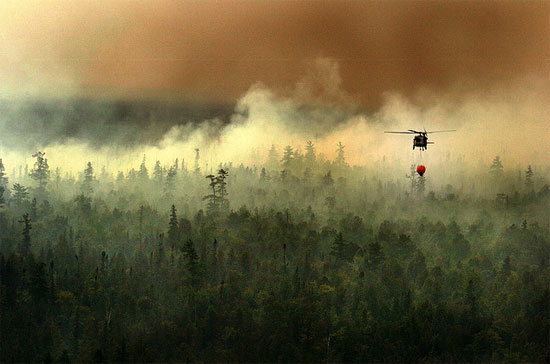
›“We cannot manage our planet if we cannot manage our forests,” said William Sommers, a research professor with the Center for Climate and Society at George Mason University, during a recent event at the Woodrow Wilson Center. The event, which coincided with the International Year of Forests, was the fourth in a series co-sponsored by George Mason University and the Environmental Change and Security Program on “Managing the Planet.” Sandra Brown, director and chief scientist of the Ecosystems Services Unit at Winrock International and David Cleaves, climate change advisor to the chief of the U.S. Forest Service, joined Sommers and moderator Thomas Lovejoy, professor at George Mason, to discuss the impact of climate change, carbon, and fire on the world’s forests. [Video Below]
Fire: A “Critical Element”
“Forests have evolved over Earth’s history,” said Sommers, with fire being a “constant shaper” of this evolution. Humans first used fire as a tool about 400,000 years ago, and around 10,000 years ago, we began using fire for agricultural purposes, which, Sommers said, can be considered the beginning of forest management.
The resulting carbon dioxide (CO2) emissions have been an important consequence of this human intervention, Sommers said. CO2 emissions have an “exceptional persistence” in the atmosphere, which, explained Sommers, “commits us to irreversible warming over the next 1,000 years.”
In order to counteract these warming effects, a replacement for the “business-as-usual” approach is needed, Sommers said. If not, he warned, CO2 concentrations could reach a thousand parts per million by the end of the century: “It has been 30 to 100 million years since Earth experienced that level of atmospheric CO2 concentration, and Earth was extremely warm at that time.”
“Fire remains a critical element of the earth’s system and is highly sensitive to climate change,” said Sommers. The potential feedback relationship between fire and climate change was illustrated in dramatic fashion in the summer of 2010 with the outbreak of wildfires in Russia after the hottest summer temperatures on record.
Time is running short, Sommers warned, to answer the question of whether humans can anticipate and respond to climate change and manage forests in a sustainable manner.
Reducing Emissions & Improving Management
“Logging can be well-planned and well-designed or maybe not so well-planned,” said Brown as she spoke about her research on the logging industry in the tropics. Sustainable forest management in the tropics is still “a bit of the wild west” in some countries, though the situation is improving slightly, she said.
One way to improve management and reduce greenhouse gas emissions would be through the REDD+ (Reducing Emissions from Deforestation and Degradation) program of the United Nations. REDD+ can provide incentives, Brown said, for people to come up with useful innovations and improvements to forest management. But, she warned, “the longer we keep waiting, [the more] forests are diminishing.”
When a tree is felled, Brown said, there is a lot of collateral damage. An estimated one billion metric tons of CO2 are released every year from logging in the tropics of Africa and Latin America, she explained. One-half of these emissions are from the harvesting itself and the other half is from incidental damage and infrastructure, such as from the skid trails and haul roads needed to transport the logs out of the forest.
Therefore, it is important for all possible reduction steps to be taken, Brown said: “Where we have opportunities to produce goods with reducing emissions, we need to take those opportunities. We just can’t keep thinking, ‘That’s too small to worry about.’ If there’s what we call ‘low-hanging fruit,’ why not go for it?”
In order to reduce emissions and improve management, Brown suggested reducing avoidable waste by trimming more off of felled logs to increase volume, creating a management plan wherein felled logs are accurately mapped and skid trails are better planned, and using silvicultural treatments to speed the forest’s recovery.
Integrating Climate Change Into Risk Management
The job of the U.S. Forest Service has always been that of a “stress manager,” said Cleaves. Climate change is likely to ramp up existing stressors, such as drought and wildfires, which is why it is necessary for the Forest Service to integrate climate change adaptation techniques into the existing stress manager role. “We feel that there is no such thing as a separate climate change program,” he said.
Many difficult choices will have to be made to address climate change, Cleaves said: “We can’t afford the scale of the problem; we can’t afford to solve it all. We need to be able to prioritize.” These choices will have to be based on economic, social, and ecological values in order to “manage risks around the full sweep of the elements of sustainability,” he said.
The country’s forests are changing and we have already seen whole system change, Cleaves explained. For example, climate change has altered snow cover patterns leading to the decline of over half a million acres of yellow-cedar forest in Alaska.
Other threats facing U.S. forests include disease (such as white pine blister rust), increased variability of fires, increased housing growth near forested areas, and the possibility of forests turning from carbon sinks into carbon sources. That is to say, as forests are destroyed through fires, clearing, or disease, they release back into the environment the carbon they have absorbed.
Risk must be integrated into the decision-making process of the agency, and to this end the Forest Service has created the National Roadmap for Responding to Climate Change. But in order to meet these climate change challenges, Cleaves said, “we have to get moving.”
Sources: U.S. Fish and Wildlife Service, USA Today.
Photo Credit: “Michigan,” courtesy of flickr user The U.S. Army. -
David Biello, Momentum Magazine
Coping with Change: Climate Adaptation Today
›May 2, 2011 // By Wilson Center StaffThe original version of this article, by David Biello, appeared in the University of Minnesota’s Momentum Magazine.
The view from space offers a clarity about our changing planet less visible from the ground: spring thaw coming sooner year after year, the iconic snows of Kilimanjaro and glaciers across the globe dwindling – and a great green wall of vegetation spreading across the region just south of Africa’s Sahara Desert.
This arid expanse, known as the Sahel, stretches from the Atlantic Ocean to the Red Sea. It has undergone a remarkable transformation since farmers in nations across the region began to allow trees to grow amidst their crops.
In some places it was by accident, as seeds sprouted from manure spread as fertilizer in Niger. In others it was by design, such as the “green dam” against the desert started in Algeria in 1971. But the result has been the same: improved harvests of millet, sorghum, and other staple crops in a region gripped by perennial drought.
Such “agroforestry” boosts yields by returning vital nutrients to the soil in the form of decaying leaves, shading crops from the harshest sun, and recharging underground water reserves. The trees also provide an additional source of income: wood for fires and construction. And they have another even more important benefit: They may help some of the poorest farmers in the world adapt to climate change – while potentially removing as much as 50 billion metric tons of carbon dioxide from the atmosphere, according to agronomist Dennis Garrity, head of the Nairobi-based World Agroforestry Centre.
“The transformation of agriculture into agroforestry is well underway,” Garrity says. “Agricultural systems incorporating trees increase overall productivity and incomes in the face of more frequent droughts, and agroforestry systems provide much greater carbon offset opportunities than any other climate mitigation practice in agriculture.”
Climate change is already worse than anticipated by the UN Intergovernmental Panel on Climate Change. Extreme precipitation events, such as last spring’s flooding in Nashville, Tenn., or last winter’s drought in China, have become more frequent. Sea ice extents have reached record lows in the Arctic. And 2010 marked the end of the hottest decade in recorded history.
Not only that, but the 0.7-degree-Celsius uptick in global average temperatures we’ve seen so far is only half the warming that can be expected from the concentrations of greenhouse gases already in the atmosphere, according to a 2010 report from the U.S. National Research Council. And as warming continues, according to the NRC report, the world can expect (among other things) a drop in the yield of cereal crops due to higher temperatures, an increase in heavy rainfall, and a rise in ocean levels.
In other words, whatever measures might be adopted to reduce emissions of greenhouse gases, the world will still need to adapt to a changing climate. Indeed, that process has already begun.
Continue reading on the University of Minnesota’s Momentum Magazine site.
Photo Credit: Deep in the Sahel, the dwindling Lake Chad borders Niger, Chad, and Nigeria. Courtesy of flickr user NASA Goddard Photo and Video. -
Rukia Seif, PHE Champion
Making Life Easier in Rural Tanzania
›This PHE Champion profile was produced by the BALANCED Project.
Rukia Seif is a population, health, environment (PHE) peer educator who promotes simple economic, environmental, and health behaviors that make sense. In many ways, the Mkalamo village where Rukia lives is a typical rural Tanzanian agricultural village. In another important way it is very different. Mkalamo abuts the biodiversity rich Saadani National Park – the only wildlife park in Tanzania that borders the sea. Ironically, this park does not make life easier for people living in Mkalamo but more difficult. In the park, there is a ban on the cutting of wood, making it difficult to find enough to fuel villagers’ cooking stoves. Also, increasing numbers of the park’s wild animals often destroy the villagers’ precious crops.
As a PHE peer educator, Rukia talks with her fellow community members about simple things they can do to improve their lives. Her messages are clear:- By planning their families, women can ensure their own and their children’s health and can decide the optimal number of children that they can provide for.
- By using fuel efficient stoves, women can spend less time collecting fire wood, freeing up time for other chores or livelihood activities and reducing the amount of needed fuel, thus helping sustain the forests for future generations.
- By joining community-led savings and credit associations, women and men gain access to capital, allowing them to scale-up current livelihoods or diversify to new sources of income.
Rukia sets a good example of how doing these simple things can improve a family’s life and protect the environment. At age 36, she is a mother of three girls, ages 14, 12, and one and a half. Rukia and her husband, Seif Ramadhani, are taking measures to plan their family. Rukia used pills before they decided to have their last daughter. Now they are using condoms as a back-up while Rukia is breastfeeding the baby. Through her work, Rukia meets and talks to many people every day. She discusses family planning and if someone is interested, she refers them to community-based distributors and the dispensary for family planning services.
“I talk to my peers about planning their families so we have enough natural resources to meet the needs of the villagers who depend on these resources,” she said. “Also, when you plan your family, you will get more time to perform other activities.”
An active member of the savings and credit association, where she also acts as the accountant, Rukia is living proof of this last statement. Through savings and loans, Rukia has diversified her income by buying a sewing machine and a fuel-efficient oven. Today, she generates income from cow and poultry husbandry, tailoring, bread-making, selling soft drinks, and constructing fuel-efficient stoves. With this increased income, Rukia and her husband have been able to put an iron sheet roof on their house and send their first-born daughter to secondary school – a great achievement in a country where only five percent of women stay in school beyond the primary level.
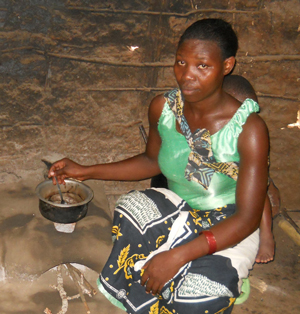
Rukia demonstrated her two fuel-efficient stoves: one is a metal oven that she uses for baking breads and cakes, the other is a simple mud stove that she uses for cooking. The mud stove, which costs less than $2 to build, is getting increasingly popular in the community. It saves fuel wood, prevents fires, produces less smoke (a serious health hazard), and cooks the food faster!
“I can even wear my best clothes and put on some lip shine when I use this stove, because it does not foul up the air,” Rukia explains with a laugh. Seeing the benefits of the fuel efficient stoves, she has inspired ten community-based distributors and five village leaders to join the team of individuals showcasing the fuel efficient technologies.
Rukia is a perfect example of practicing what one preaches. She is improving her own life, helping others learn to do the same, and protecting the very natural resources upon which almost everyone in Mkalamo depends.
This PHE Champion profile was produced by the BALANCED Project. A PDF version can be downloaded from the PHE Toolkit. PHE Champion profiles highlight people working on the ground to improve health and conservation in areas where biodiversity is critically endangered. -
What “Lost” Cultures Can Contribute to Management of Our Planet
›“Climate change is not a technical problem for indigenous people – it’s a psychological and spiritual problem,” said Wade Davis, explorer-in-residence at National Geographic, at a recent Wilson Center event, the third in a series co-sponsored by George Mason University and the Environmental Change and Security Program. Indigenous people are “being driven out of existence,” as climate change alters landscapes and weather patterns that they have carefully adapted to over centuries, he said. These people are not “failed attempts at being modern…they are unique answers to the fundamental question, ‘what does it mean to be human and alive?’” he said. “It behooves us to pay attention to how they choose to live upon the earth.” [Video Below]