-
Building Sustainable Cities in a Warmer, More Crowded World
›January 3, 2013 // By Laurie Mazur
The future is urban – but is it sustainable?
For decades – centuries, really – warnings have been issued: The burgeoning human population will outgrow the planet’s capacity to sustain us. The formula seems simple. More people equals fewer resources and greater environmental damage.
-
Africa’s Urban Youth Cohort, and Women’s Health in Forest Communities
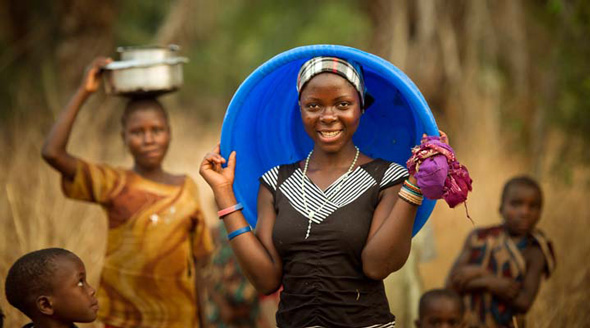
› As recently discussed by the National Intelligence Council, sub-Saharan Africa is home to both the most rapidly growing populations in the world and its fastest expanding cities. Save the Children’s recent report, Voices From Urban Africa: The Impact of Urban Growth on Children, explores the challenges faced by the continent’s youngest age cohort, revealing what forces are driving children and families to migrate to urban areas and the poverty many are experiencing upon getting there. In response to the report’s findings, the authors recommend training and deploying more health care workers, facilitating public-private dialogue to identify long-term water and sanitation solutions, improving access to jobs and skills training, expanding access to early childhood care, and strengthening the education system to ensure widespread attendance. Compiled from 1,050 interviews, the report is unique for its first-hand accounts of the daily lives of children, their families, and community members.
 -
Beyond Carbon Credits: TIST Combines Reforestation, Health, and Livelihood Efforts
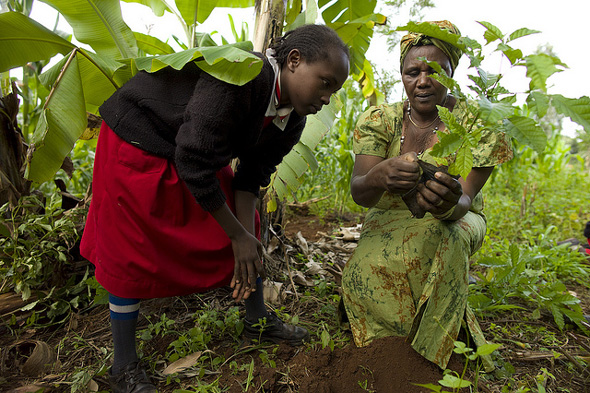
›Carbon offsets have fallen in and out of favor since they were established with the Kyoto Protocol in 1997. Critics say they allow wealthy organizations to placate consumers and claim their products are “green” without making any real, lasting changes. But, if the scheme works properly, some action is supposed to be taken somewhere, so what is it like at one of these credit-producing organizations?
-
Autumn Spanne, The Daily Climate
Colombia’s Unexplored Cloud Forests Besieged by Climate Change, Development
›December 13, 2012 // By Wilson Center StaffThe original version of this article, by Autumn Spanne, appeared on The Daily Climate.
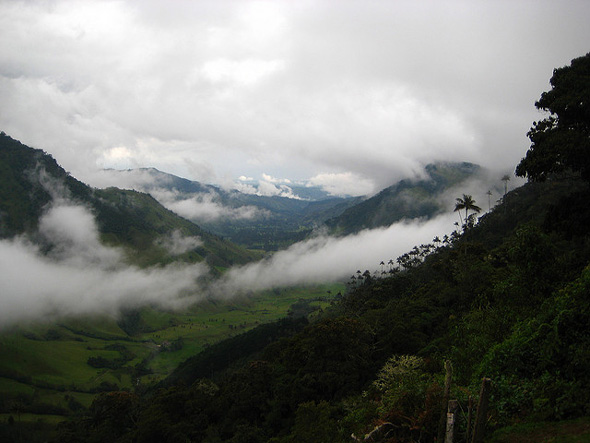
Five hours by truck and mule from the nearest town, a rumbling generator cuts through the silent night to power large spotlights as botanists crouch and kneel on large blue tarps spread across a cow pasture. It’s nearly midnight, and the team works urgently to describe every detail of the dozens of colorful orchids, ferns, and other exotic plants they have collected that day in Las Orquídeas National Park, one of the single most biologically diverse places on the planet.
-
Clean Cookstoves and PHE Champions on Tanzania’s Northern Coast
›As our ferry slowly made its way across the Pangani River along the northern coast of Tanzania, I sat next to a woman whose child held her hand tightly. The boy and I exchanged smiles, but we mainly admired the view. The late morning sun was behind us as the royal blue river met the cloudless sky.
-
Education as a Conservation Strategy – Really?
›The original version of this article appeared in The Nature Conservancy’s October issue of their Science Chronicles newsletter.
It seems like everywhere you turn recently, you hear how the planet’s population is headed to 10 billion. And obvious questions follow: How can we balance far more people with the natural resources needed for their survival? How will we get more food? How will we get more energy?
-
Ecological Footprint Accounting: Measuring Environmental Supply and Demand
›September 12, 2012 // By Kate DiamondTwenty-five years have passed since the Brundtland Commission first brought sustainable development to international prominence. Today, the United Nations appears on track to replace the soon-to-expire Millennium Development Goals with “Sustainable Development Goals,” marking the extent to which the international community has embraced the concept. And yet, in spite of its prominence, a specific and measureable definition of sustainability remains lacking.
-
PBS ‘NewsHour’ Reports on Reasons for Optimism Amid Niger’s Cyclical Food Crises
›Set in the middle of the arid region between the Sahara desert and the equatorial savannas of Africa known as the Sahel, Niger is no stranger to drought. In recent years, however, droughts have hit more often, started earlier in the season, and lasted longer, creating a cycle of food insecurity that is becoming more difficult to break.
Showing posts from category forests.