-
Education as a Conservation Strategy – Really?
›
The original version of this article appeared in The Nature Conservancy’s October issue of their Science Chronicles newsletter.
It seems like everywhere you turn recently, you hear how the planet’s population is headed to 10 billion. And obvious questions follow: How can we balance far more people with the natural resources needed for their survival? How will we get more food? How will we get more energy?
-
Ecological Footprint Accounting: Measuring Environmental Supply and Demand
›September 12, 2012 // By Kate Diamond
Twenty-five years have passed since the Brundtland Commission first brought sustainable development to international prominence. Today, the United Nations appears on track to replace the soon-to-expire Millennium Development Goals with “Sustainable Development Goals,” marking the extent to which the international community has embraced the concept. And yet, in spite of its prominence, a specific and measureable definition of sustainability remains lacking.
-
PBS ‘NewsHour’ Reports on Reasons for Optimism Amid Niger’s Cyclical Food Crises
›Set in the middle of the arid region between the Sahara desert and the equatorial savannas of Africa known as the Sahel, Niger is no stranger to drought. In recent years, however, droughts have hit more often, started earlier in the season, and lasted longer, creating a cycle of food insecurity that is becoming more difficult to break.
-
Ingrid Schulze, Mongabay
Local Experts Needed to Protect Congo Basin Rainforests Amid Conflict, Development Challenges
›July 13, 2012 // By Wilson Center StaffThe original version of this article, by Ingrid Schulze, appeared on Mongabay.
This summer, the Democratic Republic of Congo (DRC) is expected to approve a new higher education strategy which the country has developed with the World Bank and other international donors. The shape of this educational reform initiative will be critical to Congo’s future in many ways. It could finally offer Congo’s long-suffering people a route into the 21st century. It will also help determine the future of the DRC’s forests.
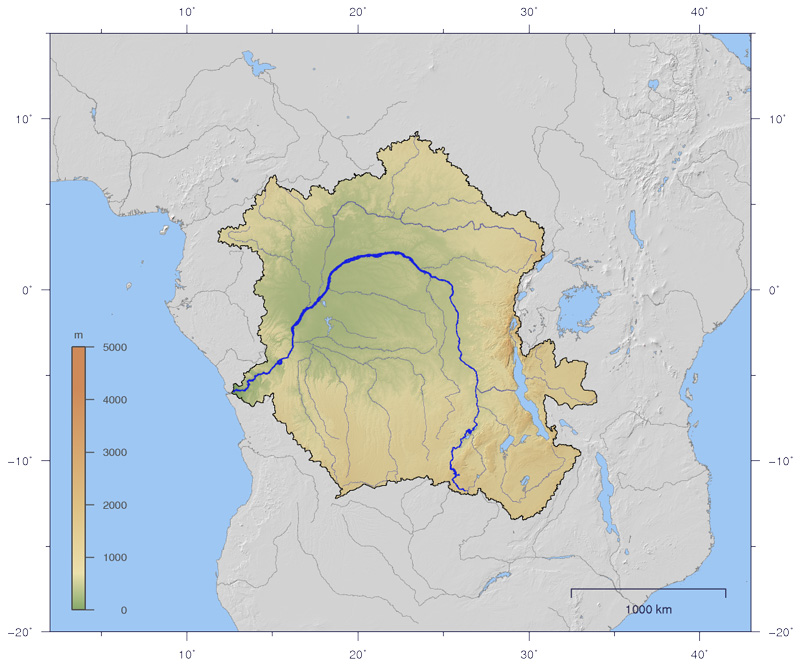
Nearly half of the Congo Basin’s remaining rainforest is in the DRC – yet the critical role of Congolese experts in forestry, agricultural science, wildlife management and other rural sciences in protecting this forest is not widely recognized.As one Congolese graduate student observed, the DRC has a “void” in agricultural and forestry research. Due to years of war and decades of economic crisis and mismanagement, most of Congo’s colleges and universities are severely underfunded and in disrepair. The country is short of experts who can investigate the ecology and economic potential of Congo’s forests and their biota, and provide an objective basis for setting priorities for protection and use of forest resources. While universities in Kinshasa and Kisangani do have some internationally funded programs to increase the number of biologists and other specialists, the number of graduates is nowhere near what is needed. Foreign scientists and consultants are not a substitute for Congolese experts.
Moreover, competent rural science graduates who can advise local farmers, communities and administrators on forestry, sustainable agriculture, wildlife management, and rural development issues are also desperately needed. The DRC’s national agricultural extension service, which should be integral to this process, has been broken for decades. A 1990 USAID report described it as underfunded, without the means to provide farmers with proven crop varieties and advice on agricultural practices, and tasked more with imposing particular crops on farmers and collecting taxes than helping them. There is little evidence that this has changed significantly since the end of the Congo war in 2003.
Continue reading on Mongabay.
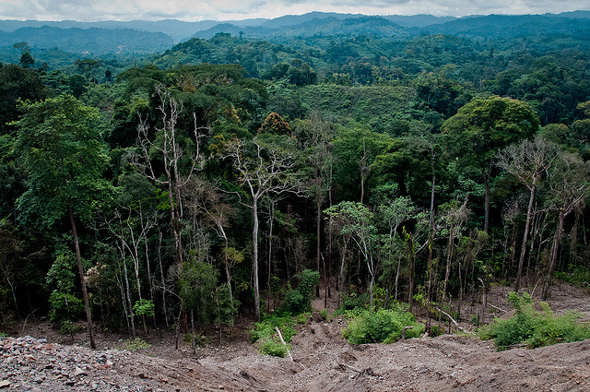
Image Credit: Depths of Forest, courtesy of flickr user Bobulix. Congo Basin map, courtesy of Wikimedia Commons user Imagico. -
African Nations Pioneer Natural Resource Accounting With ‘Gaborone Declaration’
›June 20, 2012 // By Graham NorwoodIn a move with potentially substantial ramifications for future sustainable development, 10 African nations have agreed to begin assigning monetary value to the benefits provided by non-commodity natural resources, including ecosystems such as forests, grasslands, and coral reefs.
Botswana, Gabon, Ghana, Kenya, Liberia, Mozambique, Namibia, Rwanda, South Africa, and Tanzania each affirmed their support for the “Gaborone Declaration” during last month’s Summit for Sustainability in Africa, co-hosted by Conservation International and the government of Botswana. The goal, according to Botswanan President Ian Khama, is to include these new valuations in national accounting, providing policymakers a clear perspective on the costs and benefits associated with the development or conservation of their natural resources for the first time.
Coming just prior to the Rio+20 conference, the signatories said they hoped assigning calculable costs to resource usage would encourage more sustainable development by bringing hitherto “invisible” costs and externalities into the open and onto the balance sheet.
Though the challenges of properly assessing the values of various ecosystem services are understandably many, the potential benefits of natural capital accounting are substantial.
According to SciDev.Net, the World Bank’s Vice President for Sustainable Development Rachel Kyte spoke in support of the declaration at the summit. She pointed out, for example, the advantage of knowing that a hectare of mangrove trees in a certain region of Thailand has been calculated to provide approximately $16,000 of flood protection when considering whether to clear-cut and sell the raw wood (worth about $850), convert the region into a shrimp farm ($9,000), or preserve it.
Such accounting may be particularly beneficial to the Gaborone signatories and other African nations, given growing concern among experts about foreign investment in land, natural resources, and even water on the continent.
But the declaration – and the very idea of natural capital accounting – is not without controversy.
Some argue that commodifying such resources will actually encourage their destruction rather than protect them by ascribing monetary values to previously free and shared resources, thus advantaging richer stakeholders and nations at the expense of poorer ones. As Hannah Griffiths of the UK-based World Development Movement recently wrote in The Guardian, “the result [of natural resource accounting] would be the further privatisation of essential elements of our planet to which we all share rights and have responsibilities.”
Along these lines, Nigerian environmental activist and chair of Friends of the Earth International, Nnimmo Bassey, has voiced his strenuous opposition to the plan made at the summit. “This declaration is blind to the fact that the bait of revenue from natural capital is simply a cover for continued rape of African natural resources,” he said in SciDev.
However, the signatories of the Gaborone Declaration dismissed these concerns and pointed to the value of natural resource accounting for sustainable development.
“Africa is where sustained and sustainable economic growth and stewardship of natural wealth become one and the same thing,” said Kyte at the summit. “By endorsing natural capital accounting as a tool for delivering on more inclusive green growth, Africa is showing the way for the rest of the world.”
Conservation International CEO and Chairman Peter Seligmann agreed, calling the declaration “a very big deal, a very big moment, and a big step forward.” He connected it to the imminent Rio+20 conference as well, saying the pledge is “truly a beacon on the hill for the rest of societies” and that “it will be held up on top of that hill in Rio de Janeiro.”
Indeed, the World Bank has listed natural capital accounting as one of six key issues for Rio+20, and in a report last month titled Inclusive Green Growth: The Pathway to Sustainable Development, noted that “it is vital that economic values for environmental assets be comparable to other economic values.”
The World Bank has already made significant progress in promoting the practice through its Wealth Accounting and the Valuation of Ecosystem Services (WAVES) global partnership, encouraging at least 24 countries to use some form of natural resource accounting to date. WAVES aims to sign up 50 more nations and 50 private corporations beginning at Rio+20, as a part of its “50:50 Campaign.”
WAVES and the Gaborone Declaration show that natural capital accounting is gaining momentum as a means to incentivize more sustainable development. The international news media is beginning to take notice as well. The results of the Rio+20 conference will be a good opportunity to gauge just how far the idea has come and what the extent of its future application might be.
Sources: Conservation International, The Guardian, SciDev.Net, World Bank.
Photo Credit: “Saving the Sacred Rock,” courtesy of flickr user isurusen (Isuru Senevi); video: The World Bank. -
Michael Kugelman, AfPak Channel
Pakistan’s Climate Change Challenge
›May 11, 2012 // By Wilson Center StaffLast month, an avalanche on the Siachen glacier in Kashmir killed 124 Pakistani soldiers and 11 civilians. The tragedy has intensified debate about the logic of stationing Pakistani and Indian troops on such inhospitable terrain. And it has also brought attention to Pakistan’s environmental insecurity.
Siachen is rife with glacial melt; one study concludes the icy peak has retreated nearly two kilometers in less than 20 years. It has also been described as “the world’s highest waste dump.” Much of this waste-generated from soldiers’ food, fuel, and equipment-eventually finds its way to the Indus River Basin, Pakistan’s chief water source.
Siachen, in fact, serves as a microcosm of Pakistan’s environmental troubles. The nation experiences record-breaking temperatures, torrential rains (nearly 60 percent of Pakistan’s annual rainfall comes from monsoons), drought, and glacial melt (Pakistan’s United Nations representative, Hussain Haroon, contends that glacial recession on Pakistani mountains has increased by 23 percent over the past decade). Experts estimate that about a quarter of Pakistan’s land area and half of its population are vulnerable to climate change-related disasters, and several weeks ago Sindh’s environment minister said that millions of people across the province face “acute environmental threats.”
Continue reading on the AfPak Channel.
Sources: Daily Times, Dawn.com, Environment News Service, The Express Tribune, The New York Times, Remote Sensing Technology Center of Japan.
Photo Credit: “Surveying damage in Pakistan,” courtesy of the U.S. Army.
-
Avoiding Adding Insult to Injury in Climate Adaptation Efforts
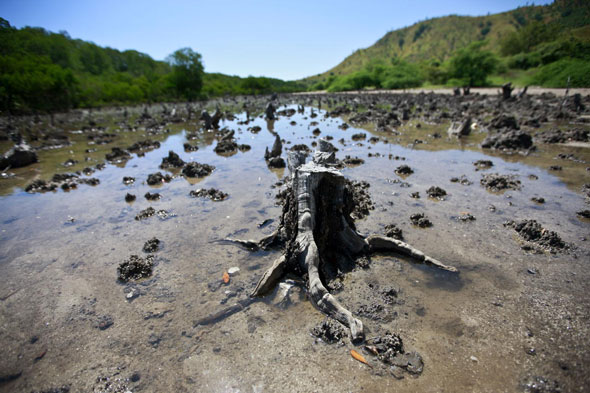
›Climate change is expected to produce winners and losers – for example, melting ice-caps may open up new economic opportunities for Greenland at the same time as sea-level rise threatens Asia’s bourgeoning coastal mega-cities. The same can be said about plans to address climate change, from both the mitigation and adaptation perspectives. A special issue of Global Environmental Change, “Adding Insult to Injury: Climate Change, Social Stratification, and the Inequalities of Intervention,” takes on this topic, with two case studies providing particularly compelling evidence.Betsy Beymer-Farris and Thomas Bassett argue in their contribution, “The REDD Menace: Resurgent Protectionism in Tanzania’s Mangrove Forests,” that efforts to ensure REDD readiness in Tanzania have placed local communities at risk of forced evictions, shattered livelihoods, and persecution by both the state and conservation community. Contrary to dominant narratives that “portray local resources users, the Warufiji, in negative terms as recent migrants who are destroying the mangrove forests,” the authors say that they in fact depend upon “allow[ing] the mangroves to regenerate naturally while preparing new rice fields.” “To carbon traders, however, an uninhabited forest greatly simplifies the logistical tasks of monitoring and paying for ecosystem services,” assert the authors. This has resulted in declaration of local communities as squatters, illegally invading the forest. Government officials have repeatedly voiced threats of eviction. As well as increasing the potential for social tension, the study concludes that, “it is difficult to reconcile Tanzania REDD’s participatory and benefit sharing goals with the rhetoric, practices, and plans of the Tanzanian state.”In “Accessing Adaptation: Multiple Stressors on Livelihoods in the Bolivian Highlands Under a Changing Climate,” Julia McDowell and Jeremy Hess present evidence about how specifically-tailored adaptations to climate change risk increasing vulnerability to a complex web of other, less obvious stressors. The study draws evidence from the livelihoods of historically marginalized indigenous farmers in highland Bolivia. The authors, who see “adaptation as part of ongoing livelihoods strategies,” use the case to “explore the tradeoffs that households make when adjustments to one stressor compromise the ability to adjust to another.” For instance, socio-economic stressors have forced many farmers to more closely couple their livelihoods with the market economy by growing more cash crops, intensifying land use, participating in off-farm laboring, and relying on irrigated agriculture. However, the shift to more market-orientated livelihoods has also increased their sensitivity to climatic stress. “As stressors compounded, the ability to mobilize assets became constrained, making adaptation choices highly interdependent, and sometimes contradictory,” the authors write. Avoiding these sorts of lose-lose situations, requires “ensuring sustained access to assets, rather than designing interventions solely to protect against a specific stressor.” -
Uganda’s Demographic and Health Challenges Put Into Perspective With Newfound Oil Discoveries [Part Two]
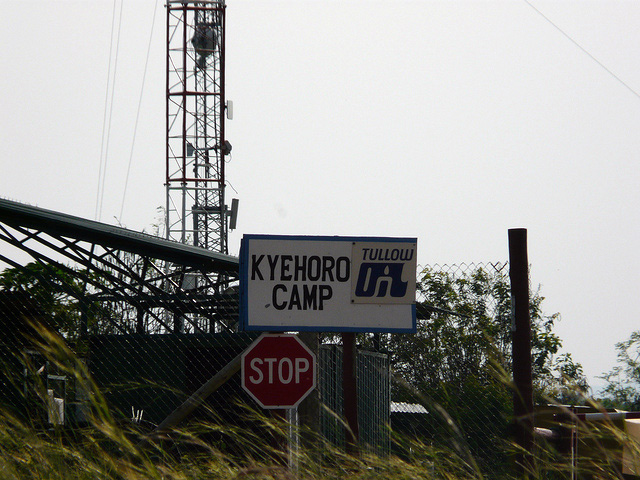
›April 26, 2012 // By Kate Diamond“We never thought we would end up having the same problems here as the people in the Niger Delta. But now I’m worried,” Henry Ford Mirima, a spokesman for Uganda’s Bunyoro kingdom, said last fall in Le Monde Diplomatique. The kingdom – which calls itself East Africa’s oldest – sits along Lake Albert, where over the past seven years British oil company Tullow Oil has discovered oil reserves big enough to produce an estimated 2.5 billion barrels.
Showing posts from category forests.