-
Ready for Change: Notre Dame Launches the Global Adaptation Index
›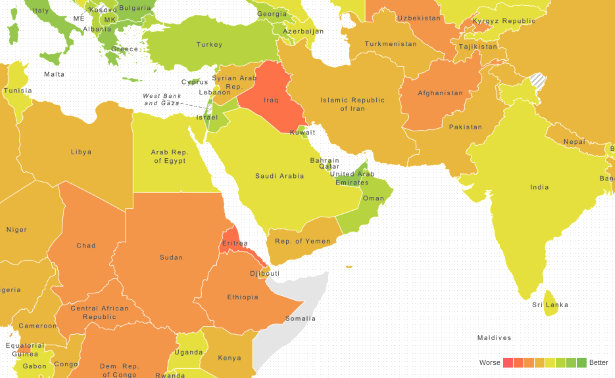
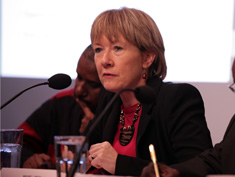
In 2008 and 2010, the price of many basic food stuffs soared, sparking a series of riots and food crises around the world. People in the poorest countries – those living with the smallest margins – were most affected, while the economies of developed nations were able to absorb the price changes. According to Notre Dame’s Global Adaptation Index, how climate change will impact different countries depends not only on their vulnerability to physical changes, but also their ability to absorb these impacts. [Video Below]
-
Opportunity Amidst Conflict: Margie Buchanan-Smith on Long-Distance Trade and Peace-Building in Darfur
›
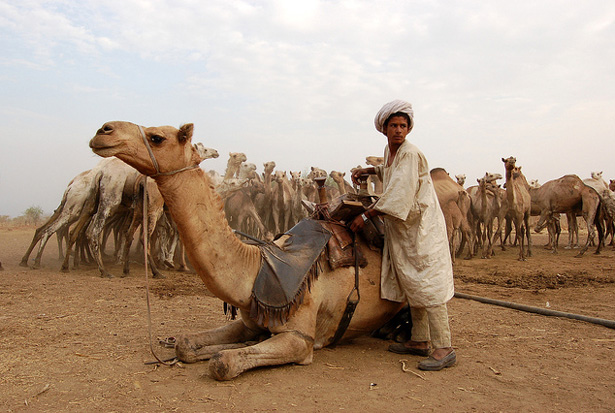
Trade is “the lifeblood of Darfur’s economy,” says Margie Buchanan-Smith in this week’s podcast.
Buchanan-Smith, a visiting fellow at Tuft University’s Feinstein International Center and the lead author of a recent study on livestock trade in Sudan, presented at the Wilson Center in November about the Feinstein Center’s collaboration with the UN Environment Program studying pastoralism in Sudan during the last decade of conflict.
-
“What I See Is That Women Are Healthier…Children Are Healthier”: Vik Mohan on Blue Ventures’ Work in Madagascar
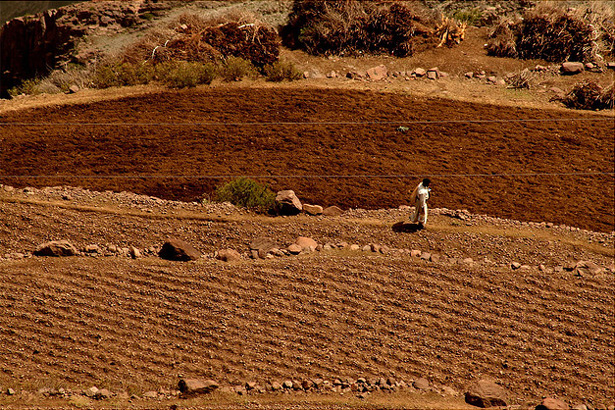
›Six years after beginning a marine conservation program focused on octopus fishery management in southwest Madagascar, “we can proudly say that we have made a real impact as an organization providing health care,” said Dr. Vik Mohan, medical director of Blue Ventures and a practicing doctor in the United Kingdom.
-
Our Last Best Hope? Family Planning and Women’s Empowerment
›January 7, 2014 // By Laurie MazurThe original version of this article appeared on the Aspen Institute blog.
When journalist Alan Weisman proposed a new book on the challenges posed by human population growth, his editor said, “That one’s a live wire; don’t touch it.”
-
The Year That Resilience Gets Real
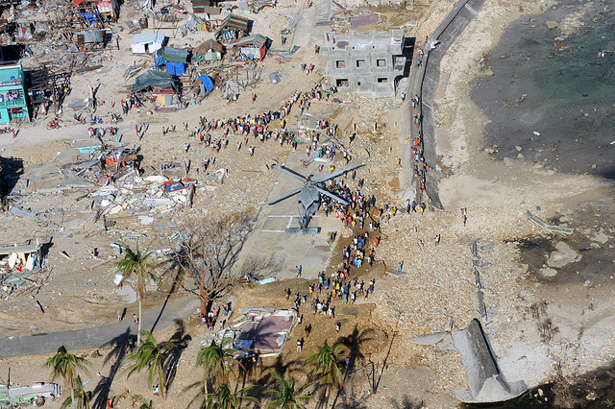
›2014 promises to be a superlative year – and that’s not necessarily a good thing. Complex, “super” disasters like Super Typhoon Haiyan are becoming more frequent, more systemic, and more destructive. Global trends, from population dynamics to food, water, and energy scarcities, threaten to further complicate the playing field. But by finally getting serious about resilience – the much discussed buzzword of 2013 – we might reduce our vulnerability, restore our communities, and build back better, rather than just picking up the pieces.
-
New Sudan Study Has Researchers Re-Thinking Risks and Resilience of Pastoralism
›Sudan’s pastoralists gained infamy during the conflict in Darfur last decade, when outsiders described the violence as a result of competition between climate-stressed, semi-nomadic herders and sedentary farmers. But Sudan’s pastoralists may not be as fragile as previously thought and could even hold the key to survival for similar groups in Africa, said a panel of experts at the Wilson Center on November 13. [Video Below]
-
Food Security and Sociopolitical Stability (Book Launch)
›Following a surge in global food prices in 2008 and again in 2011, policymakers and scholars have paid increased attention to the intersection of food security and political volatility. [Video Below]
-
Beyond the Horizon: Understanding the Future for Better Development Today
›December 16, 2013 // By Kathleen MogelgaardWhen Super Typhoon Haiyan ripped through the Philippines last month, the incredible damage visited on the people, infrastructure, and land was shaped by trends that have been in motion for decades. The country’s population has been growing rapidly, with high concentrations of people living in cities and along the coast; economic growth had been steady, but weak governance and corruption may have exacerbated vulnerability; and the gradual loss of coastal forests and mangroves left many communities exposed to the full brunt of the typhoon’s storm surge. On a positive note, wireless technology and crowd-sourced data helped in disaster response.
Showing posts from category food security.