

-
A New Model of Development? The Role of Public-Private Partnerships in International Aid
›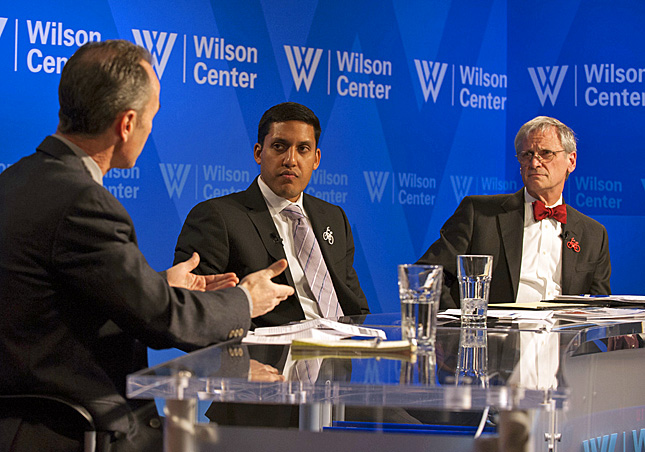
USAID funding is “far outstripped” by private investment and business relationships in “nearly every country” in which it works – and that’s a good thing, according to USAID Administrator Rajiv Shah. [Video Below]
-
Big Changes Need Big Stories: The Year Ahead in Environment and Energy Reporting
›
While climate change has enjoyed a recent spike in news coverage, journalists face a constant challenge to bring sustained attention to other environmental stories, including resource scarcity, the changing oceans, and demographic change. [Video Below]
-
Deepa Pullanikkatil: Climate Adaptation Efforts Reveal Health-Environment Links in Malawi
›
Effective development interventions often require thinking outside the box. In southern Malawi’s Lake Chilwa basin, where environmental degradation, public health, and population dynamics intersect in unpredictable ways, people like Deepa Pullanikkatil of Leadership for Environment and Development (LEAD) are challenging conventional thinking with promising results.
-
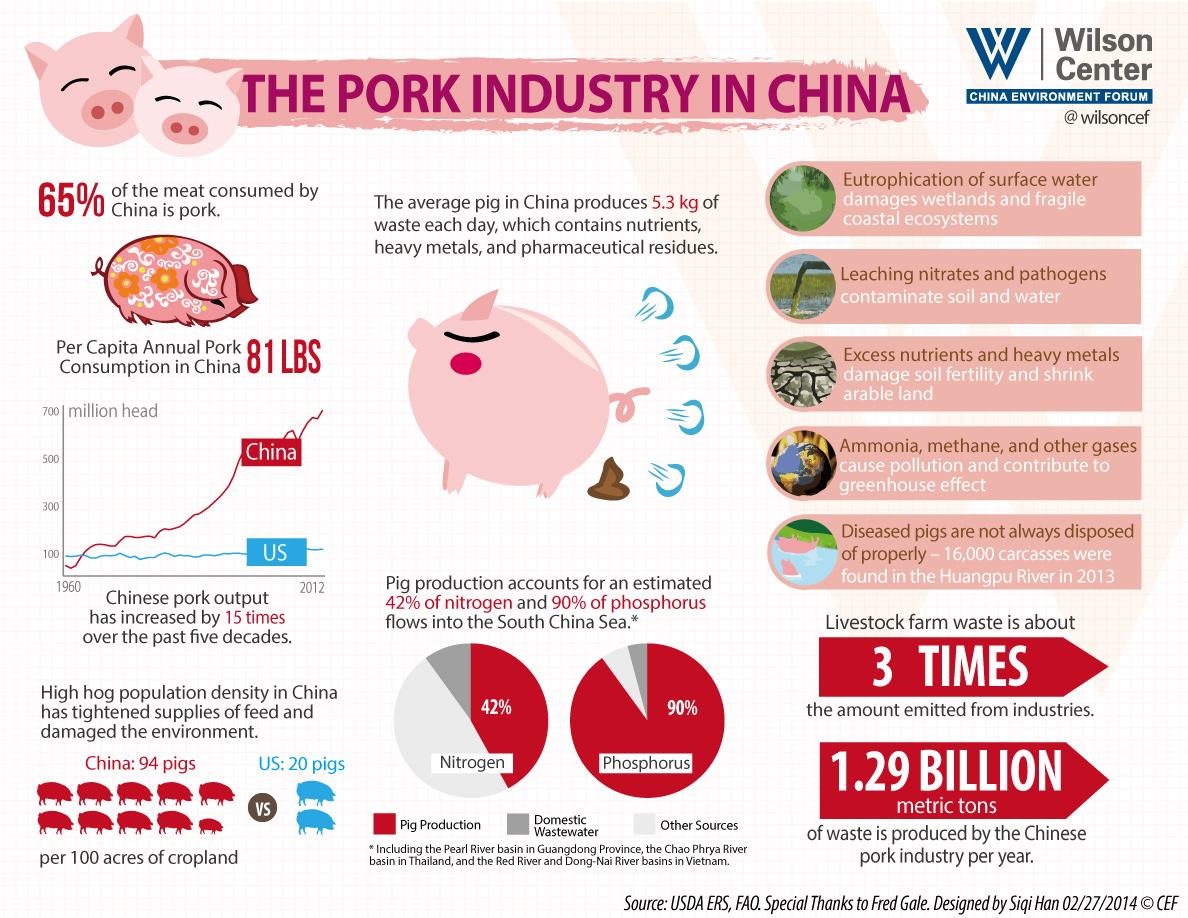
Infographic: The Environmental Effects of China’s Growing Pork Industry
›The pork industry in China accounts for 65 percent of domestic meat consumption, but also produces 1.29 billion metric tons of waste every year. China’s growing appetite for meat has put tremendous pressure on the livestock sector, which now produces three times more waste than industrial sources, and created a series of environmental and food safety issues.
-
Chris Berdnik, Pulitzer Center on Crisis Reporting
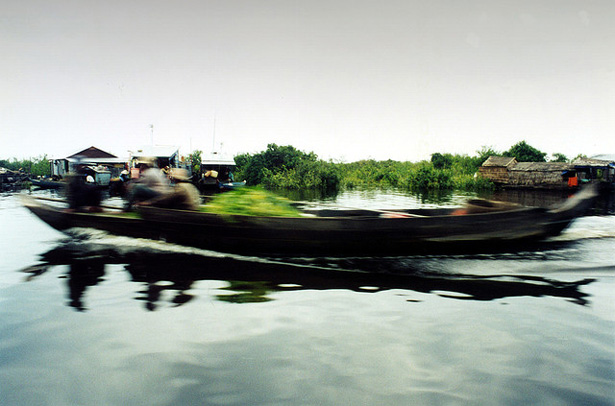
Density Breeds Scarcity on Cambodia’s Lake Tonle Sap
›March 10, 2014 // By Wilson Center StaffThe original version of this article, by Chris Berdnik, appeared on the Pulitzer Center on Crisis Reporting.
I meet Keo Mao, 42, in the floating fishing village of Akol on Cambodia’s Lake Tonle Sap. The houses here move seasonally with the lake, which expands by a factor of five during the monsoon rains and recedes again in the dry months. Fish supply about 80 percent of the animal protein eaten by Cambodians, and about 60 percent of the inland catch comes from the Tonle Sap.
-
Climate Change and National Security in an Age of Austerity: The 2014 Quadrennial Defense Review
›March 7, 2014 // By Kate DiamondEarlier this week, the Department of Defense released its first Quadrennial Defense Review since fiscal cliffs, shutdowns, and spending cuts hit the federal government. Not surprisingly, “austerity” shows up in almost every chapter of the report. What shows up even more? Climate change. For the second QDR in a row, the Pentagon has called out climate change as a “significant challenge for the United States and the world at large.”
-
USAID Administrator Rajiv Shah on Public-Private Partnerships and the Future of Aid
›What’s the best way for America’s chief development agency to help other countries reach prosperity and democracy? Increasingly, it’s creating partnerships not just with other governments, but with the private sector too, says USAID Administrator Rajiv Shah in this week’s podcast. -
20 Years After Doomsday Predictions, China Is Feeding Itself, But Global Impacts Remain Unclear
›How has China managed to feed nearly one-quarter of the world’s population with only seven percent of the world’s arable land?
In 1995, Lester Brown forecasted doom and gloom for China’s ability to produce enough grain for its people, in his popular book, Who Will Feed China? He hypothesized that China would be forced to buy grain from abroad, thereby seriously disrupting world food markets.
Showing posts from category food security.

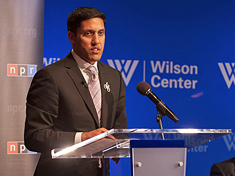 What’s the best way for America’s chief development agency to help other countries reach prosperity and democracy? Increasingly, it’s creating partnerships not just with other governments, but with the private sector too, says USAID Administrator

