• woodrow wilson center
  • ecsp

New Security Beat

Subscribe:
  • rss
  • mail-to
  • Who We Are
  • Topics
    • Population
    • Environment
    • Security
    • Health
    • Development
  • Columns
    • China Environment Forum
    • Choke Point
    • Dot-Mom
    • Friday Podcasts
    • Navigating the Poles
    • Reading Radar
  • Multimedia
    • Water Stories (Podcast Series)
    • Backdraft (Podcast Series)
    • Tracking the Energy Titans (Interactive)
  • Films
    • Water, Conflict, and Peacebuilding (Animated Short)
    • Paving the Way (Ethiopia)
    • Broken Landscape (India)
    • Scaling the Mountain (Nepal)
    • Healthy People, Healthy Environment (Tanzania)
  • Publications
  • Events
  • Contact Us

NewSecurityBeat

The blog of the Wilson Center's Environmental Change and Security Program
Showing posts from category food security.
  • Beyond the Horizon: Understanding the Future for Better Development Today

    ›
    December 16, 2013  //  By Kathleen Mogelgaard
    haiyan-futures-analysis

    When Super Typhoon Haiyan ripped through the Philippines last month, the incredible damage visited on the people, infrastructure, and land was shaped by trends that have been in motion for decades. The country’s population has been growing rapidly, with high concentrations of people living in cities and along the coast; economic growth had been steady, but weak governance and corruption may have exacerbated vulnerability; and the gradual loss of coastal forests and mangroves left many communities exposed to the full brunt of the typhoon’s storm surge. On a positive note, wireless technology and crowd-sourced data helped in disaster response.

    MORE
  • Torrent of Water and Questions Pour From India’s Himalayas

    ›
    Choke Point  //  December 13, 2013  //  By Keith Schneider
    himalayan-peak-1-2

    We made the crossing at night from Chamoli, reaching Okund, a Himalayan foothill town after dark. The innkeeper, anxious for guests in a travel economy that came to a standstill in mid-June, cooked dal and nan bread for dinner and then showed us to a room that was unlit and unheated.

    MORE
  • More Than Local: How PHE Can Help Solve Humanity’s Biggest Problems

    ›
    Guest Contributor  //  December 2, 2013  //  By William Pan
    shopping-district

    “Leave enough for everyone.” That’s what my mother used to tell us at dinner. However, the holiday season reminds me that human nature is far from innately moderate in consumption. With Black Friday as a kickoff, consumers will spend more than $600 billion by Christmas in the United States alone. As I witness droves of shoppers running through malls and stores, I wonder if their desire is driven by some insatiable appetite for their favorite products or something more fundamental about human nature.

    MORE
  • Lisa Palmer, Yale Forum on Climate Change and the Media

    Feeding 9 Billion on a Hot and Hungry Planet

    ›
    On the Beat  //  November 20, 2013  //  By Wilson Center Staff
    feeding-9-billion

    The original version of this article, by Lisa Palmer, appeared on The Yale Forum on Climate Change and the Media.

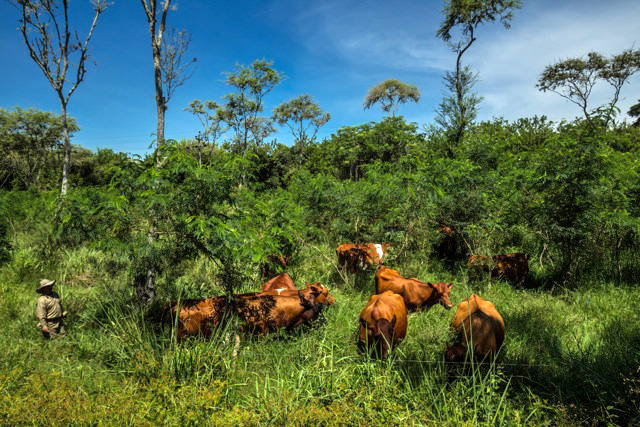
    Humans, it’s no secret, are versatile and unpredictable in how they use their land. We build mega-cities in deserts, raise crops on flood plains, live along vulnerable coast lines enjoying seas dangerously rising, and burn rain forests to create new pastures.

    MORE
  • Curbing China’s Massive – and Destructive – Distant Water Fishing Fleet

    ›
    From the Wilson Center  //  November 11, 2013  //  By Katie Lebling
    fishing-for-answers

    Last month, two Chinese fishing boats were caught operating illegally in South Korean waters. The incident made local headlines and minor diplomatic waves, but it’s just a drop in the bucket in what has become a troubling trend for China’s foreign water fishing fleets. Over the last decade, there have been more than 4,600 cases of Chinese fishing boats being caught illegally in South Korea’s waters alone, according to the government, and these marine transgressions have not been limited to neighbors.

    MORE
  • “We Are Not Sitting Idle, We Are Fighting”: Interview With Saleemul Huq on Bangladesh’s Climate & Food Challenges

    ›
    Beat on the Ground  //  November 5, 2013  //  By Jacob Glass
    Huq Interview Rice Flood

    When it comes to climate change vulnerability, it sometimes seems as if all eyes are on Bangladesh. As part of my research for a recent article exploring the rise of aquaculture in the country, I interviewed Saleemul Huq, senior fellow at the International Institute for Environment and Development in London, former executive director of the Bangladesh Center for Advanced Studies, and lead author of two chapters on adaptation and sustainable development in the IPCC’s third and fourth assessment reports. A number of his quotes made it into the final story but I wanted to provide the full transcript here as well, as his thoughts on the country’s climate-related risks, food security, and population dynamics are worth a read.

    MORE
  • Removing Boundaries: Sean Peoples on Documenting Integrated Development in Tanzania

    ›
    Eye On  //  October 31, 2013  //  By Jacob Glass

    “We knew that we had a lot of reports, we knew that we had a lot of policy papers, but what we wanted to tell was a good story,” said ECSP’s Sean Peoples speaking recently at Duke University about the short documentary, Healthy People, Healthy Environment: Integrated Development in Tanzania.

    MORE
  • Jacqueline H. Wilson, U.S. Institute of Peace

    Can Aquifer Discovery in Kenya Bring Peace to Desolate Region?

    ›
    October 28, 2013  //  By Wilson Center Staff

    The original version of this article, by Jacqueline H. Wilson, appeared on the U.S. Institute of Peace’s Olive Branch blog.

    The people of northern Kenya currently face many daily hardships. Primarily pastoralists by livelihood, their cycle of life focuses on the basics – securing food and water for family and livestock, constructing shelter from the unforgiving sun, and finding sustenance when periodic droughts ravage the region. A 2011 drought affected millions of people, and tens of thousands of livestock died. Approximately 90 percent of the area’s population lives below the poverty line.

    MORE
Newer Posts   Older Posts
View full site

Join the Conversation

  • RSS
  • subscribe
  • facebook
  • G+
  • twitter
  • iTunes
  • podomatic
  • youtube
Tweets by NewSecurityBeat

Trending Stories

  • unfccclogo1
  • Pop at COP: Population and Family Planning at the UN Climate Negotiations

Featured Media

Backdraft Podcast

play Backdraft
Podcasts

More »

What You're Saying

  • Volunteers,At,The,Lagos,Food,Bank,Initiative,Outreach,To,Ikotun, Pan-African Response to COVID-19: New Forms of Environmental Peacebuilding Emerge
    Rashida Salifu: Great piece 👍🏾 Africa as a continent has suffered this unfortunate pandemic.But it has also...
  • A desert road near Kuqa An Unholy Trinity: Xinjiang’s Unhealthy Relationship With Coal, Water, and the Quest for Development
    Ismail: It is more historically accurate to refer to Xinjiang as East Turkistan.
  • shutterstock_1779654803 Leverage COVID-19 Data Collection Networks for Environmental Peacebuilding
    Carsten Pran: Thanks for reading! It will be interesting to see how society adapts to droves of new information in...

What We’re Reading

  • Rising rates of food instability in Latin America threaten women and Venezuelan migrants
  • Treetop sensors help Indonesia eavesdrop on forests to cut logging
  • 'Seat at the table': Women's land rights seen as key to climate fight
  • A Surprise in Africa: Air Pollution Falls as Economies Rise
  • Himalayan glacier disaster highlights climate change risks
More »
  • woodrow
  • ecsp
  • RSS Feed
  • YouTube
  • Twitter
  • Facebook
  • Home
  • Who We Are
  • Publications
  • Events
  • Wilson Center
  • Contact Us
  • Print Friendly Page

© Copyright 2007-2021. Environmental Change and Security Program.

Woodrow Wilson International Center for Scholars. All rights reserved.

Developed by Vico Rock Media

Environmental Change and Security Program

Woodrow Wilson International Center for Scholars

Ronald Reagan Building and International Trade Center

  • One Woodrow Wilson Plaza
  • 1300 Pennsylvania Ave., NW
  • Washington, DC 20004-3027

T 202-691-4000