-
Lessons From Peru to Nepal
Glacial Lake Outburst Floods: “The Threat From Above”
›
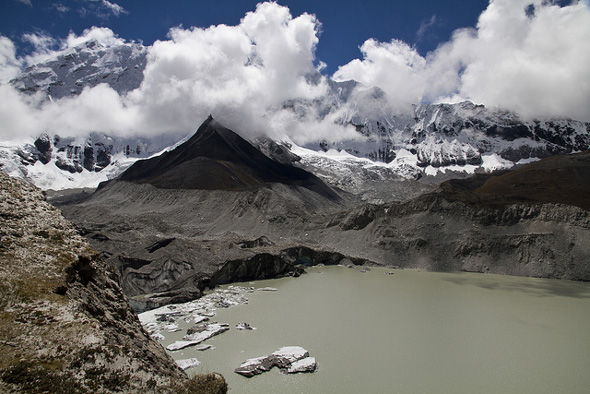
“We have never experienced so many potentially dangerous lakes in such a short period of time,” said Alton Byers of The Mountain Institute (TMI) during a roundtable discussion on glacial melt, glacial lakes, and downstream consequences at the Wilson Center on October 26. “There have always been glacial lake outburst floods,” said Byers. What has changed is how quickly these lakes now grow. “Suddenly, you wake up in the morning, and now there are hundreds and hundreds of these lakes above you – the threat from above,” he said.
-
International River Basins: Mapping Institutional Resilience to Climate Change
›Institutions that manage river basins must assess their ability to deal with variable water supplies now, said Professor Aaron Wolf of Oregon State University at the July 28 ECSP event, “International River Basins: Mapping Institutional Resilience to Change.” “A lot of the world currently can’t deal with the variability that they have today, and we see climate change as an exacerbation to an already bad situation.”
Wolf and his colleagues, Jim Duncan of the World Bank and Matt Zentner of the U.S. Department of Defense, discussed their efforts to map basins at risk for future tensions over water, as identified in their coauthored World Bank report, “Mapping the Resilience of International River Basins to Future Climate Change-Induced Water Variability.” [Video Below]
Floating Past the Rhetoric of “Water Wars”
Currently, there are 276 transnational water basins that cross the boundaries of two or more countries, said Wolf. “Forty percent of the world’s population lives within these waters, and interestingly, 80 percent of the world’s fresh water originates in basins that go through more than one country,” he said. Some of these boundaries are not particularly friendly – those along the Jordan and Indus Rivers, for example – but “to manage the water efficiently, we need to do it cooperatively,” he said.
Wolf and his colleagues found that most of the rhetoric about “water wars” was merely anecdotal, so they systematically documented how countries sharing river basins actually interact in their Basins at Risk project. The findings were surprising and counterintuitive: “Regularly we see that at any scale, two-thirds of the time we do anything over water, it is cooperative,” and actual violent conflict is extremely rare, said Wolf.
Additionally, the regions where they expected to see the most conflict – such as arid areas – were surprisingly the most cooperative. “Aridity leads to institutions to help manage aridity,” Wolf said. “You don’t need cooperation in a humid climate.”
“It’s not just about change in a basin, it’s about the relationship between change and the institutions that are developed to mitigate the impacts of change,” said Wolf. “The likelihood of conflict goes up when the rate of change in a basin exceeds the institutional capacity to absorb the change.”
Expanding the Database for Risk Assessment
Oregon State University’s Transboundary Freshwater Dispute Database (TFDD) tracks tabular and spatial information on more than 680 freshwater treaties along 276 transboundary river basins, said Jim Duncan. The team expanded the database to include recent findings on variability, as well as the impacts of climate change on the future variability of those basins. “We have a lot more information that we are able to work with now,” Duncan said.
Analyzing the institutional vulnerability of treaties along with hydrological hazards, they found the risk of tension concentrated in African basins: The Niger, Congo, and Lake Chad basins “popped out,” said Duncan. When predicting future challenges, they found that basins in other areas, such as Southeastern Asia and Central Europe, would also be at risk.
Duncan and his colleagues were able to identify very nuanced deficiencies in institutional resilience. “Over half of the treaties that have ever been signed deal with variability only in terms of flood control, and we’re only seeing about 15 percent that deal with dry season control,” said Duncan. “It’s not the actual variability, but the magnitude of departure from what they’re experiencing now that is going to be really critical.”
Beyond Scarcity
“Generally speaking, it’s not really the water so much that people are willing to fight over, but it’s the issues associated with water that cause people to have disagreements,” said Matt Zentner. Water issues are not high on the national security agendas of most governments; they only link water to national security when it actively affects other sectors of society, such as economic growth, food availability, and electric power, he said. Agricultural production – the world’s largest consumer of water – will be a major concern for governments in the future, he said, especially in developing countries economically dependent on farming.
Some experts think that current international treaties are not enough, said Zentner. Peter Gleick of the Pacific Institute has said that “the existing agreements and international principles for sharing water will not adequately handle the strain of future pressures, particularly those caused by climate change.”
How transboundary water treaties fare as the climate and consumption rates change is not as simple as measuring flow; the strength of governing institutions, the parties involved, and other variables all play major roles as well, said Zentner. “When you have flexibility built within [a treaty], it allows it to be a living, breathing, and important part of solving those [water] problems.”
Download the full event transcript here.
Sources: Oregon State University, Pacific Institute.
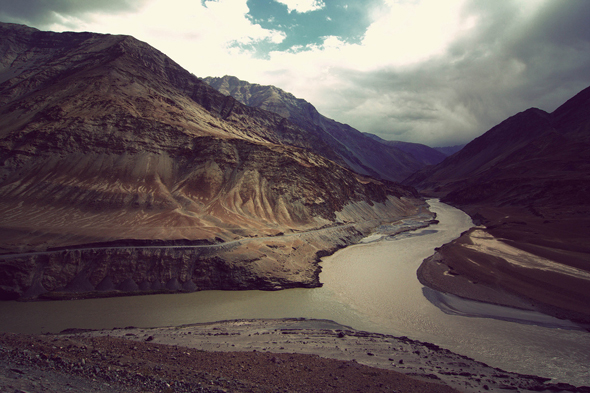
Photo Credit: “Confluence of the Zanskar and Indus,” courtesy of Flickr user Sanish Suresh. -
Life on the Edge: Climate Change and Reproductive Health in the Philippines
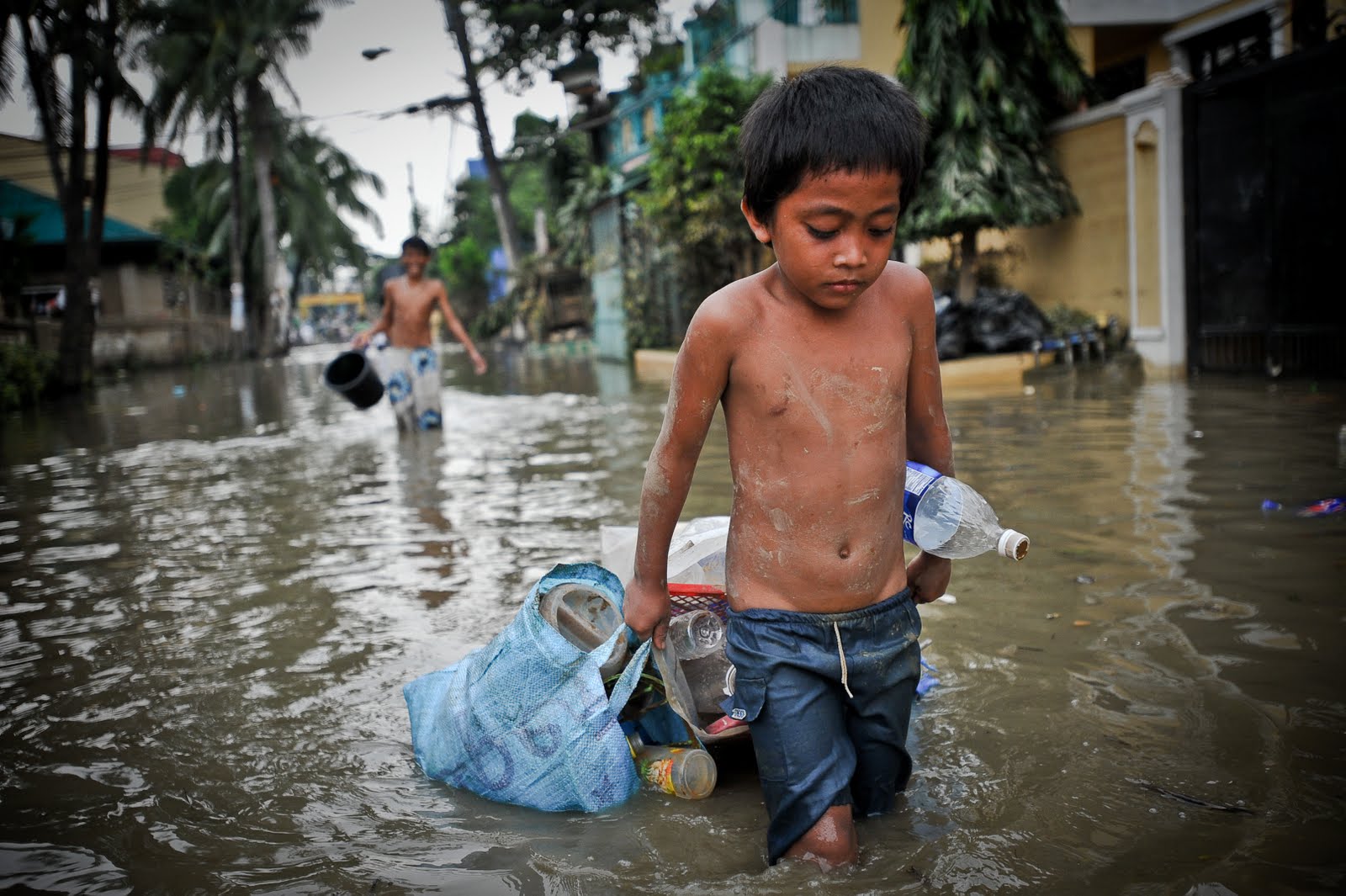
›July 18, 2011 // By Hannah MarquseeHigh population growth and population density have placed serious stress on natural resources in the Philippines. No one lives far from the coast in the 7,150-island archipelago, making the population extremely dependent on marine resources and vulnerable to sea-level rise, flooding, and other effects of climate change. The coastal megacity of Manila – one of the most densely populated in the world – is beset by poor urban planning, lack of infrastructure, and a large population living in lowland slums, making it particularly vulnerable to increased flooding and natural disasters. [Video Below]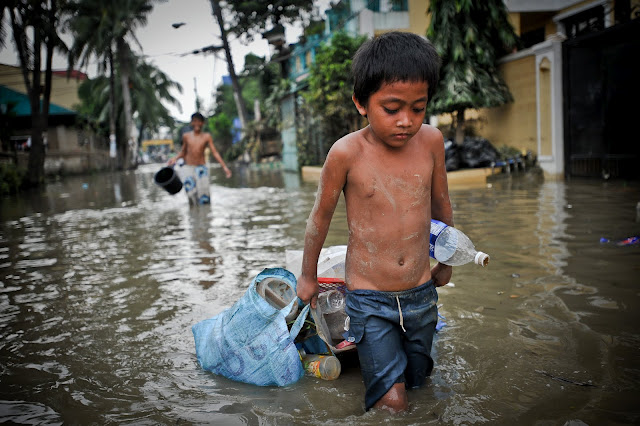
The Philippines is now home to 93 million people and by 2050 is expected to reach 155 million, according to the UN’s medium fertility variant projections. Development programs in the country have made great strides towards increasing access to family planning and reproductive health services as well as improving management of marine resources, but the underlying trends remain troubling.
The Battle Over Reproductive Health
Since 1970, the government’s Commission on Population has been addressing population growth, reproductive health, and family planning. “The impact of the high rate of population growth is intricately linked to the welfare and sustainable development for a country like the Philippines, where poverty drives millions of people to overexploit their resource base,” wrote the commission. As a result of these efforts and others, total fertility rate has dropped from 6.0 children per woman in 1970, to the present 3.2.
The Philippines has also made great gains towards achieving Millennium Development Goal targets, “particularly in the alleviation of extreme poverty; child mortality; incidences of HIV/AIDS, tuberculosis, and malaria; gender equality in education; household dietary intake; and access to safe drinking water,” according to the United Nations Development Program (UNDP). Yet, “glaring disparities across regions persist,” UNDP states.
One of the poorest regions in the country, the Autonomous Region of Muslim Mindanao, is also home to a violent separatist movement. With limited access to health services, fertility and population growth rates are the highest in the country. Women in Mindanao average 4.2 children per woman; one in four married women has an unmet need for contraception; and 45 percent of households live in poverty (compared to 24 percent nationally).
Nationally, “serious challenges and threats remain with regard to targets on maternal health, access to reproductive health services, nutrition, primary education, and environmental sustainability,” according to UNDP–in particular, indicators on maternal health are “disturbing” and of all the MDGs, are labeled “least likely to be achieved.”
Out of three million pregnancies that occur every year, half were unplanned and one-third of these end in abortions, according to a 2006 report of the Allan Guttmacher Institute conducted in the Philippines. Induced abortion was the fourth leading cause of maternal deaths, and young women accounted for 17 percent of induced abortions. Over half of births occurred at home and one-third of them were assisted by traditional birth attendants. Around 75 percent of the poorest quintile did not have access to skilled birth attendants compared to only 20 percent of the richest quintile.
The politically influential Catholic Church recently blocked passage of a reproductive health bill, despite support by President Benigno Aquino and a majority of Filipinos. The bill seeks to provide universal access to contraception and would make sex education required from fifth grade onwards, a provision that has angered Church officials.
Manila Under Water
The Philippines’ combination of high population growth and limited land area (nearly all of which is near the coast) makes the country extremely vulnerable to the effects of climate change. Sixty-five percent of Filipinos live in coastal areas and 49 percent live in urban areas. Paul Hutchcroft, in Climate Change and Natural Security, writes that “even in the best of times, the frequency of typhoons, floods, earthquakes, and volcanic eruptions makes the Philippines one of the most disaster-prone countries in the world” (p. 45).
Population growth, climate change, and deforestation will only increase the severity of these disasters, he concludes. Hutchcroft points out that by 2080, projected temperature increases of between 1.2 to 3.9 degrees Celsius could raise sea levels by an estimated 0.19 to 1.04 meters – a scary thought for the 15 million living within a one-meter elevation zone (p. 46).
In 2009, metropolitan Manila, currently home to 11 million people (18,650 per square kilometer) and projected to grow to 19 million by 2050, was hit by tropical storms that caused devastating flooding – at their peak, waters reached nearly seven meters, according to a World Bank report. “More than 80 percent of the city was underwater,” write the authors, “causing immense damage to housing and infrastructure and displacing around 280,000-300,000 people.”
“Even if current flood infrastructure plans are implemented, the area flooded in 2050 will increase by 42 percent in the event of a 1-in-100-year flood,” says the World Bank report. Climate change could also increase the cost of flooding as much as $650 million, or 6 percent of GDP. Only by considering climate-related risks in urban planning can the Philippines hope to mitigate the effects of climate change, the report concludes.
Integrated Development: One Piece of the Puzzle?
Population, health, and environment (PHE) programs that integrate family planning and natural resource management are one way to help the majority of Filipinos that live in densely populated and resource-stressed coastal areas.
In ECSP’s FOCUS Issue 15, “Fishing for Families: Reproductive Health and Integrated Coastal Management in the Philippines,” Joan Castro and Leona D’Agnes explain how Path Foundation Philippines, Inc.’s IPOPCORM project – which ran from 2000 to 2006 – helped “improve reproductive health and coastal resource management more than programs that focused exclusively on reproductive health or the environment – and at a lower total cost.” A recent peer-reviewed study, co-authored by Castro and D’Agnes and published in Environmental Conservation, proved the same point with rigorous analysis.
“When we started IPOPCORM, there was really nothing about integrating population, health, and environment,” said Castro in an interview with ECSP. IPOPCORM provided some of the first evidenced-based results showing there is value added to implementing coastal resource management and family planning in tandem rather than separately. In part due to the success of the IPOPCORM, the Philippines have become one of the major PHE development implementers in the world.
Creating sustainably managed marine sanctuaries while improving access to family planning provides a way forward for many coastal communities. However, the Philippines’ urban woes – 44 percent of urban dwellers live in slums, according to the Population Reference Bureau – internal divisions, and natural vulnerability will likely make it difficult to dodge considerable climate-related effects in the near future. Already the archipelago’s vast biodiversity is in crisis, according to studies over two thirds of native plant and animal species are endemic to the islands and nearly half of them are threatened; only seven percent of its original old-growth less than 10 percent of the islands’ original vegetation remains; and 70 percent of nearly 27,000 square kilometers of coral reefs are in poor condition.
Sources: CIA, Conservation International, Field Museum, The Guardian, The Huffington Post, Philippines National Statistics Office, Population Reference Bureau, United Nations, U.S. Census Bureau, World Bank, World Wildlife Fund.
Photo Credit: “Climate Risk and Resilience: Securing the Region’s Future” courtesy of Flickr user Asian Development Bank. -
Preparing for the Impact of a Changing Climate on U.S. Humanitarian and Disaster Response
›Climate-related disasters could significantly impact military and civilian humanitarian response systems, so “an ounce of prevention now is worth a pound of cure in the future,” said CNA analyst E.D. McGrady at the Wilson Center launch of An Ounce of Preparation: Preparing for the Impact of a Changing Climate on U.S. Humanitarian and Disaster Response. The report, jointly published by CNA and Oxfam America, examines how climate change could affect the risk of natural disasters and U.S. government’s response to humanitarian emergencies. [Video Below]
Connecting the Dots Between Climate Change, Disaster Relief, and Security
The frequency of – and costs associated with – natural disasters are rising in part due to climate change, said McGrady, particularly for complex emergencies with underlying social, economic, or political problems, an overwhelming percentage of which occur in the developing world. In addition to the prospect of more intense storms and changing weather patterns, “economic and social stresses from agricultural disruption and [human] migration” will place an additional burden on already marginalized communities, he said.
Paul O’Brien, vice president for policy and campaigns at Oxfam America said the humanitarian assistance community needs to galvanize the American public and help them “connect the dots” between climate change, disaster relief, and security.
As a “threat multiplier,” climate change will likely exacerbate existing threats to natural and human systems, such as water scarcity, food insecurity, and global health deterioration, said Vice Admiral Lee Gunn, USN (ret.), president of CNA’s Institute for Public Research. Major General Richard Engel, USAF (ret.), of the National Intelligence Council identified shifting disease patterns and infrastructural damage as other potential security threats that could be exacerbated by climate change.
“We must fight disease, fight hunger, and help people overcome the environments which they face,” said Gunn. “Desperation and hopelessness are…the breeding ground for fanaticism.”
U.S. Response: Civilian and Military Efforts
The United States plays a very significant role in global humanitarian assistance, “typically providing 40 to 50 percent of resources in a given year,” said Marc Cohen, senior researcher on humanitarian policy and climate change at Oxfam America.
The civilian sector provides the majority of U.S. humanitarian assistance, said Cohen, including the USAID Office of Foreign Disaster Assistance (OFDA) and the State Department’s Bureau of Population, Refugees, and Migration. These organizations provide leadership, funding, and food aid to developing countries in times of crisis, but also beforehand: “The internal rationale [of the Office of Foreign Disaster Assistance] is to reduce risk and increase the resilience of people to reduce the need for humanitarian assistance in the future,” said Edward Carr, climate change coordinator at USAID’s Bureau for Democracy, Conflict, and Humanitarian Assistance.
The U.S. military complements and strengthens civilian humanitarian assistance efforts by accessing areas that civilian teams cannot reach. The military can utilize its heavy lift capability, in-theater logistics, and command and control functions when transportation and communications infrastructures are impaired, said McGrady, and if the situation calls for it, they can also provide security. In addition, the military could share lessons learned from its considerable experience planning for complex, unanticipated contingencies with civilian agencies preparing for natural disasters.
“Forgotten Emergencies”
Already under enormous stress, humanitarian assistance and disaster response systems have persistent weaknesses, such as shortfalls in the amount and structure of funding, poor coordination, and lack of political gravitas, said Cohen.
Food-related aid is over-emphasized, said Cohen: “If we break down the shortfalls, we see that appeals for food aid get a better response than the type of response that would build assets and resilience…such as agricultural bolstering and public health measures.” Food aid often does not draw on local resources in developing countries, he said, which does little to improve long-term resilience.
“Assistance is not always based on need…but on short-term political considerations,” said Cohen, asserting that too much aid is supplied to areas such as Afghanistan and Iraq, while “forgotten emergencies,” such as the Niger food crisis, receive far too little. Furthermore, aid distribution needs to be carried out more carefully at the local scale as well: During complex emergencies in fragile states, any perception of unequal assistance has the potential to create “blowback” if the United States is identified with only one side of a conflict.
Engel added that many of the problems associated with humanitarian assistance will be further compounded by increasing urbanization, which concentrates people in areas that do not have adequate or resilient infrastructure for agriculture, water, or energy.
Preparing for Unknown Unknowns
A “whole of government approach” that utilizes the strengths of both the military and civilian humanitarian sectors is necessary to ensure that the United States is prepared for the future effects of climate change on complex emergencies in developing countries, said Engel.
In order to “cut long-term costs and avoid some of the worst outcomes,” the report recommends that the United States:
Cohen singled out “structural budget issues” that pit appropriations for protracted emergencies in places like Iraq, Afghanistan, and Darfur against unanticipated emergencies, like the 2010 earthquake in Haiti. Disaster-risk reduction investments are not a “budgetary trick” to repackage disaster appropriations but a practical way to make more efficient use of current resources, he said: “Studies show that the return on disaster-risk reduction is about seven to one – a pretty good cost-benefit ratio.”- Increase the efficiency of aid delivery by changing the budgetary process;
- Reduce the demand by increasing the resilience of marginal (or close-to-marginal) societies now;
- Be given the legal authority to purchase food aid from local producers in developing countries to bolster delivery efficiency, support economic development, and build agricultural resilience;
- Establish OFDA as the single lead federal agency for disaster preparedness and response, in practice as well as theory;
- Hold an OFDA-led biannual humanitarian planning exercise that is focused in addressing key drivers of climate-related emergencies; and,
- Develop a policy framework on military involvement in humanitarian response.
Edward Carr said that OFDA is already integrating disaster-risk reduction into its other strengths, such as early warning systems, conflict management and mitigation, democracy and governance, and food aid. However, to build truly effective resilience, these efforts must be tied to larger issues, such as economic development and general climate adaptation, he said.
“What worries me most are not actually the things I do know, but the things we cannot predict right now,” said Carr. “These are the biggest challenges we face.”
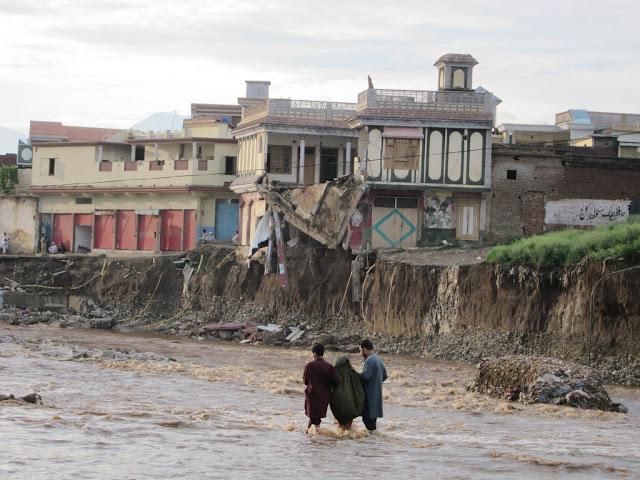
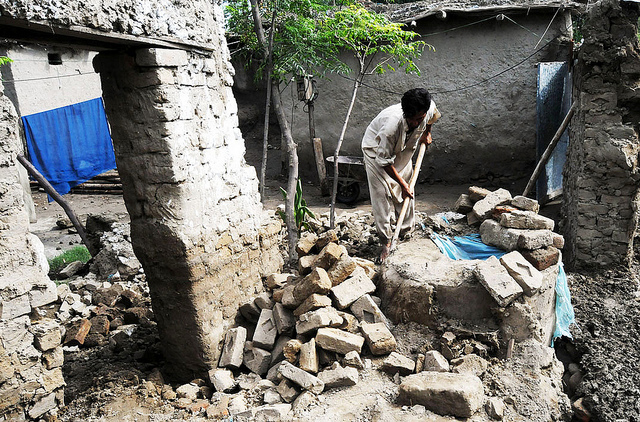
“Pakistan Floods: thousands of houses destroyed, roads are submerged,” courtesy of flickr user Oxfam International. -
Finding the Right Paddle: Navigating Climate Change Adaptation and Mitigation Strategies
›June 14, 2011 // By Christina DaggettAfter decades on the periphery, climate change has made its way onto the national security stage. Yet, while the worlds of science, policy, and defense are awakening to the threats of rising sea levels, stronger storms, and record temperatures, debate continues over the means and extent of adaptation and mitigation programs. In a world of possibilities, how to decide which paddle to use to navigate uncertain waters?
-
The U.S. Government’s Response to Disasters: Myth, Mistakes, and Recovery
›“Major crises and disasters have massively changed over the last generation,” said Dr. Frederick Burkle, senior public policy scholar at the Woodrow Wilson Center and senior fellow and scientist at the Harvard Humanitarian Initiative. “We have to start a new narrative of what we need to do to address [them].”
To discuss the emerging and persistent challenges of disaster prevention, preparedness, response, and recovery, Burkle was joined by Paul Born, co-founder and director of the Tamarack Institute for Community Engagement; Leonard Doyle, Haiti country spokesperson at the International Organization for Migration; Arif Hasan, adviser at the Orangi Pilot Project and founder and chairman at the Urban Resource Centre; and Dr. Eliane Ubalijoro, adjunct professor at McGill University and member of the Presidential Advisory Council for Rwandan President Paul Kagame.
“Retrieving the Wisdom of Those in Need”
Unfortunately, disaster responses often fail to “listen and gain a corner on the obvious,” said Born, discussing the need for community engagement and healing in times of disaster and conflict.
After Hurricane Katrina, for example, the formal disaster response failed to use hundreds of available buses to evacuate people, leaving thousands of people stranded in the floods. “If people were engaged, had a role to play, knew what to do, were part of a team, would this have made a difference? Would those buses have been deployed to help people?” asked Born.
Effective disaster response must utilize “the assets, the skills, and the knowledge that are present,” concluded Born. For example, when the systems in place by the Philippine government in the village of Talba failed to give proper warning to evacuate from a volcanic eruption, “it was a parallel warning system, developed by the community, that warned people, on time, to vacate the area and avoid any loss of life,” said Born. Community preparedness and engagement led to better utilization of available humanitarian assets and mitigated what could have been a much more severe disaster.
The Changing Nature of Humanitarian Emergencies
Increasingly, humanitarian crises are the result of unconventional warfare, causing major challenges for the humanitarian community, said Burkle. Rather than refugees, “what we are beginning to see today is an unprecedented number of internally displaced people.”
Many of the displaced migrate to urban settings, contributing to rapid urbanization which is straining water, sanitation, and public health infrastructure. In these settings, he said, there is sometimes only one latrine for every 200 people, new and infectious diseases are rampant, and high rates of violence and rape are common, putting women particularly at risk.
“It is a lot more than population size – it’s really density of population,” said Burkle. In Mumbai, for example, there is an average of 30,000 people per square kilometer, but there are major areas of the city with over one million people per square kilometer.
“People moving to the cities are still remaining in extreme poverty,” said Burkle. While the majority of the poor once lived in low-income fragile states, recent population data indicates that 72 percent of the world’s poor now live in middle income countries like India, Indonesia, and China. “It’s a total reversal – we’ve spent almost 20 years crafting our foreign aid budgets and policy around this…we have to start a new narrative about what we are going to do.”
“The other issue that I don’t think we hear about, but certainly the young people in the audience will be dealing with on a daily basis, are the biodiversity crises,” said Burkle. “Of the 34 biodiverse areas, 23 have experienced prolonged conflict,” which has had major impacts on the availability of water, food, and energy in these regions, said Burkle.
Moving forward, “we have to change the humanitarian community; we have to have more accountability and more accreditation, leading to a blueprint for professionalizing the humanitarian field,” concluded Burkle.
Community and Communication in Haiti
A little over one year after the devastating earthquake in Haiti, 680,000 people remain internally displaced, said Doyle. “About half the population has moved out of the camps, and there is some congratulations to be given to the humanitarian community for organizing that,” he said. “But, when you look at the statistics…only a tiny fraction of these people have reached what you would call durable solutions such as sustainable housing.”
“There is clearly a problem… why has more progress not taken place given the number of international organizations there and the generosity of the funding?” asked Doyle.
“People have a right to communicate and there is a benefit in that communication,” said Doyle. To help make this possible in the Haitian displacement camps, he and his colleagues at the International Organization of Migration (IOM) set up 140 suggestion boxes. The response was amazing, he said, and with the help of a local Haitian organization, IOM has begun broadcasting some of the over 5,000 letters received on a daily radio show.
“We need to help create respectful conversations in countries where we do so much hard work but see so much of it go nowhere,” said Doyle. Information from the letters has been compiled into reports detailing the major challenges faced by people including a lack of jobs, education, and housing. These letters are being used as a monitoring and accountability mechanism through which Haitians can tell NGOs and donors the successes and failures of projects being implemented in their communities. “Through this communication you can see what the community needs, rather than what the experts tell you the community needs,” he said.
Engaging Local Communities
“Regions are sometimes so badly devastated [after a disaster], that to rehabilitate their agriculture, transport, water supply systems, is a very daunting task,” said Hasan. His home country of Pakistan faced all of these challenges after heavy rains and subsequent flooding wiped out 3,000 villages and affected over 20 million people last year.
“Without a governance system, you cannot provide rehabilitation or relief,” Hasan said, citing an added challenge for disaster response in many developing countries. Often the needs of the people are not translated in to policy actions, he said, and “there is a big difference between what people want and what politicians want.”
Hasan offered some insights on how the development community can work with local communities to improve disaster response, pointing out that “pre-disaster situations determine the effectiveness of relief and rehabilitation.” Existing mechanisms to provide development assistance can be used to efficiently deliver goods and services in emergencies, he said. By fostering “true partnerships” international NGOs can help communities and governments should manage reconstruction and relief efforts after disasters using local materials, labor, and technologies, he said. Engaging communities in reconstruction “can be a really important healing process.”
Recovery and Resilience
“When you have a community that has been reduced to ashes, how can you retrieve hope so that transformation can happen?” asked Ubalijoro, stressing the importance of building community resilience after disasters. “We’ve been talking about disasters, but it’s important to remember how we learn to dream again together.”
Baskets of Hope is a project that aims to help Rwandan women recover from the genocide by providing training and jobs weaving baskets that are sold internationally. In addition to providing a source of income, the project also provides information about health and nutrition. With this multi-pronged approach, Baskets of Hope helps families to recover and move forward. “There’s an interesting relationship between weaving these baskets that are allowing these women to have economic empowerment and what it requires after a time of trauma to reweave the fabric of society,” said Ubalijoro.
Youth who have survived man-made or natural disasters are particularly vulnerable, said Ubalijoro. She and her colleagues work to link Rwandan youth with Holocaust survivors so that they can share their memories, pictures, and stories with one another. “Retrieving the wisdom from those who have gone through the unimaginable and having them share their experiences shows youth that even though they’ve lost everything, there are ways to move forward.”
Sources: Conservation International, Institute of Development Studies, International Organization for Migration, USAID.
Photo Credit: “Pakistan Floods” courtesy of flickr user IRIN Photos. -
ASRI’s Integrated Health and Conservation Programming in Borneo
›If you have a fever in the town of Sukadana in Indonesian Borneo, the locals might suggest you go to the ASRI clinic. It’s in a little house whose front yard is crowded with bicycles and motorbikes. In the waiting room, you examine a whiteboard that explains your payment options. ASRI accepts cash. But it looks like you can also pay with labor in the clinic’s organic garden or its reforestation site. If you own a goat, you can bring in its manure and pay with that. You can even pay with durian tree seeds!
Doctoring both humans and the environment is the raison d’etre of Alam Sehat Lestari (“healthy life everlasting” in Bahasa Indonesia, or ASRI for short), an NGO dedicated to the idea that human health is so intertwined with that of the environment that trying to fix one must include trying to fix the other. Located beside Indonesia’s Gunung Palung National Park, ASRI aims to protect the park’s irreplaceable rainforests by offering health care incentives to local people to stop illegal logging. We’re supported by our sister NGO in the United States, Health in Harmony.
For both people and the forest, the task is urgent. The island of Borneo was once famously covered by rainforest. But now only half of that canopy exists, and less than one-third will remain by 2020. Beginning in the mid-20th century, loggers, palm-oil plantation companies, and farmers logged, burned, and clear-cut their way through the island. Horrifyingly, much of this destruction has taken place in “protected” areas like national parks. The relentless loss of forest has devastated biodiversity in Borneo and severely reduced habitats for many organisms, including one of humanity’s closest relatives, the orangutan – as of 2005, there were about 55,000 left, a tenth of which live in Gunung Palung. Some experts predict the orangutan will be extinct within a few decades. Despite their protected status, Gunung Palung’s forests are continually threatened by illegal logging for valuable hardwood, poor implementation of management practices, and forest fires, many of which are started to clear land for new uses. Over 50,000 hectares of the 90,000-hectare national park’s forest cover are damaged or gone.Contributing is the fact that Borneo’s economy is based largely on extractive industries; there simply aren’t many other job options. An ASRI survey found that in the Gunung Palung area the average cost of an emergency visit to the district or regional hospital was $460 – more than the average annual income. In fact, one-third of interviewees had faced a choice between health care and food. Financial pressures like that are what drive people to illegal logging. A four-meter board can go for R110,000, or about $10 – a little less than the average villager’s monthly income of $13. Working in a rice field, by contrast, pays about a dollar a day.
Sukadana, located so close to Gunung Palung, is a boom town for these industries. It was recently made a seat of the local regency. We watch new buildings go up every week – most of them built using illegal wood chopped straight out of the national park – and workers and money are flowing in.
As forest is converted to plantations, however, pesticides and fertilizers enter the watershed, which damage water and soil quality as well as human health. Watershed destruction from logging and land conversion leads to flooding which makes it harder to raise rice and can increase rates of flood-related diseases. Logging itself is dangerous work, and there are few or no worker protections. As well, seasonal, man-made forest fires, which this ecosystem is not adapted to and which can last for months, devastate both the natural habitat and respiratory health.
Enter ASRI: Our Sukadana clinic offers high-quality, low-cost medical care to all comers, with discounts for people living in villages that do not contribute to illegal logging (which the National Park office determines using air and ground patrols). This incentive system was devised in consultation with local leaders and is intended to take advantage of powerful social ties in this rural area. But given the complexity of the connections between poverty, health, and the environmental degradation here, ASRI also attacks these problems from other angles.
For one, patients and families can pay by eco-friendly, non-cash means – some of which actually end up providing further benefit to the patients. Many choose to do a stint of labor for ASRI in our organic garden. There they learn techniques that they can apply to their own crops. Some farmers have reported making a considerable profit selling their own organic produce with the skills they learned at ASRI, and some have sworn off traditional slash-and-burn agriculture, because as organic farmers they earn more money for less work. Others decide to work at ASRI’s reforestation site, which aims to restore several hectares of burned-over, degraded grassland to its original forested state. Patients can also bring in compost or manure; rainforest seeds and seedlings; or handmade grass mats, which are snapped up by clinic staff and volunteers.
ASRI’s other programs include Goats for Widows, in which impoverished widows receive a goat and give back its organic manure and one kid. Clinic staff teach townspeople and villagers about the links between the environment and health and include information about diseases like tuberculosis during “movie nights,” when they set up a projection screen and show educational videos. Crucially, ASRI also engages in capacity-building through its trained medical volunteers, who serve as consultants for Indonesian staff doctors who are fresh out of medical school.
On the horizon is a new eco-friendly “super-clinic” that will allow us to perform major surgery and house many more inpatients. We hope that as it goes up, people will learn ways to build with less wood, and that by offering even better health care to people living around the national park, we will gain enough leverage to slow or even stop illegal logging. For the community – everyone from the next generation of Sukadanans to the gibbons and durian trees – that would be a healthy change for all.
Jenny Blair, M.D., is a physician, writer, and long-term volunteer at ASRI, along with her husband, Roberto Cipriano, a LEED-accredited professional and architect who is helping to design ASRI’s newest clinic.
Sources: Center for International Forestry Research, Food and Agriculture Organization, Gunung Palung Orangutan Conservation Program, Mongabay.com, Rainforest Action Network, Tropics, World Rainforest Movement, World Wildlife Foundation
Video and Image Credit: “Conservation – Part 1,” courtesy of AlamSehatLestari, and “Ibu Nurdiah,” used with permission, courtesy of Roberto Cipriano. -
Elizabeth Malone on Climate Change and Glacial Melt in High Asia
›“There’s nothing more iconic, I think, about the climate change issue than glaciers,” says Elizabeth Malone, senior research scientist at the Joint Global Change Research Institute and Pacific Northwest National Laboratory. Malone served as the technical lead on “Changing Glaciers and Hydrology in Asia: Addressing Vulnerability to Glacier Melt Impacts,” a USAID report released in late 2010 that explores the linkages between climate change, demographic change, and glacier melt in the Himalayas and other nearby mountain systems.
Describing glaciers as “transboundary in the largest sense,” Malone points out that meltwater from High Asian glaciers feeds many of the region’s largest rivers, including the Indus, Ganges, Tsangpo-Brahmaputra, and Mekong. While glacial melt does not necessarily constitute a large percentage of those rivers’ downstream flow volume, concern persists that continued rapid glacial melt induced by climate change could eventually impact water availability and food security in densely populated areas of South and East Asia.
Rapid demographic change has potentially factored into accelerated glacial melt, even though the connection may not be a direct one, Malone adds.
Atmospheric pollution generated by growing populations contributes to global warming, while black carbon emissions from cooking and home heating can eventually settle on glacial ice fields, accelerating melt rates. Given such cause-and-effect relationships, Malone says that rapid population growth and the continued retreat of High Asian glaciers are “two problems that seem distant,” yet “are indeed very related.”
The “Pop Audio” series is also available as podcasts on iTunes.
Showing posts from category flooding.