-
New Research Links Water Security and Economic Growth
›
While it is intuitively clear that economic growth is related to water security – understood here as both water availability and also exposure to water-related risks such as drought and floods – there has been very little empirical evidence of this relationship to date.
-
Karachi’s Heat Wave a Sign of Future Challenges to Pakistan’s Fragile Democracy
›Karachi, the world’s second largest city by population, is emerging from the grips of a deadly heatwave. A persistent low pressure system camped over the Arabian Sea stifled ocean breezes and brought temperatures in excess of 113°F (45°C) to the city of 23 million people in June. The searing heat disrupted electricity and water service, making life nearly unbearable. All told, officials estimate the heatwave killed at least 1,200 Pakistanis, more than twice as many as have died in terrorist attacks this year.
-
The Lancet Commission’s Latest Findings on Climate Change, Health, and Policy Responses
›July 1, 2015 // By Francesca Cameron
“Tackling climate change could be the greatest global health opportunity of the 21st century,” asserts the newest report by the Lancet Commission on Health and Climate Change.
-
Lukas Rüttinger, Adelphi
Thailand and Sri Lanka Show How Disasters Can be Catalysts of Fragility or Opportunities for Peace
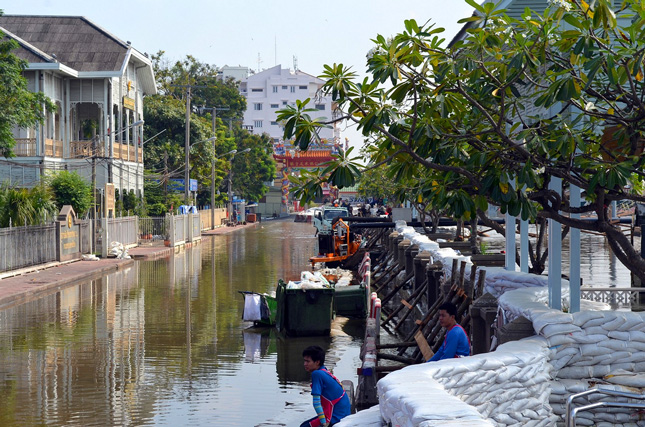
›June 26, 2015 // By Wilson Center StaffIn 2011 Thailand was hit by unprecedented monsoon rains far above the average rainfall of the previous 30 years. Two million people across 26 provinces were affected. During the crisis, hundreds of civilians took it to the streets to protest discrimination by the Flood Response Operation Center and the unfair distribution of water, electricity supply, shelter, and food. Civilians were so angry that they broke a sandbag wall in Bangkok which was protecting a wealthy district from water surges. Public unrest and discontent with the government continued until a military coup in 2013.
-
‘State of African Resilience’ and a Review of Food Security-Family Planning Programs
›In their first annual report, the ResilientAfrica Network (RAN), a partnership of 15 African universities, Tulane University, Stanford University, and the Center for Strategic and International Studies, outlines efforts to explore and define multiple “pathways of vulnerability” in sub-Saharan Africa. The report acknowledges that these pathways can be very different from place to place, but by working with African communities more closely, they hope to find new ways to break cycles of chronic crisis. One of the interventions piloted by Stanford was “deliberative polling,” which is based on the premise that communities are more likely to respond to development interventions if they understand the logic behind them and are involved in the process. -
Adapting to Global Change: Climate Displacement, Mega-Disasters, and the Next Generation of Leaders
›The world is more connected than ever before, but also more complex. Big, transnational trends like climate change, urbanization, and migration are changing the calculus of geopolitics, while local-level inequalities persist. “[Change] seems to be spinning around us so fast,” said John Hempelmann, president of the Henry M. Jackson Foundation, which honors the legacy of the late senator from Washington State. How can today’s and tomorrow’s leaders adjust to global trends? [Video Below]
-
Codi Yeager-Kozacek, Circle of Blue
Middle East Conflicts Jeopardize Water for Millions
›June 15, 2015 // By Wilson Center StaffMillions of people across the Middle East face drought, scarce drinking water supplies, and poor sanitation due to civil wars and conflict. Meanwhile, resource constraints and foreign military interventions risk more severe humanitarian disasters.
-
Alice Thomas: Climate Change Effects and Responses Profoundly Undermine Human Rights
›After Typhoon Haiyan ripped across the Philippines in 2014 leveling nearly every building in sight, 4 million people – mostly poor and from coastal regions – were displaced. In response, the government set up “no build” zones in vulnerable areas and worked to move people to new land. But many of the newly relocated people discovered this land came with no access to water, electricity, or other services.
Showing posts from category flooding.