-
Madagascar, Past and Future: Lessons From Population, Health, and Environment Programs
›In Madagascar, “today’s challenges are even greater than those faced 25 years ago,” said Lisa Gaylord, director of program development at the Wildlife Conservation Society. At an event at the Woodrow Wilson Center on March 28, Gaylord and her co-panelists, Matthew Erdman, the program coordinator for the Population-Health-Environment Program at Blue Ventures Conservation, and Kristen Patterson, a senior program officer at The Nature Conservancy, discussed the challenges and outcomes of past and future integrated population, health, and environment (PHE) programs in Madagascar. [Video Below]
Nature, Health, Wealth, and Power
Gaylord, who has worked in Madagascar for nearly 30 years, gave a brief history of USAID’s activities on the unique island, which she called a “mini-continent.” She used the “nature, health, wealth, and power” framework to review the organization’s environment, health, and livelihoods programs in Madagascar and their results. Governance, she said, is the centerpiece of this framework, but this piece “maybe didn’t have an adequate foundation” in Madagascar to see the programs through the political crisis.
Though its programs started at the community level, Gaylord said USAID’s objective was to scale up to larger levels. “You can’t always work on that level and have an impact,” she said, and there was “tremendous hope” in 2002 for such scaling up when Madagascar elected a new president, Marc Ravalomanana.
Unfortunately, changes in funding, a lack of economic infrastructure, and poor governance forced development programs to scale down. After President Ravalomanana was overthrown in a military coup in 2009, the situation got worse – the United States and other donors pulled most funding, and only humanitarian programs were allowed to continue.
“What worries me is that I think we have gone back” to working on a village level, Gaylord said. “We want to go up in scale, and I think that we felt that we could in Madagascar, but that’s where you have the political complexities that didn’t allow us to continue in that direction.”
Going forward, Gaylord said that it is important to maintain a field-level foundation, take the time to build good governance, and maintain a balance in the funding levels so that no one area, such as health, dominates development activities.
Living With the Sea
Based in southwestern Madagascar, the Blue Ventures program began as an ecotourism outfit, said Erdman, but has since grown to incorporate marine conservation, family planning, and alternative livelihoods. One of its major accomplishments was the establishment of the largest locally managed marine protection area in the Indian Ocean, called Velondriake, which in Malagasy means “to live with the sea.” This marine area covers 80 kilometers of coastline, incorporates 25 villages, and includes more than 10,000 people. The marine reserves for fish, turtles, and octopus, as well as a permanent mangrove reserve, protect stocks from overfishing.
One of the biggest challenges facing the region is its rapidly growing population, which threatens the residents’ health and their food security, as well as the natural resources on which they depend. More than half the population is under the age of 15 and the infant and maternal mortality rates are very high, Erdman explained. Blue Ventures, therefore, set up a family planning program called Safidy, which means “choice” in Malagasy.
“If you have good health, and family size is based on quality, families can be smaller and [there will be] less demand for natural resources, leading to a healthier environment,” said Erdman.
The region’s isolation and lack of education and health services are a challenge, said Erdman, but over the past three years, the contraceptive prevalence rate has increased dramatically, as has the number of clinic visits. The program uses a combination of clinics, peer educators, theater presentations, and sporting events, such as soccer tournaments, to spread information about health and family planning.
A Champion Community
“There is a long history of collaborative work in Madagascar,” Patterson said. Focusing on the commune (county) level, she worked in conjunction with USAID, Malagasy NGOs, and government ministries to try to scale up PHE programs in Madagascar’s Fianarantsoa province, which has a target population of 250,000 people.
“We essentially worked at two different levels,” said Patterson. At the regional level, a coordinating body for USAID and local partners called the “Eco-Regional Alliance” met monthly. The “Champion Commune” initiative, which worked at local levels, had three main goals, she explained:
Though working in such remote areas is expensive, and all non-humanitarian U.S. foreign aid has been suspended since the coup, Patterson hopes that development programs will return to Madagascar. Pointing to its vast rural areas, she stressed the importance of integrated efforts: “The very nature of multi-sectoral programs is that they have the highest benefit in the areas that are most remote. These are the areas where people are literally left out in the cold.”- Create a strong overlap with neighboring communes;
- Promote activities that benefited more than one sector (such as reforesting with vitamin-rich papaya trees); and
- Capitalize on the prior experiences of Malagasy NGOs in implementing integrated projects to help build up civil society.
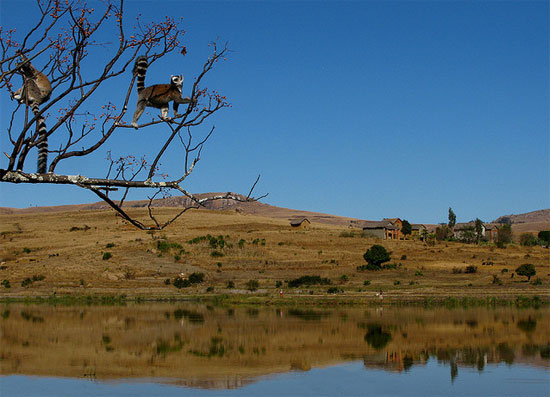
Image credit: “Untitled,” courtesy of flickr user Alex Cameron.
Sources: The New York Times, Velondriake. -
Watch: Elizabeth Leahy Madsen Explains the Demography-Civil Conflict Interface in Less Than Two Minutes
›April 12, 2011 // By Schuyler Null“We know that historically, as well as in the present, countries that have very young age structures – those that have youthful and rapidly growing populations – have been the most vulnerable to outbreaks in civil conflict,” said Elizabeth Leahy Madsen, senior research associate at Population Action International, in an interview with ECSP. “It’s not a simple cause and effect relationship, but we think that demographic trends and pressures can exacerbate underlying conditions.”
-
What’s the Link Between Population and Nuclear Energy?
›The popular Big Green Purse blog, written by best-selling author Diane MacEachern, recently asked the Worldwatch Institute’s Robert Engelman, “What’s the Link between Population and Nuclear Energy?” The blog, which encourages women to use the “power of the purse” to improve the environment, wanted to know: “Why aren’t we talking about reducing population as part of our global strategy to minimize dependence on power sources [like nuclear energy] that pollute the environment and threaten people’s health?”
While “reducing population” is not possible, slowing population growth may be, if fertility rates continue to fall. As always, Engelman answered the tough question with thoughtful aplomb, offering three core values as a starting point:One: see the global environmental dilemma not as a problem to be solved but as a predicament to be responded to. We can’t control our future, but we can act with integrity as we aspire to build just societies in an environmentally-sound world. Addressing our numbers can become part of that.
But I’m wondering how the readers of Big Green Purse – which is replete with media-friendly lists like “Top Ten Eco-Tricks” – can translate population and its messy intersection of human rights, health care, and consumption levels into an individual purchasing decision.
Two, embrace human rights as a foundation for our actions. All people – even if too many or consuming too much – have dignity and a right to be here. As it happens, population policies based on the right of all women to choose whether and when to bear a child actually slow the growth of population. …
Three, acknowledge that no one can claim a greater right than anyone else to use energy and natural resources. This is called equity. We cannot object if the poorest people living today and yet to be born succeed in gaining the means to consume as much as Americans do.
As Engelman writes, “The idea that we can easily trim our individual consumption to come into balance with nature – worthy as that effort is – looks increasingly naïve. If people in the developed world slash their per capita greenhouse emissions by half, their effort could be counterbalanced by people in developing countries boosting theirs by just 11 percent.”
Photo Credit: “Trojan Nuclear Power Plant,” courtesy of flickr user tobo. -
Book Launch: ‘The Future Faces of War: Population and National Security,’ by Jennifer Dabbs Sciubba
›“Demographic trends by themselves are neither inherently good nor bad. It’s really a state’s ability to address these issues that can determine the outcome,” said Jennifer Dabbs Sciubba, the Mellon Environmental Fellow with the Department of International Studies at Rhodes College. At a book launch event at the Wilson Center on March 14 for The Future Faces of War: Population and National Security, Sciubba, along with Deputy Under Secretary Kathleen Hicks of the Department of Defense, discussed the national security implications of demography and its important role in understanding and managing conflicts around the world. [Video Below]
Demography as an Indicator, Multiplier, and Resource
Demography can be thought of in three ways, explained Sciubba: as “an indicator of challenge and opportunity; a multiplier of conflict and progress; and a resource for power and prosperity.”
A country’s age structure can pose a challenge, said Sciubba, because countries with a large percentage of their population under the age of 30 “are about two and a half times more likely to experience civil conflict than states with more mature age structures.” Tunisia’s recent revolution, she said, could be understood as a “story about demography.”
The 26-year-old fruit vendor Mohammed Bouazizi, who set himself on fire on December 17 after being hassled by police, was part of one of the largest age cohorts in Tunisia, those aged 25-29. There are some 64 million young men across the Middle East-North Africa region between the ages of 15 and 30, according to UN estimates. “If his death was the spark” for the unrest in the region, Sciubba said, “it’s the underlying demographic trends that were the fodder.”
Yet, Sciubba sees opportunity within this challenge. Citing the work of Richard Cincotta, she said that “states have half a chance – literally 50 percent – of becoming a democracy once their proportion of youth declines to less than 40 percent.” Tunisia has the best chance in the region of becoming a free democracy based on its demography, followed by Libya, where youth aged 15-29 are 43 percent of the adult population.
At the other end of the age structure, some of the world’s most powerful countries, such as Japan, Germany, Italy, France, Russia, and China, are rapidly aging. This aging will “somewhat decrease the ability of these states to project political, economic, and military power” due to a shortage of labor and a smaller pool of funding, said Sciubba.
Countries with transitional age structures, such as India, Brazil, and South Africa, face different security challenges. With a majority of their populations between 15 and 60 years old, there are more people contributing to the economy than are taking away, which could bolster these countries economically and politically (the “demographic dividend”). Global institutions will have to reform and include these countries, she advised, “or else become irrelevant.”
But the defining trend of the 21st century, said Sciubba, is urbanization. While great sources of economic growth, cities are also quite vulnerable to natural disasters and terrorism because of their concentrations of people, wealth, infrastructure, and bureaucracy.
In looking to the future, Sciubba called for continued support for family planning initiatives. “At least 90 percent of future world population growth will take place in less developed countries,” which are least equipped to handle the demands of that growth, she said. In addition, Sciubba recommended that the United States seek out partnerships with countries that have transitional age structures, particularly India, which could be a stabilizing force in a tumultuous region. She also called on the United States to partner with states in the Western Hemisphere and remain open to migration.
Defense and Demography
“Understanding population is critical to our success in being able to prevent conflict, and also managing conflict and crises once we’re involved,” said Hicks, describing the Department of Defense’s (DOD) interest in demography. However, the DOD does not “treat demographics as destiny,” she said, but instead as “one of several key trends, the complex interplay of which may spark or exacerbate future conflicts.”
Recent world events, such as those in the Middle East and North Africa, “have demonstrated how critical our understanding of population is for security practitioners,” said Hicks. Similarly, the recent earthquake and tsunami in Japan dramatically illustrate the vulnerability of large urban areas. Echoing Sciubba’s comments on population aging, she cited “incredible divestments in defense” in Europe, which, she said, “puts us, as a key partner in NATO, at a thinking stage.”
Under Secretary of Defense for Policy Michèle Flournoy is “deeply interested” in demographic issues, said Hicks. She identified other demographic areas of great interest for her office: the youth bulge in Pakistan, urbanization in Afghanistan, the role of highly educated women in Saudi Arabia, the Chinese diaspora in the Americas, Russia’s shrinking population, and various trends in China, including aging, gender imbalance, urbanization, and migration.
Image credit: “Iraq,” courtesy of flickr user The U.S. Army.
Sources: ECSP Report 12, Financial Times, The New York Times, Population Reference Bureau, UN Population Division. -
Integrated Approach Helps “Model Farmers” Increase Productivity in Ethiopia
›March 24, 2011 // By Schuyler Null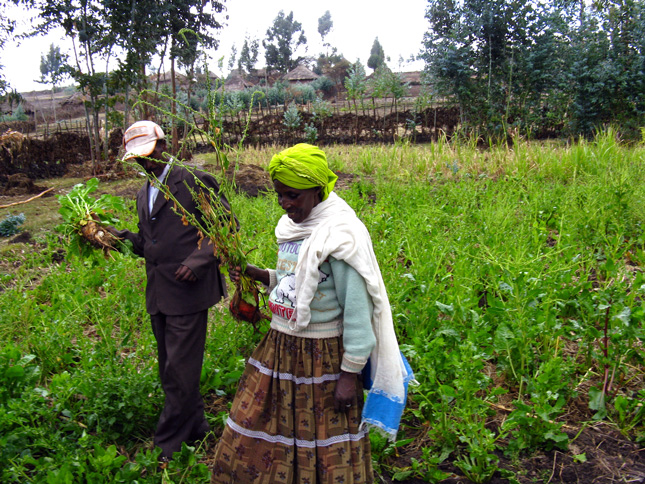
To reach the village of Grar Gaber from Addis Ababa, you drive up over the Entoto Mountains overlooking the capital then motor down two hours of new Japanese-built highway to the town of Fiche. From there it’s 20 minutes on a broken dirt road across rocky hills. I was joined there by about 20 others from the PHE Ethiopia Consortium’s general assembly (see day one and day two coverage here) and Population Action International, to visit an integrated population, health, and environment (PHE) development program run by LEM Ethiopia.
-
Watch: David Lopez Carr and Liza Grandia on Rural Population Growth and Development in Guatemala
›March 22, 2011 // By Hannah MarquseeDemographers today are largely concerned with two trends: aging in the developed world, and rapid urbanization in the developing world. The majority of people in the world now live in cities, “but this tiny fraction of people that live in rural areas – concealed by the data because it’s a small fraction – still have very high fertility rates, precisely where protected areas are,” said David Lopez-Carr, associate professor of geography at the University of California, Santa Barbara in this ECSP interview.
“You see a gradient. The more rural, the more remote, the higher fertility,” said Carr. In Guatemala, for example, fertility rates range from below four children per woman in Guatemala City, to as high as eight in the remote Maya biosphere reserve, which is mostly indigenous. “These are the populations that are growing the fastest and the ones who are living in direct proximity and whose livelihoods are predicated directly on the rainforest, whether it’s through resource extraction or…agricultural expansion,” said Carr.
Liza Grandia, assistant professor of international development and social change at Clark University, spent many years working in the Maya biosphere reserve with the Guatemalan NGO ProPeten to address deforestation. However, after years of alternative livelihood projects, “it became clear that many of those efforts would be undermined by population growth and continued migration into the region,” she said in an interview with ECSP.
Grandia and ProPeten conducted a study as part of the Demographic and Health Surveys to examine the linkages between health, population, and environmental trends in the Peten region. Based on these findings, Grandia founded Remedios, a program that partnered with International Planned Parenthood Foundation and the Guatemala Ministry of Health to provide family planning services to “one of the most remote places in Latin America.”
Remedios used mass media, such as the radio soap opera “Between Two Roads,” broadcast in Spanish and Q’eqchi’ Maya, to reach people across this remote region. In the popular soap opera, “the villain is a cattle rancher, the heroine is a midwife, and through the tales of daily life in this village we weave in messages about domestic violence, use of family planning, agrarian problems, like land speculation, and a whole host of other issues that come up in people’s daily lives,” said Grandia. “In three years as a result of that work, the total fertility went from 6.8 to 5.8. To date, 10 years later, it’s dropped to 4.3.” -
“Better Bang for the Buck”: Blogging From Ethiopia’s Population, Health, and Environment General Assembly
›March 18, 2011 // By Schuyler NullHello from Addis Ababa, where I am blogging from the 5th annual general assembly of the Population, Health, and Environment (PHE) Consortium of Ethiopia (see further coverage here). Along with the Philippines, Ethiopia is the largest PHE programmer in the world, both in terms of number of programs and people affected, and for good reason: The country combines dire need, willing donors, and a great deal of local capacity and will.
-
USAID: Maternal Deaths in Bangladesh Decline by 40 Percent in Less Than 10 Years
›The original version of this article, by the USAID Global Health Bureau, appeared on the USAID Impact blog.
Bangladesh is on track to meet the 2015 deadline for UN Millennium Development Goal 5 (50 percent reduction in maternal deaths). The Bangladesh Maternal Mortality and Health Service Survey, jointly funded by the Government of Bangladesh, USAID, Australian Aid (AusAID) and the United Nations Population Fund (UNFPA), found that maternal deaths in Bangladesh fell from 322 per 100,000 in 2001 to 194 in 2010, a 40 percent decline in 9 years.
The decline in direct obstetric deaths is most likely the consequence of better care seeking practices and improved access to and use of higher-level referral care. The decline in total fertility rate due to the successful family planning program has reduced exposure to high risk pregnancies and has thus prevented a large number of maternal deaths.
Continue reading on USAID’s Impact blog.
Sources: Directorate General of Health Services – Bangladesh, UN.
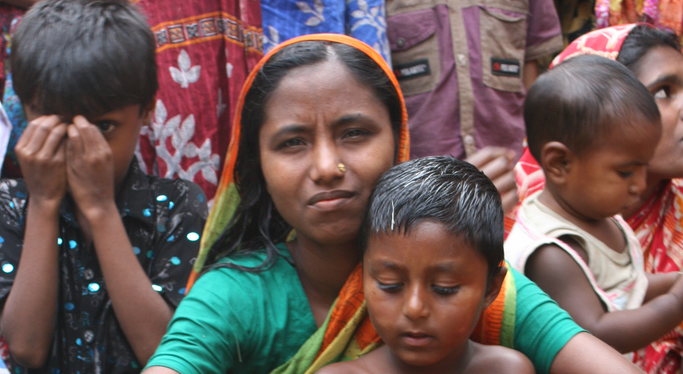
Photo Credit: Adapted from “Mother & Son,” courtesy of flickr user Anduze traveller.
Showing posts from category family planning.