Showing posts from category family planning.
-
Ten Billion: UN Updates Population Projections, Assumptions on Peak Growth Shattered
›May 12, 2011 // By Schuyler Null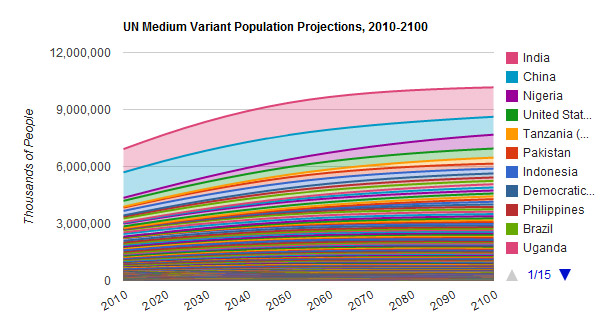
The numbers are up: The latest projections from the UN Population Division estimate that world population will reach 9.3 billion by 2050 – a slight bump up from the previous estimate of 9.1 billion. The most interesting change however is that the UN has extended its projection timeline to 2100, and the picture at the end of the century is of a very different world. As opposed to previous estimates, the world’s population is not expected to stabilize in the 2050s, instead rising past 10.1 billion by the end of the century, using the UN’s medium variant model.
-
Family Planning as a Strategic Focus of U.S. Foreign Policy
›May 11, 2011 // By Wilson Center Staff“Family Planning as a Strategic Focus of U.S. Foreign Policy,” by Elizabeth Leahy Madsen, was an input paper for the Council on Foreign Relations report, The Role of U.S. Family Planning Assistance in U.S. Foreign Policy. Excerpted from the introduction:
Comprehensive policies that incorporate demography, family planning, and reproductive health can promote higher levels of stability and development, thereby improving the health and livelihood of people around the world while also benefiting overarching U.S. interests. U.S. foreign aid will be more effective if increased investments are made in high population-growth countries for reproductive health and family planning programs. These programs are cost-effective because they help reduce the stress that rapid population growth places on a country’s economic, environmental, and social resources.
Family Planning and Reproductive Health Programs
Family planning and reproductive health programs have successfully reduced the world’s population growth rate, propelled economic development, and improved women’s lives across the world. When people, and especially women, are given the opportunity and technology to limit their family size, they often choose to do so.
Population trends are motivated by three demographic forces: fertility, mortality, and migration. Although they can have dramatic effects on national and local populations, mortality and migration in particular have relatively little influence globally. Across the world, mortality rates have declined to a point where most children born today live to reach their own reproductive years, though much work remains to reduce the effect of communicable diseases and improve nutrition among the young. Meanwhile, three percent of the world’s population currently lives outside of their birth-countries. Therefore, while migration is increasing and an important demographic force, it does not occur at a scale large enough to significantly affect global-level demography.
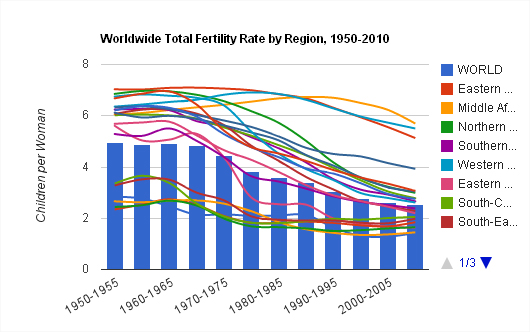
Fertility rates currently are – and in the short-term will remain – the most important driver of global demographic trends. The total fertility rate, or average number of children born to each woman, has been estimated at 2.7 for the period between 2000 and 2005, a decline from 3.6 children per woman in the early 1980s. Given this decline, population projections generally assume future declines in fertility rates. For example, the widely cited “medium-fertility variant,” which is the United Nations’ projection of a world population growing from 6.9 billion in 2010 to 9.1 billion by 2050, relies upon an assumption that the global fertility rate will decline by 24 percent to two children per woman. However, if fertility rates remain constant at current levels, the world’s population would reach 11 billion by 2050. Fertility rates, whether they decline or remain at current levels, are not distributed evenly among countries and regions.
Continue reading or download the full report, “Family Planning as a Strategic Focus of U.S. Foreign Policy,” from the Council on Foreign Relations. -
Population and Environment Connections: The Role of Family Planning in U.S. Foreign Policy
›May 11, 2011 // By Geoffrey D. Dabelko“Population and Environment Connections,” was an input paper for the Council on Foreign Relations report, Family Planning and U.S. Foreign Policy: Ensuring U.S. Leadership for Healthy Families and Communities and Prosperous, Stable Societies.
Current global population growth rates are not environmentally sustainable and the increasing demands of a growing global population are increasingly straining supplies of food, energy, and water. The expected consequences of climate change will stress resources further. Population growth dynamics compound challenges presented by increased resource consumption from a rising global middle class, making the world’s population, and the quality and quantity of natural resources, top priorities for governments and the public alike.
Governments and multilateral organizations must recognize the relationship between resource demand, resource supply, and resource degradation across disparate economic and environmental sectors. Formulating appropriate and effective responses to growth-induced resource complications requires both a nuanced understanding of the problem and the use of innovative approaches to decrease finite resource consumption.
Family planning and integrated population, health, and environment (PHE) approaches offer opportunities to address such concerns. These efforts recognize the importance of population-environment linkages at the macro-level. They also operate at the household, community, and state levels, empowering individuals and decreasing community vulnerability by building resilience in a wider sustainable development context. PHE approaches embrace the complex interactions of population, consumption, and resource use patterns. To paraphrase Brian O’Neill, a leading scholar on population-climate connections, PHE approaches offer a way forward that is neither a silver bullet nor a red herring. Addressing population-environment links is an essential step to tackling global sustainability crises.
Download “Population and Environment Connections” from the Council on Foreign Relations. -
Isobel Coleman, Council on Foreign Relations
Report: Family Planning and U.S. Foreign Policy
›May 10, 2011 // By Wilson Center StaffThe original version of this brief, by Isobel Coleman of the Council on Foreign Relations, is based on the report, Family Planning and U.S. Foreign Policy: Ensuring U.S. Leadership for Healthy Families and Communities and Prosperous, Stable Societies, by Isobel Coleman and Gayle Lemmon.
Click here for the interactive version (non-Internet Explorer users only).
U.S. support for international family planning has long been a controversial issue in domestic politics. Conservatives tend to view family planning as code for abortion, even though U.S. law, dating to the 1973 Helms Amendment, prohibits U.S. foreign assistance funds from being used to pay for abortion. Indeed, increased access to international family planning is one of the most effective ways to reduce abortion in developing countries. Investments in international family planning can also significantly improve maternal, infant, and child health. Support for international voluntary family planning advances a wide range of vital U.S. foreign policy interests – including the desire to promote healthier, more prosperous, and secure societies – in a cost-effective manner.
Saving Lives of Mothers and Children
More than half of all women of reproductive age in the developing world, some 600 million women, use a form of modern contraception today, up from only 10 percent of women in 1960. This has contributed to a global decline in the average number of children born to each woman from more than six to just over three. Despite these gains, an estimated 215 million women globally – particularly in sub-Saharan Africa and southern Asia – are sexually active but are not using any contraception, even though they want to avoid pregnancy or delay the birth of their next child. With the world’s population poised to cross the seven billion mark later in 2011, and expected to grow by nearly 80 million people annually for several more decades, global unmet need for family planning is likely to increase.
Studies have shown that contraception could reduce maternal deaths by a third, from approximately 360,000 to 240,000; reduce abortions in developing countries by 70 percent, from 35 million to 11 million; and reduce infant mortality by 16 percent, from 4 million to around 3.4 million.
For a woman in the developing world, the lifetime risk of dying from pregnancy is still one of the greatest threats she will face. In developed countries, 1 out of 4,300 women will lose her life as a consequence of pregnancy, compared to sub-Saharan Africa, where that figure soars to 1 in 31, and Afghanistan, where the lifetime risk of dying from pregnancy is 1 out of 7.
Unsafe abortions are one factor contributing to high maternal death rates. As of 2008, 47,000 abortion-related maternal deaths occur annually, accounting for 13 percent of all maternal deaths. Filling the unmet need for modern family planning would lead to a reduction in mistimed pregnancies and a significant decline in abortions and abortion-related health complications. In 2000 alone, if women who wished to postpone or avoid childbearing had access to contraception, approximately 90 percent of global abortion-related and 20 percent of obstetric-related maternal deaths could have been averted.
Maternal mortality has a devastating and irreversible effect on children and families. Indeed, countries with the highest maternal mortality rates also experience the highest rates of neonatal and childhood mortality. When a mother dies, her surviving newborn’s risk of death increases to 70 percent.
Family planning presents an opportunity to curb maternal and under-five deaths not simply by giving women of all ages the ability to determine their family size, but by enabling women to delay pregnancy until at least age 18 and to space and plan their births. In this way, modern contraceptive methods help women avoid high-risk pregnancies. Studies suggest that short pregnancy intervals (when the pregnancy occurs less than twenty-four months after a live birth) are associated with an increased risk of maternal and under-five mortality. In fact, if all mothers were to wait at least 36 months to conceive again, it is estimated that 1.8 million deaths of children under five could be prevented annually.
Enhancing International Security
While much of the developed world is experiencing population stability or even decline, many countries in the developing world continue to see rapid population growth. Population imbalances have emerged as a serious issue affecting economic opportunity, global security, and environmental stability. Ongoing civil conflicts, radicalism, weak governance, and corruption are endemic problems for many fragile states. While high fertility rates are not the cause of their problems, they do complicate the challenges these countries face in trying to reduce poverty, achieve per capita income growth, provide education and productive opportunities for youth, and address increasing shortages of natural resources.With the world’s population poised to cross the 7 billion mark later in 2011, and expected to grow by nearly 80 million people annually for several more decades, global unmet need for family planning is likely to increase.
Yemen, for example, has the highest rate of unmet need for family planning of any country. Its population has doubled in less than 20 years, and it has the world’s second-youngest population. High fertility – around six children per woman – taxes Yemen’s infrastructure, education and health systems, and environment. In addition, its labor force is growing at a pace much faster than the growth of available jobs, resulting in high youth unemployment. Increasing access to family planning would help improve Yemen’s long-term prospects for achieving per capita growth and stability. Conversely, continued high fertility rates will only deepen Yemen’s current crises.
Many countries experiencing fast population growth – like Yemen – do not have the capacity to harness the potential of their young populations. In these cases, high fertility rates can lead to a vicious cycle of poverty at the community, regional, and national levels. Rapidly growing populations are also more prone to outbreaks of civil conflict and undemocratic governance. Eighty percent of all outbreaks of civil conflict between 1970 and 2007 occurred in countries with very young populations. Demographers have shown that the statistical likelihood of civil conflict consistently decreases as countries’ birth rates decline.
Countries with the highest population growth rates face real resource constraints, particularly arable land and clean water. As of 2010, 40 percent of populations in more than 35 countries have insufficient access to food, with the largest concentration in central and eastern sub-Saharan Africa. Given that many of these food-insecure countries will continue to experience significant population growth in decades ahead, malnutrition will remain a challenge.
Continue reading at the Council on Foreign Relations or download the full report, Family Planning and U.S. Foreign Policy: Ensuring U.S. Leadership for Healthy Families and Communities and Prosperous, Stable Societies.
Isobel Coleman is a senior fellow for U.S. foreign policy; director of the Civil Society, Markets, and Democracy Initiative; and director of the Women and Foreign Policy Program at the Council on Foreign Relations.
Sources: Council on Foreign Relations, Population Action International, Population Reference Bureau, UNFPA, World Health Organization.
Chart Credit: Arranged by Schuyler Null, data from UN Population Division, World Population Prospects, 2010 Revision. -
Accessing Maternal Health Care Services in Urban Slums: What Do We Know?
›“Addressing the needs of urban areas is critical for achievement of maternal health goals,” said John Townsend, vice president of the Reproductive Health Program at the Population Council. “Just because there is a greater density of health services does not mean that there is greater access.”
Townsend moderated a discussion on the challenges to improving access to quality maternal health care in urban slums as part of the 2011 Maternal Health Dialogue Series with speakers Anthony Kolb, urban health advisor at USAID; Catherine Kyobutungi, director of health systems and challenges at the African Population Health Research Center; and Luc de Bernis, senior advisor on maternal health at the United Nations Population Fund (UNFPA). [Video Below]
Mapping Urban Poverty
“Poverty is becoming more of an urban phenomenon every day,” said Kolb. With over 75 percent of the poor in Central Asia and almost half of the poor in Africa and Asia residing in cities and towns by 2020, “urban populations are very important to improving maternal health,” he added.
Collecting accurate data in informal settings such as slums can be very challenging, and there is often a “systematic undercounting of the urban poor,” said Kolb. Data often fails to capture wealth inequality in urban settings, and there is often a lack of attention to the significant variability of conditions between slums.
Kolb also warned about the risk of generalization: “Slums and poverty are not the same.” In practice, there is not a standardized definition of what constitutes a slum across countries, he said. “It is important to look at different countries and cities individually and understand how inequality is different between them.” Slum mapping can help to scope out challenges, allocate resources appropriately, and identify vulnerability patterns that can inform intervention design and approach, he said.
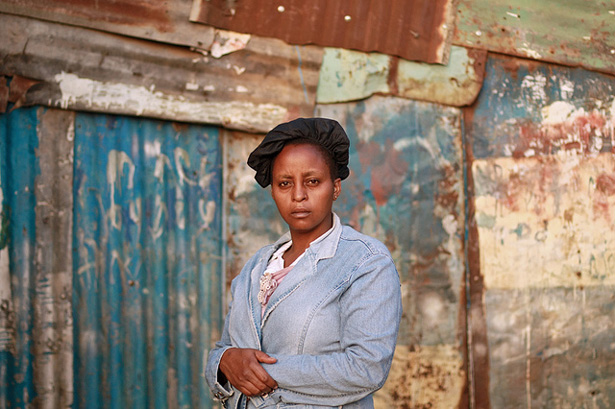
Maternal Health in Nairobi Slums
Addressing the maternal health needs of the nearly 60 percent of urban residents who live in slums or slum-like conditions will be a critical step to improving maternal health indicators of a rapidly urbanizing Kenya, said Kyobtungi.
Only 7.5 percent of women in Kenyan slums had their first antenatal care visit during their first trimester of pregnancy and only 54 percent had more than three antenatal care visits in all – rates significantly lower than those among urban women in non-slum settings.
“In some respects, [the urban poor] are doing better than rural communities, but in other ways they are behind,” said Kyobtungi. But, she said, there are many unique opportunities to improve maternal health in slums: “With these very high densities, you do have advantages; with very small investments, you can reach many more people”
Output-based voucher schemes – in which women pay a small fee for a voucher that entitles them to free, high-quality antenatal care, delivery services, and family planning – have been implemented to help poor, urban women access otherwise expensive services. But poor attitudes towards health care workers, transportation barriers, and high rates of crime still prevent some women from taking advantage of these vouchers, said Kyobtungi.
The majority of maternal health services in slums are provided by the private facilities, though size and quality vary widely. “There is a very high use of skilled attendants at delivery, but the definition of skilled is questionable,” said Kyobtungi
“Without supporting the private sector,” Kyobutungi said, “we cannot address the maternal health challenges within these informal settlements.” Combined with an improved supervision and regulation system, providing private maternal health facilities with training, equipment, and infrastructure could help to improve the quality of services in urban slums, she concluded.
Reducing Health Inequalities
“While we have evidence that health services, on average, may be better in urban areas than in rural areas, this often masks wide disparity within the population,” said de Bernis. “Reducing health inequities between and within countries is a matter of social justice.”
When it comes to family planning, total fertility rates are lower in cities, but “the unmet need…is still extremely important in urban areas,” explained de Bernis. Many poor women in cities, especially those who live in marginalized slum populations, do not have access to quality reproductive health services – a critical element to reducing maternal morbidity and mortality rates.
Economic growth alone, while important to help improve the health status of the poor in urban settings, will not solve these problems, said de Bernis. To reduce health disparities within countries, de Bernis advocated for “appropriate social policies to ensure reasonable fairness in the way benefits are distributed,” including incorporating health in urban planning and development, strengthening the role of primary health care in cities, and putting health equity higher on the agenda of local and national governments.
Event Resources:Source: African Population Research Center, United Nations Population Fund.
Photo Credit: “Work Bound,” courtesy of flickr user Meanest Indian (Meena Kadri). -
Watch: Jennifer Dabbs Sciubba on Population and National Security
›April 28, 2011 // By Schuyler Null“Long-term trends really are what shape the environment in the future,” said Jennifer Dabbs Sciubba in this interview with ECSP. “As we’ve seen recently with…revolution in North Africa, it’s the long-term trends that act together for these things to happen – I like to say demography is not usually the spark for a conflict but it’s the fodder.”
Sciubba is the Mellon Environmental Fellow in the Department of International Studies at Rhodes College. In her new book, The Future Faces of War: Population and National Security, she discusses the importance of demographic trends in relation to security and stability, including age structure, migration, youth bulges, population growth, and urbanization.
One of the most important things to emerge from the book, said Sciubba, is that countries that are growing at very high rates that are overwhelming the capacities of the state (like many in sub-Saharan Africa) really will benefit from family planning efforts that target unmet need.
Afghanistan, for example, “has an extremely young age structure,” Sciubba pointed out. “So if you’re trying to move into a post-conflict reconstruction atmosphere…you absolutely have to take into account population and the fact that it will continue to grow.”
“Even if there are major moves now in terms of reducing fertility, they have decades ahead of this challenge of youth entering the job market,” Sciubba said. “Thousands and thousands more jobs will need to be created every year, so if you have a dollar to spend, that’s a really good place to do it.”
For more on Jennifer Dabbs Sciubba and The Future Faces of War, see her book launch at the Wilson Center with Deputy Under Secretary Kathleen Hicks of the Department of Defense (video) and some of her previous posts on The New Security Beat. -
Rukia Seif, PHE Champion
Making Life Easier in Rural Tanzania
›This PHE Champion profile was produced by the BALANCED Project.
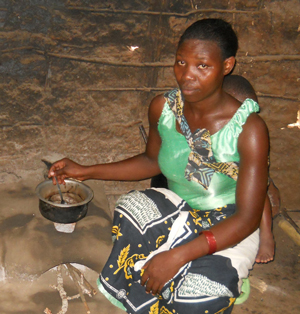
Rukia Seif is a population, health, environment (PHE) peer educator who promotes simple economic, environmental, and health behaviors that make sense. In many ways, the Mkalamo village where Rukia lives is a typical rural Tanzanian agricultural village. In another important way it is very different. Mkalamo abuts the biodiversity rich Saadani National Park – the only wildlife park in Tanzania that borders the sea. Ironically, this park does not make life easier for people living in Mkalamo but more difficult. In the park, there is a ban on the cutting of wood, making it difficult to find enough to fuel villagers’ cooking stoves. Also, increasing numbers of the park’s wild animals often destroy the villagers’ precious crops.
As a PHE peer educator, Rukia talks with her fellow community members about simple things they can do to improve their lives. Her messages are clear:- By planning their families, women can ensure their own and their children’s health and can decide the optimal number of children that they can provide for.
- By using fuel efficient stoves, women can spend less time collecting fire wood, freeing up time for other chores or livelihood activities and reducing the amount of needed fuel, thus helping sustain the forests for future generations.
- By joining community-led savings and credit associations, women and men gain access to capital, allowing them to scale-up current livelihoods or diversify to new sources of income.
Rukia sets a good example of how doing these simple things can improve a family’s life and protect the environment. At age 36, she is a mother of three girls, ages 14, 12, and one and a half. Rukia and her husband, Seif Ramadhani, are taking measures to plan their family. Rukia used pills before they decided to have their last daughter. Now they are using condoms as a back-up while Rukia is breastfeeding the baby. Through her work, Rukia meets and talks to many people every day. She discusses family planning and if someone is interested, she refers them to community-based distributors and the dispensary for family planning services.
“I talk to my peers about planning their families so we have enough natural resources to meet the needs of the villagers who depend on these resources,” she said. “Also, when you plan your family, you will get more time to perform other activities.”
An active member of the savings and credit association, where she also acts as the accountant, Rukia is living proof of this last statement. Through savings and loans, Rukia has diversified her income by buying a sewing machine and a fuel-efficient oven. Today, she generates income from cow and poultry husbandry, tailoring, bread-making, selling soft drinks, and constructing fuel-efficient stoves. With this increased income, Rukia and her husband have been able to put an iron sheet roof on their house and send their first-born daughter to secondary school – a great achievement in a country where only five percent of women stay in school beyond the primary level.
Rukia demonstrated her two fuel-efficient stoves: one is a metal oven that she uses for baking breads and cakes, the other is a simple mud stove that she uses for cooking. The mud stove, which costs less than $2 to build, is getting increasingly popular in the community. It saves fuel wood, prevents fires, produces less smoke (a serious health hazard), and cooks the food faster!
“I can even wear my best clothes and put on some lip shine when I use this stove, because it does not foul up the air,” Rukia explains with a laugh. Seeing the benefits of the fuel efficient stoves, she has inspired ten community-based distributors and five village leaders to join the team of individuals showcasing the fuel efficient technologies.
Rukia is a perfect example of practicing what one preaches. She is improving her own life, helping others learn to do the same, and protecting the very natural resources upon which almost everyone in Mkalamo depends.
This PHE Champion profile was produced by the BALANCED Project. A PDF version can be downloaded from the PHE Toolkit. PHE Champion profiles highlight people working on the ground to improve health and conservation in areas where biodiversity is critically endangered. -
Is Universal Access to Family Planning a Realistic Goal for Sub-Saharan Africa?
›“What do we require to ensure universal access to family planning services that are appropriate, affordable, accessible, and of good quality?” asked Michael Mbizvo, director of the Department of Reproductive Health and Research at the World Health Organization at the Wilson Center last month. [Video Below]
To talk about this difficult question and present research and programmatic evidence for sub-Saharan Africa, Mbizvo was joined by panelists Fred Makumbi, senior lecturer and head of the Department of Epidemiology and Biostatistics at Makerere University, Uganda; Oladosu Ojengbede, director of the Center for Population and Reproductive Health, University of Ibadan, Nigeria; and Frank Taulo, director of the Center for Reproductive Health and senior lecturer of obstetrics and gynecology at the University of Malawi.
Integrating Family Planning and HIV Services
Makumbi shared a number of findings on fertility preferences, behaviors, and contraceptive uptake in the context of HIV infection and care in Uganda. “Integrating family planning services into HIV services could help address the family planning needs of both HIV infected and uninfected,” he said.
According to new research conducted as part of the Rakai Community Cohort Study, despite significant gains in family planning use over time, there is still a high unmet need for contraception, irrespective of HIV status, in the Rakai district of central Uganda, said Makumbi. Male partner’s fertility desires were found to play an important role in pregnancy rates, and compared with previous studies conducted in the Rakai district, researchers saw an increase in pregnancy incidence and prevalence among HIV positive women, especially those on anti-retroviral therapy. HIV care that included voluntary counseling and testing was associated with significant increases in the use of family planning, and in particular, the use of condoms.
To effectively promote universal family planning in sub-Saharan Africa, “there is a need to strengthen family planning services in HIV care programs, with promotion of modern contraceptive methods, and with particular attention to women on anti-retroviral therapy,” said Makumbi. “Strategies to address desire for high fertility need to be developed, especially with regard to male involvement,” he added.
Multi-Pronged Approach to Universal Family Planning
“Family planning success in sub-Saharan Africa is a must for the region’s sustainable development,” said Ojengbede. “Poor commitment to women’s health in sub-Saharan Africa” has not only resulted in high fertility rates and poor maternal health indices but has also negatively impacted economic and human development in the region, said Ojenbede.
To increase access to and use of family planning, Ojengbede stressed the need to generate and sustain government commitment, promote legislation to support women’s autonomy, and implement policies to improve access to quality reproductive health services.
At the community level, Ojengbede said, the public health community must work to integrate family planning services into all reproductive health programs, including prevention of mother to child transmission; accelerate female empowerment programs; actively engage males in family planning access and uptake; and address social and cultural barriers that prevent widespread adoption of family planning.
“Traditional rulers can occupy a critical position to enact positive change in their communities and at the national level,” said Ojengbede. In Nigeria, for example, providing education about the health and economic benefits of family planning has helped traditional leaders embrace family planning and develop their own strategies to promote birth spacing in their communities.
“Universal family planning access must be achieved through a multi-pronged approach that should be colored with socio-cultural sensitivity, solid evidence, and sustainability,” concluded Ojengbede.
Eliminating Unmet Need: “Yes, We Can”
“It is time to prioritize issues that are affecting women and family planning is a very critical area,” said Taulo.
There are still many challenges to overcome before Malawi can achieve universal family planning access, including poverty, misconceptions and myths about family planning, lack of availability of reproductive health supplies, poor infrastructure, shortage of trained professionals, and religious and cultural barriers.
“Commodities are also very much dependent on the donor,” said Taulo, pointing to the challenges of insufficient funding and political will. “Failure to connect family planning to economic development and political stability is one of the main areas that we are struggling with,” he added.
“We have lots of challenges, but also many achievements,” said Taulo. Malawi has made important strides in expanding access to family planning by implementing community-based strategies and youth-friendly programs, developing public-private partnerships, engaging policymakers and traditional leaders, and encouraging media coverage of family planning issues.
“Education is another family planning product,” said Taulo. Moving forward, a “deliberate focus on girl child education” and promotion of women’s welfare can have a major impact on fertility reduction, he said.
“We can eliminate unmet need for family planning in Malawi, if we put our heads together, our thoughts together, and our energy together,” concluded Taulo.
Source: World Health Organization.
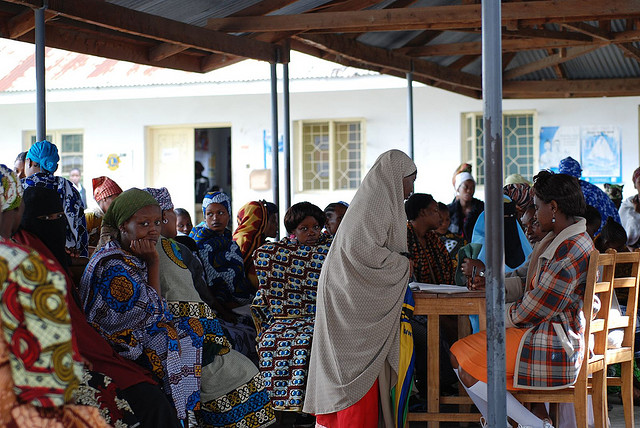
Image Credit: “Women’s Health Clinic” courtesy of flickr user advencap.