-
Lisa Hymas on Envisioning a Different Future With Family Planning in Ethiopia
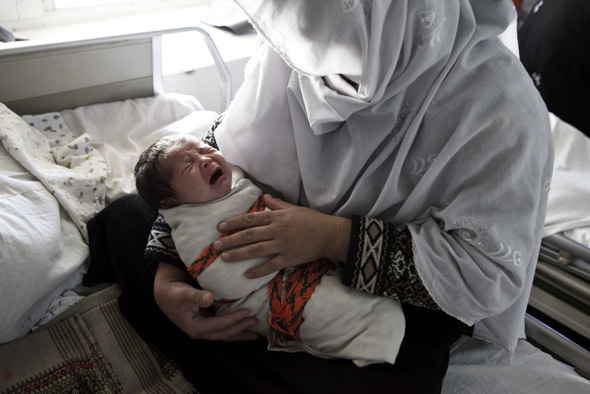
› ECSP caught up with Lisa Hymas, senior editor at Grist, last week during the first South by Southwest (SXSW) Eco conference and she spoke about her recent visit to Ethiopia to see the country’s community health extension program in action. “Ethiopia has a big challenge around population,” Hymas said, “but the government is committed to bringing that down.”
The government extension program places health-workers – young women, for the most part, who have received basic training – directly into each community, where they are able to give out immunizations, provide advice on nutrition, teach families how to properly hang bed nets to prevent mosquito-borne illnesses, and provide family planning services and advice.
Thanks to the program, these health workers and those in the communities they service can “envision very different lives for themselves than their mothers had,” Hymas explained. For instance, one woman recounted that her mother gave birth to 10 children, “and almost died giving birth to the last one, because there was no access to birth control, and there was no good access to health care.” In contrast, she is now able to have a career and to use family planning to delay and space her own childbearing.
For more on Ethiopia’s health extension program, see Schuyler Null’s report on visiting a village health clinic near the town of Fiche last spring. -
Silent Suffering: Maternal Morbidities in Developing Countries
›Maternal morbidities – illnesses and injuries that do not kill but nevertheless seriously affect a woman’s health – are a critical, yet frequently neglected, dimension of safe motherhood. For every woman who dies, many more are affected acutely or chronically by morbidities, said Karen Hardee, president of Hardee Associates at the Global Health Initiative’s September 27 panel discussion, “Silent Suffering: Maternal Morbidities in Developing Countries.” Hardee was joined by Karen Beattie, project director for fistula care at EngenderHealth, and Marge Koblinsky, senior technical advisor at John Snow, Inc., for a discussion moderated by Ann Blanc, director of EngenderHealth’s Maternal Health Task Force.
-
Strengthening the Voices of Women Champions for Family Planning and Reproductive Health
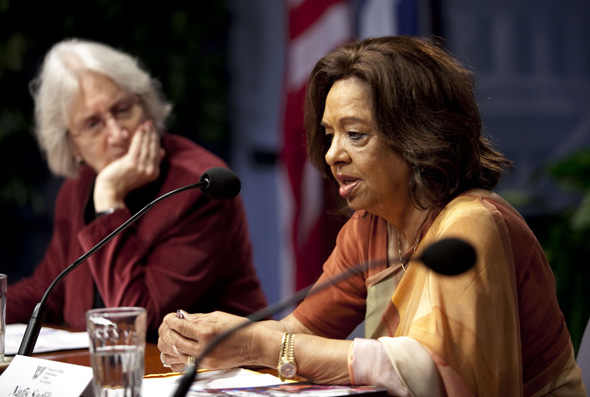
›“The health, security, and well-being of families depend importantly on the health of women,” said Carol Peasley, president and CEO of the Centre for Development and Population Activities (CEDPA). “When women have the ability to voluntarily space and limit the number of children they have, maternal and newborn child deaths decrease, as do abortions and abortion-related injuries,” she continued.
Peasley was joined by three panelists on September 28 at the Wilson Center: Dr. Nafis Sadik, special advisor to the UN Secretary General; Tigist Kassa Milko, health communications program coordinator for Panos Ethiopia; and Rosemary Ardayfio, a reporter for the Ghanaian paper, The Daily Graphic.
Ardayfio and Milko both recently participated in a CEDPA-led workshop, which is designed to create effective women champions for family planning and reproductive health.
“The voices of women champions may in fact be the best way to influence policymakers and just average citizens around the world,” said Peasley.
Women’s Rights Essential for Development of All
According to Sadik, women have gained some autonomy over their reproductive health:- Maternal mortality around the world is down by 40 percent compared to 1990 levels;
- Family planning reaches over 65 percent of women who need and want it;
- Many developing countries will achieve parity in girls’ and boys’ education by 2015; and
- Women are increasingly prominent in national and international leadership.
- Women’s literacy rates are still much lower than men’s;
- Pregnancy and childbirth still pose major health risks for women;
- Maternal mortality is the single biggest differential between developed and developing countries;
- We are far from reaching the Millennium Development Goal of reducing maternal mortality by 75 percent; and
- The current unmet demand for family planning (215 million women) is projected to rise by 40 percent by 2050 as the reproductive age population grows.
Local Champions for Local Needs
Although Tigist Kassa Milko and Rosemary Ardayfio come from two African countries hundreds of miles apart, their struggles are eerily similar.
In Ethiopia, the more than 1.5 million women who live in pastoral or nomadic areas shoulder many responsibilities, including walking long distances to fetch food and water for their families. The well-being of these women and their families is further strained by the challenges of climate change and limited health service provision.
To help overcome these obstacles, a number of micro-credit associations now offer female pastoralists alternative livelihood options. Panos Ethiopia also provides “reproductive health, family planning, gender-based violence forums” and “trainings on life skills and saving” to those who come for loans, said Milko.
But “when it’s a choice between walking to get water and walking to get contraceptives, water will win,” said Milko, so it is essential to focus on integrating ways to improve livelihoods, health, and ecosystems – also known as population, health, and environment (PHE) programs.
In Ghana, women also grapple with competing issues of development, poverty, healthcare, and cultural barriers. According to Ardayfio, 35 out of every 100 Ghanaian women want to space or limit births but are not using modern family planning methods. As a journalist, she acknowledged that there are many myths about reproductive health that need to be dispelled. The newspaper she writes for, The Daily Graphic, publishes three articles on women’s health each week.
“The stories of women dying from pregnancy-related causes should continue to be told in a compelling manner until our government makes good on the many international commitments it has signed to,” said Ardayfio. “Our decision-makers should be told again and again that it’s time to scale up family planning.”
Event Resources:
Sources: CEDPA, Guttmacher Institute, Population Reference Bureau, UNESCO, UNICEF, USAID.
Photo Credit: Dave Hawxhurst/Wilson Center. -
Weathering Change: New Film Links Climate Adaptation and Family Planning
›“Our planet is changing. Our population is growing. Each one of us is impacting the environment…but not equally. Each one of us will be affected…but not equally,” asserts the new documentary, Weathering Change, launched at the Wilson Center on September 22. The film, produced by Population Action International (PAI), explores the devastating impacts of climate change on the lives of women in developing countries through personal stories from Ethiopia, Nepal, and Peru. Family planning, argue the filmmakers, is part of the solution.
-
Women Leaders Urge Stronger Advocacy on Health and Public Policy
›The original version of this article appeared on the Pan American Health Organization website.
Women have made major strides toward greater equality in Latin America and the Caribbean, but stronger advocacy and leadership are needed to address problems they continue to face in health and other areas, said a group of top women health leaders at an event held at the Woodrow Wilson Center in Washington, D.C. on September 27.
The event was part of a series of activities surrounding the 51st Directing Council meeting of the Pan American Health Organization/World Health Organization (PAHO/WHO), which is being held this week.
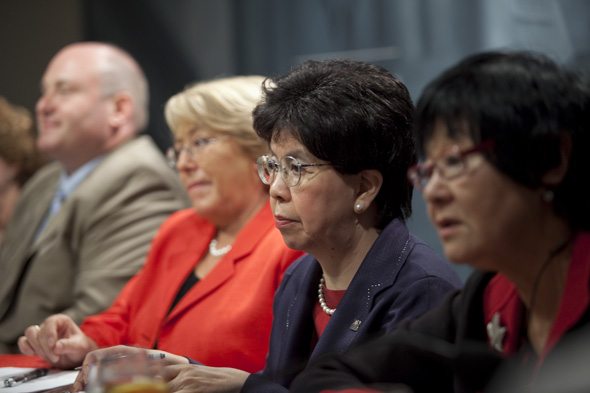
Dr. Michelle Bachelet, Executive Director of UN Women, noted that Millennium Development Goal (MDG) five, reduce maternal mortality, “is the one MDG that has advanced the least in our region and around the world.” She said it is now widely accepted that investing in women is not only an issue of human rights, it is also “the intelligent thing to do economically, politically, and socially. So why doesn’t it happen?” She said making it happen is the major leadership challenge facing women in health and public policy today. “We have to empower women to make the strongest case possible that investing in women is the best thing governments can do, and we have to help ministers of health make this same case with their governments.”
WHO Director-General Dr. Margaret Chan said that high levels of maternal mortality reflect “a failure of governments.” “We know how to prevent women from dying while giving birth. It’s a lack of political commitment, policies, and investments in the right areas. We need to get these issues out into the public, and we need to work with men who are enlightened to accomplish this,” she said.
Rocío García Gaytán, President of the Inter-American Commission of Women, said maternal mortality continues to be a major problem in the hemisphere despite the fact that it is almost completely preventable. She said that contrary to common belief, most maternal deaths take place in hospitals and are the result of a lack of proper training of medical personnel. “This problem should not exist in the second decade of this millennium,” she said.
PAHO Director Dr. Mirta Roses urged women to develop a leadership style that will effectively advocate for women’s top concerns, particularly social, economic, and political progress.
“What is different when women lead?” Roses asked. “We need to support each other and identify what we should do that is different from male models. We must all work together – UN Women, the Council of Women World Leaders – to define feminine leadership and promote it.”
Canada’s Minister of International Cooperation, Beverly Oda, said progress on public policies for women “took many years” to develop in Canada. Today, gender reviews of legislation are now mandatory for legislation, and promotion of gender equality is an integral part of Canadian technical cooperation programs.
Vice-Minister of Health Dr. Silva Palma de Ruiz of Guatemala described a number of initiatives in her country that have been successful in improving women’s health and status. They include joint efforts involving the health ministry, the public prosecutor’s office, the national human rights ombudsman, and civil society organizations to reduce sexual violence by empowering women to report violence and by more aggressive prosecution of perpetrators. PAHO/WHO has supported these efforts with technical assistance in developing guides for care of victims of sexual violence. Other efforts include a new family planning law and education of men and women as well as healthcare workers about women’s rights to use contraception.
Minister of Health Ann Peters of Grenada said that women of the Caribbean “are very vocal” and have had considerable success advocating for women’s health. In her own country, this has helped produce a highly effective comprehensive mother-child health program that includes strong community health services with well-trained midwives and good referral systems, breastfeeding-friendly hospitals, and universal voluntary testing of pregnant women for HIV. Thanks to these programs, Grenada has “no mother-to-child transmission of HIV and virtually no maternal mortality.”
Minister of Health Marcella Liburd of Saint Kitts and Nevis noted the importance of addressing the social determinants of women’s health. For example, in her country as elsewhere, the majority of people living in poverty are women. “We need to consider other aspects of women’s well-being,” she said, “including financial, social, and mental health.”
Paraguay’s Minister of Health, Dr. Esperanza Martinez, said it was important to address women’s concerns in an integral way. She described a new platform for discussing policies that affect women involving different government ministries, not just health. “Women need to participate as policymakers and also to influence policies from the outside,” she said.
Dr. Carmen Barroso, Western Hemisphere Director for the International Planned Parenthood Federation, said, “Civil society is ready to partner with ministries of health to advocate for more resources, legislation, and promotion of women’s sexual and reproductive rights.”
The event was organized by the Council on Women World Leaders, PAHO/WHO, the Wilson Center’s Environmental Change and Security Program, Global Health Initiative, and Latin America Program.
Event ResourcesPhoto Credit: David Hawxhurst/Wilson Center. -
Carl Haub, Behind the Numbers
Ethiopia’s 2011 Demographic and Health Survey: Remarkable Fertility Decline, Continued Rural Health Challenges
›September 28, 2011 // By Wilson Center StaffThe original version of this article, by Carl Haub, appeared on the Population Reference Bureau’s Behind the Numbers blog.
Continuing my recent practice of posting a quick summary of results from new demographic surveys in developing countries, here is another new Demographic and Health Survey (DHS) preliminary report, this time from a sub-Saharan African country. This will help readers of this blog to stay right up-to-date with the latest developments.
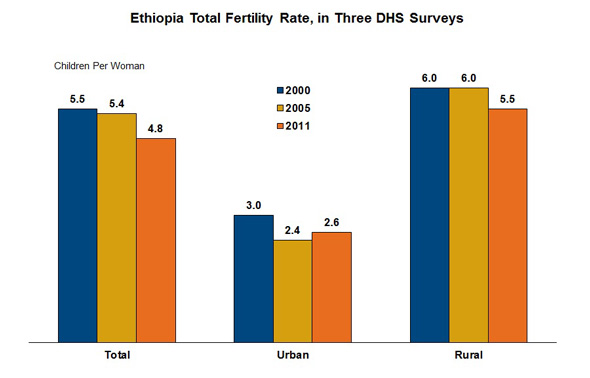
The Ethiopia 2011 DHS interviewed 16,515 women ages 15 to 49 and 14,110 men ages 15 to 59 from September 2010 to June 2011. The total fertility rate (TFR – the average number of children would bear in her lifetime if the birth rate of a particular year were to remain constant) obtained in the survey was 4.8 for the three-year period preceding the survey. For urban women, the TFR was 2.6 and for rural women, who were a little over 75 percent of the sample, 5.5. There appears to have been an acceleration of TFR decline from the 2005 to the 2011 survey compared with the 2000 DHS, which had a three-year TFR of 5.5. In 1990, a government survey had shown the TFR as 6.4. The desire to continue or cease childbearing provides one insight into possible future fertility trends. Of the women with five living children, 55.8 percent said that they did not wish to have any more children; among women with six or more living children, 68.6 percent said that they also wished to ceased childbearing.
Continue reading on Behind the Numbers.
Image Credit: Population Reference Bureau; data courtesy of Ethiopian Central Statistics Agency (CSA) and ICF Macro, Ethiopia Demographic and Health Survey (EDHS) 2011, Preliminary Report. -
John Donnelly, Global Post
Reproductive Health’s Connection to Global Problems
›September 26, 2011 // By Wilson Center StaffThe original version of this article, by John Donnelly, appeared on Global Post.
At a forum at the Rubin Art Museum earlier this week, a group of global leaders, including two top U.S. officials, talked about how reproductive health issues for women were wrongly cast as only a women’s issue.
Instead, they said reproductive health was intimately connected to the world’s population boom, climate change, water and sanitation crises, economic downturns, educational rates, and development overall. And greater reproductive health rights would trigger a brighter future for the 600 million young women in the developing world, including the 10 million girls who are married before they reach the age 18, said the panelists, members of the Global Leaders Council for Reproductive Health of Aspen Global Health and Development.
And yet, reproductive health and family planning is generally not a focus on the world stage. In fact, the topic is often avoided.
“If you can help young women feel empowered, where they themselves want to delay pregnancy, they can become the actors in their own lives,” Maria Otero, U.S. Under Secretary of State for Democracy and Global Affairs said at the Rubin Museum of Art. “What this Council allows us to do is think about the issue of reproductive health, one that is interconnected to all other issues” related to development.
Continue reading on Global Post.
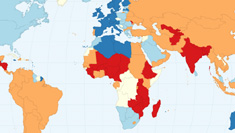
Image Credit: “Age at 1st marriage (women),” courtesy of ChartsBin; data courtesy of Gapminder. -
Carl Haub, Yale Environment 360
What If Experts Are Wrong On World Population Growth?
›September 22, 2011 // By Wilson Center StaffThe original version of this article, by Carl Haub, appeared on Yale Environment 360.
In a mere half-century, the number of people on the planet has soared from 3 billion to 7 billion, placing us squarely in the midst of the most rapid expansion of world population in our 50,000-year history – and placing ever-growing pressure on the Earth and its resources.
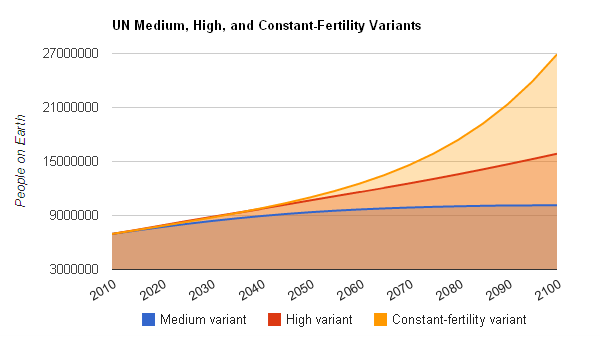
But that is the past. What of the future? Leading demographers, including those at the United Nations and the U.S. Census Bureau, are projecting that world population will peak at 9.5 billion to 10 billion later this century and then gradually decline as poorer countries develop. But what if those projections are too optimistic? What if population continues to soar, as it has in recent decades, and the world becomes home to 12 billion or even 16 billion people by 2100, as a high-end UN estimate has projected? Such an outcome would clearly have enormous social and environmental implications, including placing enormous stress on the world’s food and water resources, spurring further loss of wild lands and biodiversity, and hastening the degradation of the natural systems that support life on Earth.
It is customary in the popular media and in many journal articles to cite a projected population figure as if it were a given, a figure so certain that it could virtually be used for long-range planning purposes. But we must carefully examine the assumptions behind such projections. And forecasts that population is going to level off or decline this century have been based on the assumption that the developing world will necessarily follow the path of the industrialized world. That is far from a sure bet.
Continue reading on Yale Environment 360.
Image Credit: Data from UN Population Division, chart arranged by Schuyler Null.
Showing posts from category family planning.