Showing posts from category family planning.
-
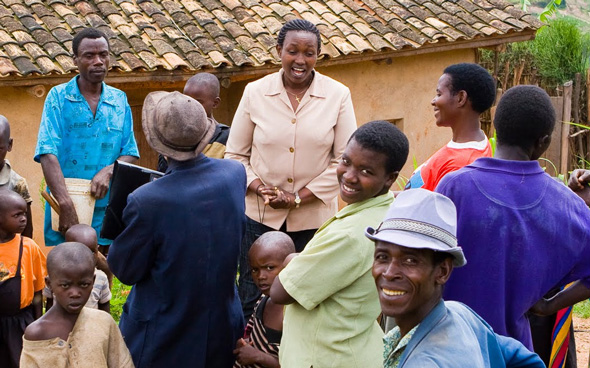
Jeanne Nyirakamana, PHE Champion
Reaching Rural Rwandans With Integrated Health and Livelihood Messages
›This PHE Champion profile was produced by the BALANCED Project.
Rwanda is one of the most densely populated countries on the planet, with more than 11 million people in one of Africa’s smallest countries, most of whom depend on the land as subsistence farmers. The country has diverse mountain, lake, and savannah landscapes, and the Virunga Mountain chain in the northwest part of the country is home to one-third of the world’s threatened mountain gorilla population. At the same time, the population throughout the country suffers from high rates of unmet need for contraception, and three percent of the adult population lives with HIV/AIDS. In a land under such intense pressure on natural resources, rural livelihood initiatives are critical to ensuring people have options for meeting their daily health and well-being needs.
For the past three years, Jeanne Nyirakamana has served as head of the health program for the Sustaining Partnerships to Enhance Rural Enterprise and Agribusiness Development (SPREAD) Project. Supported by the U.S. Agency for International Development through Texas A&M; University, the SPREAD Project is integrating a dynamic coffee production and quality improvement program in Rwanda with health outreach to improve community well-being. The health component works to improve the lives of coffee farmers and cooperative members by providing them with health information and services related to family planning, maternal and child health, prevention of sexually-transmitted infections (including HIV), and water and sanitation.
Training Peer Educators
Working closely with the coffee program, Nyirakamana’s team has trained more than 540 men, women, and youth peer educators who have reached more than 95,000 coffee farmers with education and services. Key communication messages highlight the links between sound decision-making and health-seeking behaviors, productive farms and agribusinesses, and strong and healthy families.
The program also leverages and supports local health resources through referrals to existing public health services, organization of mobile clinics, and community-based distribution of a socially marketed water purification solution (Sur Eau) and condoms (Prudence). According to Nyirakamana, one of the project’s greatest successes is the increased acceptance of family planning by farmers and their families and the more than 7,500 farmers who have been tested for HIV. In order to draw in as many coffee farmers as possible, many of the health and livelihood activities take place at the stations where the coffee beans are washed, at other buildings used by the coffee farmer cooperative, or during combined community meetings or home visits. At the washing stations, Nyirakamana’s team supports local health center staff to provide voluntary counseling and testing (VCT) and de-worming services while at the same time SPREAD-trained peer educators and coffee/health extension agents disseminate family planning information.
The cooperatives’ buildings have clean water, hand-washing stations, and small kiosks where condoms and Sur Eau are sold. These community health agents work with SPREAD to ensure that the greater community, not just the coffee farmers, has access to health knowledge and services. They learn how to teach the community about a range of health issues and each month they submit reports showing how many people they reached and with what kinds of messages. They are also becoming increasingly engaged in coffee and agribusiness activities. Through the success of their health activities, these agents are seen as vital community resources.
Integrated Results
By implementing this integrated population, health and environment (PHE) approach, the SPREAD Project staff is ensuring the health of the people and environment and success of the agribusiness. “You cannot care for the environment without first caring for the people who live and use that environment, so when you transmit dual messages [agriculture and health] you are able to hit two birds with one stone,” said Nyirakamana.
According to a 2010 evaluation of the project, farmers and their families reported improvements in personal and household hygiene; an increase in understanding and acceptance of family planning; uptake of HIV and VCT services; and use of condoms and other local health services. As well, they noted shifts in gender norms affecting household revenue use, alcohol, and reproductive health. The agribusiness stakeholders value the integrated approach as a means to more holistically meet farmers’ goals of increased incomes and improved lives and livelihoods.
This PHE Champion profile was produced by the BALANCED Project. A PDF version can be downloaded from the PHE Toolkit. PHE Champion profiles highlight people working on the ground to improve health and conservation in areas where biodiversity is critically endangered.
Photo Credit: BALANCED Project. -
UNiTE To End Violence Against Women
›November 25, 2011 // By Schuyler NullToday is the International Day to End Violence Against Women, an awareness and advocacy campaign organized by a host of UN agencies and offices “to galvanize action across the UN system to prevent and punish violence against women.”
Gender equity and inequity play a role in a myriad of international development, health, security, and even environmental issues, from rape as a weapon of war; demography’s effects on political stability; maternal health and its impact on child development; women’s rights as a social stability issue; and the disproportionate effect of climate change on rural women.
The numbers around gender-based violence are staggering. According to the UN:
Here are some of New Security Beat’s posts on gender-based violence and inequity and their intersection with development, the environment, and security:- 70 percent of women experience physical or sexual violence from men in their lifetime.
- Approximately 250,000 to 500,000 women and girls were raped in the 1994 Rwandan genocide, and in the eastern Democratic Republic of Congo (DRC), at least 200,000 cases of sexual violence, mostly involving women and girls, have been documented since 1996, though the actual numbers are considered to be much higher.
- In the United States, one-third of women murdered each year are killed by intimate partners; in South Africa, a woman is killed every six hours by an intimate partner; in India, 22 women were killed each day in dowry-related murders in 2007; and in Guatemala, two women are murdered, on average, each day.
- Over 60 million girls worldwide are child brides, married before the age of 18, primarily in South Asia (31.1 million) and sub-Saharan Africa (14.1 million).
Gender-Based Violence in the DRC: Research Findings and Programmatic Implications:
Dr. Lynn Lawry, senior health stability and humanitarian assistance specialist at the U.S. Department of Defense, presented findings from the first cross-sectional, randomized cluster study on gender-based violence in the DRC at the Wilson Center this year. The first of its kind in the region, the population-based, quantitative study covered three districts in the DRC and a total of 5.2 million adults, comprehensively assessing gender-based violence, including its prevalence, circumstances, perpetrators, and physical and mental health impacts.
Pop Audio: Judith Bruce on Empowering Adolescent Girls in Post-Earthquake Haiti: “The most striking thing about post-conflict and post-disaster environments is that what lurks there is also this extraordinary opportunity,” said Judith Bruce, a senior associate and policy analyst with the Population Council. Bruce spent time last year working with the Haiti Adolescent Girls Network, a coalition of humanitarian groups conducting workshops focused on the educational, health, and security needs of the country’s vulnerable female youth population.
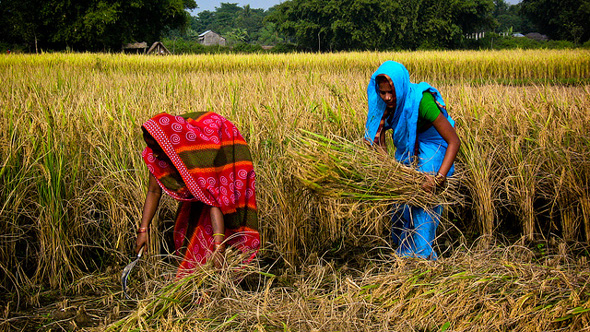
The Walk to Water in Conflict-Affected Areas: Constituting a majority of the world’s poor and at the same time bearing responsibility for half the world’s food production and most family health and nutrition needs, women and girls regularly bear the burden of procuring water for multiple household and agricultural uses. When water is not readily accessible, they become a highly vulnerable group. Where access to water is limited, the walk to water is too often accompanied by the threat of attack and violence.
Weathering Change: New Film Links Climate Adaptation and Family Planning: “Our planet is changing. Our population is growing. Each one of us is impacting the environment…but not equally. Each one of us will be affected…but not equally,” asserts the new documentary, Weathering Change, launched at the Wilson Center in September. The film, produced by Population Action International, explores the devastating impacts of climate change on the lives of women in developing countries through personal stories from Ethiopia, Nepal, and Peru.
Sajeda Amin on Population Growth, Urbanization, and Gender Rights in Bangladesh:
The Population Council’s Sajeda Amin describes the Growing Up Safe and Healthy (SAFE) project, launched in Dhaka and other Bangladeshi cities last. The initiative aims, to increase access to reproductive healthcare services for adolescent girls and young women, bolstering social services to protect those populations from (and offer treatment for) gender-based violence, and strengthen laws designed to reduce the prevalence of child marriage – a long-standing Bangladeshi institution that keeps population growth rates high while denying many young women the opportunity to pursue economic and educational advancement.
No Peace Without Women: On October 31, 2000, the UN Security Council adopted Resolution 1325, which called for women’s equal participation in all efforts to maintain and promote peace and security; however, little progress has been made over these last 10 years and women remain on the periphery when it comes to post-conflict reconstruction and development. A report from the humanitarian organization CARE concedes that “much of the action remains declarative rather than operational.”
Addressing Gender-Based Violence to Curb HIV: At last year’s International AIDS Conference in Vienna an astonishing development in the campaign to stem the spread of HIV/AIDS was unveiled – a microbicide with the ability to reduce the risk of transmission of HIV. This welcome development coincides with an intensified focus on women’s health and security needs among donors, especially the United States.
The Future of Women in the MENA Region: A Tunisian and Egyptian Perspective: Lilia Labidi, minister of women’s affairs for the Republic of Tunisia and former Wilson Center fellow, joined Moushira Khattab, former minister of family and population for Egypt, this summer at the Wilson Center to discuss the role and expectations of women in the Egyptian and Tunisian revolutions, as well as issues to consider as these two countries move forward.
Sources: UN Secretary-General’s Office. -
7 Billion: Reporting on Population and the Environment
›“It’s an issue – population – that is immensely diverse in its effects and repercussions, and it’s a great opportunity for reporting,” said Jon Sawyer, executive director of the Pulitzer Center on Crisis Reporting at a November 1 roundtable discussion at the Wilson Center. The session, reporting on population and the environment connections, also featured Dennis Dimick, executive environment editor at National Geographic; Kate Sheppard, environment reporter for Mother Jones; and Heather D’Agnes, foreign service environment officer at USAID.
“It’s an issue – population – that is immensely diverse in its effects and repercussions, and it’s a great opportunity for reporting,” said Jon Sawyer, executive director of the Pulitzer Center on Crisis Reporting at a November 1 roundtable discussion at the Wilson Center. The session, reporting on population and the environment connections, also featured Dennis Dimick, executive environment editor at National Geographic; Kate Sheppard, environment reporter for Mother Jones; and Heather D’Agnes, foreign service environment officer at USAID.The PBS NewsHour segment on “seven billion” featuring collaboration with the Pulitzer Center and National Geographic.
A Cumulative Discussion
“I ended up covering reproductive rights and health issues because I saw a need and a gap in coverage,” said Kate Sheppard. “I had been an environmental reporter for years…and so it sort of became this add-on beat for me.” But, she emphasized, they are actually very related issues.
“It’s a cumulative discussion,” said Dennis Dimick, speaking about National Geographic’s “7 Billion” series this year. “[Population] really hasn’t been addressed that much in media coverage over the past 30 years, in this country at least, and I think that the idea was that it wasn’t really just a discussion about the number seven billion, which is a convenient endline and easy way to get into something, but really to talk about the meaning of it, and the challenges and the opportunities that means for us as a civilization living on this planet.”
The series has had stories on ocean acidification, genetic diversity of food crops, the transition to a more urban world, as well as case studies from Brazil, Africa’s Rift Valley, and Bangladesh. “What we are trying to do in this series is really paint a broad picture to try to unpack all these issues and try to come at this question in sort of broad strokes,” Dimick said. “It’s sort of like we are orchestrating a symphony. Even though it’s a printed magazine, it’s a multimedia project – more than just words and more than just pictures.”
Collaborative Reporting
The Pulitzer Center, a non-profit journalism organization that seeks to fill gaps in coverage of important systemic issues, was able to commission pieces for PBS NewsHour that complemented the National Geographic series. This population collaboration launched the Center’s own initiative on population. “Our hope was that by having that platform, and the visibility of National Geographic and NewsHour, that it would bring attention to the rest of our work,” Sawyer said. The Pulitzer Center has gateways on water, food insecurity, climate change, fragile states, maternal health, women and children, HIV/AIDS in the Caribbean, and Haiti, in addition to population.
Playing off a story that was already making world headlines, the Pulitzer Center supported reporting by freelance journalist Ellen Knickmeyer on the demographic dimensions of the Arab Spring, and particularly the role of young people. The stories explored youth’s frustration at high unemployment and lack of prospects, their roles in the revolutions, and their expectations for the future.
“Of course, we had the advantage that the world was interested in North Africa because of the amazing events that were taking place, but it was an opportunity to get them to look at the other dimension to it,” Sawyer said.
Based on a model developed to cover water and sanitation in West Africa, the Pulitzer Center also created a partnership with four African journalists to produce reporting on reproductive health that will be distributed in both international and African media outlets. “They have important things to say to American audiences, to international audiences,” Sawyer said. “And so we see this project as an opportunity to bring them into the international media discussion.” The journalists will be reporting from the upcoming International Conference on Family Planning in Dakar, Senegal, later this month.
Advocating Discussions
“It’s really a nuanced discussion, and that is why covering these topics, and looking at all the different aspects of it, is really important,” said USAID’s Heather D’Agnes. Furthermore, speaking as a development practitioner, she emphasized the importance of offering solutions, such as family planning, as part of an integrated development approach.
“In our journalism we don’t pretend not to have arguments, or ideas, or thoughts about the issues we are covering,” said Sheppard, speaking of Mother Jones. “I think that the value is that you tell the story well and you do solid reporting – that gives people a more informed perspective.” Especially with complicated issues, like population and the environment, “people find it more accessible if you have a perspective…they can associate better with a story if you walk them through the process you have gone through as a reporter.”
“What we are really trying to do is to advocate a discussion of issues that aren’t getting well-aired in other media,” said Dimick. Sometimes you need to find an interesting or counterintuitive framework, such as the National Geographic story about rural electrification and TV novelas in Brazil. It started as a story about the booming popularity of soap operas, but also created the opportunity to talk about gender equity, family planning, and other complex issues. While the magazine does not advocate a position, like the editorial page of a newspaper might, Dimick said, they do use case studies to guide readers through the range of risks, choices, and opportunities and to help them understand their implications.
Event ResourcesVideo Credit: “World’s Population Teeters on the Edge of 7 Billion — Now What?,” courtesy of PBS NewsHour; “7 Billion, National Geographic Magazine,” courtesy of National Geographic. -
Jotham Musinguzi on Investing in Family Planning for Development in Uganda
›“What we are seeing is not adequate, but we think we are seeing very good positive movement, and we want to build on that,” said Jotham Musinguzi, director of the African regional office for Partners in Population and Development (PPD) in Kampala, Uganda. Musinguzi is a public health physician by training who previously advised the government of Uganda on population and reproductive health issues. “We think that [the government] is now on a firm foundation to continue investing properly in family planning,” he said.
Family Planning for Development
Uganda’s high population growth rate (the country has a total fertility rate of 6.4 children per woman, according to the UN) presents a number of challenges, said Musinguzi, exerting pressure on education and health systems, as well as on basic infrastructure, particularly for housing and transportation. Additionally, high levels of poverty and unemployment can become a source of instability.
Policymakers in Uganda are beginning to recognize the urgency of the issue, however, particularly in regards to young people, said Musinguzi. “They don’t have access to jobs, they don’t have the skills, and therefore the challenges of poverty eradication become even more important.”
Nonetheless, the country’s contraceptive prevalence rate is low, at 24 percent, with 41 percent of married women expressing an unmet need for family planning services, according to the 2006 Demographic and Health Survey (DHS) for Uganda. Low levels of investment and lack of government involvement remain the primary obstacles, according to Musinguzi, in addition to socio-cultural and religious barriers.
Uganda historically depended primarily on donor finance, rather than government funding, to support family planning and reproductive health services, Musinguzi said. However, over the past two years, the Ugandan government has increased investment due to concerted efforts by PPD, as well as USAID, the UN Population Fund, and civil society groups. “Our point was that if the government does not fund family planning, then they are going to find that achievement of the Millennium Development Goals…is going to be very challenging,” he said.
“I think the low investment in family planning in Uganda is a thing of the past, and we are now looking forward to really better investment in this field,” Musinguzi said. “I am sure we are going to witness quite a big change [in the 2011 DHS] in terms of access as a result of the proper social investment that the government is trying to do now.”
South-South Collaboration
“I have a keen and strong interest in South-South collaboration in the field of reproductive health, family planning, population, and development,” Musinguzi said. Countries in the South have experience linking programming on population and development, and may face similar challenges, he said. For instance, Bangladesh and Vietnam had successful family planning programs that helped blunt rapid population growth rates.
“Countries, like Uganda, and others which haven’t gotten there yet, could learn from these other countries,” said Musinguzi, by sharing best practices and lesson learned, and replicating applicable solutions.
PPD also has a regional project reaching out to policymakers to increase commitment and accountability for family planning and reproductive health services. For instance, parliamentarians may not realize that they can play a significant role, but they have a unique function in providing government and budget oversight, Musinguzi said. Furthermore, they can create legal and administrative frameworks that prioritize family planning programs.
“We continue to make the case for more investment in family planning and reproductive health, but also making sure we hold leaders accountable, to show more commitment, and make sure they improve on the welfare of the people that they represent,” Musinguzi concluded.
The “Pop Audio” series is also available as podcasts on iTunes.
Sources: MEASURE DHS, UN Population Division. -
Healthy People, Healthy Ecosystems: Results From a Public-Private Partnership
›“A lot of people probably don’t think that an organization with a name like ‘World Wildlife Fund’ would have a program on population, health, and the environment,” said WWF’s Tom Dillon at the Wilson Center, but actually it is very natural. “Most of the people we work with are in rural areas, and they depend on their natural resources for their own livelihoods and for their own well-being. Of course, if you are in that situation, in order to be a steward of the environment, you’ve got to have the basics. You have got to have your own health.”
Dillon was joined by staff from WWF, as well as Scott Radloff, director of USAID’s Office of Population and Reproductive Health, and Conrad Person, director of corporate contributions at Johnson & Johnson, to talk about the results of a three-year partnership between USAID, WWF, and Johnson & Johnson. The joint effort, a formal Global Development Alliance, provided health and family planning services, clean water, and sanitation to communities in three of WWF’s priority conservation landscapes: The Salonga National Park in the Democratic Republic of Congo (DRC), the Lamu Archipelago in Kenya, and the Terai Arch Landscape in Nepal.
By creating an innovative public-private partnership that linked health objectives, particularly related to family planning and maternal and child health, to environmental and conservation activities, “this alliance was ahead of its time,” said Radloff.
Human Health Linked to Environmental Health
The project had four objectives, said Terri Lukas, WWF’s population, health, and environment (PHE) program manager: improve family health; reduce barriers to family planning and reproductive health services; improve community management of natural resources and habitat conservation; and document and promote successful approaches.
“Human health cannot be separated from environmental health anywhere,” Lukas said, “but most especially when we are working with very poor people who live very close to nature.”
Projects Provide Integrated Services
The Salonga National Park in the DRC is home to many endangered species, including the bonobo, one of the four great apes. Local communities are very isolated, and lack access to safe drinking water and sustainable livelihoods, as well as basic health and family planning services, according to Lukas. The PHE project was able to train 135 voluntary community health workers in family planning and maternal and child health care, including 55 women. One year after the training, health workers were distributing contraception to more than 300 new users per month, Lukas said.
The alliance has also integrated health and family planning services into conservation programs in Kenya’s Kiunga Marine National Reserve, in part, “to demonstrate to the people that we care about them as well as the environment, and also to show them the synergies that exist between the health issue and the environment issue,” said WWF Program Coordinator Bahati Mburah. The region has been suffering through a year-and-a-half-long drought, and has one of the highest population growth rates in east Africa, placing considerable pressure on natural resources.
“We talk to [the fisher folk] about health and family planning, and how they are related to the management of fisheries,” said Mburah. With improved transportation and mobile outreach services provided by the project, 97 percent of women are now able to access family planning services within two hours of their home, she said.
The third site is in the Terai region along the southern border of Nepal. In this lowland region, the alliance is attempting to safeguard and restore forest areas in order to allow wildlife to move and breed more freely, while at the same time improving the health and economic prospects of the people. By linking these goals, support for conservation efforts increased from 59 percent to 94 percent of households, with 85 percent attributing positive attitude changes to increased access to health services and safe drinking water, according to Bhaskar Bhattarai, project coordinator for WWF-Nepal.
Documenting and Promoting Successful Approaches
Cara Honzak, WWF’s senior technical advisor on population, health, and environment, said the global objective of the alliance was to document and promote successful PHE approaches. Comprehensive baseline and endline surveys provided critical evidence that integrated PHE programming increases family planning use in remote areas, improves conservation buy-in within communities, and leads to increased participation of women in community leadership and decision-making.
“We have played a key role in producing some of the evidence that has been used throughout Washington [D.C.], especially to provide information to government bodies that are making decisions about bringing more money into family planning, health, and particularly in the environmental sector,” said Honzak.
“After two decades in the field, and working in this area, I wasn’t expecting many surprises. I couldn’t have been more wrong,” Lukas said. “These three years have changed almost everything about the way I now view health development…I have long called myself a conservationist, but now I say to my international health colleagues: we are all conservationists, and if we aren’t, we should be.”
Event Resources- Bhaskar Bhattarai presentation
- Cara Honzak presentation
- Terri Lukas presentation
- Bahati Mburah presentation
- Photo gallery
- Video
-
Rwanda: Dramatic Uptake in Contraceptive Use Spurs Unprecedented Fertility Decline
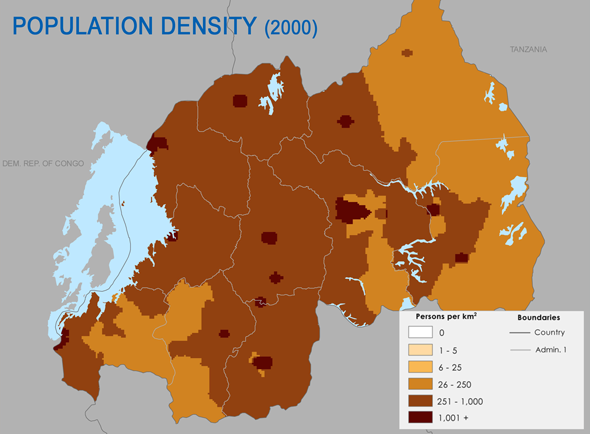
›November 8, 2011 // By Elizabeth Leahy MadsenWith over 400 people per square kilometer, the highest rate on the African mainland, population density is perhaps the most widely-discussed factor of Rwanda’s demography. Some scholars, notably Jared Diamond, have argued that it played a primary role in sparking the 1994 genocide through competition for land (although others present a more complex theory based in policies and governance).
-
Watch: Ann Blanc on Finding Unique Partnerships to Address Maternal Health Needs
›In the last five years, maternal health has begun to take a front seat within the larger global health agenda, but when it comes to a neutral space for broader focusing and prioritizing efforts there is still a void. In 2008 the Gates Foundation created the Maternal Health Task Force (MHTF) in an effort to fill that void. In this interview with ECSP, former MHTF Director Ann Blanc discusses how collaboration with the Wilson Center and the United Nations Population Fund has created an ideal space for addressing the technical, programmatic, and policy sides of neglected maternal health issues.
“Part of our mandate,” Blanc noted, “is to bring in the perspective of what we call ‘allied fields.’” The Wilson Center’s Advancing Policy Dialogue to Improve Maternal Health series focuses on engaging with neglected and emerging topics and experts, finding connections and encouraging partnerships with other fields, such as those working in water, sanitation, or HIV/AIDS services.
For instance, a two-day conference last year with private meetings and public dialogues focused on the neglected issue of transportation for women seeking maternal health services. The conference brought together non-traditional actors, including transportation engineers and mobile technology experts, to identify common barriers mothers commonly face like lack of infrastructure, poor security, or limited access to emergency communications.
“We’re constantly trying to push those barriers and look for interconnections between different development sectors and maternal health,” Blanc concluded. -
STATcompiler: Visualizing Population and Health Trends
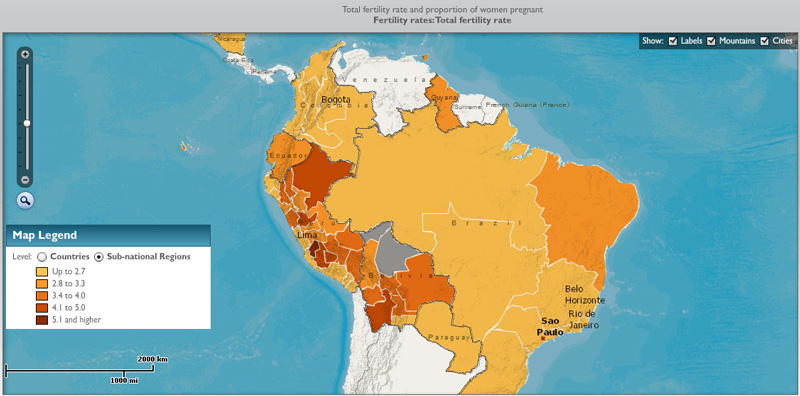
›World population is growing – earlier this week, the global community symbolically marked the arrival of the seven billionth person. But the unprecedented growth in global population over the last few decades has not affected everyone equally – in 1950, 68 percent of the world’s population lived in developing regions; today that number is 82 percent. MEASURE’s latest version of their STATcompiler tool helps visually highlight areas simultaneously experiencing the most demographic change and poor health indicators.
The revised STATcompiler – released in September – provides new ways for users to visualize data by generating custom data tables, line graphs, column charts, maps, and scatter plots based on demographic and health indicators for more than 70 countries. Users can select countries or regions of interest, and relevant indicators, including for family planning, fertility, infant mortality, and nutrition. Tables can be further customized to view indicators over time, across countries, and by background characteristics, such as rural or urban residence, household wealth, or education. In some cases, sub-national data is available. User-created tables and images are then exportable so that they may be easily used in papers or presentations.
Since STATcompiler is still in active development, certain functions are still being added. HIV data has not yet been integrated into the program, nor has the express viewer function, with customizable, ready-made tables for quick access. Additionally, updated information is not available for all countries, in all categories – for instance, the most recent data available for Mexico comes from a 1987 survey. If preferred, the legacy version remains available to users in the meantime.
MEASURE DHS – the Monitoring and Evaluation to Assess and Use Results Demographic and Health Surveys project – provides technical assistance for data collection on health and population trends in developing countries. Their demographic and health surveys, funded by USAID, provide data for a wide range of monitoring and impact evaluation indicators at the household level in the areas of population, health, and nutrition. They have become a staple data source for researchers, and the addition of better analysis functions and dissemination tools, via STATcompiler, will hopefully help advance understanding of demographic and health trends.
Image Credit: Map from STATcompiler, arranged by Schuyler Null.