• woodrow wilson center
  • ecsp

New Security Beat

Subscribe:
  • rss
  • mail-to
  • Who We Are
  • Topics
    • Population
    • Environment
    • Security
    • Health
    • Development
  • Columns
    • China Environment Forum
    • Choke Point
    • Dot-Mom
    • Friday Podcasts
    • Navigating the Poles
    • Reading Radar
  • Multimedia
    • Water Stories (Podcast Series)
    • Backdraft (Podcast Series)
    • Tracking the Energy Titans (Interactive)
  • Films
    • Water, Conflict, and Peacebuilding (Animated Short)
    • Paving the Way (Ethiopia)
    • Broken Landscape (India)
    • Scaling the Mountain (Nepal)
    • Healthy People, Healthy Environment (Tanzania)
  • Publications
  • Events
  • Contact Us

NewSecurityBeat

The blog of the Wilson Center's Environmental Change and Security Program
Showing posts from category family planning.
  • The Year That Resilience Gets Real

    ›
    January 6, 2014  //  By Roger-Mark De Souza & Meaghan Parker
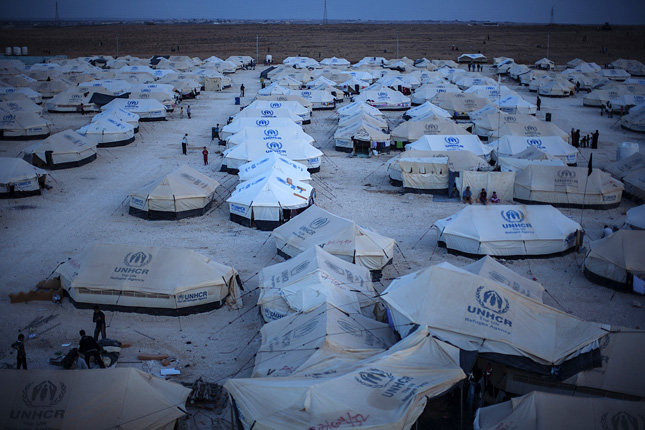
    Haiyan-destruction

    2014 promises to be a superlative year – and that’s not necessarily a good thing. Complex, “super” disasters like Super Typhoon Haiyan are becoming more frequent, more systemic, and more destructive. Global trends, from population dynamics to food, water, and energy scarcities, threaten to further complicate the playing field. But by finally getting serious about resilience – the much discussed buzzword of 2013 – we might reduce our vulnerability, restore our communities, and build back better, rather than just picking up the pieces.

    MORE
  • Facing the Challenge of Adolescent Pregnancy: ‘State of the World Population 2013’ Launch

    ›
    Dot-Mom  //  From the Wilson Center  //  December 23, 2013  //  By Laura Henson
    calcutta-mother

    Twenty thousand girls under the age of 18 give birth every day, and 90 percent of these births occur within the context of marriage, according to the UN Population Fund’s latest State of the World Population report. This year’s edition, launched at the Wilson Center on October 30, focuses on adolescent pregnancy and finding ways to better protect this vulnerable group of young women.

    MORE
  • “Childhood Must Never Be Derailed by Motherhood”: Dianne Stewart on UNFPA’s ‘State of the World Population 2013’

    ›
    Friday Podcasts  //  December 20, 2013  //  By Laura Henson
    dianne_stewart_small

    Twenty thousand girls under the age of 18 give birth each day, according to the United Nations Population Fund (UNFPA). Two million girls age 14 or younger give birth each year. Societal norms often frame adolescent pregnancy as the result of promiscuous behavior, but this year’s State of the World Population Report encourages “a shift away from interventions targeted at the girl toward broad-based approaches that build girls’ human capital, protect girls’ rights, and empower them to make decisions,” says Dianne Stewart, director of the information and external relations division of UNFPA, in this week’s podcast.

    MORE
  • David Canning: Africa’s High Fertility Can Change Quickly, Help Harness the Demographic Dividend

    ›
    Friday Podcasts  //  December 13, 2013  //  By Laura Henson
    canning-small

    Compared to East Asia and Latin America, the “demographic transition” in Africa has been slower to date, prolonging periods of rapid growth and creating very youthful populations. But, explains David Canning in this week’s podcast, “the high level of fertility in Africa doesn’t seem to be something that is set in stone.”

    MORE
  • Vik Mohan: Madagascar’s Cyclone Haruna Showed Benefits of Integrated Development

    ›
    December 10, 2013  //  By Jacob Glass

    When Cyclone Haruna swept across Madagascar last February, Blue Ventures, a marine conservation and community health organization, found themselves in a surprising new role. “We went from development, to aid, and back to development, in an integrated way we never expected,” said Medical Director Vik Mohan in an interview at the Wilson Center.

    MORE
  • Jay Gribble: For Demographic Dividend, Invest in Health, Education, and Governance

    ›
    Friday Podcasts  //  December 6, 2013  //  By Jacob Glass
    jay-gribble-small

    Developing countries with youthful populations may have the opportunity to take advantage of a phenomenon called the “demographic dividend,” when a decline from high to low fertility rates leads to slower population growth and a large working age population. But “age structure alone isn’t going to make it happen,” says Jay Gribble of Abt Associates in this week’s podcast.

    MORE
  • Laura Robson and Caroline Savitzky, Blue Ventures

    PHE Is Alive and Kicking: Inspiration and Endorsement From Addis Ababa

    ›
    December 4, 2013  //  By Wilson Center Staff
    AU-conf-center

    The original version of this article, by Laura Robson and Caroline Savitzky, appeared on Blue Ventures’ Beyond Conservation blog.

    The excitement was palpable as we gathered with almost 200 of the world’s finest population-health-environment (PHE) practitioners, researchers, and advocates in Addis Ababa for the International PHE Conference earlier last month! With all of us working on integrated projects encompassing family planning, community health, sustainable livelihoods, and environmental initiatives, there were many ideas and progress updates to be shared.

    MORE
  • More Than Local: How PHE Can Help Solve Humanity’s Biggest Problems

    ›
    Guest Contributor  //  December 2, 2013  //  By William Pan
    shopping-district

    “Leave enough for everyone.” That’s what my mother used to tell us at dinner. However, the holiday season reminds me that human nature is far from innately moderate in consumption. With Black Friday as a kickoff, consumers will spend more than $600 billion by Christmas in the United States alone. As I witness droves of shoppers running through malls and stores, I wonder if their desire is driven by some insatiable appetite for their favorite products or something more fundamental about human nature.

    MORE
Newer Posts   Older Posts
View full site

Join the Conversation

  • RSS
  • subscribe
  • facebook
  • G+
  • twitter
  • iTunes
  • podomatic
  • youtube
Tweets by NewSecurityBeat

Trending Stories

  • unfccclogo1
  • Pop at COP: Population and Family Planning at the UN Climate Negotiations

Featured Media

Backdraft Podcast

play Backdraft
Podcasts

More »

What You're Saying

  • Volunteers,At,The,Lagos,Food,Bank,Initiative,Outreach,To,Ikotun, Pan-African Response to COVID-19: New Forms of Environmental Peacebuilding Emerge
    Rashida Salifu: Great piece 👍🏾 Africa as a continent has suffered this unfortunate pandemic.But it has also...
  • A desert road near Kuqa An Unholy Trinity: Xinjiang’s Unhealthy Relationship With Coal, Water, and the Quest for Development
    Ismail: It is more historically accurate to refer to Xinjiang as East Turkistan.
  • shutterstock_1779654803 Leverage COVID-19 Data Collection Networks for Environmental Peacebuilding
    Carsten Pran: Thanks for reading! It will be interesting to see how society adapts to droves of new information in...

What We’re Reading

  • Rising rates of food instability in Latin America threaten women and Venezuelan migrants
  • Treetop sensors help Indonesia eavesdrop on forests to cut logging
  • 'Seat at the table': Women's land rights seen as key to climate fight
  • A Surprise in Africa: Air Pollution Falls as Economies Rise
  • Himalayan glacier disaster highlights climate change risks
More »
  • woodrow
  • ecsp
  • RSS Feed
  • YouTube
  • Twitter
  • Facebook
  • Home
  • Who We Are
  • Publications
  • Events
  • Wilson Center
  • Contact Us
  • Print Friendly Page

© Copyright 2007-2021. Environmental Change and Security Program.

Woodrow Wilson International Center for Scholars. All rights reserved.

Developed by Vico Rock Media

Environmental Change and Security Program

Woodrow Wilson International Center for Scholars

Ronald Reagan Building and International Trade Center

  • One Woodrow Wilson Plaza
  • 1300 Pennsylvania Ave., NW
  • Washington, DC 20004-3027

T 202-691-4000