-
As More Aid Flows to Fragile States, a Call for a Better Approach
›March 7, 2017 // By Sreya Panuganti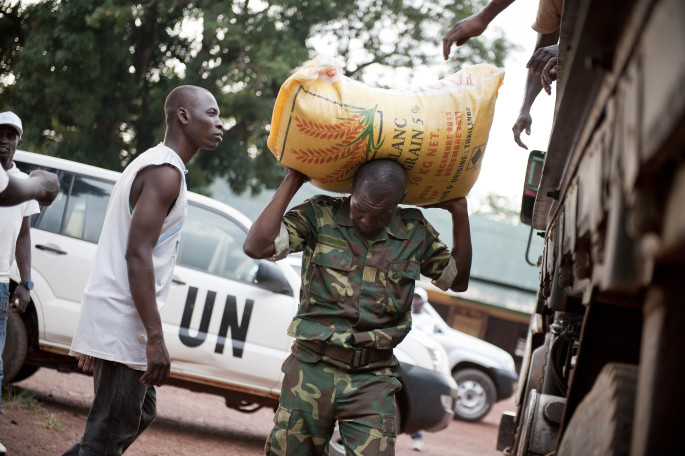
Global poverty has been reduced dramatically over the past two decades. Less than 11 percent of the world’s population were living in extreme poverty in 2013 compared to 35 percent in 1990. But improvements have largely come in stable countries. Many of the remaining pockets of extreme poverty are in “fragile states,” countries that are vulnerable to internal and external shocks and can easily tip into crisis when faced with an environmental, economic, social, or political change.
-
Backdraft Episode #2: Stacy VanDeveer on the New Energy Economy and the Fate of Petro States
› A “green economy,” an energy sector composed entirely of renewables, is the goal of many. But we haven’t thought out the full implications of that change, says Stacy VanDeveer, professor at the University of Massachusetts Boston, in this week’s “Backdraft” podcast.
 -
Paradox of Progress: National Intelligence Council Releases Global Trends Report
›January 11, 2017 // By Schuyler NullDo you experience information overload? Feel like there’s always another crisis to worry about? Sense a kind of chaos? Well, you may be a citizen of the early 21st century.
-
Somini Sengupta, The New York Times
Heat, Hunger, War Force Africans Onto a “Road on Fire”
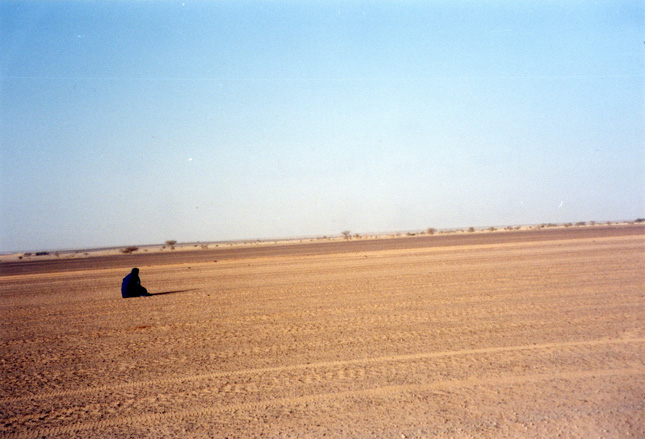
›December 16, 2016 // By Wilson Center StaffAGADEZ, Niger — The world dismisses them as economic migrants. The law treats them as criminals who show up at a nation’s borders uninvited. Prayers alone protect them on the journey across the merciless Sahara.
-
Planetary Security Conference Convenes Amidst “Unsettling New Normal”
›December 14, 2016 // By Schuyler NullEnvironmental security? Climate security? How about planetary security. Last week at the venerable Peace Palace in The Hague, nearly 300 experts from around the world met for the somewhat dramatically named Planetary Security Conference, a new initiative aimed at bringing together people working on all things related to the environment, climate change, and their security implications.
-
Climate Change Is the Biggest Challenge: Wilson Experts on Top Issues Facing President-Elect Trump
›From Putin to Cuba, there are a bevy of international issues competing for attention as the next administration beings to take shape. In a series of contextual one minute video briefings, the Wilson Center’s community of experts weighs in what the world expects of President-elect Trump and the United States moving forward.
-
The Global Refugee Crisis Has Coarsened Our Politics, Says Wilson Fellow Joseph Cassidy
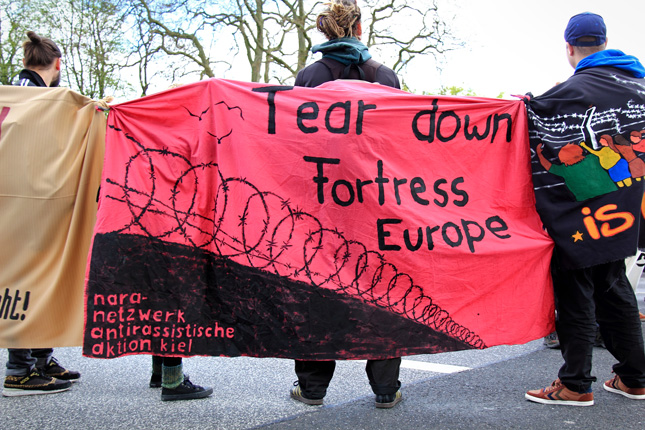
›Chaotic flows of refugees and migrants – the most since World War II – have challenged leaders in Western Europe and North America. “The reactions to those big flows are undermining our institutions in important ways and degrading our politics,” says Wilson Center Fellow Joseph Cassidy in this week’s podcast. -
Report: Reducing Risks from Rapid Demographic Change
›October 27, 2016 // By Cara ThuringerThe world is undergoing a period of demographic transition which presents both opportunities and challenges for governments. A report by the Atlantic Council’s Mathew Burrows, formerly of the National Intelligence Council, Reducing the Risks from Rapid Demographic Change, examines the changes in population structures across high-, upper-middle-, lower-middle-, and low-income countries.
Showing posts from category Europe.
 A “green economy,” an energy sector composed entirely of renewables, is the goal of many. But we haven’t thought out the full implications of that change, says Stacy VanDeveer, professor at the University of Massachusetts Boston, in this week’s “Backdraft” podcast.
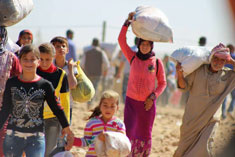 Chaotic flows of refugees and migrants – the most since World War II – have challenged leaders in Western Europe and North America. “The reactions to those big flows are undermining our institutions in important ways and degrading our politics,” says Wilson Center Fellow