-
Shannon Beebe, Los Angeles Times
Somali Piracy Shows How an Environmental Issue Can Evolve Into a Security Crisis
›March 14, 2011 // By Wilson Center Staff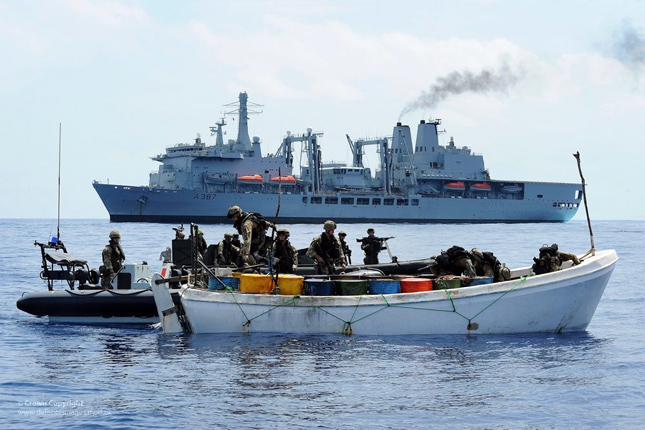
It has become apparent that real piracy is far different from the lighthearted subject sometimes portrayed in popular culture, and the problem is growing much worse. Besides the tragic cost in lives, the United States, many other nations, and NATO spent roughly $2 billion combined last year to safeguard the busy international sea lanes off the Horn of Africa from Somali pirates. According to the International Maritime Bureau, “hijackings off the coast of Somalia accounted for 92 percent of all ship seizures last year,” and the price tag does not include the costs of reallocating critical military resources.
-
What’s Behind Iraq’s Day of Rage? It’s Pretty Basic
›March 4, 2011 // By Schuyler NullIraq’s “Day of Rage” – a phenomenon that has swept the Middle East since Tunisia’s “Jasmine Revolution” – reportedly claimed the lives of nearly 20 people last week. But though the protests may have been inspired by the current broader movement in the region, they are also a symptom of long-standing grievances ordinary Iraqis have had with their government since the American invasion, including lack of public services like access to clean water and especially, reliable electricity.
While these protests alone are unlikely to lead to revolution, they reveal basic livelihood challenges that neither the United States nor the Maliki government have effectively addressed.
The protests in Baghdad and more than 10 other cities were the largest since last summer, when demonstrations over access to electricity led to the death of two protestors in Basra. The New Security Beat spoke to Iraq’s first Minister of the Environment, Mishkat Al Moumin, after those protests to ask her about the lack of services and Iraq’s other non-security challenges, including water security, women’s empowerment, and demographics. She said that decentralizing decision-making power might help alleviate pressure on the government and provide more effective local services:Enacting policies at the local level establishes a sense of ownership among local communities and provides them with an incentive to protect their environmental resources. Moreover, it provides a better opportunity to involve the main stakeholders in policymaking.
Frederick Burkle, senior public policy scholar at the Wilson Center and a senior fellow of the Harvard Humanitarian Initiative at the Harvard School of Public Health, recently cited the military’s failure to restore services, specifically public health services in Iraq, as something the State Department and USAID should seize on to justify the end of “militarized aid.” He pointed out that a 2004 joint report by the Iraqi Ministry of Health and Red Cross found more death and illness was due to the country’s decimated public health infrastructure and social protections than to the violence of war:These indirect deaths from war are preventable but require attention from the occupying powers to the invaded country’s declining public health, social, and physical protections. Iraqis were well aware of this deficiency, and the United States’ lack of attention to the matter led to the loss of lasting trust.
For more on Iraq, be sure to also check out The New Security Beat’s interview with Steve Lonergan, former head of Canada-Iraq Marshlands Initiative, on the state of the southern marshes and their potential for peacemaking.
Sources: Foreign Affairs, The New York Times.
Photo Credit: Adapted from “Tangle of electrical wires in Baghdad,” courtesy of flickr user News Hour (PBS News Hour – Larisa Epatko). -
Teaching Environment and Security at West Point
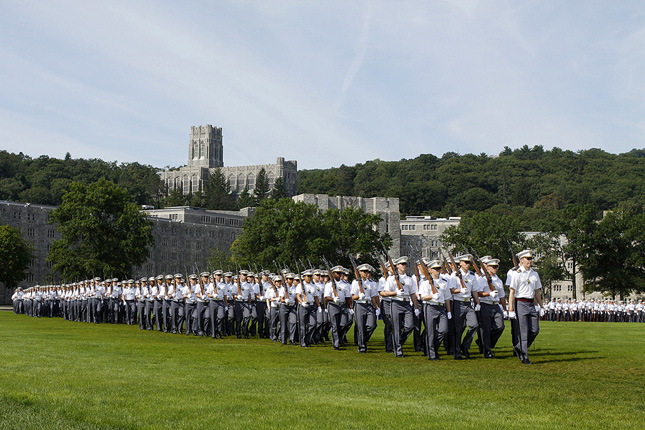
›February 16, 2011 // By Geoffrey D. DabelkoU.S. strategic assessments like the 2010 Quadrennial Defense Review, the 2010 National Security Strategy, and the Director of National Intelligence’s annual threat assessment have placed natural resources, climate change, population, and poverty squarely on the American security agenda. But are these broad statements in doctrine and threat assessments translating into tangible changes, such as new approaches to the education of future military officers? My colleague Sean Peoples and I recently spoke with faculty and cadets at the U.S. Military Academy about how West Point’s Geography and Environmental Engineering Department is integrating these issues directly into their curriculum.
-
Yemen’s Revolt Won’t Be Like Egypt or Tunisia
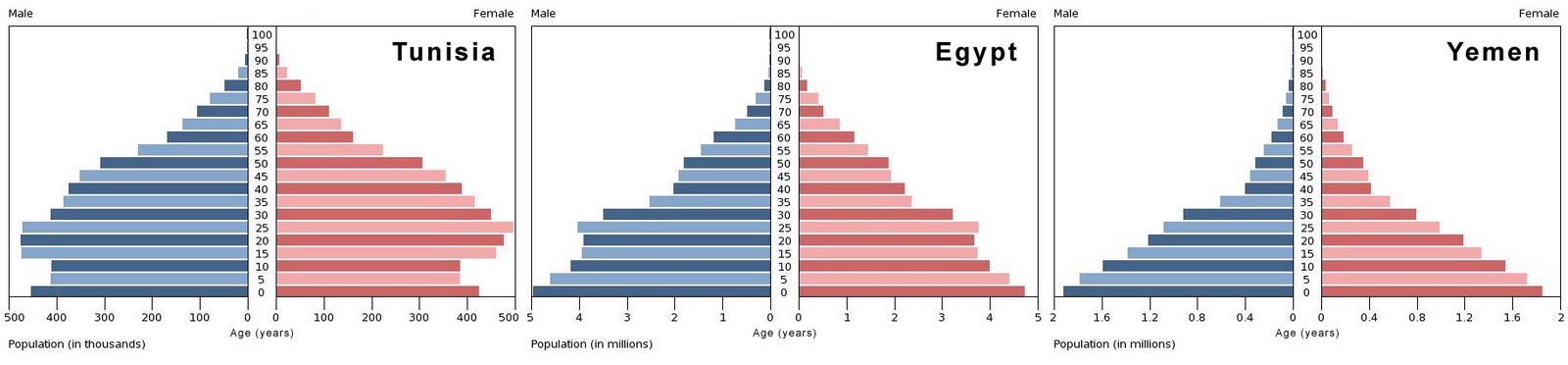
›February 15, 2011 // By Schuyler NullInspired by the success of the recent Tunisian and Egyptian revolts, another key state in the Middle East is under pressure from youth-led unrest: Yemen. Again the United States must decide whether to support a corrupt autocrat (albeit one that has been helpful in the war on terror) or face the uncertainty of life without. The Saleh regime in Yemen has been in power for three decades, but major protests led by multiple opposition groups have forced recent concessions, including agreement that neither President Ali Abdullah Saleh nor his son will run for re-election in 2013.
-
Climate-Induced Migration: Catastrophe or Adaptation Strategy?
›February 11, 2011 // By Kayly OberThe claims on climate change-induced migration have often been hyperbolic: “one billion people will be displaced from now until 2050”, “200 million people overtaken by…monsoon systems…droughts…sea-level rise and coastal flooding”, “500 million people are at extreme risk” from sea-level rise. However, hard data is difficult to come by or underdeveloped. The International Institute of Environment and Development (IIED) have set out to fill this gap with their newest publication, “Not Only Climate Change: Mobility, Vulnerability and Socio-Economic Transformations in Environmentally Fragile Areas of Bolivia, Senegal and Tanzania.” As the title suggests, the author, Cecilia Tacoli, traveled to Bolivia, Senegal, and Tanzania in order to see how environmental change affects migration patterns in real world case studies. What she found was a bit more nuanced than the headlines.
Case Studies: Bolivia, Senegal, and Tanzania
Despite existing predictions of doom and gloom, the report found that there has been no dramatic change in mobilization in each community, even in the face of recurring droughts. Instead, those who rely heavily on agriculture for subsistence have turned to seasonal or temporary migration. While previously considered a last resort, moving locally from rural to urban areas has become more common. The motivation for following this option, however, seems to be couched more in socio-economic concerns and only marginally exacerbated by the environment.
“All the case study locations,” writes Tacoli, “are in areas affected by long-term environmental change (desertification, soil degradation, deforestation) rather than extreme weather events. However, in the majority of locations residents identify a precipitating event – a particularly severe drought, an epidemic of livestock disease, the unintended impact of infrastructure – as the tipping point that results in drastic changes in local livelihoods. In all cases, socio-economic factors are what make these precipitating environmental events so catastrophic.”
Practical Policy Prescriptions
Although the report finds that the environment wasn’t currently the main driver of migration in Bolivia, Senegal, or Tanzania, it acknowledges that it may play a larger role in the future: “Environmental change undoubtedly increases the number of people mobile,” Tacoli told BBC News. “But catastrophe like droughts and floods tend to overlap with social and structural upheaval, like the closure of other sources of local employment that might have protected people against total dependence on the land.”
As such, Tacoli suggests treating migration as a practical adaptation strategy rather than a problem. “The concentration of population in both large and small urban centers has the potential to reduce pressure on natural resources for domestic and productive uses,” she writes.
For example, Tacoli argues that the resulting remittances and investments from migrants in urban centers fuel “a crucial engine of economic growth” in smaller towns where land prices are cheaper. This, in turn, creates further employment opportunities.
The report also encourages policymakers to focus on local interventions, such as ensuring more equitable access to land, promoting the sustainable management of natural resources to reduce vulnerability, and investing in education, access to roads, and transportation to markets. These programs would help diversify and bolster non-agricultural livelihoods, thus reducing to the risks of climate variability.
“Local non-farm activities,” writes Tacoli, “can be an important part of adaptation to climate change for the poorer groups, and the nature of the activities can contribute to a relative reduction in local environmental change.”
Avoiding Backlash
Tacoli points out that “by downplaying political and socio-economic factors in favor of an emphasis on environmental ones, alarmist predictions of climate change-induced migration can result in inappropriate policies, for example forced resettlement programmes, that will do little to protect the rights of those vulnerable to environmental change.”
However, Tacoli is careful not to over-extend her policy prescriptions. In an email to the New Security Beat she emphasized that the case studies were not intended to be representative:The emphasis is on the need to have a detailed understanding of the local context – socio-economic, cultural and political – to understand the impacts of climate change on migration and mobility…Generalizations are not usually helpful for policy-making, and a grounded understanding of the local factors that influence livelihood responses (of which mobility and migration are one aspect) is certainly a better starting point. The aim of the report is to contribute to the building of collective knowledge on these issues, rather than provide a definitive account.
Sources: BBC News, Christian Aid, Commission on Climate Change and Development, Global Humanitarian Forum, Organization for Security and Co-operation in Europe.
Photo Credit: “Villager in Tanzania,” courtesy of flickr user vredeseilanden. -
The International Framework for Climate-Induced Displacement
›In an article sponsored by the East-West Center, author Maxine Burkett discusses the challenges climate-induced migration presents to the people of the Pacific Islands. In the brief, titled “In Search of Refuge: Pacific Islands, Climate-Induced Migration, and the Legal Frontier,” Burkett states that millions of people in the Pacific Islands will be forced to leave their homes because of “increased intensity and frequency of storms and floods, sea-level rise, and desertification.” These low-lying islands could face a loss of agriculture and freshwater resources, or even be wiped out altogether, an outcome for which there is no international legal precedent.In “Swimming Against the Tide: Why a Climate Displacement Treaty is Not the Answer,” published in the International Journal of Refugee Law, Jane McAdam takes a different position on the plight of so-called “climate refugees.” McAdam argues that focusing on an international treaty for these migrants distracts from efforts to establish responses for adaptation, internal migration, and migration over time. The article, writes the author, “does not deny the real impacts that climate change is already having on communities,” but rather questions the utility and political consequences of “pinning ‘solutions’ to climate change-related displacement on a multilateral instrument.” -
First Steps on Human Security and Emerging Risks
›The 2010 Quadrennial Development and Diplomacy Review (QDDR), the first of its kind, was recently released by the State Department and USAID in an attempt to redefine the scope and mission of U.S. foreign policy in the 21st century. Breaking away from the Cold War structures of hard international security and an exclusive focus on state-level diplomacy, the QDDR recognizes that U.S. interests are best served by a more comprehensive approach to international relations. The men and women who already work with the U.S. government possess valuable expertise that should be leveraged to tackle emerging threats and opportunities.
-
‘Blood in the Mobile’ Documents the Conflict Minerals of Eastern Congo
›With Blood in the Mobile, Danish director Frank Poulsen dives into the eastern Democratic Republic of Congo (DRC) to document a vicious cycle of conflict that has claimed millions of lives, produced rampant humanitarian abuses, and is driven in part (though not entirely, it should be noted) by the area’s rich mineral resources – all under the noses of the world’s largest peacekeeping operation.
The minerals extracted in the eastern DRC – tin, tantalum, tungsten, and gold, mainly from North and South Kivu provinces – are used in cell phones around the world. The trailer shows Poulsen gaining access to an enormous tin mine in the area – the biggest illegal mine in the Congo, he says – capturing powerful footage of the squalid and dangerous conditions that thousands of often-teenage workers labor under for days at a time.
“Four years ago this place was nothing but jungle,” narrates Poulsen. “Today, 15,000-20,000 people are working here [and] different armed groups are fighting to gain control over the mine.”
Though Poulsen is pictured making dramatic phone calls to Nokia (the largest cell phone manufacturer in the world), the issue of conflict minerals from the DRC and places like it is in fact more than just a blip on the radar screens of most leading technology companies. The NGO the Enough Project in particular has been championing the cause and bringing it to tech companies’ doorsteps for quite some time. Their efforts have helped produce an action plan for certifying conflict-free supply chains (complete with company rankings) and also helped lead to passage of the United States’ first law addressing conflict minerals this fall.
However, Poulsen’s message of the developed world taking responsibility for sourcing is commendable. Efforts like this that have led to the adoption of corporate responsibility initiatives like the Cardin-Lugar amendment, a similar measure in the works for the European Union, the Extractive Industries Transparency Initiative, and the Kimberley Process for diamonds.
Blood in the Mobile premiered this fall at the International Documentary Film Festival and the producers are “in dialogue with different U.S. distributors,” according to their Facebook page, where those interested are advised to stay tuned.
Sources: BloodintheMobile.org, Enough Project, EurActiv.
Video Credit: Blood in the Mobile Official Trailer.
Showing posts from category environmental security.