

-
Climate Change, Conflict, and Peacebuilding in Solomon Island Communities
›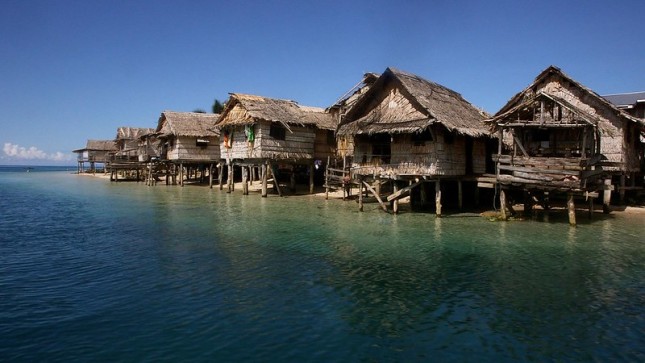
Meaningful engagement with the social and conflict implications of climate change in Solomon Islands must be firmly grounded within local worldviews—within Solomon Islanders’ physical, economic, political, and social and spiritual worlds. As we note in a recent policy brief for the Toda Peace Institute, when addressing conflict challenges exacerbated or caused by climate change, approaches should be draw upon community understandings of what constitutes peace and justice.
-
Defying Boundaries: Using Climate Risks to Forge Cross-Border Agreements
›
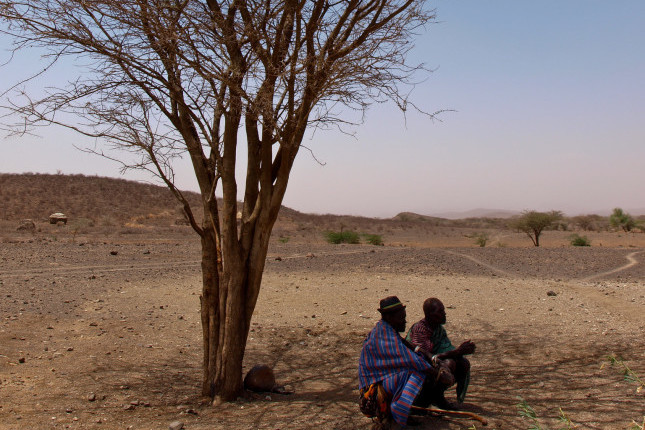
Climate change is a risk, said Maurice Amollo, a Mercy Corps Chief of Party in Nigeria Mercy Corps. “But it is also an opportunity if people come together.” He spoke at a recent USAID Adaptation Community Meeting, “Tackling the threat multiplier: Addressing the role of climate change in conflict dynamics.” The discussion focused on USAID’s Peace III initiative that Amollo and Mercy Corps implemented in the Karamoja region along the borders of Kenya, Ethiopia, Somalia, and Uganda, where climate and conflict shocks are part of daily life for pastoralist ethnic groups. Addressing climate and conflict issues in these regions will require using the environment to build cooperation and peace, said Eliot Levine, the Director of Mercy Corps’ Environment Technical Support Unit.
-
Is Environmental Peacebuilding the Answer to South Sudan’s Conflict?
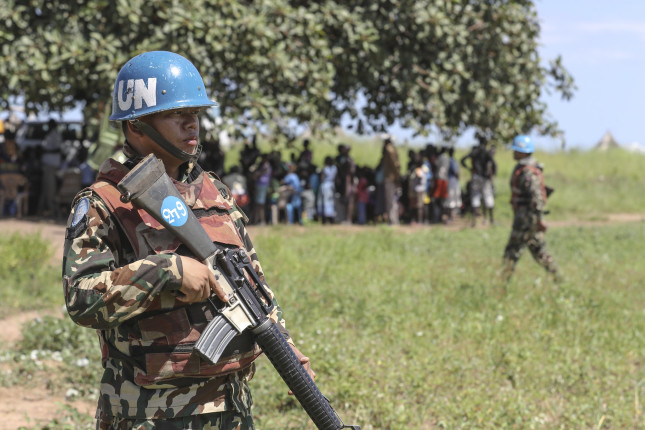
›September 12, 2019 marks one year since South Sudan’s President Salva Kiir and former Vice President-turned-opposition leader Riek Machar signed a new peace agreement. The human and environmental cost of the five-year war it ended has been staggering. Women and girls have often borne the brunt of the violence. Fighting and displacement have also placed tremendous pressure on the country’s abundant wildlife and natural resources. Militarized cattle raiding and competition over access to traditional grazing lands threaten the country’s tenuous stability. Gender-sensitive environmental peacebuilding promises to be one of the strategies needed to resolve these multiple challenges.
-
In Search of Consensus on Climate-Conflict Links
›What do we (think we) know about the links between climate change and armed conflict? Early attempts to theorize what climate-related conflict might look like were exceptionally successful in sparking policymaker interest in and funding of research on climate-conflict links. But they were more like works of science fiction than science. Since then, research on climate-conflict links has exploded, with hundreds of articles and working papers published on the subject. Moreover, the findings have been all over the map, with some arguing for strong impacts of climate on conflict at multiple temporal and spatial scales, while others argue—in both specific instances, about the supposedly climate-fueled Syrian Civil War, and more generally—that climate-conflict links are overstated.
-
Lost in Translation: How Building “Strong” Institutions can Diminish Human Security in the Global South
›In the Global South, natural resource conflict has largely been considered a consequence of poor governance and weak political institutions. The international community’s solution? Build “green” governance capacity as a way to mitigate violent conflict and improve environmental outcomes. For the international development community, this has meant introducing laws, policies, and practices based on international standards of best practice, and training local regulators to adhere to those standards.
-
When Climate Change Meets Positive Peace
›Climate change is being increasingly framed as a security issue—a “threat multiplier” that can amplify the risks of breakdowns in peacefulness. Yet, even extreme climate hazards do not always lead to higher levels of violence.
-
Environmental Security Risks: How to Plan for Disasters in the Face of Uncertainty
›How do we plan for disasters that have never occurred before? One million species are at risk of extinction in the near future from environmental changes. The frequency of historic tropical storms is increasing. The rapidly melting permafrost in the Arctic is placing unprecedented pressures on northern infrastructure. Given the overwhelming and unpredictable nature of new disaster risks, it is not clear what the appropriate responses should be. Our book, Disaster Security: Using Military and Intelligence Planning for Energy and Environmental Risks, addresses how to assess unique environmental hazards and disaster risks, based on tools used by the U.S. intelligence and military communities. The book draws on lessons learned from developing, applying, and translating scenarios and simulations (or wargames) to plan for future environmental security risks. -
Climate and Conflict: Where Environment, Ethnicity, and Socioeconomic Power Intersect
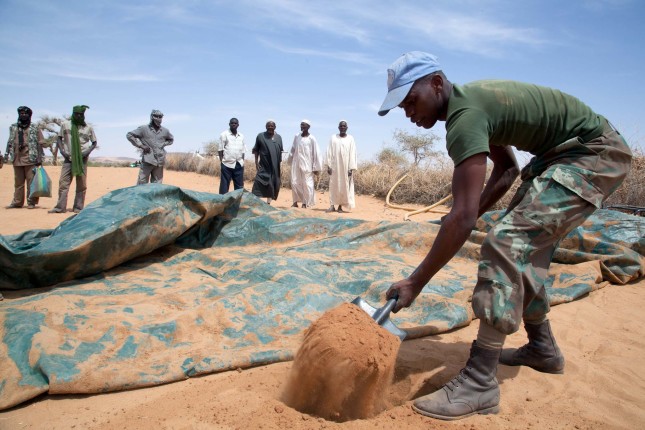
›As researchers investigate the connection between climate change and conflict, the relative power of communities and individuals attempting to cope with climate change has become a recurring theme. While climate change may not directly cause conflict, it may be inextricably woven into pre-existing conflicts of power, ethnicity, and economic interest.
Showing posts from category environmental security.
 How do we plan for disasters that have never occurred before?
  As researchers investigate the connection between climate change and conflict, the relative power of communities and individuals attempting to cope with climate change has become a recurring theme. While climate change may not directly cause conflict, it may be inextricably woven into pre-existing conflicts of power, ethnicity, and economic interest.

