-
Warfare and Global Warming
›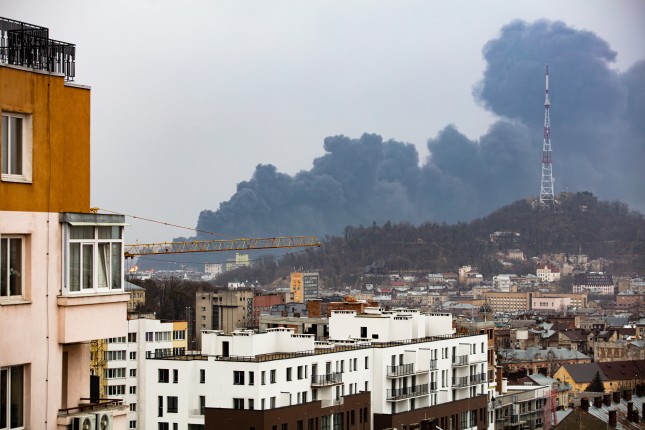
The world has plenty of reasons to avoid conflict already. Yet attendees at the recently-concluded COP27 climate conference in Sharm el-Sheikh, Egypt were presented with another compelling argument: Warfare is bad for global warming. So much so, in fact, that Ukraine’s delegation to the conference organized a special session at the conference of parties on “War Related Emissions,” bringing along a tree trunk bearing scars from Russian shell fragments as tangible evidence.
-
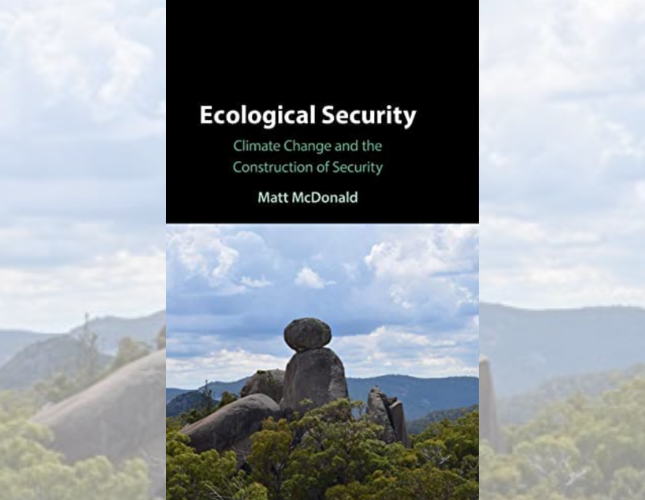
Climate Change and Ecological Security
›
As climate change is increasingly recognized as a security issue, a parallel understanding is also developing. Traditional categories and approaches may not be the optimal way to address the threats posed by climate impacts.
The nation states and international institutions at the center of security discussions now are shifting their approach. For instance, the U.S. has affirmed and moved to institutionalize its commitment to address the national security implications of climate change under the Biden Administration. In doing so, it is joining an increasing number of other nation-states (the UK, France, Sweden, Germany and New Zealand) that have also developed institutional arrangements and plans for their national response to climate insecurity.
-
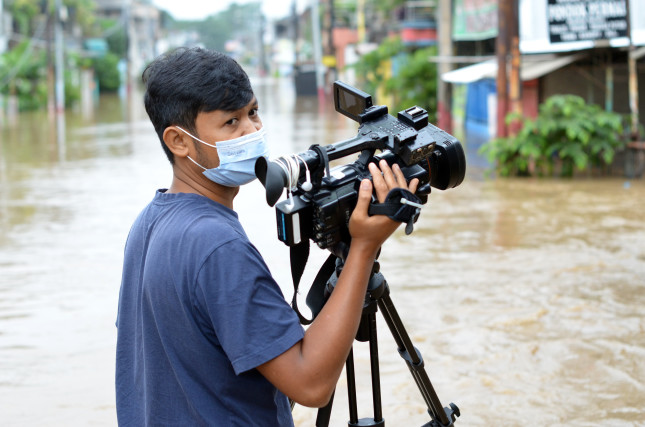
Media and Climate Security: Mutual Miscomprehension?
›There’s a scene near the climax of Agatha Christie’s Murder on the Orient Express when Hercule Poirot starts to plot out the possible murderers. There’s Colonel Arbuthnot, who had opportunity and motive. There’s Mr. McQueen, suspicious in his transparent attempts to misdirect the detective. There’s even the haughty, toad-faced Princess Dragomiroff. Like practically everyone on the train, she had good reason to wish the evil Ratchett dead.
-
One Earth, one security space: from the 1972 Stockholm Conference to Stockholm+50 and beyond
›The 1972 United Nations Conference on the Human Environment marked a watershed in world environmental politics. Gathered in Stockholm, Sweden, the international community collectively recognized that the technologies and economic models that enable modern development were also driving unsustainable environmental degradation, compromising the vital natural systems on which human well-being depends.
-
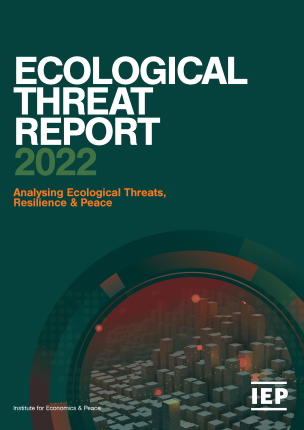
Ecological Threats, Resilience and Peace: A New Assessment of Hotspots
›Which nations are most at risk of catastrophic outcomes due to intensifying ecological threats? The third edition of the Institute for Economics & Peace (IEP)’s Ecological Threat Report (ETR)—released on October 20, 2022— applies a lens of societal resilience to predict the hotspots most likely to suffer from instability and conflict in the future, and provides projections of ongoing trends to 2050.
-
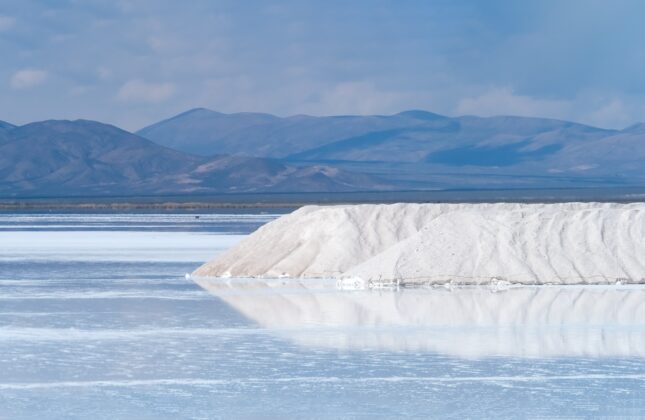
Creating a Just Transition in Green Minerals: A New Video from the Wilson Center and its Partners
›We need minerals to build the solar panels, wind turbines, and other technologies that will decarbonize our economies—and we need a lot of them. The World Bank estimates that demand for lithium, cobalt, and graphite could jump by as much as 500 percent by 2050. Yet mining for these resources has had a fraught history, and it continues to be associated with a hefty list of human rights and conflict risks, including violence, child labor, poor working conditions, land rights abuses, environmental damage and pollution, and a lack of community participation. -
New Analysis by Peter Schwartzstein: How Water Strategizing is Remaking the Middle East
›In the run up to COP 27 in Sharm El-Sheikh, Egypt, the first summit of its kind to be hosted in the region, water is rising on the agenda, and for good reason. In a new essay for the Wilson Center, Global Fellow Peter Schwartzstein explores how governments across the Middle East are approaching a world with less water – and to what effect. Drawing on a decade of environmental reportage from the Middle East, Schwartzstein sketches out how, why, and with what consequences states have adopted often dramatically divergent strategies.
-
What Better Looks Like: Breaking the Critical Minerals Resource Curse
›In recent years, the urgency of climate action has brought fresh attention to the critical minerals sector. Growing renewable energy investments are driving up demand for resources like lithium, cobalt, and copper, which form the mineral backbone of green technologies. But there are substantial concerns to navigate when it comes to sourcing green energy minerals.
Showing posts from category environmental security.