-
The Tenth Parallel: Dispatches From the Fault Line Between Christianity and Islam
›The latitudinal tenth parallel — located 700 miles above the equator — constitutes a “faith-based fault line” between Islam and Christianity, said Eliza Griswold at the launch of her latest book, The Tenth Parallel: Dispatches from the Fault Line Between Christianity and Islam at the Wilson Center on September 16, 2010. The former Wilson Center public policy scholar traveled more than 9,000 miles to six countries along the line. One quarter of the world’s Muslim population lives north of the line, while one-fourth of the world’s Christian population lives south of it.
Religious Conflict and Environmental Peacemaking
The tenth parallel is vulnerable to intense religious conflicts, exacerbated by the imposition of colonial-era national borders. Griswold collected stories from tribal leaders, presidents, and missionaries that reveal subtle linkages between religious conflict, politics, and environmental change. “Every single religious conflict I saw had a worldly trigger, whether land, oil, or water,” she said, because these groups tend to self-identify along lines of religion, “even over any kind of ethnicity.”
In the town of Abiay, Sudan, Griswold described a fight “over who’s going to get that oil, and how they’re going to divide themselves. Religion comes in as an overlay, because the north pushes the people of the south farther south by saying, ‘Guess what? We need that land, and why? Because our Muslim people need that land for their cattle,’ but underneath that land runs a river of oil.”
But in these origins of conflict Griswold finds an avenue to peace: “Environmental challenges seem to work well in areas of religious conflict” as a neutral meeting ground, she said.
For example, in the Nigerian city Kaduna, where Christians and Muslims have clashed violently, two former mortal enemies and self-avowed fundamentalists work together to deprogram the youth they trained to protect their faith through violence. At the Interfaith Reconciliation Center, Pastor James (who lost an arm to a group of Muslims) and Imam Muhammed Nurayn Ashafa use practical aspects of living to encourage interfaith dialogue. During Griswold’s visit, it was fuel-efficient cookstoves, “because that’s one of the things Christians and Muslims fight about…whether land, water, oil.”
Such concrete examples of environmental peacemaking offer future policy options for mitigating conflicts in other areas. “The tenth parallel is one of the most sensitive environmental zones in the world…so do I think it’s replicable? Absolutely,” said Griswold.
The Changing Demographics of Religion
Today, “four out of five of the world’s one billion Muslims don’t live in the Middle East; they live in Africa and they live in Asia. More than half of them live along the tenth parallel, and about half of the world’s two billion Christians also live along the tenth parallel,” sais Griswold.
She explained that the migration of Islam to Africa stopped along the tenth parallel because of the tsetse flies and the devastating sleeping sickness they carried.
Later, colonial-era European missionaries arrived, many with “the express purpose of stopping Islam from winning Africa, from spreading south of the tenth parallel,” she said. For example, Britain’s division of Sudan restricted Muslims to the north and Christians to the south, where missionaries developed and constructed the southern Sudanese state.
“Many of these places are failed states…and religion has come in largely to fill the gaps,” said Griswold. “The world is breaking down on tribal lines and religion is the largest tribe there is, more so than ethnicity, more so than other global markers.”
Based on population projections, Griswold pointed out that “the center of Christianity, in 2050 will be on the tenth parallel…in Muslim Nigeria.”
Historical Echoes
Historically, aid and development work along the tenth parallel “was not a secular enterprise,” Griswold said, since most of the aid workers were Christian missionaries. “So there is a very long history and a very strong association between the West and Christianity in many, many places,” she pointed out.
This history has long affected American foreign policy and perceptions of the United States abroad. According to Griswold, “foreign policy [has] come to reflect the interests of selective groups of Americans.” For that reason, “we really need to call for caution in how we allow ourselves to be represented and in the diversity of voices that get out there,” she advised.
For example, the evangelical preacher Franklin Graham met with Bashir in 2003 to ask for the right to proselytize in northern Sudan. In exchange, Bashir hoped to avoid being added to “the American ‘hit list’ after Afghanistan and Iraq,” reported Griswold. Graham told her that in response he took out a George W. Bush re-election pin and said, “Mr. President, I understand you’ll be talking to my president later today. Why don’t you tell him you’re his first voter here in the Sudan?”
In the same vein, Griswold cautioned against perpetuating American ignorance of Muslim culture:We, especially in America, are extremely aware of this fight over who speaks for God. Because I think, when we see what’s happening on the steps of the Lincoln Memorial or at Ground Zero, we’re looking at a struggle inside of a broader Christian context between Franklin Graham and Barack Obama over who a true Christian is. And Islam becomes the easiest bogeyman. The quickest way to whip up fear in followers is to create a shared enemy.
“The single most important finding of the book,” Griswold concluded, “was that the clashes within religions, the clashes between Christians and Christians, Muslims and Muslims, over who has the right to speak for God, are the most important and most overlooked religious conflicts going on today.”
Shawna Cuan is an intern with the Environmental Change and Security Program. Edited by Meaghan Parker.
Photo Credit: “Farmer Harvests Sorghum Seeds in Sudan,” courtesy of flickr user United Nations Photo. -
Syria: Beyond the Euphrates
›September 28, 2010 // By Russell SticklorThe Middle East is home to some of the fastest growing, most resource-scarce, and conflict-affected countries in the world. New Security Beat’s “Middle East at the Crossroads” series takes a look at the most challenging population, health, environment, and security issues facing the region.
Across the Middle East, sustained population growth has strained government institutions, natural resources, and the social fabric of entire societies. In Syria, these problems have been particularly acute.
With a total fertility rate of 3.3 children per woman and a population growth rate of 2.45 percent, the country is slated to swell from 22.5 million people to 28.6 million by 2025, and upward to 36.9 million by mid-century, according to the Population Reference Bureau.
“We have a population problem, no question,” acknowledged Syrian economist and former World Bank official Nabil Sukkar in a recent interview with Reuters. “Unless we cope with it, it could be a burden to our development.”
One of the biggest population problems threatening to derail Syria’s continued development is the scarcity of clean fresh water, which has troubling implications for both the security of the country and the region, since Syria shares key transboundary waterways, like the Euphrates River, with neighbors Iraq and Turkey.
As Syria grows more crowded, can Damascus find a way to encourage more efficient management and sustainable use of the country’s water? Or is greater conflict over the resource at home and in the neighborhood inevitable?
From Water Rich to Water Scarce
Historically, Syria has enjoyed plentiful groundwater resources and water from a number of rivers. Even today, Syria typically receives more annual precipitation per capita than seven other Arab nations, placing Syria 13th on a list of 20 released by the UN Development Programme’s 2009 Arab Human Development Report.
However, rapid demographic change, coupled with a series of severe droughts since 2006, has made life considerably more difficult for many Syrians. According to the UN, erratic rainfall in recent years has reduced Syria’s surface water supplies, inducing crop failures and livestock losses, and nudging millions — especially those involved in subsistence farming — into “extreme poverty.” In particular, wheat production has been hit hard, weakening the country’s food security and pushing farmers to migrate to urban centers.
Heading Underground
To cope with the drought, large- and small-scale farmers alike have increased their reliance on groundwater. But in a country where 90 percent of all water withdrawals are used for agriculture, Syria’s efforts are placing a huge strain on its aquifer health. And despite appearances, it’s not just the drought: Syria’s groundwater depletion problems have spanned decades, mirroring its population growth.
According to Syria’s National Agricultural Policy Center (NAPC), the number of wells tapping aquifers nationwide is thought to have swelled from just over 135,000 in 1999 to more than 213,000 in 2007. The rampant pumping — much of it illegal — has caused groundwater levels to plummet in many parts of the country, and raised significant concerns about the water quality in remaining aquifer stocks.
And demand continues to rise: NAPC reports that the amount of land irrigated by groundwater soared from roughly 650,000 hectares in 1985 to 1.4 million hectares in 2005, a trend that has only accelerated in the face of recent rainfall shortages.
Drawing down aquifers is worrisome as long as withdrawals outpace natural recharge. Some, known as “fossil aquifers,” lack natural inputs or outlets and will never refill — once drained, these aquifers are gone for good.
Avoiding the Hard Choices
For decades, Damascus did little to acknowledge or address the country’s growing problem of aquifer overuse. Government officials shied away from implementing robust policies that would have metered, taxed, or even simply monitored groundwater usage. In lieu of encouraging water-use conservation in the agricultural sector, Syria’s water managers instead focused on manipulating supply, by constructing dams or proposing plans to shuttle water between river basins. In doing so, they largely avoided imposing water austerity measures that almost certainly would have proven politically unpopular.
Belatedly, some efforts to mitigate Syria’s water issues are now underway. The country’s 2005 water-use code called for the licensing of all the country’s wells, threatening fines or prison terms for those caught illegally pumping groundwater. In 2008, Damascus took its campaign one step further, eliminating diesel subsidies that once facilitated groundwater removal.
But while these efforts have had some positive effect on groundwater-use trends nationwide, they could undermine stability in the short term. Illegal wells facilitate crop growth in many areas and help employ thousands in the agricultural sector, so shutting them down could heighten regional unemployment, and further weaken the country’s food security.
There Goes the Neighborhood?
With the future of Syria’s groundwater uncertain, there has been speculation that these internal water tensions might increase competition with neighboring countries for transboundary surface waters. The two countries most inextricably linked to Syria’s water crunch are Iraq and Turkey, who share the Euphrates with Syria.
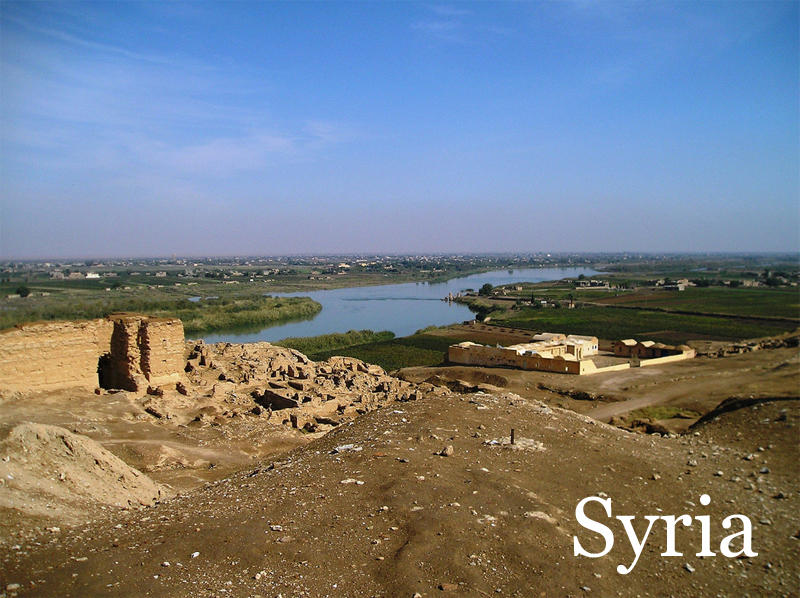
Syria pulls roughly 85 percent of its water from the Euphrates, making the river a vital strategic resource. Yet water availability has historically been subject to the whims of Turkey, which controls the Euphrates’ headwaters.
Meanwhile, Iraq, which lies downstream of Syria, is also heavily dependant on the river. Understandably, as all three countries have seen their populations grow in recent decades, so too have tensions over controlling and sharing the Euphrates’ flow.
Despite Turkey’s long-standing resistance to international water-sharing pacts and penchant for large-scale hydroelectric projects, a new round of water diplomacy may help ease future tensions over the river. A recently created joint institute — backed by Iraq, Syria, and Turkey — is designed to provide a forum for the three countries to share data and policy ideas. Academics and water experts from the three countries will collaborate on efficient management, share best practices, and create a comprehensive map of the region’s water supplies.
The institute may be only a small step, but its emphasis on transparency is undoubtedly a move in the right direction. For Syria — sandwiched between two much larger countries — better communication with its neighbors is not only smart, but necessary to avoid conflict. But that won’t solve the country’s serious water scarcity problem. Leaders in Damascus should also continue to encourage conservation and more efficient use of water to stretch supplies to meet the needs of their growing population.
Sources: BBC, Global Arab Network, IRIN, Mideastnews.com, National Agricultural Policy Centre (Syria), Population Reference Bureau, Reuters, Syria Ministry of Agriculture, Syria Today
Photo Credit: “Euphrates and the Dig House Dura Europos,” courtesy of flickr user Verity Cridland. -
Environmental Disaster or Impetus for Cooperation?
Iraq: Steve Lonergan on the Southern Marshes
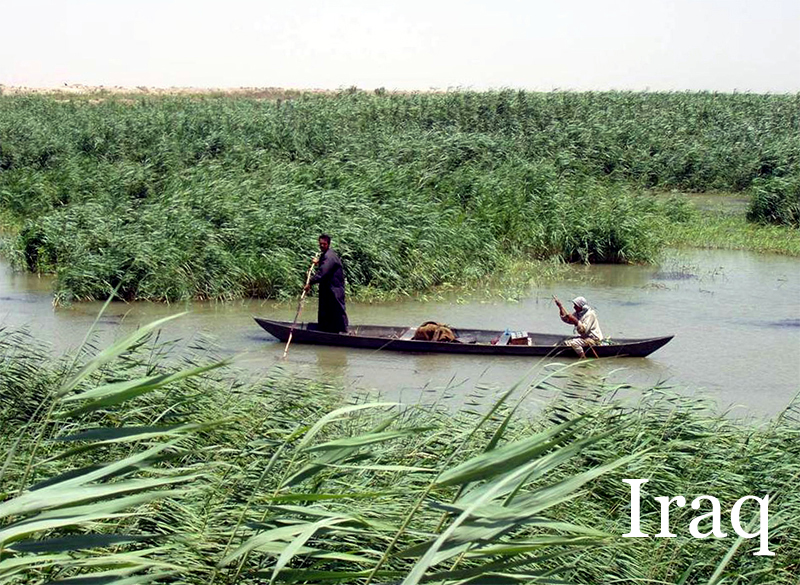
›September 21, 2010 // By Schuyler NullIraq’s Southern Marshes, once the Middle East’s largest and most ecologically diverse wetlands, have survived the Iran-Iraq war, systematic drainage by Saddam Hussein, American invasion, and record-breaking drought. Today, however, the prospects for survival are dimming, as water consumption across the region continues to increase and security remains unsettled. Despite these challenges, the marshes’ location along the Iranian border and their reliance on flow from Turkey upstream offers unique potential for environmental peacemaking in this troubled region.
-
Saleem Ali at TEDxUVM on Environmental Peacemaking
›“The use of the term ‘peace’ is in many circles still considered taboo, because immediately people think you are talking about something that is utopian,” said University of Vermont Professor Saleem Ali at a recent TEDx event on sustainability. “But I’m here to tell you that peace is pragmatic. Peace is possible.”
Ali points out the value of peace to every sector of society and, using an example from Ecuador and Peru, argues for the utility of the environment as a peacemaker. Other longstanding conflict areas like Cyprus, Iraq, Israel, and Korea are also ripe for environmental peacebuilding efforts, he says.
Professor Ali has written for The New Security Beat before on the strengths and weaknesses of viewing conservation and sustainability efforts through a strictly security lens. He points out that environmentalists must tread a fine line when assigning causality between the environment and conflict, but even when natural resources or climate are not central to a conflict, environmental peacebuilding can still play a role in creating shared ground (sometimes literally) between combatants.
“Treasures of the Earth,” Ali’s latest book, examines the thorny subject of how best to balance resource extraction in developing countries with long-term sustainability. Recent examples, such as Angola and Liberia’s blood diamonds, the DRC’s conflict minerals, and concerns over Afghanistan’s potential reserves have shown the difficulty in striking that balance.
“Ultimately, conflict trumps everything else” in terms of what we ought to be concerned with, Ali argues, and therefore, anyone, no matter their profession or capacity, should keep the pursuit of peace in mind – and all options on the table – when making decisions that affect others. -
The Dead Sea: A Pathway to Peace for Israel and Jordan?
›September 7, 2010 // By Russell SticklorThe Middle East is home to some of the fastest growing, most resource-scarce, and conflict-affected countries in the world. New Security Beat’s “Middle East at the Crossroads” series takes a look at the most challenging population, health, environment, and security issues facing the region.
Amidst the start of a new round of Middle East peace negotiations, the fate of the Dead Sea — which is divided between Israel, Jordan, and the West Bank — may not seem particularly relevant. But unlike the perpetually thorny political issues of Israeli settlement policy and Palestinian statehood, the Dead’s continuing environmental decline has sparked rare consensus in a region beset by conflict. Israelis, Jordanians, and Palestinians all agree that something must be done. The much more difficult question, however, is what. But no one is lacking for ideas.Who Stole the Dead’s Water?
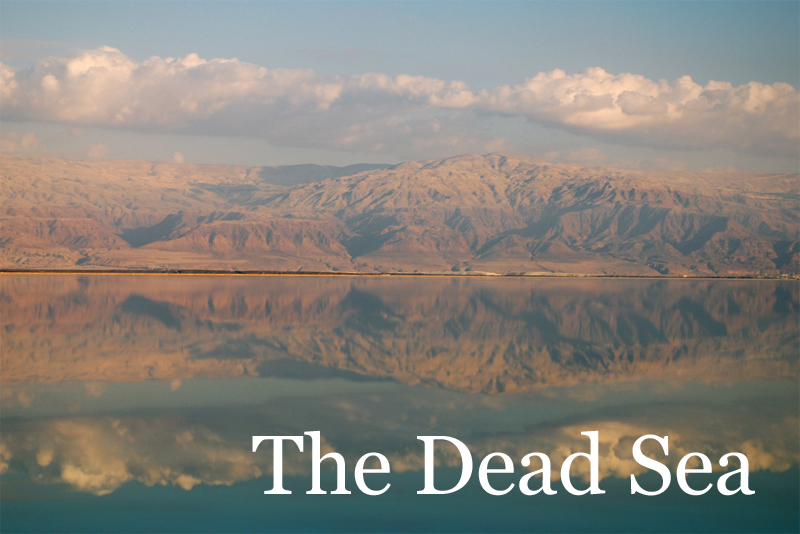
Some 1,400 feet below sea level, the shoreline of the Dead Sea lies at the lowest dry point on the planet. Since the 1970s, this ancient inland saltwater sea has been changing, and fast, with the water level dropping at a rate of three feet per year. The region’s stifling heat and attendant high evaporation rates have certainly played their part. But the real culprits are irrigated agriculture and household water demand, spurred by population growth, which have siphoned off much of the precious little water that once flowed into the sea.
Historically, the Jordan River and its tributaries have contributed roughly 75 percent of the Dead’s annual inflow, or about 1.3 billion cubic meters per year. Even though the Jordan isn’t a large river system, it is an economic lifeline in this parched region. The basin’s waters have been tapped to the point of exhaustion by businesses, farms, and households in Israel, Jordan, the West Bank, and, father afield, Syria and Lebanon. With the cumulative population of those areas projected to increase by 68 percent between now and 2050 (or from 44.9 million today to 75.4 million by mid-century), strain on the region’s water supply will only increase with each passing year.
Already, the Jordan and its tributaries are far worse for the wear. Pollution is an ongoing concern thanks to untreated wastewater entering the river system, while a sprawling network of dams and other irrigation diversions to “make the desert bloom” has carried with it a hefty environmental price tag. The Jordan now delivers a scant 100 million cubic meters to the Dead each year, with up to 50 percent of that flow likely contaminated by raw sewage due to inadequate wastewater treatment upstream.
Meanwhile, water depletion rates in the Dead have been exacerbated by mineral-extraction companies on the sea’s southern reaches, which rely heavily on evaporation ponds to remove valuable minerals from the saltwater.
Tapping the Red
Attempts to internationalize the environmental dilemmas facing the greater Dead Sea region range from a proposed transborder “peace park” in the Jordan River valley to a global, internet-driven campaign to vote the Dead Sea as one of the seven natural wonders of the world. But by far the most ambitious — and controversial — idea for restoring the Dead Sea’s health is to build a 186-mile canal to bring in water from the Red Sea.
The plan has been around for decades, but has not gotten off the drawing board due to its large scale and costs. The project’s centerpiece would be a waterway built through the Arava Desert Valley along the Israeli-Jordanian border. Proponents on both sides of the border say the canal could help raise the Dead’s surface level, helping restore the area’s struggling ecosystems. And given the canal’s substantial elevation drop from sea level to shoreline, its waters could likely be harnessed for hydroelectricity, powering desalination plants that would provide new fresh water for the region.
The project could also harness cross-border environmental issues to transcend long-standing political and religious divisions between the region’s Jewish and Arab populations. “People are saying that water will cause wars,Dr. Hazim el-Naser in a 2002 interview on the canal project, when he served as Jordanian minister of water and irrigation. “We in the region, we’re saying, ‘No.’ Water will enhance cooperation. We can build peace through water projects.” Currently, the canal proposal is the subject of a World Bank feasibility study expected to be completed in 2011.
Deep Skepticism Remains
Still, as diplomatically and environmentally promising as a Red-Dead canal may seem, not everyone is on board with the proposed project. Environmentalists’ concerns run the gamut from unintended ecological impacts on the Dead Sea’s delicate chemical composition, to a sense that, even after decades of on-and-off consideration, the project is being pushed at the expense of other possible policy options.
The New Security Beat recently contacted Mira Edelstein of the international environmental nonprofit Friends of the Earth Middle East via email to discuss some of the group’s concerns about the canal. Edelstein highlighted some of the potential pitfalls of — and alternatives to — a canal link to the Dead:
New Security Beat: How have population growth and the corresponding rise in food demand in Israel, Jordan, and the West Bank affected the Dead Sea’s health?Mira Edelstein: The Jordanian and Israeli agricultural sectors still enjoy subsidized water tariffs, making it easy to continue growing water-intensive crops. But this depletes flows in the lower Jordan River system, and directly impacts the Dead Sea.
NSB: Why is your organization opposed to the idea of a Red-Dead canal link?ME: Friends of the Earth Middle East does not support a Red Sea link, as this option carries the risk of irreparable damage. We believe that this option will not only damage the Dead Sea itself — where the mixing of waters from two different seas will surely impact the chemical balance that makes the Dead Sea so unique — but also because we are worried that pumping such an enormous amount of water from the Gulf of Aqaba will likely harm the coral reefs in the Red Sea itself.
NSB: What steps do you propose to improve environmental conditions in the Dead Sea and the Jordan River valley?
Additionally, the Arava Desert Valley, where the pipes will be laid, is a seismically active region. Any small earthquake might damage the pipes, causing seawater to spill and polluting underground freshwater aquifers.ME: It all has to do with the water policies in the region. The governments [of Israel, Jordan, and the West Bank] desperately need to reform our unsustainable policies, and at the top of this list is agriculture. This means removing water subsidies and changing over from water-intensive crops to more sustainable crops appropriate for the local environment.
Sources: Friends of the Earth Middle East, Israel Marine Data Center, Israel Ministry of Foreign Affairs, National Geographic, the New York Times, Population Reference Bureau, United Nations, Washington Post, Waternet, the World Bank.
In addition, wastewater treatment plants need to be built throughout all of the Jordan valley region so that only treated wastewater is used for agriculture. Some of that treated water, and of course fresh water, should be brought back into the Jordan River system that will later flow into the Dead Sea…In addition, ecotourism projects should be encouraged, as they are an economic stimulus that can help support greater environmental conversation in the region.
Photo Credit: “Dead Sea Reflection,” looking east across the Dead Sea to the Jordanian shore, courtesy of flickr user Mr. Kris. -
Interview With Wilson Center’s Maria Ivanova: Engaging Civil Society in Global Environmental Governance
›August 13, 2010 // By Russell SticklorFrom left to right, the five consecutive Executive Directors of the United Nations Environment Programme: Achim Steiner, Klaus Toepfer, Elizabeth Dowdeswell, Mostafa Tolba, and Maurice Strong, at the 2009 Global Environmental Governance Forum in Glion, Switzerland.
In the eyes of much of the world, global environmental governance remains a somewhat abstract concept, lacking a strong international institutional framework to push it forward. Slowly but surely, however, momentum has started to build behind the idea in recent years. One of the main reasons has been the growing involvement of civil society groups, which have demanded a more substantial role in the design and execution of environmental policy—and there are signs that environmental leaders at the international level are listening.
On the heels of the UN Environment Programme’s Governing Council meeting earlier this year in Bali, a call was put out to strengthen the involvement of civil society organizations in the current environmental governance reform process. To that end, UNEP is creating a Civil Society Advisory Group on International Environmental Governance, which will act as an information-sharing intermediary between civil society groups and regional and global environmental policymaking bodies over the next few years. (The application deadline has been extended; applicants interested in joining the Advisory Group should submit their materials via e-mail by Sunday, August 15, 2010—full instructions are listed at the end of this post.)
Maria Ivanova, a fellow at the Woodrow Wilson Center and director of the Global Environmental Governance Project, played a key role in ensuring civil society engagement in the contemporary political process on international environmental governance reform. Ivanova recently sat down with the New Security Beat to talk about the future prospects for global environmental governance, the Rio+20 Earth Summit in Brazil in 2012, and how to foster a more open and sustained dialogue between the worlds of environmental policymaking and academia.
New Security Beat: What are the pitfalls of a regional approach to addressing climate change and other environmental issues, as opposed to an international approach?
Maria Ivanova: Global environmental problems cannot be solved by one country or one region alone, and require a collective global response. But they can also not be addressed solely at the global level because they require action by individuals and organizations in particular geographies. The conundrum with climate change is that the countries and regions most affected are the ones least responsible for causing the problem in the first case. We cannot therefore simply substitute a national or regional response for a global action plan, as more often than not, it would be a case of “victim pays” rather than “polluter pays”—the fundamental principle of environmental policy in the United States and most other countries. Importantly, however, our global environmental institutions do not possess the requisite authority and ability to enforce agreements and sanction non-compliance.
NSB: What are some of the inherent difficulties in getting countries to see eye-to-eye and collaborate on the development of institutions for global environmental governance?
MI: The most important difficulty is perhaps the lack of trust and a common ethical paradigm accompanied by a pervasive suspicion about countries’ motives. Secondly, there is a perceived dichotomy between environment and development that has lodged in the consciousness of societies around the world. Thirdly, there’s the inability of current institutions to deliver on existing commitments. The resulting blame game feeds suspicions and restarts the whole cycle again.
NSB: Do you see the 21st century’s various environmental challenges as being a driver of international conflict or cooperation?
MI: After the fall of the Berlin Wall, it was expected that global environmental (and other) issues would be a driver for cooperation. A green dividend was expected, and the 1992 Rio Earth Summit fostered much hope. But quite the opposite happened. Global environmental challenges such as climate change, for example, have caused more conflict than cooperation. Other concerns, such as whaling and biodiversity loss, have also triggered conflicts as governments have become fiercely protective of their national sovereignty. On the other hand, civil society groups and even individuals around the world have come together in new coalitions and formed new alliances. So while at a governmental level we observe increased tension, at a civil society level, we witness unprecedented mobilization and collaboration, especially through social media. Obviously, we live in a new world.
NSB: There has been a lot of talk about bridging the gap between the academic and policy worlds—two communities that do not typically have much interaction, but likely have a lot to learn from one another. What steps do you think can be taken regarding environmental governance that might facilitate a sustained dialogue and interaction between the two sides?
MI: Many academics have thought, debated, and written about global environmental governance. Fewer have presented their analysis to policymakers and politicians. At the Global Environmental Governance (GEG) Project that I direct, we seek to bridge that gap and provide a clearinghouse of information, serving as a “brutal analyst,” and acting as an honest broker among various groups working in this field. Moreover, we are in the process of launching a collaborative initiative among the Global Environmental Governance Project, the Center for Law and Global Affairs at Arizona State University, and the Academic Council on the UN System to collect, compile, and communicate academic thinking on options for reform to the ongoing political process on international environmental governance. We are creating a Linked-In group where we hope to engage in discussions with colleagues from universities around the world with the purpose of generating ideas, developing options, and testing them with policymakers. Moreover, we are engaging with civil society beyond academia. The GEG Project is sponsoring five regional events on governance in Argentina, China, Ethiopia, Nepal, and Uganda that are taking place in August and September. Led by young environmental leaders in those countries who attended the 2009 Global Environmental Governance Forum in Glion, Switzerland, these consultations are generating genuine engagement in thought and action on governance. So, new initiatives are certainly emerging and the results could be visible by the Rio+20 conference in May 2012.
NSB: What are your expectations for Rio+20?
MI: Given that governance is a major issue on the agenda for Rio+20, my hope is that the conference will bring about a new model for global governance, which reframes the environment-development dichotomy, cultivates shared values, and fosters leadership. Indeed, I am convinced that leadership is the most important necessary condition for change. We need to encourage more bold, visionary, entrepreneurial behavior rather than conformity.
My hidden hope for Rio+20 is that it will dramatically shift the narrative and move us from sustainable development to sustainability. Sustainability builds on sustainable development but goes further than that. As a concept it allows for new thinking, new actors, and new politics. It avoids the North-South polarization of sustainable development, which is so often equated with development and is therefore understood as what the North has already attained and what the South is aspiring to. By contrast, no one society has reached sustainability, and learning by all is necessary. Moreover, much of the innovative thinking about sustainability is happening in developing countries, which are trying to improve quality of life without jeopardizing the carrying capacity of the environment. Progressive thinking is also taking place on campuses in industrialized countries, which are creating a new sense of community and collaboration. Indeed, young people around the world are engaging in finding new ways of living within the planetary limits in a responsible and fulfilling manner.
Maria Ivanova is director of the Global Environmental Governance Project, a fellow at the Woodrow Wilson International Center for Scholars, and an assistant professor of global governance at the McCormack Graduate School of Policy and Global Studies, University of Massachusetts Boston.
If you wish to nominate yourself or someone else as a candidate for the Civil Society Advisory Group on IEG, you need to submit materials to civil.society@unep.org by Sunday, August 15, 2010 (please copy info@environmentalgovernance.org). You can find the nomination form and the Terms of Reference for the group at the Global Environmental Governance Project’s website.
Photo Credit: “UNEP Leadership,” courtesy of the Global Environmental Governance Project. -
Ban Ki-moon: Natural Resources Should Be Part of Peacebuilding
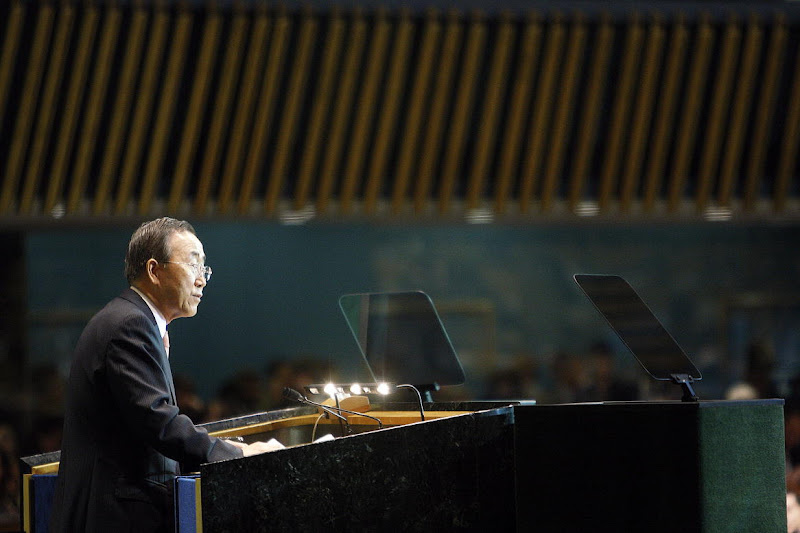
›July 30, 2010 // By Schuyler NullNatural resource management is a critical component of the peacebuilding process according to a new report from UN Secretary-General Ban Ki-moon. The report, presented to the UN Security Council and General Assembly this month, is a follow-up to last year’s presentation by the Secretary-General’s office on peacebuilding in the immediate aftermath of conflict.
The Secretary-General singles out the 2009 UN Environment Programme (UNEP) study “From Conflict to Peacebuilding: The Role of Environment and Natural Resources” for demonstrating the recent links between land use, natural resources, frequency of conflict, and conflict relapse. The Secretary-General writes:44. I wish to highlight two areas of increasing concern where greater efforts will be needed to deliver a more effective United Nations response. First, natural resources: a recent study by the United Nations Environment Programme concluded that 40 per cent of internal conflicts over a 60-year period were associated with land and natural resources, and that this link doubles the risk of conflict relapse in the first five years. Efforts have been made to draw early attention to these risks and to improve inter-agency coordination to address them, including by strengthening national capacity to prevent disputes over land and natural resources, as described in paragraph 31 above. Examples include programmes in Afghanistan, Timor-Leste and the Sudan, where coordination among several United Nations entities addressing land and natural resource management has demonstrated the importance of an inclusive approach. In order to further deliver on the ground I call on Member States and the United Nations system to make questions of natural resource allocation, ownership and access an integral part of peacebuilding strategies.
ECSP Director Geoff Dabelko calls the inclusion of this language “an important step towards integrating environmental issues into broader UN peacebuilding efforts and providing critical top-level political support for this integration effort.”
UNEP’s Post-Conflict and Disaster Management Branch (PCDMB) has been working to support a variety of UN bodies on integrating environment and natural resources into the peacebuilding process. Recent PCDMB efforts have been based in Afghanistan, Iraq, Lebanon, Sierra Leone, the DRC, and Sudan. New Security Beat asked UNEP PCDMB’s Director of Policy and Planning David Jensen to reflect on the new report via email:I’m thrilled to finally see that after over 10 years of work by UNEP and a variety of other organizations and scholars, these issues have finally been recognized at the highest political level. There is no longer any doubt that the mismanagement of natural resources can be a key factor in contributing to violent conflict. At the same time, the very recognition that environmental issues and natural resources can contribute to violent conflict underscores their potential significance as pathways for cooperation, transformation, and the consolidation of peace in war-torn societies.
As Jensen writes in ECSP Report 13, “If people cannot find clean water for drinking, wood for shelter and energy, or land for crops, what are the chances that peace will be successful and durable? Very slim.”
Last fall, Jensen predicted the UN was finally approaching a fundamental tipping point for inclusion of natural resource issues in the broader peacebuilding process, and the Secretary-General appears to have proven him right.
Photo Credit: “Secretary-General Addresses General Assembly,” courtesy of flickr user United Nations Photo.Don’t Cry for Me, Argentina: Why a Melting Arctic Needs Stronger Governance
›May 11, 2010 // By Schuyler NullThe Arctic Council, which helps broker economic and environmental agreements between the Arctic nations, needs a larger role in developing joint international policy, says Norway’s ambassador to Canada. Accelerating ice melt is expected to open the Arctic Ocean to seasonal ship traffic sometime between 2013 and 2030 – which analysts worry will lead to disputes over newly accessible oil and gas reserves.
The Arctic Council was founded in 1996 to “provide a means for promoting cooperation, coordination and interaction among the Arctic States” – Canada, Greenland, Finland, Iceland, Norway, Sweden, Russia, the United States, as well as some Arctic indigenous communities are all members. According to the U.S. Geological Survey, the Arctic may contain up to 90 billion barrels of oil (more than the known reserves of Nigeria, Kazakhstan, and Mexico combined) and 27 percent of the world’s known natural gas reserves, most of which is located offshore.
While rhetorical flare-ups over access to resources and accusations of militarization have occurred, to date the Arctic Council has been an effective mitigating body. However, the Council currently lacks a permanent secretariat and reliable funding.
Currently, any territorial disputes are handled under the U.N. Convention on the Law of the Sea (UNCLOS), while the Arctic Council mainly facilitates communication. However the United States has not yet ratified the Law of the Sea, despite concerted high-level efforts to do so.
Referring to the Arctic, Secretary of State Hillary Clinton recently told Congress that “the Law of the Sea provides commercial rights to the mining of what is in the seabed of the territories that are claimable under sovereignty provisions in the treaty,” and if the United States does not ratify it, “we will lose out, in economic and resource rights, in terms of environmental interests, and national security.”
While the National Intelligence Council predicts that a major armed conflict over the Arctic is unlikely in the near future, it suggests that “serious near-term tension could result in small-scale confrontations over contested claims.” A comprehensive agreement brokered by Arctic Council leadership and agreed upon by all members – like the Convention on the Protection of the Mediterranean Sea Against Pollution, and Protocols, which helps regulate commerce and environmental protections – would guarantee third-party moderation and alleviate the risk of an outstanding dispute erupting into real conflict.
The value of such an agreement is illustrated by the growing tension between Britain and Argentina over offshore oil rights around the Falkland Islands. Recent British drilling efforts, which have yielded a pocket of oil worth potentially an estimated $25 billion, provoked a furious response from Argentinean officials who have long disputed Britain’s claims to sovereignty, not only of the islands themselves, but of the seas around them.
Under UNCLOS, a nation is entitled to “explore and exploit” any natural resources within 200 nautical miles of their shores and in certain circumstances can apply for an extension to 350 nautical miles. By these definitions, there is considerable overlap in British and Argentinean claims, which the Law of the Sea alone is unable to resolve.
In a statement reported by the Times Online last week, Foreign Minister Jorge Taiana said that “Argentina energetically refutes what is an illegal attempt to confiscate non-renewable natural resources that are the property of the Argentine people.”
In an earlier bid to slow development, Argentinean President Cristina Fernandez de Kirchner announced in February that any ship coming to or from the disputed islands would have to be granted a permit in order to pass through Argentinean waters, effectively threatening blockade.
The sovereignty of the Falkland Islands has remained a disputed topic for Argentina since the loss of the Falkland Islands War in 1982, made worse by recent financial woes at home and the country’s lack of domestic oil reserves.
Although tensions in the Arctic region are low now, a changing environment and increased competition for energy resources may lead to similar disputes in the polar region – a strong argument for strengthening multilateral institutions like the Arctic Council and UNCLOS sooner rather than later.
Video Credit: “2008 Arctic Sea Ice Minimum w/overlay” courtesy of Flickr user NASA Goddard Photo and Video.
Showing posts from category environmental peacemaking.